If you want better Bluetooth codec support
Choose Fluance Ri71 Reference Powered Bookshelf Speakers. It scores 4.3 vs 2.5 for Bluetooth codec support, with a 4.1 overall score.
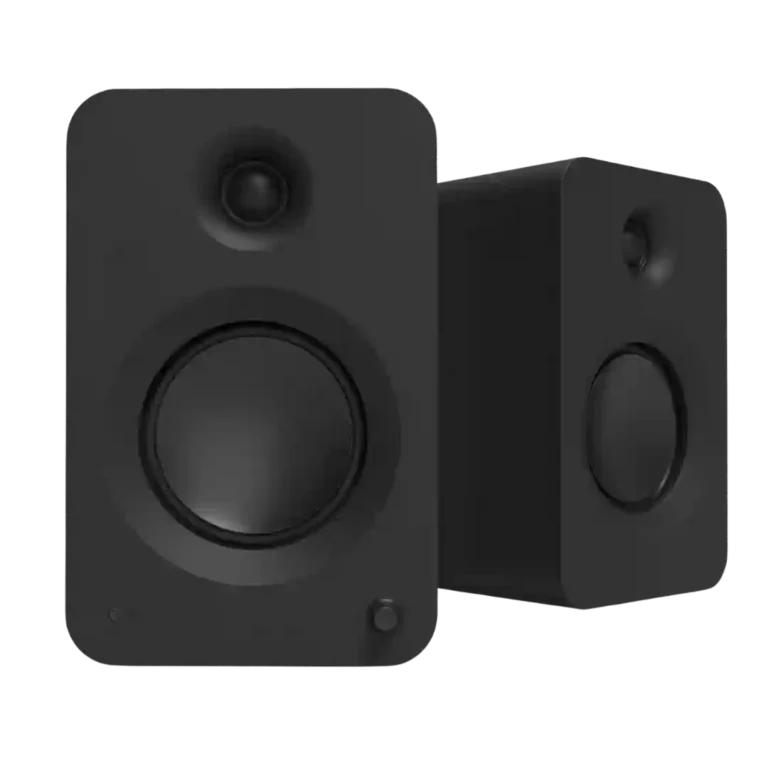
Choose the Kanto REN if you want stylish powered stereo speakers with HDMI ARC, strong imaging, easy setup, and flexible inputs. Skip them if you need Wi-Fi, surround/Atmos, maximum SPL, or deep bass without a subwoofer.
Best for TV and music listeners who want a compact powered stereo pair with HDMI ARC, strong imaging, simple setup, and flexible wired inputs. It especially suits people upgrading from TV speakers or a conventional soundbar without building a separate amp-and-speaker system.
Not for buyers who need Wi-Fi streaming, AirPlay/Chromecast, surround/Atmos expansion, or the deepest bass without adding a subwoofer. It also may not satisfy listeners who need maximum SPL in a large room.
Reviewers largely frame the Kanto REN as a polished powered stereo system that makes the most sense as a soundbar alternative. It earns repeated praise for balanced tonality, real stereo imaging, broad wired connectivity, HDMI ARC convenience, attractive matte finishes, and simple setup. The main tradeoff is bass and output headroom: several reviewers found the low end satisfying for size and room-friendly use, but the speakers sound more dynamic, cleaner, and more authoritative with a subwoofer, and port chuffing or boomy bass can appear when pushed or placed poorly. Remote feedback is also mixed, with strong functionality offset by chunkiness or slow response. Overall, the evidence points to a stylish, flexible, high-value TV/music system rather than a full surround or room-shaking solution.
Compared with other Bookshelf Speakers, this product is above average in Wired input, HDMI ARC, Subwoofer, near average in Aesthetic design / Finish options, Price, below average in Bluetooth codec support, Distortion at high volume, Amplifier power requirements.
| Attribute | This product | Category average | Difference |
|---|---|---|---|
| Bluetooth codec support | 2.5 | 4.3 | -1.8 |
| Distortion at high volume | 3.4 | 4.2 | -0.8 |
| Wired input | 4.5 | 3.9 | +0.6 |
| HDMI ARC | 4.6 | 3.9 | +0.7 |
| Subwoofer | 4.3 | 3.8 | +0.5 |
| Smart features | 4.5 | 3.8 | +0.7 |
| Remote control usability | 4.0 | 3.6 | +0.4 |
| Amplifier power requirements | 4.0 | 4.6 | -0.6 |
Choose Fluance Ri71 Reference Powered Bookshelf Speakers. It scores 4.3 vs 2.5 for Bluetooth codec support, with a 4.1 overall score.
Choose KEF LS50 Wireless II Powered Bookshelf Speakers. It scores 4.6 vs 3.4 for Distortion at high volume, with a 4.1 overall score.
Choose KEF LSX II Wireless HiFi Speakers. It scores 4.2 vs 3.8 for Loudness / maximum volume, with a 4.2 overall score.
Choose Edifier M90. It scores 4.0 vs 2.5 for Surround sound simulation, with a 4.3 overall score.
Products reviewers directly compared with this model, grouped into quick takeaways.
Yes. Reviewers repeatedly described REN as a strong or even superior soundbar alternative because HDMI ARC, real stereo separation, and wider speaker spacing improve TV and movie presentation.
It does not strictly need one for smaller spaces or moderate listening, but many reviewers said a subwoofer makes the system sound more authoritative, dynamic, and clean.
Dialogue performance was praised. Reviewers reported clear narration, strong center placement, and useful vocal-boost behavior for TV viewing.
The evidence is mixed. Reviewers found it loud enough for typical use, but several wanted more output or said it is not a room-shaking system without a subwoofer.
Yes. Reviewers strongly praised the input selection, especially HDMI ARC, optical, USB-C audio, RCA, 3.5mm aux, Bluetooth, and the subwoofer output.
The recurring drawbacks are bass limits without a subwoofer, occasional port noise or boomy bass when pushed or poorly placed, no Wi-Fi/AirPlay/Chromecast evidence, and some remote-control quirks.
These are a few of the reviews included in our analysis.



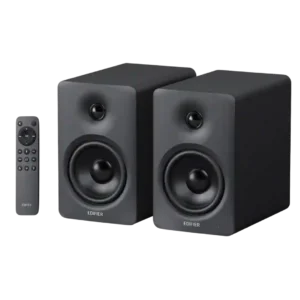
Choose the M90 for powerful, spacious sound, exceptional connectivity, and easy TV integration in a compact desktop-friendly pair. Skip it if you need Wi-Fi or AirPlay, front-mounted controls, or deep...
Pros: HDMI ARC, Low-volume performance
Cons: AirPlay compatibility, Wi-Fi streaming reliability
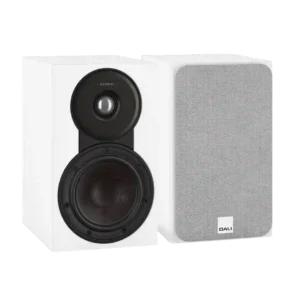
Choose the Sonik 1 for compact-room hi-fi with vivid vocals, punchy bass and precise imaging. Skip it if you need deep sub-bass, dislike forward treble, or cannot justify the steep...
Pros: Distortion at high volume, Dynamic headroom
Cons: Warranty support, Included accessories
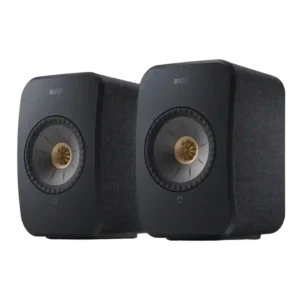
Choose the KEF LSX II if you want compact wireless speakers with sharp imaging, easy setup, strong streaming, and stylish design. Skip it if you need theater-style surround, deepest bass...
Pros: Soundstage height, Amplifier power requirements
Cons: On-device controls, Surround sound simulation
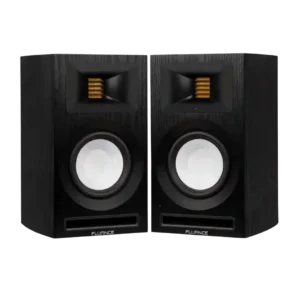
Choose the Fluance Ri71 if you want balanced, detailed powered stereo speakers for music and TV with HDMI ARC and subwoofer expansion. Skip them if you need Wi-Fi, USB/optical inputs,...
Pros: Setup simplicity, Bluetooth connection stability
Cons: optical, Smart features