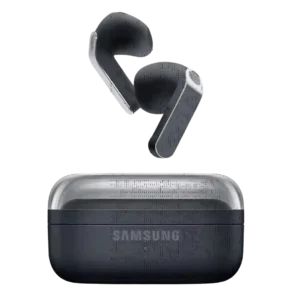
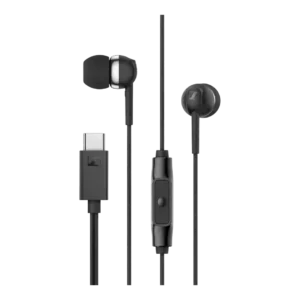
Average score
P1
Product 1: Samsung Galaxy Buds 4
3.8
P2
Product 2: Sennheiser CX 80U Wired Earbuds
4.2
Active noise cancellation
P1
Product 1: Samsung Galaxy Buds 4
2.5
Reviewers agreed ANC is the weakest major feature: two hands-on reviews found it modest or not serious, while the specs-focused comparison expected improvement over Buds 3.
P2Product 2: Sennheiser CX 80U Wired Earbuds
No score yetAndroid compatibility
P1
Product 1: Samsung Galaxy Buds 4
4.5
Android and especially Samsung users get the strongest experience, with one reviewer explicitly saying the buds were made for Android/Samsung users.
P2
Product 2: Sennheiser CX 80U Wired Earbuds
5.0
Android-style USB-C use was strong in Tom’s Guide testing, where the earbuds worked seamlessly with a Google Pixel phone.
App
P1
Product 1: Samsung Galaxy Buds 4
4.5
The app and phone settings offer a broad control surface, with reviewers highlighting a huge range of adjustable settings.
P2
Product 2: Sennheiser CX 80U Wired Earbuds
3.5
Tom’s Guide noted there is no companion app, but judged that absence as not a major drawback for these wired earbuds.
Bass performance
P1
Product 1: Samsung Galaxy Buds 4
4.3
Bass was consistently praised as punchy, wide, warm, and stronger than expected for open-fit entry-level earbuds.
P2
Product 2: Sennheiser CX 80U Wired Earbuds
4.0
Bass was generally described as clean, responsive, punchy, and powerful, though both transcripts noted the deepest sub-bass lacked some weight.
Battery
P1
Product 1: Samsung Galaxy Buds 4
2.5
Battery life was treated as adequate but unimpressive, with one reviewer calling 5-6 hours poor beside longer-lasting rivals.
P2Product 2: Sennheiser CX 80U Wired Earbuds
No score yetBluetooth
P1
Product 1: Samsung Galaxy Buds 4
4.4
Bluetooth was viewed positively, with reviewers citing longer range, future-proofing, and Bluetooth 6.1 as a meaningful upgrade.
P2Product 2: Sennheiser CX 80U Wired Earbuds
No score yetBuild quality
P1
Product 1: Samsung Galaxy Buds 4
4.3
Build quality drew positive comments for a premium feel and a more refined look than the prior generation.
P2
Product 2: Sennheiser CX 80U Wired Earbuds
4.5
TechRadar explicitly praised the earbuds’ build quality as impressive for the budget category.
Built-in DAC and hi-res playback
P1
Product 1: Samsung Galaxy Buds 4
4.3
Hi-res/UHQ playback was praised when paired with compatible Galaxy hardware and high-resolution sources, adding perceived expansiveness and cleaner sound.
P2
Product 2: Sennheiser CX 80U Wired Earbuds
5.0
Tom’s Guide treated the built-in DAC and hi-res playback support as a major selling point for budget wired earbuds.
Button control usability
P1
Product 1: Samsung Galaxy Buds 4
4.5
The stem controls were praised as easy, precise, and straightforward, especially after Samsung refined the blade shape.
P2
Product 2: Sennheiser CX 80U Wired Earbuds
3.3
Control usability was mixed: TechRadar disliked the missing volume buttons, while Tom’s Guide praised the button feel and responsiveness.
Cable quality
P1Product 1: Samsung Galaxy Buds 4
No score yet
P2
Product 2: Sennheiser CX 80U Wired Earbuds
2.5
Cable quality drew criticism from Tom’s Guide because the wires lack anti-tangle design and bunch up in a pocket.
Carry case quality
P1
Product 1: Samsung Galaxy Buds 4
4.0
The case was reviewed favorably for practical design touches, including visibility through the lid and useful physical controls.
P2Product 2: Sennheiser CX 80U Wired Earbuds
No score yetComfort during long use
P1
Product 1: Samsung Galaxy Buds 4
4.8
Comfort was a major strength in the Tom's Guide review, including for smaller ears and everyday listening.
P2
Product 2: Sennheiser CX 80U Wired Earbuds
5.0
Comfort was excellent across both reviews, including multi-hour listening with no irritation and full marks for long-period wear.
Design and Aesthetics
P1
Product 1: Samsung Galaxy Buds 4
4.1
Design impressions were positive overall, with reviewers calling the Buds 4 more polished, premium, and refined despite the familiar AirPods-like shape.
P2
Product 2: Sennheiser CX 80U Wired Earbuds
4.3
Design reactions were split: TechRadar loved the classy look, while Tom’s Guide found the lowkey all-black design unflashy.
Eartips fit
P1
Product 1: Samsung Galaxy Buds 4
2.6
Fit evidence was mixed: reviewers liked the comfort of the open form, but the lack of a seal and repeated fit adjustments hurt stability and ANC.
P2
Product 2: Sennheiser CX 80U Wired Earbuds
4.8
Fit was a major positive, with the right seal improving comfort and Tom’s Guide’s chosen tips staying put securely.
Ear tip size options
P1Product 1: Samsung Galaxy Buds 4
No score yet
P2
Product 2: Sennheiser CX 80U Wired Earbuds
4.8
Both reviews valued the supplied eartip options because they helped users find a better fit and seal.
Equalizer customization
P1
Product 1: Samsung Galaxy Buds 4
4.5
EQ customization was described as a premium feature, with access to adjustment options and presets inside Samsung's software experience.
P2
Product 2: Sennheiser CX 80U Wired Earbuds
3.0
Equalizer customization is limited, but Tom’s Guide did not feel a need to tailor the sound profile during use.
Frequency response accuracy
P1
Product 1: Samsung Galaxy Buds 4
4.0
One comparison review credited the Buds 4 tuning with better clarity and balance than the prior generation.
P2
Product 2: Sennheiser CX 80U Wired Earbuds
4.3
The tonal balance was broadly praised as full-range and accurate, but Tom’s Guide still noted the lowest frequencies were less refined.
Head gestures
P1
Product 1: Samsung Galaxy Buds 4
4.1
Head gestures were treated as a useful modern addition that adds hands-free control and helps Samsung keep pace with rivals.
P2Product 2: Sennheiser CX 80U Wired Earbuds
No score yetInstrument separation
P1
Product 1: Samsung Galaxy Buds 4
4.2
Instrument separation was praised in track testing, where synths, bass, vocals, and percussion stayed layered rather than smeared together.
P2
Product 2: Sennheiser CX 80U Wired Earbuds
4.3
Instrument and vocal separation were praised, with layers avoiding muddiness and words not bleeding together.
Integrated microphone
P1
Product 1: Samsung Galaxy Buds 4
4.0
The integrated microphone system was described as upgraded and designed for clearer calls and better voice recognition.
P2
Product 2: Sennheiser CX 80U Wired Earbuds
3.0
The integrated mic was usable but not impressive, with decent voice clarity offset by static and limited call quality.
Lossless audio support
P1Product 1: Samsung Galaxy Buds 4
No score yet
P2
Product 2: Sennheiser CX 80U Wired Earbuds
5.0
Tom’s Guide praised the earbuds for lossless, low-latency playback support up to 24-bit/96KHz.
Maximum volume clarity
P1Product 1: Samsung Galaxy Buds 4
No score yet
P2
Product 2: Sennheiser CX 80U Wired Earbuds
4.5
At peak volume, the TechRadar review found the treble stayed controlled instead of becoming harsh or tinny.
Microphone noise reduction
P1
Product 1: Samsung Galaxy Buds 4
4.2
Microphone noise reduction was a strength, with reviewers saying background roar, white noise, wind, and background noise were reduced or blocked.
P2
Product 2: Sennheiser CX 80U Wired Earbuds
2.0
The mic picked up noticeable background static, suggesting weak noise handling during recording or calls.
Microphone quality for calls
P1
Product 1: Samsung Galaxy Buds 4
3.6
Call quality was usable but not flawless: one review heard crisp clarity, another reported a muffled voice, and the comparison piece expected clearer calls.
P2
Product 2: Sennheiser CX 80U Wired Earbuds
2.5
Call mic performance was a weakness in TechRadar’s testing, with acceptable voice clarity but below-best call quality.
Midrange clarity
P1
Product 1: Samsung Galaxy Buds 4
4.2
Midrange clarity was praised, especially for vocals, though Engadget described the non-Pro model's mids as merely filling the gaps adequately.
P2
Product 2: Sennheiser CX 80U Wired Earbuds
4.5
Mids and vocals came through clearly, with one review praising robust balance and the other emphasizing intelligible, separated vocals.
Multi-platform compatibility
P1
Product 1: Samsung Galaxy Buds 4
2.5
Multi-platform compatibility was a clear limitation because the richest features and smoothest device switching stay tied to Samsung or Galaxy devices.
P2
Product 2: Sennheiser CX 80U Wired Earbuds
5.0
Multi-platform compatibility was strong, with Tom’s Guide reporting seamless use across a Pixel phone, MacBooks, and an iPad.
Multipoint connectivity reliability
P1
Product 1: Samsung Galaxy Buds 4
3.3
Multipoint and device switching were mixed: Tom's Guide criticized non-Galaxy limitations, while the specs comparison expected smoother Galaxy ecosystem switching.
P2Product 2: Sennheiser CX 80U Wired Earbuds
No score yetNoise isolation (passive)
P1
Product 1: Samsung Galaxy Buds 4
2.0
Passive isolation was weak because the open-fit body lacks a sealing silicone tip, letting outside noise seep in.
P2
Product 2: Sennheiser CX 80U Wired Earbuds
4.8
Passive noise isolation was repeatedly praised, with the seal and eartips blocking office chatter and reducing external sounds well.
Portability/foldability
P1Product 1: Samsung Galaxy Buds 4
No score yet
P2
Product 2: Sennheiser CX 80U Wired Earbuds
3.0
Pocket portability is undercut by the cable tangling and bunching, which Tom’s Guide found annoying to manage.
Software/setup simplicity
P1
Product 1: Samsung Galaxy Buds 4
4.1
Setup and software were strongest for Galaxy users, with settings baked into the phone and a broad range of options available.
P2
Product 2: Sennheiser CX 80U Wired Earbuds
5.0
Setup simplicity was excellent because the USB-C plug-and-play interface worked without friction.
Sound quality
P1
Product 1: Samsung Galaxy Buds 4
4.3
Sound quality was the clearest strength across all three reviews, with praise for richness, refinement, and overall listening enjoyment.
P2
Product 2: Sennheiser CX 80U Wired Earbuds
4.8
Reviewers strongly praised the CX 80U’s sound for detail and refinement, while one review framed it as mostly superb because the lowest bass was weaker.
Soundstage depth
P1
Product 1: Samsung Galaxy Buds 4
4.2
Soundstage depth received positive evidence through UHQ listening, where acoustics were described as reverberating around the listener.
P2Product 2: Sennheiser CX 80U Wired Earbuds
No score yetSoundstage width
P1
Product 1: Samsung Galaxy Buds 4
4.5
Soundstage width was praised in UHQ mode, with Tom's Guide calling the presentation surprisingly expansive.
P2
Product 2: Sennheiser CX 80U Wired Earbuds
4.5
Both reviewers found a convincing sense of space, including defined treble placement and a notably wide soundstage.
Spatial audio
P1
Product 1: Samsung Galaxy Buds 4
2.5
Spatial audio was not a selling point for one reviewer, who said upmixed spatial audio could warp music.
P2Product 2: Sennheiser CX 80U Wired Earbuds
No score yetStability
P1
Product 1: Samsung Galaxy Buds 4
2.2
Physical stability was a weakness in the Engadget review because the open design required repeated fit adjustments.
P2
Product 2: Sennheiser CX 80U Wired Earbuds
5.0
Stability was excellent in Tom’s Guide testing, with the earbuds staying in place while stationary and walking.
Touch control responsiveness
P1
Product 1: Samsung Galaxy Buds 4
4.4
Touch control responsiveness was praised, with reviewers finding the touch area easy to locate and the gestures precise or straightforward.
P2Product 2: Sennheiser CX 80U Wired Earbuds
No score yetTransparency mode quality
P1
Product 1: Samsung Galaxy Buds 4
4.0
Transparency mode earned positive evidence from the comparison review because Ambient Sound made daily use more practical than Buds 3.
P2Product 2: Sennheiser CX 80U Wired Earbuds
No score yetTreble clarity
P1
Product 1: Samsung Galaxy Buds 4
4.3
Treble performance was praised for crunchy highs and strong mids/treble performance, without the tinniness criticized in AirPods comparisons.
P2
Product 2: Sennheiser CX 80U Wired Earbuds
4.8
Treble was a strength in both reviews, staying vivid and bright without turning harsh, tinny, or shrill.
USB-C
P1Product 1: Samsung Galaxy Buds 4
No score yet
P2
Product 2: Sennheiser CX 80U Wired Earbuds
5.0
USB-C was a major advantage in both reviews, improving fit with modern devices and making the earbuds more versatile.
Value for money
P1
Product 1: Samsung Galaxy Buds 4
4.3
Value was favorable for Galaxy owners and price-conscious buyers, with reviewers calling the performance strong for the $179 tier.
P2
Product 2: Sennheiser CX 80U Wired Earbuds
5.0
Value was a standout strength in both reviews, with strong praise for the sub-$40 sound and overall bang for the buck.
Voice assistant integration
P1
Product 1: Samsung Galaxy Buds 4
4.0
Voice assistant integration was considered useful for hands-free tasks, though one reviewer personally had little interest in AI assistants.
P2Product 2: Sennheiser CX 80U Wired Earbuds
No score yetWater/sweat resistance rating
P1
Product 1: Samsung Galaxy Buds 4
2.5
Water and sweat resistance were a concern because the Buds 4 dropped from Buds 3's IP57 rating to IP54 and were described as less rugged.
P2
Product 2: Sennheiser CX 80U Wired Earbuds
2.0
Water resistance was a limitation because TechRadar wanted at least IPX4-style splash protection and found no waterproofing claim.
Weight comfort
P1Product 1: Samsung Galaxy Buds 4
No score yet
P2
Product 2: Sennheiser CX 80U Wired Earbuds
4.5
Tom’s Guide tied comfort and stability partly to the very light individual earbud weight.