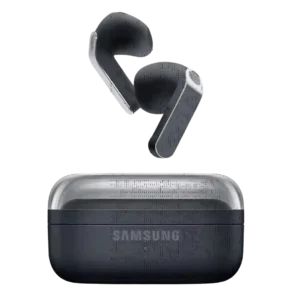
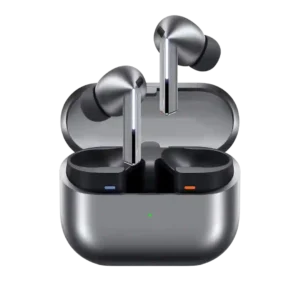
ANC is the main weakness. The open design limits sealing, so the effect is modest against chatter and steady noise and much less convincing against higher-frequency or sudden sounds, even if it appears somewhat improved over Buds 3.
ANC performance is polarized: several reviewers find it strong and effective, while others rate it merely average and still behind the best-in-class models, especially for certain environments. The buds offer multiple noise modes and adaptive behaviors. Some like the options, but multiple reviews describe adaptive switching as inconsistent or not clearly different from other modes.
Android compatibility is strong, and Galaxy phones get the most complete experience. Non-Samsung Android users still get meaningful control through Samsung's software, but the best extras remain Galaxy-first.
Android compatibility is strong overall, and the experience is best on recent Samsung phones where the newest codec and AI features are available.
Samsung's settings integration and Wearables app expose useful controls, EQ options, and ANC adjustments. The software feels feature-rich, though some advanced features stay exclusive to Galaxy phones.
The Galaxy Wearable app unlocks core features like EQ, noise modes, and Find My tools. Reviews repeatedly warn that iPhone support is limited and some features are Samsung-only.
Several reviewers explicitly note there is no aptX support, which is a drawback for some Android users who want broader high-quality codec compatibility.
Video and gaming latency is generally reported as good, helped by a low-latency or game mode in some setups, though availability can depend on device and settings.
Bass is a standout strength, with reviewers repeatedly calling it punchy, warm, and satisfyingly deep for an open-fit earbud. It is not as textured as the Pro model, but it gives the Buds 4 a lively, full sound.
Bass is frequently described as boosted and punchy. Many enjoy the impact, but a few reviewers call it thumpy or overcooked without EQ.
Battery life is acceptable rather than exceptional at roughly 5 to 6 hours from the buds and up to 30 hours with the case. Reviewers treat endurance as serviceable, not a category advantage.
Battery life varies noticeably by reviewer and settings: some measured around 4.5 to 5 hours with ANC, while others report closer to 6 hours or more, and some tests cite longer runtimes. Reviews note the battery is not designed to be user-replaceable, so long-term serviceability is limited compared to more repairable designs.
Connectivity looks strong overall, helped by Bluetooth 6.1 and solid range in real-world use. The bigger limitation is not dropouts but that the smartest switching behavior is mostly reserved for Samsung-centric setups.
Bluetooth stability is generally strong, with few dropouts reported and solid range, though occasional stutters or device-specific quirks are mentioned.
Build and finish are seen as more refined than the previous generation, with a more polished stem design and cleaner execution. The Buds 4 feel premium enough for the price, though not especially rugged.
Build quality is generally good with strong water resistance, though early QC chatter and fragile or finicky ear-tip swapping show up repeatedly.
The case earns positive marks for its flatter layout, translucent lid, and practical physical pairing button. It feels useful and better thought out than a generic accessory shell.
The clear-lid case is generally compact and convenient, but a few reviewers dislike the feel, one-hand opening, or the fussiness of seating stems correctly.
Charging is well rounded with USB-C and wireless charging. Some sources highlight fast top-ups or convenient reverse wireless charging support on compatible phones.
Codec support is solid for Samsung owners via Samsung Seamless Codec options, but limited for everyone else, with common fallbacks to AAC or SBC.
Comfort is one of the Buds 4's biggest wins, especially for listeners who prefer open-fit earbuds or have smaller ears. The only caveat is that the looser fit can require occasional readjustment.
Long-wear comfort is widely praised thanks to the stemmed design and reduced ear pressure, but side sleeping can be uncomfortable and fit still varies by ear shape.
Design feedback is favorable overall: slimmer stems, a cleaner case, and a more polished look improve the presentation. The main knock is that the styling still feels very close to Apple's template.
Design is divisive: many like the blade-stem look and lights, while others view it as too AirPods-like or slightly plasticky.
Ear tips come in three sizes. Several reviews mention the swap process can be annoying and early units had tearing complaints.
EQ flexibility is unusually strong for mainstream earbuds, with both a multi-band equalizer and preset options available. This gives listeners real room to tailor the sound signature.
EQ options are unusually deep for mainstream earbuds, with a 9-band equalizer and presets called out as a major advantage for tuning the sound.
Find My and tracking features are improved with lights and alerts, but some reviewers still want UWB-grade precision and note occasional quirks.
Measured tuning is often reported as close to a modern target in mids and treble, with extra bass energy that can be dialed back via EQ.
The Buds 4 separate vocals, synths, percussion, and layered mixes well for the class. They are not hyper-analytical, but they rarely sound congested or smeared.
Instrument separation is strong, with multiple reviewers noting they can track individual elements in busy mixes more easily than on older Galaxy Buds.
Multiple reviews point out there is no LDAC option, limiting hi-res codec flexibility outside of Samsung’s proprietary codec path.
Maximum volume is generally ample for typical listening. No major complaints surface, though the loudest levels can sound a bit strained in some accounts.
Noise reduction during calls performs better than expected and can suppress loud background noise effectively. The tradeoff is that strong processing can make the speaker sound a bit digitized.
Noise reduction for calls is mixed: some tests show strong background suppression, while others struggle to pull much reduction without the right client or conditions.
Call quality is good in quiet spaces and usable in noisier ones, but it is not best-in-class. Voices remain understandable, though they can sound slightly muffled or processed compared with stronger premium rivals.
Call mic quality is usually rated good to excellent, with clear voice reproduction in many tests; a few reviewers still describe it as only fine or slightly unnatural depending on device and conditions.
Midrange tuning is clear and well judged, keeping vocals and core instruments present even with the Buds 4's fuller bass. This helps the earbuds sound richer than many entry-level competitors.
Midrange is typically clean and articulate with good vocal detail, though some describe it as slightly recessed in a V-shaped tuning.
Basic listening works across devices, but the overall experience is plainly Samsung-centric. iPhone users and people mixing Apple, Windows, and Galaxy hardware lose access to several of the best features.
These earbuds work on many devices, but cross-platform value depends on how much you rely on Samsung-only features and the lack of a full iOS app experience.
Automatic switching is strongest inside the Galaxy ecosystem and notably less convenient elsewhere. Mixed-device users should expect more manual intervention than they would want at this price.
Multipoint and device switching are often limited to the Samsung ecosystem. Some reviews praise seamless Galaxy-to-Galaxy switching, while others note weak or missing multipoint for mixed-device setups.
Passive isolation is weak because the open design does not create a proper seal. That physical limitation is a big reason the ANC never becomes truly class-competitive.
Passive isolation is decent with a good seal, but it varies by fit and ear tips; some reviewers say it lags behind foam-tip competitors for blocking high-pitched noise.
Sensors enable wear detection and convenience features in supported apps, with some reviews highlighting automatic pausing and posture or voice-detect behaviors.
Setup and customization are straightforward on Galaxy phones and still manageable on other Android devices through Wearables. The biggest friction comes from Galaxy-only options rather than a confusing interface.
Setup is usually straightforward, helped by quick pairing and clear in-app controls, but some reviewers find the interface non-intuitive or note feature lock-in outside Samsung.
Sound quality is the clearest reason to buy the Buds 4. Across the reviews, the earbuds are praised for rich tuning, strong bass, clear vocals, and a presentation that beats many direct price rivals.
Across reviews, sound quality is a standout: a lively, detailed presentation with strong clarity and a generally wide, engaging mix that can compete with top-tier earbuds, especially after EQ tuning.
For everyday earbuds, the Buds 4 sound fairly open and spacious, especially with higher-quality Galaxy playback modes enabled. They do not sound huge, but they avoid the boxed-in feel common at this tier.
Soundstage is commonly praised as wider than average for in-ears, helping music feel more open and layered.
Spatial audio is present as a headline feature, but clear enthusiasm is limited. It adds another box to the feature list more than it defines the Buds 4 listening experience.
Spatial and 360 audio features are included and can be fun, but reviews are mixed on immersion, head tracking accuracy, and real-world usefulness.
Fit stability is acceptable for regular daily use, but the open shape can shift enough to require adjustment. This is not the best pick for people who prioritize a locked-in feel.
Stability is often improved versus older Galaxy Buds, with many reporting a secure fit for workouts, but some testers still experienced easy dislodging depending on ear shape.
Touch and stem-based controls are a strength. Reviewers repeatedly call them easy to locate, responsive, and customizable, with the flatter stem helping usability.
Controls are a frequent talking point: many find pinch and swipe gestures responsive and precise, while others dislike the stem shape and the learning curve for consistent pinches or swipes.
Transparency mode is a highlight for many, described as natural and very clear, though a few note slight hiss or less realism than the very best implementations.
Treble comes through cleanly with good detail and vocal presence. Reviewers do not describe it as harsh or thin, which helps the Buds 4 avoid sounding brittle despite their lively tuning.
Treble is crisp and revealing with good sparkle and detail. It can lean bright or forward for sensitive listeners, and some note a bit less refinement with ANC engaged.
Voice assistant support is solid on paper, with access to Bixby and Gemini plus Galaxy-focused conveniences. It adds real hands-free utility, even if reviewers do not treat it as the product's main selling point.
Voice controls and assistant integration are widely mentioned, including hands-free commands. Reliability is often praised, but setup and feature depth can vary by device and preferences.
IP54 is enough for sweat and light splashes, making the Buds 4 workable for everyday workouts and commuting. Still, the rating is not especially rugged and is a downgrade from tougher earlier protection.
With an IP57 rating, water and sweat resistance is consistently positioned as a strong point for workouts and daily use.