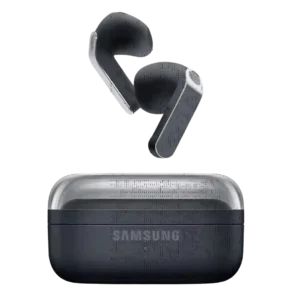
ANC is the main weakness. The open design limits sealing, so the effect is modest against chatter and steady noise and much less convincing against higher-frequency or sudden sounds, even if it appears somewhat improved over Buds 3.
ANC effectiveness is usually rated good but not class-leading; it can handle commute rumble well, yet several reviewers say Sony/Bose options suppress more, especially in the upper ranges. Noise cancelling and awareness modes are often limited in fine control, with some reviews noting on/off style behavior and few intensity tweaks compared with competitors.
Android compatibility is strong, and Galaxy phones get the most complete experience. Non-Samsung Android users still get meaningful control through Samsung's software, but the best extras remain Galaxy-first.
Android compatibility is good overall, and Android users with aptX-capable Snapdragon devices can get the most from Lossless/Adaptive modes; on other phones it still works well but with fewer codec benefits.
Samsung's settings integration and Wearables app expose useful controls, EQ options, and ANC adjustments. The software feels feature-rich, though some advanced features stay exclusive to Galaxy phones.
The companion app is feature-rich for personalization, EQ, control mapping, and updates, but some sources mention slow loading or occasional instability, and several note it is effectively required to get full value.
aptX support is a highlight, with repeated mentions of aptX Adaptive/Lossless (and sometimes aptX Voice) as a key advantage for compatible Android devices.
Video latency is generally reported as well controlled, with reviewers noting little to no audio-video sync issues during typical streaming and YouTube viewing.
Bass is a standout strength, with reviewers repeatedly calling it punchy, warm, and satisfyingly deep for an open-fit earbud. It is not as textured as the Pro model, but it gives the Buds 4 a lively, full sound.
Bass is frequently praised as impactful and well controlled, with Immersion mode letting you add heft without obvious bleed; a few listeners still find the default or certain profiles bass-light or overly sculpted.
Battery life is acceptable rather than exceptional at roughly 5 to 6 hours from the buds and up to 30 hours with the case. Reviewers treat endurance as serviceable, not a category advantage.
Battery life is marketed as long, but real-world reports vary, with at least one standardized test landing closer to about six hours; most still consider it adequate for daily use.
Connectivity looks strong overall, helped by Bluetooth 6.1 and solid range in real-world use. The bigger limitation is not dropouts but that the smartest switching behavior is mostly reserved for Samsung-centric setups.
Bluetooth stability is mostly strong with quick reconnects, though at least one review reports occasional stuttering in specific conditions.
Build and finish are seen as more refined than the previous generation, with a more polished stem design and cleaner execution. The Buds 4 feel premium enough for the price, though not especially rugged.
Build quality is generally viewed as solid and premium-feeling, with durable housings and a well-made overall package.
The case earns positive marks for its flatter layout, translucent lid, and practical physical pairing button. It feels useful and better thought out than a generic accessory shell.
The charging case is often described as somewhat bulky but generally sturdy with strong magnets; a few comments mention hinge/handling quirks.
Charging is a strong point with fast-charge support and both wired and wireless options, though a small number of users report the case can get warm on a wireless pad.
Codec support is broad, including aptX Adaptive and aptX Lossless alongside AAC/SBC; the main caveat is that benefits depend on having a compatible source and LDAC is missing.
Comfort is one of the Buds 4's biggest wins, especially for listeners who prefer open-fit earbuds or have smaller ears. The only caveat is that the looser fit can require occasional readjustment.
Long-wear comfort is highly personal: some find the fit secure and comfortable, especially with wings, while others report pressure, heat, or discomfort due to the large shells.
Design feedback is favorable overall: slimmer stems, a cleaner case, and a more polished look improve the presentation. The main knock is that the styling still feels very close to Apple's template.
Design is distinctive and polarizing: the large circular faceplate stands out, but many note the buds are physically big and may look or feel awkward in smaller ears.
Ear tip options are generous, typically including several silicone sizes plus at least one foam set, which helps comfort and isolation when matched correctly.
EQ flexibility is unusually strong for mainstream earbuds, with both a multi-band equalizer and preset options available. This gives listeners real room to tailor the sound signature.
EQ options are strong for the category, typically including a 5-band ProEQ plus an Immersion bass slider to fine-tune tonality after personalization.
Frequency response accuracy is divisive: some praise a balanced, natural tuning once updated, while others cite measured or perceived tonal issues out of the box that may require firmware and EQ.
Included accessories are a highlight, with multiple tip sizes, foam options, and stabilizing wings helping users dial in fit and seal.
The Buds 4 separate vocals, synths, percussion, and layered mixes well for the class. They are not hyper-analytical, but they rarely sound congested or smeared.
Instrument separation and imaging are commonly highlighted as a standout, with precise placement and clean layering across busy mixes.
LDAC is repeatedly called out as not supported, so Android users who rely on LDAC for high-bitrate Bluetooth may prefer alternatives.
Clarity at higher volumes is typically strong, with multiple sources noting low distortion and intelligible detail even when played loudly.
Noise reduction during calls performs better than expected and can suppress loud background noise effectively. The tradeoff is that strong processing can make the speaker sound a bit digitized.
Noise and wind reduction on calls is frequently reported as effective, helping keep speech understandable in busy or windy environments.
Call quality is good in quiet spaces and usable in noisier ones, but it is not best-in-class. Voices remain understandable, though they can sound slightly muffled or processed compared with stronger premium rivals.
Call quality is generally above average, with voices described as clear and intelligible; a few reviewers still note slight processing or that top rivals edge it out.
Midrange tuning is clear and well judged, keeping vocals and core instruments present even with the Buds 4's fuller bass. This helps the earbuds sound richer than many entry-level competitors.
Midrange is generally clear and present, but can sound forward or radio-like depending on the AAT profile and firmware, so some users prefer minor EQ adjustments for balance.
Basic listening works across devices, but the overall experience is plainly Samsung-centric. iPhone users and people mixing Apple, Windows, and Galaxy hardware lose access to several of the best features.
Multi-platform use is supported across phones and computers, but fidelity and feature access can vary by platform, with iOS often limited to AAC and Android benefiting more from aptX.
Automatic switching is strongest inside the Galaxy ecosystem and notably less convenient elsewhere. Mixed-device users should expect more manual intervention than they would want at this price.
Multipoint connectivity is a consistent win, with reviewers reporting reliable dual-device pairing and fast handoff between phone and computer/tablet.
Passive isolation is weak because the open design does not create a proper seal. That physical limitation is a big reason the ANC never becomes truly class-competitive.
Passive isolation depends heavily on getting a good seal; with the right tips, attenuation is described as decent, but it is not the main selling point versus active cancellation.
Personalized AAT profiles can produce dramatic, often positive changes, but results vary by listener and tips; some profiles trade a sense of spaciousness for extra punch or focus.
In-ear sensors for auto play/pause are commonly mentioned and generally work as expected, with options to change or disable behavior in the app.
Setup and customization are straightforward on Galaxy phones and still manageable on other Android devices through Wearables. The biggest friction comes from Galaxy-only options rather than a confusing interface.
Setup and daily usability are good once configured, but some reviews describe the experience as less polished than rivals because controls and tuning can require initial tinkering.
Sound quality is the clearest reason to buy the Buds 4. Across the reviews, the earbuds are praised for rich tuning, strong bass, clear vocals, and a presentation that beats many direct price rivals.
Sound quality is the main strength: many reviews describe a clean, low-distortion, spacious and highly detailed presentation, especially after Masimo AAT personalization and/or EQ tweaks, though a minority found stock tuning or earlier firmware disappointing.
For everyday earbuds, the Buds 4 sound fairly open and spacious, especially with higher-quality Galaxy playback modes enabled. They do not sound huge, but they avoid the boxed-in feel common at this tier.
Soundstage is widely described as unusually wide and open for true wireless, with good spacing; a few reviews note it can feel a bit flatter in depth compared with the very best rivals.
Spatial audio is present as a headline feature, but clear enthusiasm is limited. It adds another box to the feature list more than it defines the Buds 4 listening experience.
Spatial audio gets mixed reactions: some find it immersive and bubble-like, while others call it subtle or underwhelming, and it is typically not head-tracked.
Fit stability is acceptable for regular daily use, but the open shape can shift enough to require adjustment. This is not the best pick for people who prioritize a locked-in feel.
Stability is usually good when the right tips and wings are used, though some users report slight movement during chewing or vigorous motion without added support.
Touch and stem-based controls are a strength. Reviewers repeatedly call them easy to locate, responsive, and customizable, with the flatter stem helping usability.
Touch controls are commonly described as responsive and highly customizable, with reliable gesture detection and audible feedback.
Transparency or social mode is usable but mixed: some call it smooth and subtle, while others find it less natural, occluded, or slightly artificial versus AirPods-class passthrough.
Treble comes through cleanly with good detail and vocal presence. Reviewers do not describe it as harsh or thin, which helps the Buds 4 avoid sounding brittle despite their lively tuning.
Treble tends to be detailed and airy, but reports vary from smooth and controlled to tinny or over-sharpened on older firmware or specific personalized profiles.
USB-C charging is consistently supported and frequently mentioned as the standard wired option.
Voice assistant support is solid on paper, with access to Bixby and Gemini plus Galaxy-focused conveniences. It adds real hands-free utility, even if reviewers do not treat it as the product's main selling point.
Voice assistant integration is supported through touch controls, with reports of common assistants working reliably when mapped.
Volume output is often described as louder than average with plenty of headroom, useful for dynamic music and noisy environments.
IP54 is enough for sweat and light splashes, making the Buds 4 workable for everyday workouts and commuting. Still, the rating is not especially rugged and is a downgrade from tougher earlier protection.
IPX4 water and sweat resistance is consistently noted, making the earbuds suitable for light workouts and rain, though not for submersion.
Weight comfort is a recurring tradeoff: the earbuds are heavier and more noticeable than many rivals, which can cause fatigue for smaller ears.