Included extras look thin. One reviewer specifically called out the lack of spare bags, filters, and cleaning solution in the box.
Unboxings typically include the robot, dock, ramp, cord, and manuals, with a dust bag preinstalled. Multiple reviewers note that extra consumables (spare bags or detergent) may not be included.
Threshold performance is adequate rather than class-leading. It handled common 1–2 cm transitions in several homes, but it lacks the more aggressive chassis-lift tricks seen on higher-end rivals.
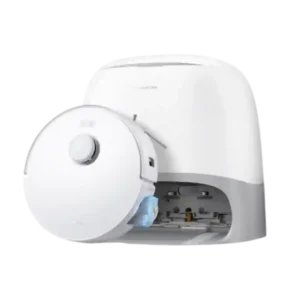
Design is a standout. Reviewers repeatedly praised the curved dock and glossy white finish as unusually attractive for a robot vacuum.
Design and finish are consistently praised, with multiple reviewers calling the robot and dock premium-looking (brushed/metal-like textures and a sleeker base). Even reviewers with performance complaints tend to like the aesthetics.
The software experience is a major strength. Mapping, room control, no-go zones, routines, remote viewing, and deep customization are widely praised, though some reviewers found SmartPlan or buried settings less reliable than manual tuning.
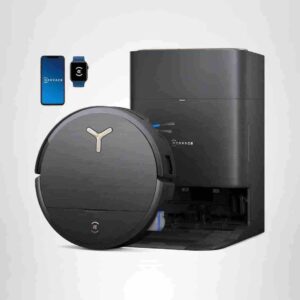
The Ecovacs app is widely praised for organization and depth (routines, maps, barriers, dock controls), and multiple sources mention Matter and voice features (including Yiko). A few note that some settings are buried or that the robot can be overly chatty.
Multiple reviewers note reduced debris scattering compared with earlier models, sometimes crediting a slowed or redesigned side brush. Conversely, some negative experiences describe debris drops around thresholds or during return-to-dock events.
Rug handling is generally good thanks to automatic mop lift and the protective shield, but classification mistakes and troublesome mats still show up in some homes.
Carpet detection is described as competent, but thick rugs and thresholds are recurring pain points in negative reviews. The robot is also described as limited to standard threshold heights rather than newer advanced climbing systems.
Setup is consistently easy. Pairing, mapping, and getting the dock ready were described as straightforward even for first-time use.
Setup is often described as straightforward, but several reviews mention initial firmware updates, mapping hiccups, or time spent editing room divisions. Planning a little extra time for first-run mapping improves the experience.
Battery life is serviceable but mixed. Some testers got strong runtime and efficient coverage, while others found recharge speed and large-job endurance only average.
Battery impressions are mixed: official low-power runtimes are strong, but measured testing and higher-power settings can look below average for efficiency and coverage per charge. Recharge-and-resume helps, and some reviewers still find it sufficient for typical homes.
Dust handling is solid overall. The larger bin and bagged dock are positives, though a few reviewers noted outlet clogging or hair clumps near the dock.
Several reviews note the robot’s internal bin is small for a flagship, increasing dependence on the dock. The dock’s disposable bag is described as large-capacity, but spare bags aren’t always included.
Build quality feels premium. The robot and dock were described as sturdy, polished, and thoughtfully designed for regular use.
High-pile or dense carpet is not this robot’s sweet spot. Several reviews said deep or fluffy carpet performance trails its otherwise strong hard-floor behavior.
On lower-pile carpet it does a respectable job, especially with routine maintenance cleaning, but it is not a category leader on carpet overall.
Medium-pile carpet pickup is one of its stronger vacuuming traits, with multiple tests showing above-average deep-clean results.
Carpet performance is frequently rated near the top, with strong deep-clean results and above-average pickup on rugs. Some comparisons still argue the X8 is close enough on most tests that the X9’s premium is hard to justify.
Clog resistance is decent but not perfect. The removable roller and scraper help, yet hair clumps, kibble, cords, and tiny objects can still create trouble.
This is a key split point: multiple reviews report clogs with medium/large debris, pet hair, or messy mixtures, sometimes without timely alerts. Others report strong day-to-day debris handling with reduced scattering, suggesting performance depends on debris type and home layout.
In roundup-style coverage it’s presented as a top performer and award winner, but some side-by-side comparisons conclude the less expensive X8 (or other flagships) can be a better overall buy. The X9’s strengths are usually framed as best-in-class mopping and very strong all-around cleaning.
The controls are powerful and polished. Reviewers liked the app’s layout and flexibility, although some menus are deeper than they need to be.
App controls are generally seen as excellent, but physical controls and map-editing workflows get criticism in some reviews (sluggish button response or tedious confirmation steps). After setup, day-to-day control is usually straightforward.
Corner cleaning is only average. Dual side brushes help, but the lack of an extending side brush leaves some corners less thoroughly cleaned than the best competitors.
Some reviews call out a dirty-water sensing feature in the dock that can adjust washing based on how dirty the pads are. It’s consistently described as a higher-end automation feature rather than a must-have.
Docking and automated dock functions are a clear strength. Returning to base, washing, drying, and bagged emptying are usually reliable, with only occasional debris-chute complaints.
The OMNI dock is broadly viewed as full-featured and convenient, combining auto-empty, refill, and mop washing/drying. A minority of reports mention a one-off auto-empty clog/failure or debris dropping on the way back to the dock, so reliability is strong but not flawless.
Dock noise is acceptable but noticeable. Drying is often described as a background hum, though some reviewers found the station louder than competing docks over long drying cycles.
Dried-on stain removal is the most divisive part of the product. Some reviewers saw impressive real-world stain cleanup, while several controlled tests found it notably weaker than expected.
Reviewers cite exceptional performance on dried-on messes, including lab-style scoring that places it near the top of recorded results. Real-home testers also report it can scrub sticky spots that older robot mops often leave behind, though not always perfectly.
When everything is dialed in, reviewers describe an almost set-and-forget experience with strong automation. Negative experiences typically stem from clogs, threshold issues, or mapping inaccuracies that demand more intervention.
Edge mopping is strong. The extending roller gets close to walls and baseboards, though it still cannot fully overcome the limits of a round robot body.
Edge cleaning is typically a strength thanks to extending brush/mop behavior, with several reviewers noting good wall-hugging and baseboard coverage. A common caveat is that the roller shape may miss a strip near certain appliances or toe-kicks.
Mess handling at the dock is improved over simpler systems, but not spotless. A few reviewers still reported damp clumps or debris left near the station.
Lower water left behind and hot-air drying are commonly noted, which can help floors dry faster and reduce lingering dampness. Some owners still mention long deep-clean cycles that may include recharge breaks, but drying performance is generally praised.
Several sources emphasize that the roller design can handle small wet spills by separating dirty water rather than dragging a damp pad across the floor. Demo-style testing (e.g., spilled milk) suggests it can clean quickly with minimal smearing compared with traditional pad mops.
Carpet hair pickup is decent but not elite. It manages pet hair better than many robots, yet some tests still showed leftovers on more challenging carpet.
Carpet hair pickup is widely reported as strong, including high pet-hair percentages in testing and positive real-home pet results. Performance can drop if debris clogs the airflow path or during tricky threshold transitions.
Hard-floor hair pickup is very good. On tile, wood, and similar surfaces it consistently handles pet fur and fluff well.
Hair-wrap resistance is excellent. The DuoDivide brush system repeatedly earned praise and strong test results for keeping long hair from tangling badly.
Many sources highlight anti-tangle brush features (ZeroTangle/active hair removal) with lab tests showing near-zero tangling. At least one reviewer still experienced significant hair wrapping during problem runs, so it’s excellent but not guaranteed.
Fine-dust pickup on hard floors is strong. Repeated real-world and test feedback says it leaves hard floors looking clean and polished.
Hard-floor dust pickup is consistently described as strong, with reviewers noting reliable capture of micro debris and fine dust. Some negative reviews still credit it for routine dust pickup even when larger-debris clogs occur.
It handles larger dry debris very well. Cereal, litter, crumbs, rice, and similar messes are usually picked up with little drama.
Large-debris handling is generally good, but multiple reviews note edge cases where larger particles, thresholds, or entering/exiting the dock can lead to drops. Very large debris can also contribute to clogs on some floors.
Heated mop washing and heated-air drying are frequently highlighted, with some reviews noting adjustable wash/dry behavior. This is repeatedly framed as a premium feature that improves hygiene and reduces damp odors.
Roborock’s first roller-mop design is seen as a meaningful step forward for the brand, even if some reviewers felt competitors are already further along on mopping refinement.
Reviewers frequently call out the roller self-washing concept and BLAST airflow path as meaningful advances over older hybrids. It’s still in a competitive field (other brands have strong threshold handling or alternative mop designs), but the X9’s implementation is often viewed as one of the more complete packages.
This is a relatively tall robot. The non-retracting LiDAR turret and larger body hurt clearance compared with slimmer premium models.
Internal LiDAR is positioned as a design win for getting into tighter spaces compared with tower designs. Measured height is still around the high-3-inch range, so ultra-low furniture may remain out of reach.
Maintenance is better thought out than average. Key parts are easy to remove and clean, but owners still need to check rollers, tanks, trays, and occasional clumps.
Routine upkeep is generally reduced thanks to dock automation and app reminders, but several reviewers still recommend periodic tank cleaning and occasional brush/roller clearing. Sticky, paste-like messes can create a bigger cleanup burden.
Navigation and route planning are consistently strong. It maps quickly, covers rooms efficiently, and usually returns to the dock without drama.
Some reviewers describe fast, efficient coverage and strong navigation once maps are set. Others report inaccurate initial mapping (especially in larger rooms) and more manual tweaking than expected for a flagship.
Carpet protection is one of its best ideas. The roller lifts and the shield keeps many carpets dry, though a few classification errors still occur.
Multiple reviews mention automatic lifting behavior to protect carpets (mop lift, and in some descriptions additional component lifting). This generally helps with mixed-floor homes, though the robot is still limited on very tall thresholds or very thick rugs.
Overall mopping is good to very good for daily hard-floor upkeep, especially wet spills and everyday grime. It is less convincing when asked to scrub stubborn, dried-on messes.
The self-washing roller mop is repeatedly called the standout feature, delivering strong scrubbing and excellent day-to-day hard-floor cleaning. A few tests found minor limitations (toe-kicks/appliances it can’t slide under, or slight stickiness/residue on messy stress tests), but it still ranks among the best.
In use, noise is moderate. Vacuum noise is not a major complaint, but max suction and dock maintenance cycles can be more noticeable.
Operational noise is generally described positively (quiet or unobtrusive), and some coverage suggests BLAST aims to improve performance without a big noise penalty. Few reviews provide direct measurements, so perceptions dominate.
Obstacle avoidance is adequate rather than best-in-class. It usually handles larger clutter, pets, and furniture well, but small cables, strings, toys, and flat objects remain risky.
Obstacle avoidance is generally rated above average, with good performance around common household items. Still, multiple reviewers report occasional real-world snags (chair legs, protrusions, or clutter), so it’s not consistently flawless.
Hot-air drying and regular mop washing are repeatedly credited with preventing the damp, mildew-like smell that some robot mops develop. A few owners still clean the dirty-water tank regularly to avoid odors.
Ongoing costs can include disposable dust bags and detergent, and some reviews cite specific replacement pricing. This contributes to the sense that the X9’s total cost of ownership is premium, especially versus the X8.
Taken together, the review set lands on a positive but not unanimous verdict: strong vacuuming, navigation, and automation, with mopping brilliance on everyday messes but clear caveats on tougher stains.
Packaging quality was viewed positively where discussed, with secure protection and little unnecessary excess.
It is a strong fit for pet homes. Good fur pickup, strong anti-tangle behavior, and useful pet-viewing or pet-detection features came up often.
Pet-focused commentary is largely positive: tests show strong pet-hair pickup and many highlight pet-oriented app features. The main pet-related downside raised is that heavy hair and larger debris can still contribute to clogs in certain homes.
Value depends on priorities. At sale pricing it is widely seen as compelling, but at full price some reviewers wanted better stain performance or more flagship hardware.
Value is polarized: some reviewers say the performance and automation justify the splurge, while others recommend it only on sale or prefer the cheaper X8/competitors at full MSRP. The $200+ gap to close siblings is a recurring theme.
Privacy protections are reassuring where mentioned. Camera features are opt-in, locks are available, and one review highlighted TÜV-backed security credentials.
The self-cleaning system is a real advantage. Hot-water washing, warm-air drying, and easy access to the roller hardware reduce day-to-day mop maintenance.
Both the robot and dock emphasize self-cleaning: the roller refreshes during runs, and the dock can wash and dry the mop and clean its basin. Reviewers still report occasional manual cleanup after unusually sticky or heavy messes.
The liquid system is functional but imperfect. The separate dirty-water path and fresh-water roller feed are smart, yet several reviewers disliked the lack of automatic detergent dispensing or simple mop-only workflows.
A detergent reservoir/auto-dispensing system and adjustable water output are noted across several reviews, enabling hands-off mopping. A few sources mention proprietary-solution recommendations or smaller solution tanks, which can increase refills or cost.
Residue control is mixed. Some users saw clean, shiny, low-residue floors, while others reported streaking until water levels or routes were adjusted.
Many reviews report low water left behind and good streak control, and some highlight adjustable moisture settings. However, a few stress tests (jelly or flour-and-water paste) left mild residue or streaks, indicating outcomes depend on mess type and settings.
Stuck resistance is fairly good in real homes. It usually avoids rescues, but strings, craft materials, cables, mats, and tricky transitions can still catch it out.
Reports vary from near trouble-free operation to frequent help alerts depending on home layout. Thresholds and odd obstacles can cause wedging or debris drops in some tests, while careful mapping/no-go zones improves reliability for others.
Vacuum performance is stronger than the bench numbers suggest. Real-world debris pickup is widely praised, even though a few lab-style airflow and suction metrics were only average.
Most reviews describe very strong pickup driven by Ecovacs’ BLAST airflow approach, with top-tier results on both hard floors and carpet. A few reviewers say the real-world improvement over the X8 is modest and that large debris can still trigger drops or clogs.
Under-furniture reach is limited by the robot’s height. Several reviewers flagged this as a meaningful downside versus lower-profile competitors.
The internal LiDAR approach avoids a tall turret and helps it reach under more furniture than tower-based bots. Still, reviewers note the roller mop can’t slide under some low-clearance areas the way flat pads can.
The onboard and dock water setup is practical. Tanks are easy to access and generally sized well for routine cleaning, though the onboard dirty-water tank still needs periodic attention.
The clean/dirty tank setup is commonly described as easy to use, but there are tradeoffs: some miss transparent or externally visible tanks, some describe smaller/hidden tanks requiring more frequent refills, and dirty tanks can have corners that trap grime.
Wool or shedding carpet can be troublesome. At least one reviewer saw clumps left behind on a wool rug during early runs.