Active noise cancellation
P1
Product 1: Gadhouse Wesley Retro Headphones
1.0
ANC is not part of the Wesley package; coverage explicitly frames active noise cancellation as absent, so buyers should not expect active hush from this retro wired design.
P2Product 2: Meze Audio 105 Silva Headphones
No score yetAudio-video sync accuracy
P1
Product 1: Gadhouse Wesley Retro Headphones
4.8
Its wired connection is presented as low-latency and free of the Bluetooth delay issues that can throw off lip-sync or gaming timing.
P2Product 2: Meze Audio 105 Silva Headphones
No score yetBass performance
P1
Product 1: Gadhouse Wesley Retro Headphones
2.9
Bass is adequate for casual listening but loses control as volume rises, with the clearest hands-on review calling out muddiness and low-end smearing.
P2
Product 2: Meze Audio 105 Silva Headphones
4.2
Bass is generally controlled and textured, with some listeners hearing a fuller, pillowy low end and others calling it restrained or dry compared with bassier alternatives. Sub-bass is present but not the main emphasis, so slam-heads may want more weight.
Build quality
P1
Product 1: Gadhouse Wesley Retro Headphones
4.1
Construction looks simple but respectable for the price, with a stainless steel or robust headband noted alongside very light materials rather than heavy premium heft.
P2
Product 2: Meze Audio 105 Silva Headphones
4.7
Build quality is consistently described as excellent, with premium materials, tight assembly, and a refined feel. Several reviews highlight serviceability and long-term durability as part of the value proposition.
Built-in DAC and hi-res playback
P1
Product 1: Gadhouse Wesley Retro Headphones
4.6
Multiple sources highlight 48kHz lossless playback over USB-C as a useful modern upgrade on an otherwise old-school wired design.
P2Product 2: Meze Audio 105 Silva Headphones
No score yetButton control usability
P1
Product 1: Gadhouse Wesley Retro Headphones
4.5
Inline controls are consistently described as easy, tactile, and intuitive for playback, track skipping, and everyday use.
P2Product 2: Meze Audio 105 Silva Headphones
No score yetCable quality
P1
Product 1: Gadhouse Wesley Retro Headphones
2.6
The fixed 1.5 meter cable fits the retro concept but is also the biggest ergonomic drawback, with tangling and cumbersome handling called out.
P2
Product 2: Meze Audio 105 Silva Headphones
3.9
Cable impressions are mixed: many find the stock cable sturdy and functional, but some report microphonics or less-than-ideal ergonomics, and several note the lack of a balanced stock option.
Clamping force comfort
P1
Product 1: Gadhouse Wesley Retro Headphones
4.5
Available hands-on impressions suggest an easy, non-fatiguing fit rather than an overly tight clamp, helping comfort over longer sessions.
P2
Product 2: Meze Audio 105 Silva Headphones
4.2
Clamp force is generally described as moderate and well-distributed, supporting stability without obvious pain. A handful of impressions mention the clamp feeling a bit tight out of the box, with minor adjustment/break-in helping.
Comfort during long use
P1
Product 1: Gadhouse Wesley Retro Headphones
4.8
Comfort is one of the product's clearest strengths thanks to its light build and soft foam pads, with multiple reviews describing it as easy to wear for extended listening.
P2
Product 2: Meze Audio 105 Silva Headphones
4.7
Comfort is a consistent strength: the self-adjusting suspension design and soft pads enable long listening sessions for most people. A few note fit quirks (small cups for some ears or clamp that starts slightly tight).
Design and Aesthetics
P1
Product 1: Gadhouse Wesley Retro Headphones
4.9
Retro styling is the Wesley's standout trait, repeatedly positioned as a nostalgic statement piece that channels Walkman-era fashion.
P2
Product 2: Meze Audio 105 Silva Headphones
4.8
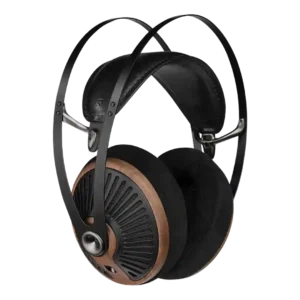
Design is a standout, with walnut accents and Meze’s mid-century styling repeatedly called premium-looking and distinctive. Even critics of the tuning tend to praise the aesthetics and finish quality.
Detachable cable convenience
P1Product 1: Gadhouse Wesley Retro Headphones
No score yet
P2
Product 2: Meze Audio 105 Silva Headphones
3.9
The detachable dual 3.5mm system is convenient for replacement, yet recessed/narrow connector sizing can limit third-party cable compatibility compared with more universal designs. Connection security itself is generally praised.
Ear cup padding quality
P1
Product 1: Gadhouse Wesley Retro Headphones
4.8
The foam pads are described as soft and squishy, supporting the headphone's strong comfort story even if they are not plush modern luxury pads.
P2
Product 2: Meze Audio 105 Silva Headphones
4.6
Velour/suede pads are commonly described as plush, breathable, and comfortable, helping distribute pressure and avoid hotspots. Some users wish for a touch more ear room, but pad comfort is still rated highly.
Ear cup swivel/rotation range
P1Product 1: Gadhouse Wesley Retro Headphones
No score yet
P2
Product 2: Meze Audio 105 Silva Headphones
4.0
Cup articulation is generally sufficient for a good seal/fit, with tilt helping the pads conform, though some describe movement as limited compared with more freely articulating designs.
Frequency response accuracy
P1Product 1: Gadhouse Wesley Retro Headphones
No score yet
P2
Product 2: Meze Audio 105 Silva Headphones
4.1
Tonality is often described as balanced or smooth rather than strictly neutral, with a coherent frequency integration that avoids obvious bloat. Some characterize it as tastefully colored (warm-bright/W-shaped) rather than reference-flat.
Headband adjustability
P1
Product 1: Gadhouse Wesley Retro Headphones
4.5
The adjustable sizing system appears straightforward and functional, with sliders and a snug fit mentioned in coverage.
P2
Product 2: Meze Audio 105 Silva Headphones
4.8
The auto/self-adjusting headband system is repeatedly singled out as one of the best parts of the design, requiring little to no fiddling while spreading pressure evenly. It also helps with consistent fit and comfort over time.
Included accessories
P1
Product 1: Gadhouse Wesley Retro Headphones
4.7
Accessory support is better than expected for the price, with 3.5mm, 6.35mm, and USB-C connection options regularly highlighted.
P2
Product 2: Meze Audio 105 Silva Headphones
4.2
Accessories are generally seen as generous for the price: a protective case, cables, and adapters (often including USB-C). The main recurring complaint is the absence of a balanced cable in the box.
Instrument separation
P1
Product 1: Gadhouse Wesley Retro Headphones
3.3
Separation is passable at moderate levels but weakens noticeably when mixes get busier or volume climbs.
P2
Product 2: Meze Audio 105 Silva Headphones
4.5
Instrument separation and imaging are widely regarded as excellent for the price, helping complex mixes stay organized and making positional cues easy to track. Even reviewers who nitpick tuning tend to credit the Silva’s placement and delineation.
Maximum volume clarity
P1
Product 1: Gadhouse Wesley Retro Headphones
2.2
High-volume performance is the product's clearest weakness, with sound becoming muddy and less separated when pushed.
P2
Product 2: Meze Audio 105 Silva Headphones
4.4
When pushed louder, reviewers who mention it report the presentation staying composed, with bass and treble control holding together without obvious strain.
Midrange clarity
P1
Product 1: Gadhouse Wesley Retro Headphones
4.1
Vocals and mids come through more cleanly than the rest of the range, making speech and vocal-forward tracks a relative strength.
P2
Product 2: Meze Audio 105 Silva Headphones
4.1
Midrange is a highlight for many, with clear, forward vocals/instruments and an overall transparent character. A few note that certain vocal ranges can sound a bit thin, scooped, or pushed depending on recording and pairing.
Multi-platform compatibility
P1
Product 1: Gadhouse Wesley Retro Headphones
4.6
With included adapters and standard wired connections, the Wesley is framed as easy to use across phones, laptops, music players, and older audio gear.
P2
Product 2: Meze Audio 105 Silva Headphones
4.4
Reviewers frequently describe good compatibility across sources (phones with dongles, laptops, DAPs, and desktop amps), helped by easy drivability. Some note it scales with source quality and can reveal harshness from poor gear.
Noise isolation (passive)
P1Product 1: Gadhouse Wesley Retro Headphones
No score yet
P2
Product 2: Meze Audio 105 Silva Headphones
2.2
As open-backs, passive isolation is low and sound leakage is expected; a couple of reviewers note mild attenuation compared to very open designs, but these are still best for quiet rooms.
Portability/foldability
P1
Product 1: Gadhouse Wesley Retro Headphones
2.8
The headphones are light and not bulky, but portability is undercut by the long fixed cable and lack of a carry case.
P2
Product 2: Meze Audio 105 Silva Headphones
2.5
Portability is mixed: they’re easy to drive and include a protective case, but the open-back design and size make them better suited to home or quiet environments than true travel/commute use.
Replaceable earpads
P1Product 1: Gadhouse Wesley Retro Headphones
No score yet
P2
Product 2: Meze Audio 105 Silva Headphones
4.8
Where discussed, earpads are replaceable and intended for long-term ownership, with guides or documentation supporting pad swaps and maintenance.
Software/setup simplicity
P1
Product 1: Gadhouse Wesley Retro Headphones
4.8
Battery-free, app-free, firmware-free operation makes the Wesley extremely simple to use: plug it in and go.
P2Product 2: Meze Audio 105 Silva Headphones
No score yetSound quality
P1
Product 1: Gadhouse Wesley Retro Headphones
3.9
Overall sound lands in the decent-but-not-audiophile camp: fine for casual listening and clear vocals, but not consistently refined or competitive with stronger sound-focused rivals. The wired setup brings dependable low-latency listening and potentially cleaner lossless playback, but the sonic payoff still depends on expectations because the tuning remains modest.
P2
Product 2: Meze Audio 105 Silva Headphones
4.4
Across reviews, the 105 Silva is described as an engaging open-back with a premium “Meze” presentation: natural timbre, strong technicalities for the price, and a tuning that favors musical enjoyment over strict neutrality. A minority find the voicing less competitive on pure sound-per-dollar versus cheaper rivals without EQ.
Soundstage width
P1
Product 1: Gadhouse Wesley Retro Headphones
2.8
At least one hands-on review found the presentation somewhat hollow and not especially spacious, so staging is not a major selling point.
P2
Product 2: Meze Audio 105 Silva Headphones
4.0
Soundstage impressions vary: some describe it as expansive, airy, and three-dimensional, while others find it only moderately wide or a touch narrow with limited depth/layering. Imaging is commonly cited as more consistent than sheer stage size.
Stability
P1Product 1: Gadhouse Wesley Retro Headphones
No score yet
P2
Product 2: Meze Audio 105 Silva Headphones
4.3
Fit stability is usually strong thanks to moderate clamp and the suspension design, with reports of little slippage and secure positioning. One review flags potential fit issues for smaller heads due to the frame geometry.
Treble clarity
P1
Product 1: Gadhouse Wesley Retro Headphones
3.8
Treble is generally clear enough for casual use, though it does not fully escape the broader softness and muddiness heard at higher volumes.
P2
Product 2: Meze Audio 105 Silva Headphones
3.9
Treble is typically praised for clarity and refinement, but several reviews note peaks/extra air that can sound a little spicy, sizzly, or less forgiving on bright or compressed tracks. Others hear it as smooth and well-balanced for long sessions.
USB-C
P1
Product 1: Gadhouse Wesley Retro Headphones
4.6
USB-C support is a major practical plus, letting the Wesley connect to modern devices while still keeping its wired retro identity.
P2
Product 2: Meze Audio 105 Silva Headphones
4.1
USB-C support comes via an included adapter/dongle, enabling plug-and-play use with phones and computers lacking a headphone jack. It’s positioned as convenience rather than a high-end solution.
Volume output
P1Product 1: Gadhouse Wesley Retro Headphones
No score yet
P2
Product 2: Meze Audio 105 Silva Headphones
4.7
Multiple reviews call the 105 Silva very easy to drive (high sensitivity, modest impedance) and capable of reaching loud listening levels from phones, dongles, laptops, and DAPs. Higher-quality sources can still improve refinement and control.
Weight comfort
P1
Product 1: Gadhouse Wesley Retro Headphones
4.8
At roughly 105 grams, the Wesley is unusually light for an over-ear, and that featherweight feel is repeatedly praised.
P2
Product 2: Meze Audio 105 Silva Headphones
4.1
At roughly mid-300g, the Silva isn’t ultra-light, but reviewers frequently say it feels lighter on-head due to excellent weight distribution. Most report minimal fatigue from weight during extended sessions.