
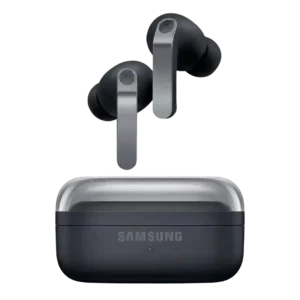
ANC is usually rated as strong and clearly improved, but not universally best-in-class; it excels more with steady noise than sudden sounds and remains behind the very top Bose, Sony, or Apple options for some listeners.
Wired playback on Android phones works well with the right USB-C adapter or DAC, according to the reviews that tested it.
These earbuds pair especially well with Samsung and Android devices, and many reviewers frame that ecosystem fit as one of the product's biggest selling points.
The Galaxy Wearable experience is feature-rich and useful, but several reviews note that the best tools remain most valuable on Samsung devices.
One review notes that enabling the highest-quality Samsung audio mode can hurt lip-sync performance, making video playback less precise than standard settings.
Bass is generally controlled, punchy, and well-balanced rather than bloated, but seal sensitivity can thin it out and bassheads may want more weight or texture.
Bass is widely described as deep, punchy, and well-controlled, but a minority of reviewers thought the low end could overpower some tracks without EQ tweaks.
Battery life is serviceable rather than standout. Most reviews land around six hours per charge and see that as fine for everyday use, but short versus the longest-lasting rivals.
Bluetooth stability is generally solid, with good range and few disconnect complaints, though one review did note occasional dropouts.
Build quality is usually viewed as solid and functional for the price, but the plastic shells feel less premium than higher IE models.
The IE 200 has no inline remote or physical controls, so playback and volume changes must be handled on the source device.
The cable is the most divisive part: some like the light braided design, but many criticize tangling, microphonics, cheap feel, or proprietary fit frustrations.
The included pouch is serviceable for storage, but reviewers often describe it as basic, soft, and not especially protective or premium.
The redesigned case earns mostly positive marks for pocketability, easier docking, and the translucent lid, though a few reviewers found it blockier or more scratch-prone than ideal.
Charging convenience is strong thanks to USB-C and wireless charging support, and reviewers generally liked the case's day-to-day practicality.
Codec support is strong for Samsung owners thanks to SSC and UHQ options, but the experience is less compelling outside the Galaxy ecosystem where higher-end features are restricted.
Comfort is a major strength, with many reviewers calling the small shells easy to wear for hours, even in bed or during long sessions.
Long-session comfort is a major positive. Many reviewers wore the earbuds for hours on flights, work sessions, or daily use without significant fatigue.
Reviewers like the compact, understated black design and discreet fit, even if it lacks the luxury feel of metal-bodied siblings.
Samsung's new look is broadly seen as more polished and premium, with the flatter metallic stem and refined case helping the Buds 4 Pro feel more distinct and mature.
Removable MMCX cables improve repairability, but the recessed connector design limits easy aftermarket replacements and reduces convenience.
The package includes both silicone and foam tips in multiple sizes, but several reviews say seal quality is highly tip-dependent and stock silicone tips can be finicky.
Samsung includes multiple tip sizes, but fit outcomes still vary widely; some reviewers got a strong seal quickly while others could not find a great match.
EQ customization is a clear strength, with reviewers frequently praising the custom bands and the ability to tune the sound away from the stock profile.
The tuning is commonly described as balanced, mildly V-shaped, or reference-leaning, with strong overall coherence even if it is not perfectly neutral.
Accessory coverage is good for the class with multiple ear tips and a pouch, though the case and cable quality keep it from feeling especially generous.
Instrument separation and imaging are standout traits, making individual lines easy to place, though a few reviews find layering flatter than top competitors.
Instrument separation is frequently cited as a standout, with cleaner layering and better distinction between elements than earlier Galaxy Buds generations.
These earbuds do not include an integrated microphone.
Limited evidence says the IE 200 stays composed at higher playback levels without turning muddy or congested.
Background-noise suppression during calls performs very well in most reviews, especially against wind, traffic, and loud ambient noise, even if the processed voice can sound a bit artificial.
Because there is no mic, the IE 200 is a poor fit for calls unless you use another microphone.
Call quality is good overall, with clear enough voice pickup for everyday use, but several reviewers heard some digitizing, fuzziness, or mild warble in tougher conditions.
Mids and vocals are usually clear, natural, and well-positioned, though some reviewers hear slightly lean lower mids or a cooler tone on guitars.
Midrange performance is a strength, with vocals and core instruments coming through clearly and without being swallowed by the boosted low end.
The 3.5mm connection works broadly across laptops, music players, and phones with appropriate adapters, making the IE 200 flexible across devices.
Outside the Samsung ecosystem, the Buds 4 Pro lose meaningful convenience and some premium features, so cross-platform users get a less complete product.
Multipoint and device switching are a weak spot. Galaxy-to-Galaxy switching is convenient, but true cross-platform multipoint is missing or awkward.
Passive isolation is generally good with a proper seal and improves with foam tips, though silicone tips can leak more and it is not close to ANC silence.
Passive isolation depends heavily on fit: reviewers with a strong seal found it effective, while others said the tips failed to seal well enough for class-leading isolation.
Preset EQ options are generally well received, especially the Dynamic-style tuning, though they are not a full substitute for manual tweaking if you dislike the default balance.
Setup is not difficult, but one review noted a small learning curve because some controls moved from the old app-centered flow into Samsung's system settings.
Reviewers consistently praise clear, balanced, high-fidelity sound with strong detail and musicality, though a few say it lacks some technical finesse or excitement versus stronger rivals. Across laptops, phones with adapters, DACs, and desktop gear, the IE 200 sounds notably clean and revealing, and several reviews say it scales up with better sources.
Across the review set, the Buds 4 Pro are consistently praised for rich, detailed, energetic sound, though a few reviewers found the tuning a bit bass-forward or Samsung-dependent at the top end.
The stage is unusually spacious for the price, often described as wide and sometimes tall, though depth and layering are less impressive than on pricier IEMs.
When reviewers commented on staging, they found the presentation surprisingly open and spacious for true wireless earbuds, especially with Samsung's higher-quality audio modes.
Once fitted correctly, the over-ear design and secure seal keep the earbuds stable for long listening or light movement.
Fit security is good for many listeners, but not universal. Several reviewers found the buds locked in well, while others reported slipping during movement or difficulty maintaining a seal.
Pinch and swipe controls are usually considered responsive and easier to use than last generation, though a few people still found the gesture scheme awkward at first.
Transparency or ambient mode is one of the most consistently praised features, sounding natural and useful for conversations, announcements, and day-to-day awareness.
Treble is widely seen as crisp and detailed without being brutally harsh, but it can sound bright, spicy, or a touch sibilant on some material.
Treble is generally clear and lively with good sparkle, though a few reviews mention occasional high-frequency leak-through in ANC mode or a slightly uneven top-end balance.
Power demand is mixed: some find it easy enough to drive, while others report limited headroom from weaker phone outputs and better dynamics from DACs or amps.
One review explicitly says there is no water resistance, and no review presents it as a workout-focused model.
The IP57 rating is repeatedly highlighted as a useful advantage for sweaty workouts, rain, and general durability, even though the buds are not meant for swimming.
The tiny 4-gram earpieces are repeatedly praised for disappearing in the ear and reducing fatigue.