
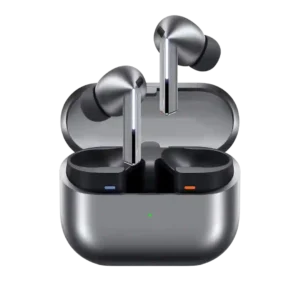
ANC performance is polarized: several reviewers find it strong and effective, while others rate it merely average and still behind the best-in-class models, especially for certain environments. The buds offer multiple noise modes and adaptive behaviors. Some like the options, but multiple reviews describe adaptive switching as inconsistent or not clearly different from other modes.
Wired playback on Android phones works well with the right USB-C adapter or DAC, according to the reviews that tested it.
Android compatibility is strong overall, and the experience is best on recent Samsung phones where the newest codec and AI features are available.
The Galaxy Wearable app unlocks core features like EQ, noise modes, and Find My tools. Reviews repeatedly warn that iPhone support is limited and some features are Samsung-only.
Several reviewers explicitly note there is no aptX support, which is a drawback for some Android users who want broader high-quality codec compatibility.
Video and gaming latency is generally reported as good, helped by a low-latency or game mode in some setups, though availability can depend on device and settings.
Bass is generally controlled, punchy, and well-balanced rather than bloated, but seal sensitivity can thin it out and bassheads may want more weight or texture.
Bass is frequently described as boosted and punchy. Many enjoy the impact, but a few reviewers call it thumpy or overcooked without EQ.
Battery life varies noticeably by reviewer and settings: some measured around 4.5 to 5 hours with ANC, while others report closer to 6 hours or more, and some tests cite longer runtimes. Reviews note the battery is not designed to be user-replaceable, so long-term serviceability is limited compared to more repairable designs.
Bluetooth stability is generally strong, with few dropouts reported and solid range, though occasional stutters or device-specific quirks are mentioned.
Build quality is usually viewed as solid and functional for the price, but the plastic shells feel less premium than higher IE models.
Build quality is generally good with strong water resistance, though early QC chatter and fragile or finicky ear-tip swapping show up repeatedly.
The IE 200 has no inline remote or physical controls, so playback and volume changes must be handled on the source device.
The cable is the most divisive part: some like the light braided design, but many criticize tangling, microphonics, cheap feel, or proprietary fit frustrations.
The included pouch is serviceable for storage, but reviewers often describe it as basic, soft, and not especially protective or premium.
The clear-lid case is generally compact and convenient, but a few reviewers dislike the feel, one-hand opening, or the fussiness of seating stems correctly.
Charging is well rounded with USB-C and wireless charging. Some sources highlight fast top-ups or convenient reverse wireless charging support on compatible phones.
Codec support is solid for Samsung owners via Samsung Seamless Codec options, but limited for everyone else, with common fallbacks to AAC or SBC.
Comfort is a major strength, with many reviewers calling the small shells easy to wear for hours, even in bed or during long sessions.
Long-wear comfort is widely praised thanks to the stemmed design and reduced ear pressure, but side sleeping can be uncomfortable and fit still varies by ear shape.
Reviewers like the compact, understated black design and discreet fit, even if it lacks the luxury feel of metal-bodied siblings.
Design is divisive: many like the blade-stem look and lights, while others view it as too AirPods-like or slightly plasticky.
Removable MMCX cables improve repairability, but the recessed connector design limits easy aftermarket replacements and reduces convenience.
The package includes both silicone and foam tips in multiple sizes, but several reviews say seal quality is highly tip-dependent and stock silicone tips can be finicky.
Ear tips come in three sizes. Several reviews mention the swap process can be annoying and early units had tearing complaints.
EQ options are unusually deep for mainstream earbuds, with a 9-band equalizer and presets called out as a major advantage for tuning the sound.
Find My and tracking features are improved with lights and alerts, but some reviewers still want UWB-grade precision and note occasional quirks.
The tuning is commonly described as balanced, mildly V-shaped, or reference-leaning, with strong overall coherence even if it is not perfectly neutral.
Measured tuning is often reported as close to a modern target in mids and treble, with extra bass energy that can be dialed back via EQ.
Accessory coverage is good for the class with multiple ear tips and a pouch, though the case and cable quality keep it from feeling especially generous.
Instrument separation and imaging are standout traits, making individual lines easy to place, though a few reviews find layering flatter than top competitors.
Instrument separation is strong, with multiple reviewers noting they can track individual elements in busy mixes more easily than on older Galaxy Buds.
These earbuds do not include an integrated microphone.
Multiple reviews point out there is no LDAC option, limiting hi-res codec flexibility outside of Samsung’s proprietary codec path.
Limited evidence says the IE 200 stays composed at higher playback levels without turning muddy or congested.
Maximum volume is generally ample for typical listening. No major complaints surface, though the loudest levels can sound a bit strained in some accounts.
Noise reduction for calls is mixed: some tests show strong background suppression, while others struggle to pull much reduction without the right client or conditions.
Because there is no mic, the IE 200 is a poor fit for calls unless you use another microphone.
Call mic quality is usually rated good to excellent, with clear voice reproduction in many tests; a few reviewers still describe it as only fine or slightly unnatural depending on device and conditions.
Mids and vocals are usually clear, natural, and well-positioned, though some reviewers hear slightly lean lower mids or a cooler tone on guitars.
Midrange is typically clean and articulate with good vocal detail, though some describe it as slightly recessed in a V-shaped tuning.
The 3.5mm connection works broadly across laptops, music players, and phones with appropriate adapters, making the IE 200 flexible across devices.
These earbuds work on many devices, but cross-platform value depends on how much you rely on Samsung-only features and the lack of a full iOS app experience.
Multipoint and device switching are often limited to the Samsung ecosystem. Some reviews praise seamless Galaxy-to-Galaxy switching, while others note weak or missing multipoint for mixed-device setups.
Passive isolation is generally good with a proper seal and improves with foam tips, though silicone tips can leak more and it is not close to ANC silence.
Passive isolation is decent with a good seal, but it varies by fit and ear tips; some reviewers say it lags behind foam-tip competitors for blocking high-pitched noise.
Sensors enable wear detection and convenience features in supported apps, with some reviews highlighting automatic pausing and posture or voice-detect behaviors.
Setup is usually straightforward, helped by quick pairing and clear in-app controls, but some reviewers find the interface non-intuitive or note feature lock-in outside Samsung.
Reviewers consistently praise clear, balanced, high-fidelity sound with strong detail and musicality, though a few say it lacks some technical finesse or excitement versus stronger rivals. Across laptops, phones with adapters, DACs, and desktop gear, the IE 200 sounds notably clean and revealing, and several reviews say it scales up with better sources.
Across reviews, sound quality is a standout: a lively, detailed presentation with strong clarity and a generally wide, engaging mix that can compete with top-tier earbuds, especially after EQ tuning.
The stage is unusually spacious for the price, often described as wide and sometimes tall, though depth and layering are less impressive than on pricier IEMs.
Soundstage is commonly praised as wider than average for in-ears, helping music feel more open and layered.
Spatial and 360 audio features are included and can be fun, but reviews are mixed on immersion, head tracking accuracy, and real-world usefulness.
Once fitted correctly, the over-ear design and secure seal keep the earbuds stable for long listening or light movement.
Stability is often improved versus older Galaxy Buds, with many reporting a secure fit for workouts, but some testers still experienced easy dislodging depending on ear shape.
Controls are a frequent talking point: many find pinch and swipe gestures responsive and precise, while others dislike the stem shape and the learning curve for consistent pinches or swipes.
Transparency mode is a highlight for many, described as natural and very clear, though a few note slight hiss or less realism than the very best implementations.
Treble is widely seen as crisp and detailed without being brutally harsh, but it can sound bright, spicy, or a touch sibilant on some material.
Treble is crisp and revealing with good sparkle and detail. It can lean bright or forward for sensitive listeners, and some note a bit less refinement with ANC engaged.
Voice controls and assistant integration are widely mentioned, including hands-free commands. Reliability is often praised, but setup and feature depth can vary by device and preferences.
Power demand is mixed: some find it easy enough to drive, while others report limited headroom from weaker phone outputs and better dynamics from DACs or amps.
One review explicitly says there is no water resistance, and no review presents it as a workout-focused model.
With an IP57 rating, water and sweat resistance is consistently positioned as a strong point for workouts and daily use.
The tiny 4-gram earpieces are repeatedly praised for disappearing in the ear and reducing fatigue.