
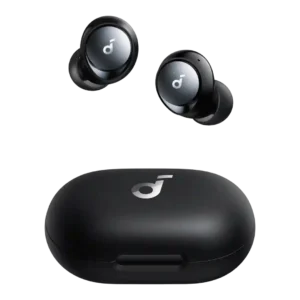
Across reviews, ANC is strong for the price, especially against steady low-frequency rumble (traffic, engines), but it is less consistent against voices and higher-frequency clatter; a few reviewers still call it merely adequate compared with premium flagships. ANC offers manual and adaptive modes plus strength presets, but several testers report little real-world difference between levels, and changing presets from the earbuds is limited; others find the adjustability useful enough to dial in.
Wired playback on Android phones works well with the right USB-C adapter or DAC, according to the reviews that tested it.
Android support is strong, including access to LDAC and the full Soundcore app feature set on compatible devices.
The Soundcore app is a major value add: it is usually described as straightforward, stable, and essential for unlocking features like EQ, control remapping, and firmware.
aptX support is explicitly absent in multiple reviews, so users prioritizing aptX should look elsewhere.
Latency and A/V sync are generally reported as good, especially for video; gaming modes exist, but several reviewers say improvements are subtle and best for casual mobile gaming.
Bass is generally controlled, punchy, and well-balanced rather than bloated, but seal sensitivity can thin it out and bassheads may want more weight or texture.
Bass tends to be punchy and fun, with some reviews noting a mid-bass lift; extension and sub-bass weight are more variable, and stock tuning can feel light down low for bassheads unless EQ is used.
Battery life is a consistent highlight: real-world playback commonly lands around 6–8 hours with ANC and higher without it, with the case extending total time well beyond a full workweek for many.
Bluetooth stability is usually reliable with quick pairing and solid range, though at least one review reports intermittent re-pairing frustration that may require forgetting devices.
Build quality is usually viewed as solid and functional for the price, but the plastic shells feel less premium than higher IE models.
Overall build quality is solid for the price, though small durability concerns show up around case hinges and scratch-prone glossy interior surfaces.
The IE 200 has no inline remote or physical controls, so playback and volume changes must be handled on the source device.
The cable is the most divisive part: some like the light braided design, but many criticize tangling, microphonics, cheap feel, or proprietary fit frustrations.
The included pouch is serviceable for storage, but reviewers often describe it as basic, soft, and not especially protective or premium.
The case is compact and convenient with wireless charging, but some reviews flag lid/hinge security or imperfect closure that can risk accidental opening.
Charging features are premium for the price, typically including fast-charge boosts and wireless charging; real-world convenience is strong even if total runtime varies by codec and ANC.
Codec support is strong for the class (SBC/AAC with LDAC often available), but higher-quality modes can reduce battery life and may constrain other features like multipoint.
Comfort is a major strength, with many reviewers calling the small shells easy to wear for hours, even in bed or during long sessions.
Comfort is a strong point thanks to the small shells and light weight; long sessions are generally easy, though a few users report minor pressure or discomfort after several hours.
Reviewers like the compact, understated black design and discreet fit, even if it lacks the luxury feel of metal-bodied siblings.
Design is frequently described as stylish and premium-looking for the price, with a compact, pocket-friendly aesthetic that does not scream budget.
Removable MMCX cables improve repairability, but the recessed connector design limits easy aftermarket replacements and reduces convenience.
The package includes both silicone and foam tips in multiple sizes, but several reviews say seal quality is highly tip-dependent and stock silicone tips can be finicky.
Multiple ear tip sizes are included (often five or six), improving fit odds; however, people with very large ear canals may still need third-party XL tips.
EQ customization is one of the standout features, with extensive presets plus custom multi-band control and HearID-style personalization that can noticeably refine mids/highs and bass balance.
Find My-style locating is present in some accounts, typically using audible beeps rather than true GPS tracking, and works as a practical backstop for misplaced buds.
The tuning is commonly described as balanced, mildly V-shaped, or reference-leaning, with strong overall coherence even if it is not perfectly neutral.
Tuning is described as broadly balanced and inoffensive, with the ability to correct the signature via EQ; some note small tonal shifts when ANC is enabled.
Accessory coverage is good for the class with multiple ear tips and a pouch, though the case and cable quality keep it from feeling especially generous.
Instrument separation and imaging are standout traits, making individual lines easy to place, though a few reviews find layering flatter than top competitors.
Instrument separation and imaging are often highlighted as a strength, delivering good layering and placement for the money, though not at true flagship levels.
These earbuds do not include an integrated microphone.
LDAC support is repeatedly called a key differentiator for Android users, enabling higher-bitrate streaming; expect higher power draw and the need to toggle settings in the app.
Limited evidence says the IE 200 stays composed at higher playback levels without turning muddy or congested.
Maximum-volume clarity is mostly maintained, with limited distortion reported; tonal balance, rather than distortion, is the more common complaint at higher levels.
Mic noise reduction can be effective at separating voice from traffic or café noise, yet wind processing artifacts and aggressive suppression can reduce naturalness or intelligibility for some callers.
Because there is no mic, the IE 200 is a poor fit for calls unless you use another microphone.
Call mic quality is mixed: indoor clarity is often fine, and some reviewers are impressed, but others report thin, muffled, or inconsistent voice pickup in louder or windy environments.
Mids and vocals are usually clear, natural, and well-positioned, though some reviewers hear slightly lean lower mids or a cooler tone on guitars.
Midrange is generally clear with decent vocal intelligibility, but a few reviewers note slightly veiled vocals or a cooler tuning that benefits from HearID/EQ tweaks.
The 3.5mm connection works broadly across laptops, music players, and phones with appropriate adapters, making the IE 200 flexible across devices.
Cross-platform support is good across iOS and Android, but the best codec features and some behaviors vary by platform (for example LDAC typically being Android-only).
Multipoint/dual-device connectivity is commonly praised as smooth and dependable, but at least one source claims it is missing and others note tradeoffs (like dropping to AAC/SBC when enabled).
Passive isolation is generally good with a proper seal and improves with foam tips, though silicone tips can leak more and it is not close to ANC silence.
Passive isolation is generally above average with a good seal, providing a solid baseline even before ANC; fit-dependent leakage is the main limiter if tips do not seal well.
Preset EQ profiles are plentiful and generally useful, giving workable options for music genres and spoken word; most reviewers still recommend light personalization for best results.
Wear sensors are a weak spot: multiple reviews call out the lack of auto-pause/in-ear detection, which reduces day-to-day convenience compared with some rivals.
Setup is generally easy with quick pairing, but the feature set can feel dense; most reviewers suggest using the app to configure controls, codecs, and listening modes early.
Reviewers consistently praise clear, balanced, high-fidelity sound with strong detail and musicality, though a few say it lacks some technical finesse or excitement versus stronger rivals. Across laptops, phones with adapters, DACs, and desktop gear, the IE 200 sounds notably clean and revealing, and several reviews say it scales up with better sources.
Sound quality is widely praised for a sub-$100 set, with a clean, detailed presentation and lots of tuning flexibility; a recurring theme is that it is enjoyable rather than truly reference-grade for critical listening.
The stage is unusually spacious for the price, often described as wide and sometimes tall, though depth and layering are less impressive than on pricier IEMs.
Soundstage is typically called wider than expected for compact buds, but still varies by listener and EQ, with some describing it as more in-head than expansive.
Once fitted correctly, the over-ear design and secure seal keep the earbuds stable for long listening or light movement.
Fit stability is generally good for daily use and light exercise, though the lack of stabilizing fins means heavy workouts and running can require occasional readjustment.
Touch controls are customizable and usually responsive, but several reviewers mention occasional missed taps, lag, or finicky behavior that takes practice.
Transparency mode is feature-rich (often with full and vocal-focused options) and can work well for quick conversations, but opinions diverge on naturalness: some hear hiss, brightness, or a narrow sound window.
Treble is widely seen as crisp and detailed without being brutally harsh, but it can sound bright, spicy, or a touch sibilant on some material.
Treble detail is good for the price, yet multiple reviewers mention either a treble spike/snappiness or a slight roll-off and reduced sparkle depending on tuning and ANC mode.
USB-C charging is standard and universally present, with quick top-ups frequently cited as genuinely useful.
Voice assistant integration is available but not always reliable, with reports of lag or misinterpreted commands on some platforms.
Power demand is mixed: some find it easy enough to drive, while others report limited headroom from weaker phone outputs and better dynamics from DACs or amps.
Peak volume is generally more than sufficient for most listeners, with at least one measured test placing it firmly in loud-enough territory without obvious strain.
One review explicitly says there is no water resistance, and no review presents it as a workout-focused model.
The IPX4 rating is adequate for sweat and light rain but not for dunking or heavy water exposure; runners wanting more protection may prefer higher-rated alternatives.
The tiny 4-gram earpieces are repeatedly praised for disappearing in the ear and reducing fatigue.
Weight comfort is excellent, with the buds routinely described as lightweight and easy to forget once seated properly.