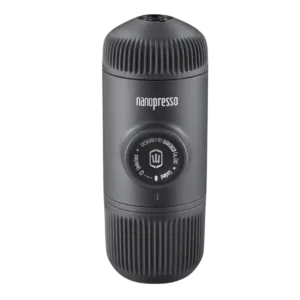
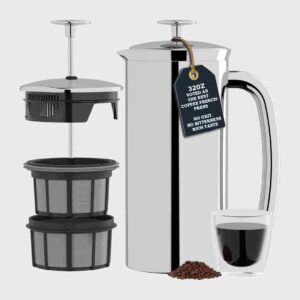
Reviewers consistently mention useful included extras such as the cup, scoop, brush, case, and optional Barista Kit, which broaden storage or brewing options.
In-box accessories are often described as minimal, but optional add-ons are mentioned across reviews: paper filters (to further clean up oils), replacement filter baskets/filters, and specialty filter-cleaning products.
The reviews generally agree the Nanopresso does deliver crema and espresso-like results on the go, but several also say it stops short of matching true coffee-shop espresso.
Heat-retention claims are broadly supported by reported temperature tests and timed heat checks, showing meaningful insulation benefits. Sediment-free claims are partially supported: the cup is much cleaner than standard presses, but multiple reviewers still note small amounts of chaff/fines. Exterior temperature claims vary, suggesting handling comfort may depend on use and expectations.
Most reviewers describe setup as easy or straightforward once you learn the basic steps, though it still involves manual prep like filling, tamping, and pumping.
Setup is generally described as easy and quick, with clear assembly and intuitive use for anyone familiar with French press brewing. One user notes that overloading grounds can prevent proper latching/assembly, and official guidance emphasizes correct filter installation and not overfilling.
The pressurized system is repeatedly described as forgiving and capable of good extractions, but some reviewers say it takes experimentation or careful dialing-in for the best results.
Reviews consistently describe a richer, sweeter, more balanced French press cup with fewer muddy notes than standard presses. Multiple sources highlight repeatable results and a forgiving brew process, with less bitterness than typical immersion when using the filter system and brew cut-off approach.
Across written and video reviews, the Nanopresso is regularly described as sturdy, durable, and solid despite its plastic construction.
Build quality is repeatedly described as premium and durable, centered on the double-walled stainless steel construction. Multiple reviews imply long service life versus glass presses, with solid fit/finish and replaceable filter parts available if needed.
Reviewers repeatedly note the base unit is a small single-shot brewer with roughly 8 grams of coffee and around 80 ml of water, making output modest unless you add the Barista Kit.
Two primary sizes are repeatedly mentioned (18 oz and 32 oz). The 32 oz model is often described as producing roughly four mugs, while the 18 oz suits smaller single-serve needs; overall capacity is best for small households rather than large groups.
Multiple reviewers praise the optional pod adapters for making the Nanopresso more convenient, easier to clean, and simpler to use while traveling.
One reviewer specifically highlights the integrated espresso cup attached to the water tank as an efficient, space-saving design detail.
Pouring is widely praised: long/oversized handle support and clean pours are common notes, with minimal dripping in several reviews. Some mention you need to align the spout correctly, and the body can feel weighty, but overall handling is reported as easy.
The Nanopresso is widely praised for its compact size, packable form, and clean industrial design, with several reviewers highlighting how neatly the parts store together.
Design is a standout: many call it gorgeous and counter-worthy, with a comfortable handle and premium finishes. Downsides include a tall, space-claiming footprint for some kitchens, a weighty feel, and mixed reports about exterior heat; plunge force is also discussed as firmer than some standard presses.
The main negatives mentioned across reviews are stray grounds, leakage or spillage, small-part fuss, thin texture, and the limited volume of each shot.
Common knocks include premium pricing, occasional fines/chaff getting through, and the multi-part filter cleanup feeling tedious to some. Mixed notes also appear about exterior heat and plunge force, plus at least one report of latching/assembly issues if overfilled with grounds.
Reviewers generally find the coffee enjoyable, crema-topped, and impressive for a portable manual brewer, though several note it is lighter or less authentic than café-quality espresso.
The pressurized filter/head is repeatedly described as forgiving and central to the machine's performance, while reviewers who discuss removing or bypassing it report different or less ideal results.
Filtration is the defining feature: dual micro-mesh filters and a gasketed system are credited with dramatically reducing grit and sediment versus standard French presses. However, several reviews still report occasional chaff/fines, and technique (correct assembly, grind, plunge speed, and cleaning) affects how clean the cup ends up.
At least one review emphasizes using a scale and paying attention to grind selection, reinforcing that dosing and grind choice still matter even with the forgiving pressurized design.
The included scoop-tamper is seen as workable and convenient, though one reviewer explicitly says it functions better as a tamper than as a scoop.
The reviews are clear that the Nanopresso has no built-in heater, so users must bring their own hot water or external heating method.
Some reviews note it can handle cold beverages (iced tea or cold brew steeping) thanks to insulation, but testing detail is limited. Expect it to work for cold steeping, though it is primarily discussed as a hot French press brewer.
Cleanup is usually manageable, but used-puck handling is not perfectly tidy; one reviewer says compacted grounds are only reasonably easy to remove, while another says the puck can come out in one piece.
The overall experience is usually positive, especially for travel and outdoor use, with reviewers calling it convenient, enjoyable, and easy to recommend within its niche.
Overall experience trends strongly positive: easy brewing, premium feel, and noticeably cleaner-tasting French press coffee are frequent themes. The most consistent tradeoffs are premium price, more parts to clean, and occasional residual fines or chaff.
One review explicitly describes the Nanopresso as one of the most popular manual espresso makers available.
Multiple reviews frame it as a top French press pick and a commonly recommended model, including long-term usage notes (kept for over a year) and repeated best-of placements.
Portability is the product's strongest recurring theme: reviewers repeatedly describe it as small, lightweight, bag-friendly, and especially useful for travel, hiking, camping, and hotels.
Several reviewers cite the stable-feeling manual pump and repeated pressure-building cycle as a core strength, with the machine commonly described as capable of producing crema and espresso-like extraction.
The P7 is referenced as an award/top-pick style product in at least one major outlet, indicating recognition in curated best-of lists. No formal brewing certification is consistently cited in these reviews.
A couple of reviews call out that small tools like the measure and cleaning brush store inside the unit, helping keep the kit self-contained.
Once prepped, reviewers describe the Nanopresso as fairly quick, with shots typically arriving after a short pumping sequence and often within about 1 to 2 minutes.
Most reviewers frame the Nanopresso as reasonably priced for portable espresso, though one review notes that accessories can raise the real-world total cost.
Pricing is consistently labeled premium for a French press. Many reviewers feel the cleaner cup and insulation justify the cost, while others frame it as hard to justify versus basic presses if you do not value reduced grit, heat retention, and premium build.
One reviewer mentions a one-year warranty and expresses confidence in the company's support based on prior experience.
Warranty/support is lightly covered in the reviews, with at least one source citing a 1-year limited warranty and multiple sources noting replacement filters/baskets are available, implying a service path for wear items.
The machine is generally described as easy to rinse and maintain, but reviewers also recommend drying parts carefully and, in one case, regular descaling in hard-water areas.
Cleaning is a major theme: the filter basket disassembles for thorough washing, and many find day-to-day cleanup straightforward, but some call it tedious compared with simpler presses. Several sources say it is dishwasher safe for some parts/finishes, while also recommending hand washing; keeping filters clean helps preserve flavor and pressing smoothness.