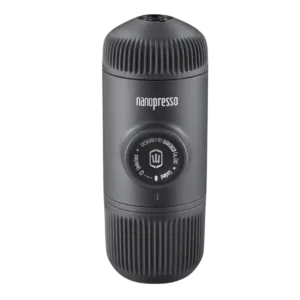
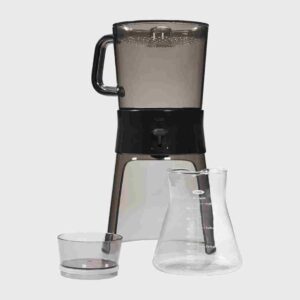
Reviewers consistently mention useful included extras such as the cup, scoop, brush, case, and optional Barista Kit, which broaden storage or brewing options.
Accessories mentioned include the optional paper filters (often included in a starter pack) and the core removable components that support dual-filtration and storage.
The reviews generally agree the Nanopresso does deliver crema and espresso-like results on the go, but several also say it stops short of matching true coffee-shop espresso.
Marketing-style claims around ease and consistent extraction are mostly supported by reviewer experiences, but a minority express skepticism about how necessary the rainmaker is or note that included instructions are not ideal for best flavor.
Most reviewers describe setup as easy or straightforward once you learn the basic steps, though it still involves manual prep like filling, tamping, and pumping.
Most reviewers say assembly is straightforward with clear directions, though a few mention initial confusion because the parts ship nested together or that setup takes a bit of patience the first time.
The pressurized system is repeatedly described as forgiving and capable of good extractions, but some reviewers say it takes experimentation or careful dialing-in for the best results.
Reviewers generally report reliable extraction and consistently good flavor; the rainmaker-style water distribution is frequently credited with helping evenly saturate grounds for repeatable results.
Across written and video reviews, the Nanopresso is regularly described as sturdy, durable, and solid despite its plastic construction.
Build quality impressions are largely positive (thick-feeling components and durable assembly), though a few mention concerns about the thinness of the glass carafe compared with the plastic body.
Reviewers repeatedly note the base unit is a small single-shot brewer with roughly 8 grams of coffee and around 80 ml of water, making output modest unless you add the Barista Kit.
Capacity is commonly cited as a strength: reviews reference a 40 oz water fill with a lower concentrate yield (often around the mid-20s to low-30s ounces), enough for many drinks once diluted.
Multiple reviewers praise the optional pod adapters for making the Nanopresso more convenient, easier to clean, and simpler to use while traveling.
One reviewer specifically highlights the integrated espresso cup attached to the water tank as an efficient, space-saving design detail.
Carafe handling is generally liked for measurement markings and fridge storage, but at least one reviewer notes the wide mouth can feel slippery or awkward to grip when pouring, especially for smaller hands.
The Nanopresso is widely praised for its compact size, packable form, and clean industrial design, with several reviewers highlighting how neatly the parts store together.
Design feedback is mostly positive for a sleek or premium look and smart storage (nesting parts), but many also call it large or bulky for small counters and tight kitchens.
The main negatives mentioned across reviews are stray grounds, leakage or spillage, small-part fuss, thin texture, and the limited volume of each shot.
Common critiques include the large footprint, the need to buy paper filters if you insist on ultra-clear brew, occasional annoyance with instructions or technique guidance, and small usability nits like water pooling on the rainmaker or minor dripping.
At least one review criticizes the packaging for using a lot of single-use plastic, even if it protects the product well in transit.
Reviewers generally find the coffee enjoyable, crema-topped, and impressive for a portable manual brewer, though several note it is lighter or less authentic than café-quality espresso.
The pressurized filter/head is repeatedly described as forgiving and central to the machine's performance, while reviewers who discuss removing or bypassing it report different or less ideal results.
Filtration is a recurring highlight: the stainless mesh filter is praised for clarity, and optional paper filters are often recommended for extra sediment reduction when users want the cleanest cup.
At least one review emphasizes using a scale and paying attention to grind selection, reinforcing that dosing and grind choice still matter even with the forgiving pressurized design.
The included scoop-tamper is seen as workable and convenient, though one reviewer explicitly says it functions better as a tamper than as a scoop.
The reviews are clear that the Nanopresso has no built-in heater, so users must bring their own hot water or external heating method.
Across reviews, the cold-brew output is repeatedly described as smooth, strong, and balanced, with many noting it produces concentrate meant to be diluted and stored for days to about two weeks.
Cleanup is usually manageable, but used-puck handling is not perfectly tidy; one reviewer says compacted grounds are only reasonably easy to remove, while another says the puck can come out in one piece.
The overall experience is usually positive, especially for travel and outdoor use, with reviewers calling it convenient, enjoyable, and easy to recommend within its niche.
The experience is widely characterized as easy and low-fuss once learned: add grounds and water, wait, then drain via lever. The biggest frictions are size, hand-washing, and the long wait time.
One review explicitly describes the Nanopresso as one of the most popular manual espresso makers available.
Multiple reviews describe it as a top pick or frequent recommendation and cite strong popularity signals (including high review counts and winning taste comparisons).
Portability is the product's strongest recurring theme: reviewers repeatedly describe it as small, lightweight, bag-friendly, and especially useful for travel, hiking, camping, and hotels.
Several reviewers cite the stable-feeling manual pump and repeated pressure-building cycle as a core strength, with the machine commonly described as capable of producing crema and espresso-like extraction.
A couple of reviews call out that small tools like the measure and cleaning brush store inside the unit, helping keep the kit self-contained.
Once prepped, reviewers describe the Nanopresso as fairly quick, with shots typically arriving after a short pumping sequence and often within about 1 to 2 minutes.
Time-to-cup is inherently slow: reviewers consistently cite 12 to 24 hours of steeping, plus a drip/drain phase that can take several minutes to longer for full batches.
Most reviewers frame the Nanopresso as reasonably priced for portable espresso, though one review notes that accessories can raise the real-world total cost.
Value is often framed as a payback versus buying cafe cold brew, even though several reviews note it costs more than basic pitcher-style options; the consensus is that flavor and convenience justify the price for frequent cold-brew drinkers.
One reviewer mentions a one-year warranty and expresses confidence in the company's support based on prior experience.
The machine is generally described as easy to rinse and maintain, but reviewers also recommend drying parts carefully and, in one case, regular descaling in hard-water areas.
Cleanup is described as manageable and the unit disassembles well, but multiple reviews note that most parts require hand washing (with the glass carafe more often dishwasher safe).