Across reviews, auto-detection was quick and effective for common activities like walks, though one reviewer still framed the watch as better for basic fitness starts than deeper training.
Auto-start is genuinely useful and can launch runs quickly, but one reviewer found it a little too eager when casual walking was not meant to be tracked.
Wear OS gives the FE a strong app ecosystem, with reviewers highlighting broad access to popular Android wearable apps and a deeper app library than many cheaper rivals.
The app ecosystem is limited by mainstream smartwatch standards, with reviewers repeatedly calling out weak third-party app breadth and a separate Connect IQ experience.
The bundled band drew positive comments for its soft feel and visual detailing, though band comfort and finish were discussed more favorably than outright premium materials.
Band impressions are mixed: some reviewers liked the softer, less plasticky feel and stretch, while another reported initial skin rubbing from the silicone strap.
Battery life is the watch’s clearest compromise. Most reviewers landed around a day to roughly a day and a half, with lighter use stretching farther but daily charging remaining common.
Battery life is a clear strength, with reviewers commonly landing around a week of real use and some citing up to about 11 to 12 days in lighter scenarios.
Blood oxygen support is a genuine strength for the FE, with multiple reviews calling out SpO2 monitoring as part of a health feature set that feels unusually complete for the price.
Blood oxygen tracking is present as part of the health suite, though reviewers mostly described availability rather than deeply validating its accuracy.
Bluetooth support is versatile, covering external sensors, headphones, and accessory pairing without much friction.
The display gets bright enough for outdoor use, helping the FE stay readable in strong light even if the screen itself is not class-leading.
The screen is generally considered brighter than before and reasonably bright overall, though glare can still make it harder to read in harsh light.
Build impressions were solid overall, with reviewers describing a watch that looks and feels put together well enough for everyday use despite its budget positioning.
Build quality is solid for the price, with reviewers calling the watch well-built and well-constructed despite its lighter materials.
The physical buttons add useful control shortcuts and navigation, though one reviewer noted occasional missed presses that keep them from feeling flawless.
The two-button setup is easy to use, and several reviewers specifically liked the updated raised button design and tactile feel.
Call handling is a real smartwatch strength here: reviewers noted on-watch calling support with a microphone and speaker, plus easy answering and declining from the wrist.
Call handling is basic rather than full smartwatch grade: you can manage call prompts in some cases, but reviewers also stressed that true on-wrist calling is limited or absent.
Calorie tracking is available in the daily metrics and app views, but reviewers did not spend much time validating how actionable it feels beyond basic logging.
Charging is straightforward thanks to the included magnetic cable, but the lack of a power brick makes the overall setup feel more basic than convenient.
Charging convenience is mixed because the cable connection is secure, but the proprietary charger remains a recurring complaint.
Charging speed is slow by current standards. Multiple reviews put a full charge around one and a half to two hours, which is noticeable on a watch meant for round-the-clock tracking.
Charging speed is decent rather than class-leading, with reviewers describing it as fairly quick but still taking around an hour to an hour and 45 minutes.
Coaching features are useful rather than advanced, with heart-rate prompts, running coaching, sleep coaching, and guided pace or intensity feedback called out most often.
Garmin Coach and related plans are a strong point, with useful running, cycling, strength, and guided workout support called out across reviews.
Comfort is mixed. Some reviewers found the FE easy to wear all day and through sleep, while others said the strap or case edges became noticeable over longer sessions.
Comfort is one of the Vivoactive 6’s biggest wins thanks to its low weight, slim profile, and easy all-day and overnight wear.
The phone-side software feels fragmented. Reviewers repeatedly mentioned needing multiple Samsung apps, and one also ran into a frustrating setup and account-linking process.
Garmin Connect is rich and motivating for some reviewers, but others found it complex, overwhelming, or in need of refinement.
Contactless payments are well covered through NFC and wallet support, though one reviewer disliked Samsung’s hardwired shortcut behavior compared with Google Wallet preferences.
Garmin Pay is a helpful everyday convenience, though one reviewer noted it still feels less polished than Apple Watch or Wear OS payment flows.
Compatibility is limited: the FE is built for Android, does not work with iPhone, and some higher-value features are reserved for Samsung phones specifically.
The watch works well with both Android and iOS, making it an easy fit for users who do not want to be locked into one phone platform.
Customization is a plus, with support for different straps and configurable replies, widgets, or interface shortcuts helping the watch feel flexible day to day.
Customization is strong, with flexible watch faces, widgets, fonts, and expanded data-page setup helping users tailor the watch to their preferences.
Display quality is decent but compromised. Reviewers liked the AMOLED panel and sharpness, yet several also called out the small screen area and chunky bezels.
Display quality is strong overall, with reviewers praising the AMOLED panel for being vibrant, sharp, and pleasant to look at.
Durability is one of the FE’s better traits, with reviewers noting IP68 protection, strong water resistance, and scratch-focused glass protection that make it feel tougher than the price suggests.
Durability is respectable for normal use, but not flawless, as some reviewers praised its toughness while another noticed scratches during everyday wear.
ECG support helps the FE stand out on paper, but its usefulness is reduced by Samsung-phone requirements in some setups.
ECG is a clear omission here, and multiple reviews explicitly highlighted that the Vivoactive 6 does not offer it.
The single 40mm case was described as fitting a broad range of wrists, even if that same one-size approach also limits buyer choice.
Fit is generally very good on smaller or average wrists, though the single-size approach limits flexibility for people who want a different case size.
General fitness tracking is consistently good for the basics. Reviewers found workout tracking dependable for heart rate, distance, and everyday exercise, even if the watch is not aimed at serious athletes.
Fitness tracking accuracy is one of the product’s core strengths, with multiple reviewers calling its activity tracking highly accurate and dependable.
GPS accuracy is generally solid, with route tracking that stayed close to reality and avoided major path errors, though minor deviations still showed up at times.
GPS accuracy is consistently praised for this price tier, even if reviewers still note that Garmin’s higher-end multiband models can do better in tougher conditions.
Health tracking is broadly strong for the class. Reviewers praised the range of metrics and said the core readings were useful, even if certain values can skew slightly or newer premium extras are absent.
Health tracking broadly compares well with competing devices, with reviewers finding the overall mix of measurements and wellness monitoring impressively accurate for the class.
Heart-rate tracking performs well overall. Several reviewers found readings close to reference devices, usually with only a slight high bias rather than major errors.
Heart-rate accuracy is good for steady efforts and everyday use, but some reviewers still saw lag or weaker behavior during harder interval-style sessions.
LTE is not available, so this is not the watch to buy if you want cellular freedom away from your phone.
Material choices feel better than entry-level, with sapphire crystal glass and an aluminum case helping the watch avoid a cheap feel.
Materials are functional more than luxurious, combining polymer and aluminum parts in a package that feels light but not especially premium.
Navigation is easy to learn, with quick tile scrolling and bezel-based movement helping users move around the watch efficiently.
Menu navigation is improved and easier than earlier Garmin efforts, though some reviewers still felt the structure could be confusing at times.
Music controls cover the basics well enough, including playback control from the watch without needing a more full-featured app experience.
Onboard music support is useful enough for workouts, with one reviewer noting that music can be downloaded directly to the watch for offline listening.
Onboard music storage is a real plus, with 8GB available and support for syncing or downloading music from major services like Spotify.
The operating system experience is capable but dated. Reviewers liked Wear OS access and familiar Galaxy watch behavior, yet several also noted that the FE is not on Samsung’s freshest software stack.
The operating system feels more polished and intuitive than before, helping the watch feel less clunky than older Garmin experiences.
Outdoor visibility is strong thanks to a bright display and clear text, making the FE easier to read outside than its chunky bezels might suggest.
Outdoor visibility is mostly very good, with several reviewers saying the display remains readable in direct sunlight.
Pairing can be a pain outside the Samsung comfort zone. One review described account linking and setup as fussier than it should be.
Pairing is straightforward for sensors and music services, with reviewers describing setup and connections as easy or painless.
Recovery-style insights are present through sleep and running analysis, with reviewers calling out physical and mental recovery data plus deeper running-form metrics.
Recovery insights are useful and fairly deep for the segment, including metrics like HRV status, recovery times, and related training feedback.
One reviewer explicitly framed the FE as a tried-and-true entry point, suggesting dependable day-to-day behavior even if the overall package is not especially exciting.
Reliability is a strong theme across reviews, with the watch described as dependable in daily use, workout recording, and connected features.
Safety coverage includes emergency access and heart-related alerts, giving the FE more protective utility than a bare-bones budget smartwatch.
Safety tools such as incident detection and LiveTrack add meaningful protection, even if one reviewer felt they were not the most detailed in class.
Size choice is a weakness. Reviewers repeatedly pointed out that the FE comes in only one 40mm size, which narrows its appeal for shoppers wanting a larger watch.
Only one size is offered, and reviewers repeatedly flagged that lack of size choice as a compromise.
Sleep tracking is one of the FE’s more convincing health features. Reviews found its sleep timing and stage data generally accurate, though total sleep can read a bit low.
Sleep tracking is generally good but not perfect, with several reviewers finding it solid overall and others noting misses or weaker stage detection on some nights.
Phone notifications are a strong everyday feature, with reviewers saying alerts reach the wrist promptly and feel easy to manage from the watch.
Smartphone notifications work well for the basics, with clear alerts and a generally pleasant experience on the wrist.
The FE feels surprisingly complete for a budget smartwatch, delivering a broad mix of health, fitness, and smart features that covers most mainstream needs.
Smartwatch features are good enough for everyday basics, but they stop short of the richer experience offered by full app-heavy smartwatch platforms.
Software smoothness is adequate at best. Some reviewers found the interface responsive enough in daily use, but sluggish app loads, hiccups, and an aging chip came up often.
Software smoothness is a strong area, with reviewers describing the watch as fast, smooth, and responsive in use.
One hands-on review found step counting close to spot-on in simple manual checks, suggesting good enough accuracy for everyday activity tracking.
Step counting is generally reliable and aligns well with other trackers, even if one reviewer saw inconsistency across tests.
Stress tracking is present as part of the FE’s broader wellness toolkit, though reviewers spent more time noting availability than validating its precision.
Stress tracking is part of the health stack and appears useful day to day, though reviews focused more on availability than deep validation.
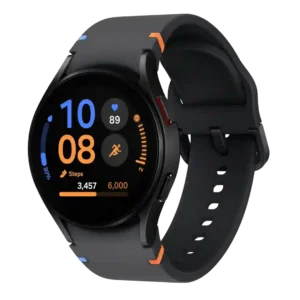
Design is broadly appealing. Reviewers liked the classic round shape and felt the watch looked good, even if the thick bezel makes it feel less modern.
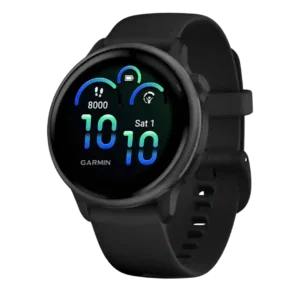
Style and design are widely praised, with reviewers liking the slim, sleek, casual look that works beyond workouts.
Third-party app support is a standout advantage, with reviewers repeatedly highlighting access to mainstream apps through Google Play.
Third-party app support exists but remains limited, and it still trails watchOS and Wear OS by a wide margin.
Touch input is easy enough to use, with taps and swipes generally feeling responsive and not overly finicky on the small display.
The touchscreen is widely described as responsive and easy to use, helping the watch feel modern despite its fitness-first roots.
The user interface is easy to understand, using familiar tiles, swipe directions, and straightforward navigation once setup hurdles are out of the way.
The refreshed interface is one of the clearest improvements, making the watch noticeably more intuitive and beginner-friendly.
Value is highly context-dependent. Some reviewers saw real budget appeal, but others argued the FE makes less sense when discounted Galaxy Watch 6 or rival models are priced similarly.
Value for money is excellent, with many reviewers framing the Vivoactive 6 as one of Garmin’s strongest deals.
Voice assistant use is serviceable, and one review specifically found Google Assistant faster and easier to understand than the default alternative.
Voice features are weak because there is no built-in speaker or voice assistant, and reviewers clearly noticed that omission.
Watch-face options are flexible, but quality is mixed because some faces or always-on views are easier to read than others.
Water resistance is a strength, with multiple reviews describing the FE as suitable for rain, swims, and general wet-condition use.
Water resistance is solid at 5 ATM, making the watch suitable for swimming and other everyday wet conditions.
Wellness insights go beyond raw numbers with sleep scoring, recovery-related context, and coaching-style interpretation, though the FE misses Samsung’s newer AI-driven Energy Score layer.
Wellness insights are strong, especially around Body Battery, Morning Report, sleep context, and other at-a-glance readiness information.
Wi-Fi support helps with updates and music-related tasks, though reviewers did not discuss it in much depth.
Workout coverage is broad, with support for more than 100 exercise types and enough variety to satisfy most general fitness users.
Workout tracking variety is excellent, with reviewers repeatedly highlighting the large number of sport profiles and supported activities.