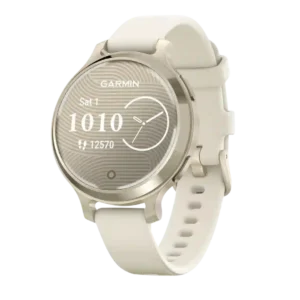
- Alternative: battery life and fitness-watch role TechRadar frames it as an Apple Watch SE 3 alternative for users prioritizing longer battery life.
- Alternative: smartwatch functionality versus fitness insights The reviewer recommends Apple Watch SE instead if full smartwatch features matter more than Garmin fitness tools.
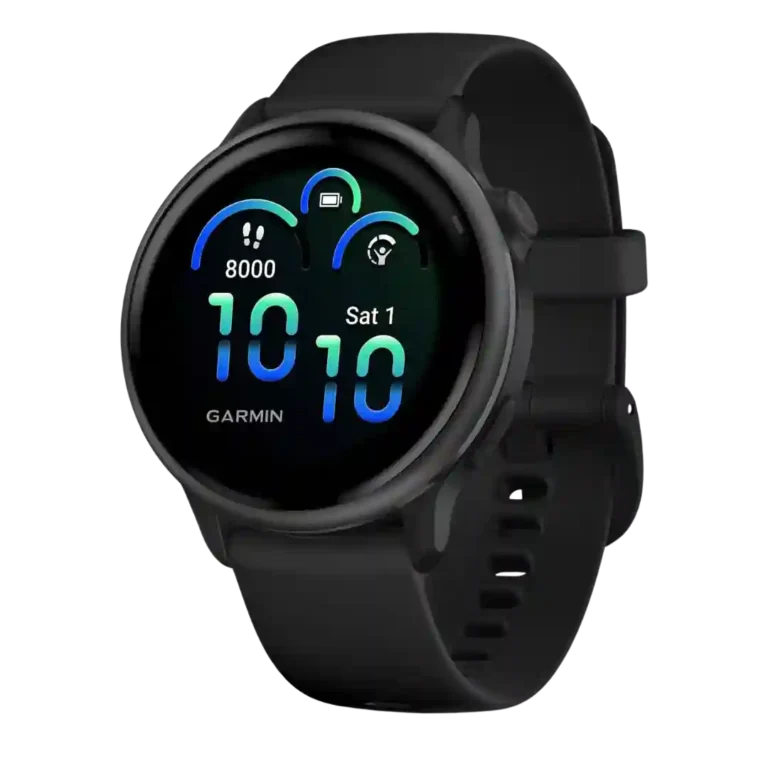
Garmin Vivoactive 6 Review
Bottom Line
Choose the Garmin Vivoactive 6 if you want a light, long-lasting fitness watch with Garmin coaching, GPS, wellness tools, and basic smart features. Skip it if you need full smartwatch apps, calls, LTE, ECG, or advanced mapping.
Best for everyday fitness users, runners, walkers, gym-goers, and health-data fans who want Garmin coaching, wellness metrics, GPS, offline music, payments, and long battery life in a light watch.
Not for users who need a phone-like smartwatch, LTE, wrist calls, voice assistants, ECG, full topographic maps, triathlon-level tools, or the most accurate wrist HR during intense intervals.
The Garmin Vivoactive 6 lands as a fitness-first smartwatch with unusually broad appeal. Reviewers repeatedly praised its light comfort, AMOLED screen, week-ish battery life, Garmin Coach tools, GPS performance, wellness insights, and expanded sport profiles. The tradeoff is clear: it feels much more capable as a health and training companion than as a phone replacement. Smart features cover notifications, payments, and offline music, but the watch lacks LTE, ECG, speaker/mic calling, voice assistant support, and the richer third-party app ecosystems of Apple or Wear OS. It also offers breadcrumb navigation rather than full maps, and the older heart-rate sensor is better for steady efforts than fast-changing intervals.
Compared in Reviews
Products reviewers directly compared with this model, grouped into quick takeaways.
- Worse: comfort and weight Digital Trends found the Vivoactive 6 dramatically easier to wear than the heavier OnePlus Watch 3.
- Better: third-party apps and smartwatch tools Trackbetter says the Vivoactive 6 lacks the broader app/tool suite available on rivals such as the Galaxy Watch 7.
Feature Scorecards
Pros
-
Comfort is one of the strongest consensus positives thanks to the light, slim body that works for day, workouts, and sleep.
-
Software smoothness is strong, with one reviewer calling the watch fast and very smooth.
-
Workout tracking variety is a major upgrade, with 80-plus sports or roughly 50 added profiles repeatedly noted.
-
Pairing/setup evidence is positive, with an easy initial setup and straightforward external sensor pairing.
-
Reliability is strong overall, with reviewers emphasizing Garmin’s software stability and dependable fitness basics.
-
Value for money is very strong, with reviewers repeatedly calling it a good deal at about $299.
-
Cross-platform compatibility is strong, with Android and iOS support; Android gets better notification replies.
-
Wellness insights are strong, centered on Body Battery, Morning Report, stress, sleep, HRV, and smart wake/sleep tools.
-
Display quality is widely praised for its AMOLED sharpness, color, and overall readability.
-
Onboard music storage is a clear upgrade, with 8GB and support for services such as Spotify, Deezer, Amazon Music, and YouTube Music.
-
Touchscreen responsiveness is widely positive, with reviewers calling it snappy, responsive, and quick.
-
Battery life is one of the strongest points, commonly landing around five days to a week or more depending on GPS and always-on use.
-
Outdoor visibility is generally good to excellent, especially in direct sunlight, despite some glare complaints.
-
Customization is strong for workouts, data screens, widgets, and watch faces, though some watch-face options are limited.
-
The user interface is much improved, easier, and more inviting, though a few Garmin quirks remain.
-
Coaching is a major strength, with Garmin Coach, PacePro, suggested workouts, and animated or structured workouts repeatedly praised.
-
Style and design are praised as sleek, subtle, lightweight, and easy to wear outside workouts.
-
Safety features are a meaningful plus, especially LiveTrack and Incident Detection.
-
Fit is broadly good for many wrists due to the slim 42mm case, but the single size limits choice.
-
Health tracking accuracy is generally credible in reviewer comparisons, especially across sleep scores, heart rate, and steps.
-
Water resistance is solid at 5 ATM/50 meters, making pool, shower, rain, and swim use acceptable.
-
GPS accuracy is generally good to very good for the price, with caveats around lack of multi-band and some built-up-route limitations.
-
The two-button setup is generally intuitive, with improved tactile controls, though touch remains central to operation.
-
The operating system feels refreshed, cleaner, and closer to Garmin’s newer higher-end interface.
-
Auto activity detection is useful and quick, though one reviewer found it could trigger when walking casually.
-
Bluetooth support is useful for headphones and external sensors, including heart-rate straps.
-
Stress tracking is part of Garmin’s wellness suite and feeds into broader energy and recovery features.
-
Step counting is generally in line with other trackers, though one test showed some inconsistency before improving.
-
Smartphone notifications are solid, fast, and pleasant to view, with better reply features on Android.
-
Recovery insights are a strength through Body Battery, HRV Status, Sleep Need, suggested recovery times, and morning reports.
-
Blood oxygen tracking is present as part of the health sensor set, but reviewers mostly mention availability rather than detailed accuracy testing.
-
Wi-Fi is present and helps with updates and music downloads, but review evidence is limited.
-
Menu navigation is improved and more logical than older Garmin software, but some reviewers still found menus unintuitive.
-
Brightness is generally strong for an AMOLED Garmin, though always-on visibility and glare can still disappoint some users.
-
Contactless payments are useful through Garmin Pay/NFC, though bank compatibility and smoothness can lag Apple or Wear OS.
-
Music controls and playback are useful basic smartwatch features, including phone media control and offline listening.
-
Build quality feels solid for the price, with a light polymer body and aluminum bezel rather than a premium metal-heavy chassis.
-
Charging speed is acceptable to quick in reviewer use, though not universally described as exceptional.
-
Durability feedback is mixed: some units held up well with Gorilla Glass, while one reviewer saw display scratches in ordinary use.
-
Calorie data appears in the watch/app reporting, but review evidence focuses on availability rather than deep usefulness.
-
Materials are lightweight and practical, mixing silicone, polymer, glass, and aluminum rather than high-end metals.
-
Fitness tracking is reliable for everyday workouts and strength tracking, though older HR/GPS tech and elevation limitations keep it from elite accuracy.
-
Smartwatch features cover essentials but remain intentionally limited versus Apple Watch, Wear OS, or Venu models.
-
Garmin Connect adds strong workout and trend detail, but some reviewers found it complex or overwhelming for new users.
-
Navigation is useful for breadcrumb routes, courses, off-course alerts, and route following, but it lacks full offline maps and serious backcountry rerouting.
-
Bands are generally wearable and easy to replace, but feedback ranges from improved feel to early silicone rubbing.
-
Watch-face quality is mixed: customization exists, but one reviewer found built-in options limited.
-
Heart-rate accuracy is good for steady efforts but repeatedly shows lag or inconsistency during intervals, cold/wet conditions, rowing, or lifting.
Cons
-
Sleep tracking is useful but mixed: duration, scores, and coaching are helpful, while sleep stages and Smart Alarm accuracy draw caveats.
-
Charging convenience is mixed: battery frequency is forgiving, but Garmin’s proprietary cable is still a recurring annoyance.
-
The broader app ecosystem is notably thinner than Apple or Wear OS, even though Garmin’s own platform and Connect IQ cover basics.
-
Third-party app support is limited compared with Apple and Wear OS, though Garmin’s Connect IQ adds some apps and data fields.
-
Size options are limited because the Vivoactive 6 only comes in one 42mm case size.
-
Call handling is limited because there is no speaker or mic; Android users get more message/call interaction than iPhone users.
-
Voice assistant quality is poor because the watch lacks a microphone, speaker, and voice assistant support.
-
ECG is consistently absent because the watch uses Garmin’s older Elevate sensor generation.
-
LTE is not available, and reviewers explicitly note the lack of cellular support compared with smartwatch rivals.
Compared With Category Average
Compared with other Smart Watch, this product is above average in onboard music storage, contactless payments, value for money, below average in voice assistant quality, ECG functionality, call handling.
| Attribute | This product | Category average | Difference |
|---|---|---|---|
| onboard music storage | 4.4 | 2.8 | +1.5 |
| voice assistant quality | 1.0 | 2.7 | -1.6 |
| ECG functionality | 1.0 | 2.3 | -1.3 |
| call handling | 1.8 | 3.1 | -1.4 |
| contactless payments | 3.9 | 2.8 | +1.1 |
| app ecosystem | 2.7 | 3.6 | -0.9 |
| LTE connectivity | 1.0 | 1.9 | -0.9 |
| value for money | 4.5 | 3.8 | +0.7 |
FAQ
How long does the Garmin Vivoactive 6 battery last?
Reviewers commonly got around five days to a week with regular use, while lighter use can stretch longer. GPS workouts, music, and always-on display reduce runtime.
Is the Vivoactive 6 good for running?
Yes for everyday runners: it adds PacePro, running dynamics, route following, GPS, and Garmin Coach. Serious runners may still want a Forerunner because the Vivoactive 6 lacks multi-band GPS, a barometric altimeter, and deeper performance tools.
Can it take calls or use a voice assistant?
No. Reviewers repeatedly noted the lack of a speaker, microphone, and voice assistant, so it handles notifications more than full wrist calling.
Does it have ECG or LTE?
No. The Vivoactive 6 uses Garmin’s older Elevate sensor generation, so ECG is absent, and reviewers also noted there is no LTE or optional cellular model.
How good is the sleep tracking?
Sleep duration, Sleep Coach, Body Battery, and morning reports are useful, but evidence is mixed on sleep stages and Smart Alarm behavior. Several reviewers found sleep-stage accuracy or wake-alarm timing imperfect.
Does it have maps?
It supports breadcrumb-style route following, courses, and off-course alerts, which reviewers found useful for planned routes. It does not provide full offline topographic maps or dynamic backcountry rerouting.
Does it work with both Android and iPhone?
Yes. Reviewers describe it as working across Android and iOS, though Android users get richer notification replies and some image/message handling advantages.
Consider This Instead
If you want better call handling
Choose Apple Watch Series 10. It scores 4.6 vs 1.8 for call handling, with a 4.2 overall score.
If you want better size options
Choose Garmin Approach S70. It scores 4.7 vs 2.5 for size options, with a 4.3 overall score.
If you want better third-party app support
Choose Samsung Galaxy Watch 8. It scores 4.8 vs 2.6 for third-party app support, with a 4.0 overall score.
If you want better app ecosystem
Choose Apple Watch Ultra 3. It scores 4.9 vs 2.7 for app ecosystem, with a 4.2 overall score.
Overall Top Smart Watch Alternatives
Good if you want the most rugged Apple Watch, brighter outdoor screen, better battery, LTE, and top apps. Skip it if you need Garmin-like mapping, recovery analytics, smaller sizing, or...
Pros: display quality, heart rate accuracy
Cons: cross-platform compatibility, recovery insights
Choose the Galaxy Watch 6 for a polished Android smartwatch with a bright screen, strong apps, and broad health tracking. Skip it if battery life, iPhone support, or full non-Samsung...
Pros: outdoor visibility, workout tracking variety
Cons: cross-platform compatibility, battery life
Good if you need a rugged Garmin with deep outdoor, tactical, GPS, training, and battery features. Skip it if you want a cheaper lifestyle watch or do not need the...
Pros: materials quality, durability
Cons: LTE connectivity, value for money
Good if you want premium golf maps, virtual caddie tools, health metrics, music, notifications, and long battery life in one watch. Skip it if you only need basic yardages or...
Pros: pairing reliability, brightness
Cons: software smoothness, user interface