One review says the watch can log bouts of elevated activity automatically, but those passive records are less detailed than starting a dedicated workout mode.
Auto workout detection is present and at least one review called out reliable automatic detection for common activities.
Reviews describe Connect IQ as a real app ecosystem with apps, watch faces, widgets, and data fields, but they also note it is far behind Apple and Google in breadth and polish.
Wear OS gives the watch a broad app ecosystem, with reviewers highlighting access to many apps rather than a locked-down platform.
Band feedback is mixed: one reviewer found the silicone strap notably more comfortable than rival bands, while another found it stiff and uncomfortable during exercise.
Band quality is mixed: the 46mm model’s fluoro-rubber strap was viewed as solid and integrated well, while a 43mm reviewer called that model’s strap basic.
Battery life is a standout. Multiple reviews report roughly nine to eleven days of regular use, with the caveat that always-on display use cuts endurance sharply.
Battery life is the standout strength, with the 46mm model repeatedly lasting about 4-5 days, though the 43mm version falls closer to 2-2.5 days per charge.
Pulse Ox support is flexible, with on-demand and broader tracking options, but one review found the readings slightly low versus Apple Watch measurements.
Blood oxygen tracking is widely available, and one hands-on test explicitly found the SpO2 reading matched a reference device.
Bluetooth support is strong, with wireless headphone pairing plus ANT+ and Bluetooth Smart support for sensors and accessories.
Bluetooth connectivity is standard rather than expansive, but at least one reviewer reported stable connections with no drop or latency issues.
Brightness gets mostly positive remarks, especially at night, though outdoor readability is not perfect in every review and can require a squint in bright sun.
Display brightness is a clear win, with multiple reviews citing the 2,200-nit panel and strong daylight readability.
Build quality is solid but not luxurious. Reviewers like the aluminum bezel and overall look, while also noting the watch feels less premium than pricier Garmins.
Build quality is generally praised, with reviewers describing the watch as solid and well built.
The two-button setup works, and one review says the buttons are easy to use even with gloves, but another found the control scheme a bit clunky at first.
The rotating crown and buttons are much improved overall, though one reviewer still disliked how useful the hardware buttons were during workouts.
Calling is a clear weakness. Reviews explicitly say the Venu Sq 2 lacks the speaker and microphone features needed for proper wrist-based calls.
Calls work directly from the watch and are generally serviceable, but multiple reviewers noted that speaker volume is limited.
Calories and intensity metrics cover the basics well, and Garmin’s activity modes apply sport-specific calorie calculations, though reviewers do not present this as a standout differentiator.
Calorie tracking usefulness drew criticism in one review that said the watch awarded calorie progress too easily.
Charging convenience is mixed: one review says the cable connects securely, while another criticizes the proprietary charger design.
Charging convenience is strong thanks to a magnetically attached dock that seats easily and, in some reviews, a handy USB-C-based cradle design.
One review says the watch can recharge to full in under an hour, suggesting solid charging speed.
Charging speed is consistently praised, with full charges often taking under an hour and short top-ups delivering a day of use.
Garmin Coach and training plans are a real strength. Reviews say plans adapt over time and downloadable guidance adds meaningful coaching value.
Coaching features are present but uneven: one review liked the exercise-intensity guidance, while another wanted more actionable tips.
Comfort is generally good thanks to the low weight and slim case, especially for sleep wear, but the stock silicone strap does not suit everyone.
Comfort is divisive: some reviewers found the watch comfortable, but repeated complaints about bulk and wrist feel remain part of the experience.
The Garmin Connect app is powerful but divisive. Some reviews praise the depth and presentation, while others say settings and metrics are buried and newcomer-unfriendly.
The OHealth companion app is generally well designed and easy to read, though setup and syncing were not seamless for every reviewer.
Garmin Pay works well when supported by the user’s bank, with reviewers describing it as convenient and broadly usable for contactless payments.
Contactless payments work well through Wear OS, with reviewers reporting no major issues using wallet features.
Cross-platform support is a strong point, with reviewers explicitly noting compatibility with both Android and iOS.
Compatibility is good across Android brands, but the watch is not iPhone-compatible, which sharply limits cross-platform use.
Customization is broad, spanning watch faces, shortcuts, widgets, and app layout, and multiple reviews highlight how adjustable the experience is.
Customization is a strength, especially for watch faces and complications, though some reviewers still wanted deeper personalization.
Display quality is one of the biggest upgrades, with reviewers praising the AMOLED panel for its color, clarity, and overall premium feel.
Display quality is a major positive, with reviewers repeatedly calling the screen sharp, vibrant, and easy to read.
Durability looks reassuring for the class, with Gorilla Glass protection and 5 ATM water resistance called out as practical strengths.
Durability is strong on the main model thanks to high protection ratings, while the 43mm version drew complaints for cutting some durability hardware and certifications.
ECG is not available on the Venu Sq 2 according to the reviews, which repeatedly contrast it with Garmin models that do offer or may add ECG.
ECG support is region-dependent: where enabled it works well, but North American reviewers repeatedly flagged that it is unavailable there.
Fit is widely praised. Reviews cite a broad wrist fit range and describe the watch as snug, lightweight, and easy to wear during activity.
Fit depends heavily on wrist size and model choice; the 43mm improves wearability for smaller wrists, while the larger model can sit awkwardly.
Fitness tracking accuracy is consistently strong, with reviewers calling the watch especially good for run and exercise tracking.
Fitness tracking accuracy is broadly improved and often trusted for general workouts, even if not every reviewer considered it best-in-class for serious athletes.
GPS accuracy is a major strength. Multiple reviews say results were close to pricier watches and, in one case, within about 20 meters on a measured route.
GPS accuracy is mostly good for everyday runs and hikes, but some reviewers still saw tracking issues in dense urban conditions.
Overall health tracking is considered dependable for core metrics, with reviewers saying daily health data is generally useful and reliable.
Health tracking accuracy is improved and often described as solid, though some reviewers still ranked Samsung and Google ahead for refinement.
Heart-rate accuracy is one of the watch’s best traits, with multiple reviewers finding it close to chest straps or other high-end watches.
Heart-rate accuracy is good for everyday exercise and often close to reference devices, but latency and under-reading can still appear during high-intensity efforts.
The Venu Sq 2 does not include LTE or cellular connectivity, so safety and smart features depend on having a phone nearby.
LTE remains a clear weakness because the watch still lacks a cellular option.
Material quality is acceptable rather than premium, combining resin or plastic with aluminum, and several reviews say that tradeoff helps keep weight down.
Materials are premium on the main model, with stainless steel, sapphire, and titanium frequently mentioned, but the 43mm trims some of those upscale materials.
Menu navigation is mostly easy once learned, and some reviews call it quick or improved, though others still find the layout a little clunky.
Menu navigation benefits from the rotating crown, but some reviewers still found the navigation flow cumbersome or unintuitive in places.
Music controls are well implemented for phone playback and onboard playback control, including play, pause, volume, and track management.
Onboard music is split by model. The base watch lacks local song storage, while the Music Edition adds offline playlists and about 4GB or up to 500 songs.
Onboard storage is useful enough for local media, with reviewers specifically mentioning space for playlists, music, and podcasts.
Software and OS-level experience is improved versus the prior model and closer to other recent Garmins, but reviewers still note a few odd gaps.
The dual-OS Wear OS and RTOS setup is widely viewed as effective, delivering a polished smartwatch experience without giving up endurance.
Outdoor visibility is good overall, with bright-sun readability praised by some reviews and described as merely adequate by another.
Outdoor visibility is excellent, with multiple reviewers saying the screen stays readable in direct sunlight.
Pairing and syncing seem reliable in the available evidence, with quick Spotify account linking and fast download syncing to the watch.
Pairing and setup are usually straightforward, but at least one reviewer reported sync hiccups during setup.
Recovery insights are useful and easy to understand, especially through Garmin’s Body Battery, which reviewers describe as genuinely reflective of how they feel.
Recovery insights exist in a basic form through workout recovery-time guidance, but reviews do not suggest a deeply developed recovery system.
General reliability is strong, with reviews describing the watch as a dependable running or tracking companion that largely works as expected.
General reliability is improved versus prior OnePlus watches, with reviewers noting fewer notification and sensor problems.
Safety tools are a meaningful extra, with Assistance, Incident Detection, and LiveTrack coverage noted across reviews.
Safety features are more competitive now thanks to additions such as fall detection, though the safety suite is still not the category leader in every review.
Size choice is limited. Reviews note there is only one case size, even though that size still fits a wide range of wrists.
Size options improved once the 43mm variant arrived, but many early and large-watch reviews still criticized the lineup for being too size-limited.
Sleep tracking is good but not flawless. Some reviews call sleep timing spot-on or accurate every night, while others saw occasional over-reporting or off nights.
Sleep tracking is one of the more consistently praised health features, with reviewers finding sleep timing and stage trends reasonably accurate.
Smartphone notifications work well, with fast delivery and full on-watch reading highlighted in multiple reviews.
Smartphone notifications are handled well and arrive promptly, making the watch effective as an everyday alert hub.
Smartwatch features are useful but secondary. Reviews mention payments, notifications, calendar, weather, and alarms, yet still say the overall smart feature set trails true smartwatches.
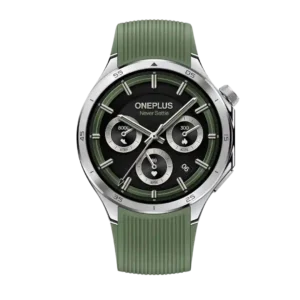
As a full smartwatch, the Watch 3 offers a strong feature set, especially for Android users who want apps, notifications, maps, and wallet support.
Software smoothness is acceptable rather than class-leading. Some reviews report little lag, while others notice visible sluggishness when swiping around the UI.
Software smoothness is usually excellent, but a minority of reviews still described the interface as sluggish or inconsistent in spots.
Step counting is generally trusted, with reviewers saying step data is close to other wearables and reliable enough for daily use.
Step counting is mixed: one reviewer found it close to manual counts, while another believed it overcounted by a wide margin.
Stress tracking is useful, especially when paired with reminders and breathwork, though one review says Garmin presents the data more for interpretation than for deep guidance.
Stress tracking is available but not especially trusted, with reviewers often describing the results as vague or inconsistent.
Design opinion is mixed. Some reviewers like the chic square look, while others think it is ordinary compared with more distinctive watches.
Style and design are widely praised on the main model for looking like a real watch, though some 43mm impressions found the smaller variant cheaper-looking.
Third-party app support is limited by smartwatch standards. Reviewers acknowledge useful Connect IQ extras, but repeatedly say selection and polish trail Apple and Google.
Third-party app support is a strong point because Wear OS brings access to popular services like Spotify, Strava, Audible, and more.
Touch response is mostly good, but not perfectly snappy. Reviews range from bright and responsive to mildly delayed when swiping.
Touchscreen responsiveness is generally good, with reviewers noting responsive controls and little lag in normal use.
The user interface is workable and improved from the first-generation Sq, but ease of use still depends on patience with Garmin’s layered menus and learning curve.
The user interface is mostly polished, but it still divides opinion because some reviewers found it smooth while others found parts of it unintuitive.
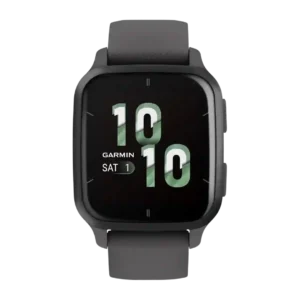
Value for money is one of the Venu Sq 2’s strongest themes. Reviews repeatedly frame it as a strong mid-range buy with lots of Garmin fitness value for the price.
Value for money is strong overall, especially on the 46mm model, though some reviewers felt same-price Pixel and Galaxy alternatives were harder to beat in feature depth.
Voice assistant support is effectively absent here. Reviews say it misses the voice features and assistant access found on the Venu 2 Plus and rival smartwatches.
Google Assistant support is useful and responsive enough for quick voice tasks, with at least one reviewer also praising microphone pickup.
Watch face support is good, with preinstalled options and many Connect IQ faces, though some reviewers imply the square-face selection could be better.
Watch-face quality is good overall with attractive defaults and lots of options, but video-face setup and deeper polish still drew complaints.
Water resistance is solid at 5 ATM or 50 meters, making the watch suitable for swimming and general wet conditions.
Water resistance is a solid checkbox feature, with 5ATM-style swimming protection repeatedly mentioned.
Wellness insights are a genuine Garmin strength, especially Body Battery and related health summaries, though not every reviewer finds Garmin’s interpretation especially actionable.
Wellness insights are more ambitious than before and sometimes helpful, but reviewers still found the score and advice inconsistent or shallow.
Wi-Fi support is present in the evidence, though it is tied mainly to music syncing and battery-management discussions rather than being a headline feature on every model.
Wi-Fi connectivity is available, but reviews focused more on the fact that it supplements Bluetooth rather than replacing the lack of LTE.
Workout coverage is broad, with more than 25 sport modes and a healthy mix of indoor and GPS-based activities.
Workout tracking variety is a clear strength, with repeated mentions of 100-plus activity modes and multiple pro or sport-specific modes.