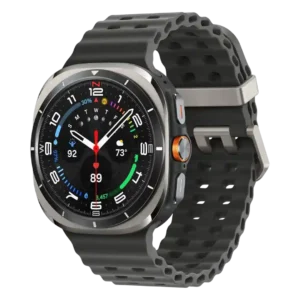
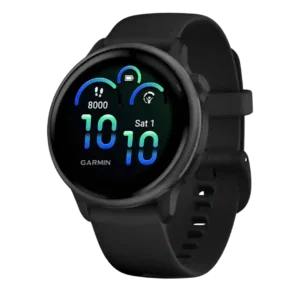
Reviews describe auto-detection as reliable for walks and runs and able to recognize many workout types, though one reviewer treats it more as a convenience backup than a substitute for manually choosing the exact workout.
Auto-start is genuinely useful and can launch runs quickly, but one reviewer found it a little too eager when casual walking was not meant to be tracked.
Reviews highlight lots of available apps, including media and fitness options, and portray the Wear OS app catalog as broad enough to add meaningful utility to the watch.
The app ecosystem is limited by mainstream smartwatch standards, with reviewers repeatedly calling out weak third-party app breadth and a separate Connect IQ experience.
The band system is easy to swap, stays secure in daily wear, and is described as robust, though one review notes that genuine replacement bands are expensive.
Band impressions are mixed: some reviewers liked the softer, less plasticky feel and stretch, while another reported initial skin rubbing from the silicone strap.
Battery life is consistently one of the watch’s strongest traits, with reviewers reporting anything from roughly 35–36 hours under heavier use to multiple days in lighter real-world use.
Battery life is a clear strength, with reviewers commonly landing around a week of real use and some citing up to about 11 to 12 days in lighter scenarios.
Blood oxygen tracking is widely available as part of the sensor package, but one long-term review says the SpO2 readings tend to run low, so confidence in the metric is mixed.
Blood oxygen tracking is present as part of the health suite, though reviewers mostly described availability rather than deeply validating its accuracy.
Bluetooth support is versatile, covering external sensors, headphones, and accessory pairing without much friction.
The display’s brightness is a standout strength in the review that directly measures it, with the screen described as exceptionally bright.
The screen is generally considered brighter than before and reasonably bright overall, though glare can still make it harder to read in harsh light.
Reviews describe the chassis as rugged and premium, with a solid case that fits the Ultra’s outdoor positioning.
Build quality is solid for the price, with reviewers calling the watch well-built and well-constructed despite its lighter materials.
The Quick button gets positive marks for usefulness and shortcut flexibility, but other reviews dislike the overall button layout or want better workout-time control behavior.
The two-button setup is easy to use, and several reviewers specifically liked the updated raised button design and tactile feel.
Reviews confirm that the watch supports speaker-and-mic calling, but they focus more on availability and setup than on deep call-quality analysis.
Call handling is basic rather than full smartwatch grade: you can manage call prompts in some cases, but reviewers also stressed that true on-wrist calling is limited or absent.
Calorie tracking is available in the daily metrics and app views, but reviewers did not spend much time validating how actionable it feels beyond basic logging.
Wireless charging is a plus, but convenience is undercut by Samsung’s decision to omit the wall charging block in the box.
Charging convenience is mixed because the cable connection is secure, but the proprietary charger remains a recurring complaint.
Charging looks decent rather than class-leading, with one review citing about 95 minutes for a full charge and another showing a meaningful top-up during a short morning routine.
Charging speed is decent rather than class-leading, with reviewers describing it as fairly quick but still taking around an hour to an hour and 45 minutes.
Running Coach is the standout coaching feature, with reviews describing personalized plans, helpful guidance, and useful support for improving pace or distance.
Garmin Coach and related plans are a strong point, with useful running, cycling, strength, and guided workout support called out across reviews.
Comfort is generally good for a large watch thanks to the straps and wrist feel, but reviewers who prefer smaller watches still notice the size and weight.
Comfort is one of the Vivoactive 6’s biggest wins thanks to its low weight, slim profile, and easy all-day and overnight wear.
Setup and app integration are smooth, but Samsung’s split between Galaxy Wearable and Samsung Health remains a mild annoyance.
Garmin Connect is rich and motivating for some reviewers, but others found it complex, overwhelming, or in need of refinement.
Samsung Wallet or Pay access is readily available from the watch and is framed as convenient for payments on the go.
Garmin Pay is a helpful everyday convenience, though one reviewer noted it still feels less polished than Apple Watch or Wear OS payment flows.
The watch works with Android phones beyond Samsung, but the best experience is still framed as being inside Samsung’s own ecosystem, and iPhone compatibility is off the table.
The watch works well with both Android and iOS, making it an easy fit for users who do not want to be locked into one phone platform.
Customization is a major strength, with repeated praise for editable widgets, watch faces, colors, fonts, and shortcut layouts.
Customization is strong, with flexible watch faces, widgets, fonts, and expanded data-page setup helping users tailor the watch to their preferences.
The display is repeatedly described as large, vibrant, detailed, and excellent to look at, making it one of the clearest strengths in the review set.
Display quality is strong overall, with reviewers praising the AMOLED panel for being vibrant, sharp, and pleasant to look at.
The Ultra’s rugged build and durability are repeated positives, with both spec-focused and long-term reviews reinforcing its tough-watch positioning.
Durability is respectable for normal use, but not flawless, as some reviewers praised its toughness while another noticed scratches during everyday wear.
ECG is supported and easy to access, but Samsung-specific limitations still apply for some advanced health functions.
ECG is a clear omission here, and multiple reviews explicitly highlighted that the Vivoactive 6 does not offer it.
Fit is polarizing: larger-wrist users like the substantial case, while others call it bulky or simply too big.
Fit is generally very good on smaller or average wrists, though the single-size approach limits flexibility for people who want a different case size.
General fitness tracking is reviewed positively overall, with one reviewer saying it matched a Garmin closely, but the scientific review still frames it as good enough rather than class-leading.
Fitness tracking accuracy is one of the product’s core strengths, with multiple reviewers calling its activity tracking highly accurate and dependable.
GPS performance is usually described as accurate or very good for normal use, but the scientific review says it is not perfect and trails stronger sports-watch options.
GPS accuracy is consistently praised for this price tier, even if reviewers still note that Garmin’s higher-end multiband models can do better in tougher conditions.
The dedicated scientific review judges the overall health-and-sports tracking package as acceptable rather than elite, with clear room for improvement versus stronger competitors.
Health tracking broadly compares well with competing devices, with reviewers finding the overall mix of measurements and wellness monitoring impressively accurate for the class.
Heart-rate tracking is solid for running in several reviews, but the scientific review stops short of calling it best-in-class.
Heart-rate accuracy is good for steady efforts and everyday use, but some reviewers still saw lag or weaker behavior during harder interval-style sessions.
LTE availability is a clear Ultra advantage, with reviewers appreciating phone-free use and noting that LTE is standard on this model.
LTE is not available, so this is not the watch to buy if you want cellular freedom away from your phone.
Titanium construction and premium materials are central to the Ultra’s identity and are repeatedly cited as meaningful differentiators.
Materials are functional more than luxurious, combining polymer and aluminum parts in a package that feels light but not especially premium.
Navigation is serviceable and helped by touch and haptics, but several reviews still miss a true rotating control or want better workout-time interactions.
Menu navigation is improved and easier than earlier Garmin efforts, though some reviewers still felt the structure could be confusing at times.
Music access is integrated into the interface, with reviewers noting Spotify-aware controls and quick access from the watch.
Music controls cover the basics well enough, including playback control from the watch without needing a more full-featured app experience.
The move to 64GB is one of the clearest 2025 upgrades and is repeatedly framed as useful for storing music, podcasts, or other offline content directly on the watch.
Onboard music storage is a real plus, with 8GB available and support for syncing or downloading music from major services like Spotify.
One UI Watch and One UI 8 are portrayed as feature-rich and modern, with newer software bringing visible interface changes and new capabilities.
The operating system feels more polished and intuitive than before, helping the watch feel less clunky than older Garmin experiences.
Outdoor readability is a clear strength, with multiple reviews saying the screen stays readable in bright sun.
Outdoor visibility is mostly very good, with several reviewers saying the display remains readable in direct sunlight.
Setup is described as immediate and hassle-free in the review that directly covers pairing.
Pairing is straightforward for sensors and music services, with reviewers describing setup and connections as easy or painless.
The recovery-style insight layer exists, but the long-term review says the recommendations often feel off or unhelpful.
Recovery insights are useful and fairly deep for the segment, including metrics like HRV status, recovery times, and related training feedback.
One review notes occasional display interruptions, suggesting that everyday reliability is good but not flawless.
Reliability is a strong theme across reviews, with the watch described as dependable in daily use, workout recording, and connected features.
Safety-minded setup options and the built-in siren add real appeal for outdoor-focused users.
Safety tools such as incident detection and LiveTrack add meaningful protection, even if one reviewer felt they were not the most detailed in class.
Multiple reviews call out the lack of size choice, noting that the watch comes only in a single 47mm configuration.
Only one size is offered, and reviewers repeatedly flagged that lack of size choice as a compromise.
Sleep tracking is useful but mixed: some reviews call the stages relatively accurate, while others say certain sleep metrics still miss obvious awake time.
Sleep tracking is generally good but not perfect, with several reviewers finding it solid overall and others noting misses or weaker stage detection on some nights.
Notifications are easy to access from the main interface and behave like a normal smartwatch strength.
Smartphone notifications work well for the basics, with clear alerts and a generally pleasant experience on the wrist.
The Ultra is consistently described as feature-packed, combining fitness tools with everyday smart features like calls, texts, and assistant access.
Smartwatch features are good enough for everyday basics, but they stop short of the richer experience offered by full app-heavy smartwatch platforms.
Day-to-day performance is smooth in the review that directly comments on software behavior, with fast app launches and fluid operation.
Software smoothness is a strong area, with reviewers describing the watch as fast, smooth, and responsive in use.
One detailed long-term review found step counts spot-on in normal walking, while also noting that locked-arm situations can reduce accuracy.
Step counting is generally reliable and aligns well with other trackers, even if one reviewer saw inconsistency across tests.
Stress tracking is part of the health stack and appears useful day to day, though reviews focused more on availability than deep validation.
Design reactions are mixed: some reviewers like the rugged adventure look and color options, while others find the watch too big or not especially attractive.
Style and design are widely praised, with reviewers liking the slim, sleek, casual look that works beyond workouts.
Third-party fitness and media apps are part of the appeal, with examples like Spotify, Strava, Map My Run, and Hole19 explicitly mentioned.
Third-party app support exists but remains limited, and it still trails watchOS and Wear OS by a wide margin.
The touchscreen is widely described as responsive and easy to use, helping the watch feel modern despite its fitness-first roots.
The updated UI is generally viewed as more functional and easier to organize, though some reviewers still think Samsung’s visual design language looks odd or over-layered.
The refreshed interface is one of the clearest improvements, making the watch noticeably more intuitive and beginner-friendly.
Value is the biggest caveat. Reviews repeatedly say the watch is hard to justify at launch price unless you specifically want the Ultra’s rugged build, LTE, or extra storage.
Value for money is excellent, with many reviewers framing the Vivoactive 6 as one of Garmin’s strongest deals.
Gemini and voice-assistant access are treated as genuinely useful additions, especially for quick hands-free interactions from the wrist.
Voice features are weak because there is no built-in speaker or voice assistant, and reviewers clearly noticed that omission.
Watch faces are a standout strength, with repeated praise for variety, aesthetics, and customization depth.
Watch-face options are flexible, but quality is mixed because some faces or always-on views are easier to read than others.
Reviews consistently frame the watch as well-suited to water exposure, with strong resistance credentials and real-world confidence for wet conditions.
Water resistance is solid at 5 ATM, making the watch suitable for swimming and other everyday wet conditions.
Wellness features like Energy Score, guidance, and metric explanations add context, but some reviewers feel parts of the insight layer are generic or gimmicky.
Wellness insights are strong, especially around Body Battery, Morning Report, sleep context, and other at-a-glance readiness information.
Wi-Fi support helps with updates and music-related tasks, though reviewers did not discuss it in much depth.
Workout support is broad, with reviewers describing lots of trackable activities and something for nearly everyone.
Workout tracking variety is excellent, with reviewers repeatedly highlighting the large number of sport profiles and supported activities.