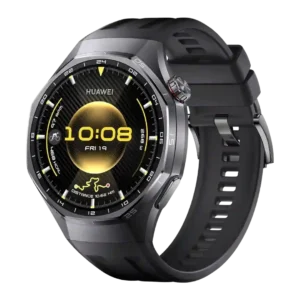
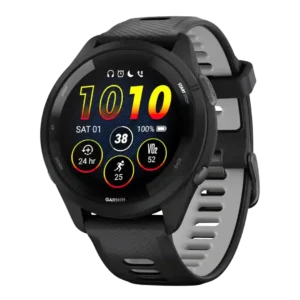
Auto-detection exists for activities like cycling and running, but evidence is mixed because one review found it handy while another said detection could be slow.
Multiple reviews explicitly note that the watch does not auto-detect workouts, so activities usually need to be started manually.
The app ecosystem is one of the weakest parts of the GT 6 Pro. Reviewers consistently say AppGallery remains limited versus Apple, Google, and Samsung.
The Connect IQ ecosystem adds watch faces and widgets, giving the watch a broader customization and app layer than a closed platform.
Band quality is good, especially on the softer sport-focused options. Reviewers call the straps soft, practical, and comfortable during sweaty workouts.
Reviewers describe the silicone band as easy to clean, flexible, and more comfortable than stiffer sport bands.
Battery life is a standout strength. Real-world testing repeatedly lands in the roughly 9-13 day range with active use, while light-use claims stretch much longer.
Battery life is strong for everyday training, but several reviewers say it trails longer-lasting Garmin alternatives and can be limiting for ultras.
SpO₂ support is comprehensive and generally accurate. Reviewers noted continuous or manual tracking and acceptable variance versus reference devices.
Blood oxygen tracking is available as Pulse Ox or blood oxygen measurement, though reviewers focused more on feature presence than deep validation.
Bluetooth connectivity is dependable for core use. Reviews note modern Bluetooth support, straightforward pairing, and stable call or headphone connections.
Bluetooth connectivity appears dependable for phone syncing and audio accessories, with reviewers noting smooth pairing behavior.
Brightness is exceptional overall, especially outdoors, though one review notes the minimum brightness can still feel a little high.
The AMOLED screen is widely praised for its brightness and vividness, making the watch feel more modern than older MIP models.
Build quality is premium and confidence-inspiring, with repeated praise for fit, finish, and solidity.
The watch feels very light, but some reviewers say the plastic build gives it a cheaper impression than pricier Garmin models.
The buttons and crown are generally well executed, with tactile feedback and flexible shortcuts, though one review noted the crown could trigger too easily.
Physical controls are a strength, with reviewers highlighting clear button layout, useful shortcuts, and easier operation during workouts.
Call handling is solid thanks to clear mics and speakers. Multiple reviews say wrist calls are easy to take and understandable even outside.
Call handling is limited: some phone-linked accept or reject functions are available, but full on-watch calling is not.
Charging is convenient because the watch rarely needs topping up, and reviewers liked the magnetic or wireless charging approach.
Charging is straightforward with USB-C, but there is no wireless charging, no wall plug in the box, and convenience is not class-leading.
Charging speed is decent rather than class-leading. Full charges usually take around 75 to 108 minutes depending on the review.
Charging speed is generally good, with reviewers noting roughly hour-long fills or meaningful short top-ups before workouts.
Coaching features are practical rather than deeply advanced, offering sleep-improvement tips, pace guidance, and other prompts that can help users train with more structure.
Coaching features are a major draw, including Garmin Coach plans, structured workouts, daily suggestions, and audio prompts.
Comfort is better than the large case might suggest. Several reviews say it wears well through daily use and workouts.
Comfort is a standout, with repeated praise for the low weight, soft band, and easy all-day wear.
The Huawei Health companion app is informative and capable, but review sentiment is mixed because some testers found it user-friendly while others thought advanced settings were messy.
Companion app impressions are mixed: Garmin Connect is powerful and data-rich, but some reviewers still find it less intuitive than rivals.
Contactless payments are a weak point, with most reviews reporting no practical card support in their regions. One review mentions Quicko support, but the broader evidence is still restrictive.
Garmin Pay works well when supported by the user’s bank, though one reviewer cautioned that bank compatibility can make the feature hit or miss.
Cross-platform support is a clear strength. Reviewers repeatedly say the watch works across iPhone, Android, and Huawei phones better than many rivals.
The watch works with both iPhone and Android phones, giving it solid cross-platform support.
Customization is strong thanks to configurable buttons, widgets, cards, and a very large watch-face catalog.
Customization is extensive across shortcuts, watch faces, widgets, data screens, and other settings.
Display quality is excellent. Reviews praise the panel for its size, crispness, color, and premium overall presentation.
Display quality is one of the Forerunner 265’s clearest strengths thanks to its sharp, colorful, high-contrast AMOLED panel.
Durability is a clear strength. Reviews highlight scratch resistance, rugged materials, and strong resistance to knocks and harsh conditions.
Durability is mixed in the reviews: one reviewer worried about scratches and dents, while another reported very little wear after weeks of use.
ECG is a meaningful Pro-only health feature. Reviews say it can flag AFib-related issues and generate useful reports, though taking readings can be a bit fiddly.
ECG is not supported on this model because the necessary ECG hardware is absent.
Fit is mixed. Some reviewers say the 46mm case works on many wrists, but others warn it can feel large or less suitable for smaller wrists.
Fit is generally praised as close, light, and easy to wear, without feeling overly bulky on the wrist.
Fitness tracking accuracy is repeatedly praised. Reviewers found workout logging dependable across running, cycling, gym sessions, and general activity tracking.
Overall fitness tracking accuracy is rated highly, with reviewers describing the watch as dependable across many activity types.
GPS performance is one of the watch’s strongest traits. Reviews describe fast lock-ons and highly accurate route tracking, with only minor caveats about occasional pre-release issues or smoothing.
GPS accuracy is consistently one of the watch’s best-reviewed areas, with multiple reviewers calling it excellent or extremely accurate.
Across multiple reviews, the watch’s overall health tracking is described as accurate and broadly in line with flagship rivals, with reviewers saying readings generally matched how they felt and other trusted devices.
Broad health tracking accuracy is viewed positively, especially for body metrics, sleep-related monitoring, and recovery-oriented data.
Heart-rate tracking is a standout strength. Multiple reviewers compared it with chest straps and found tiny or no meaningful differences during rides, runs, and interval work.
Heart rate accuracy is strong by wrist-based standards, with several reviewers comparing it favorably to chest straps or other trusted devices.
LTE connectivity is absent. Multiple reviews explicitly say there is no cellular option on the GT 6 Pro.
LTE connectivity is not available, so the watch cannot serve as a phone-free cellular device.
Materials are a major selling point, with sapphire, titanium, and ceramic construction giving the watch a high-end feel.
Materials feel functional rather than premium, with plastic components and Gorilla Glass instead of more upscale case materials.
Menu navigation is easy to learn, with swipes, crowns, buttons, and widget layouts making it quick to move between features.
Menu navigation is flexible thanks to the five-button layout plus touchscreen input, though it still leans toward a sports-watch style UI.
Music controls work reliably for phone playback, with responsive skip, pause, and volume actions called out positively.
Music controls are easy to access during workouts and make it simple to skip tracks or adjust volume from the watch.
Onboard music support is useful but limited. Reviews mention loading your own music and storing tracks, but not the deeper offline app support many rivals offer.
Onboard music storage is strong, with offline playback support and no need to buy a separate music-specific version.
HarmonyOS is generally viewed as polished, simple, and pleasant to use, even if it cannot match the breadth of leading smartwatch platforms.
Outdoor visibility is excellent. Reviewers repeatedly say metrics and watch faces remain easy to read in strong sunlight.
Outdoor visibility is generally good for an AMOLED watch, though a few reviewers still note bright-sun or sunglasses-related caveats.
Pairing is usually smooth once the app is installed, though some reviewers still mention extra setup friction depending on phone and ecosystem.
Pairing and syncing behavior appears reliable, with reviewers noting quick syncing and easy earbud connections.
Recovery guidance is present through post-workout recovery metrics and pace guidance, giving athletes some actionable feedback after or during sessions.
Recovery insights are a major strength, especially through Training Readiness and related readiness or recovery metrics.
Reliability is mixed. Several reviews found the software stable, but others reported bugs such as false fall alerts or notification hiccups.
Safety features are welcome but imperfect. Fall detection and SOS options add reassurance, yet reviewers also mention false triggers and limited emergency behavior.
Safety features include incident detection, LiveTrack, or alert-based assistance tools that add reassurance for training.
Size choice is limited because the Pro model only comes in one 46mm size, which several reviewers see as a drawback.
Two case sizes make it easier to fit different wrists, and several reviewers appreciated the smaller option.
Sleep tracking is generally strong, with reviewers praising how well it reflected sleep quality, stages, and wake periods, though not every review treated it as class-leading.
Sleep tracking gets mixed marks: sleep and wake timing are often solid, but sleep stage scoring can be inconsistent.
Notifications cover the basics well, but the experience is not flawless. Several reviews liked the core delivery while others noted limited interactivity or occasional missed alerts.
Smartphone notifications are well supported for alerts, texts, emails, and other phone-linked updates.
As a smartwatch, the GT 6 Pro feels intentionally limited. Reviewers describe it as a fitness-first device that covers basics but falls short as a rich phone companion.
Smartwatch features are useful but limited, with solid basics like notifications, music, and payments but fewer lifestyle extras than true smartwatches.
Day-to-day performance is smooth, with reviews calling out fluid animations, fast navigation, and little or no stutter.
Software smoothness is acceptable, but some reviewers noticed occasional stutter and less polish than Apple or Samsung interfaces.
Step counting is described as consistent and more accurate than some older Huawei models, especially across walks and treadmill use.
Stress and emotional-state tracking are helpful in some reviews, but evidence is mixed because at least one reviewer found the mood interpretation off the mark.
Stress tracking is built into the wellness stack and is used meaningfully in readiness and recovery features.
Style and design are among the watch’s biggest strengths. Reviews repeatedly praise the premium, fashionable look and its ability to work in both gym and office settings.
The design is sporty and generally liked, but it still looks more like a training watch than an all-occasion fashion watch.
Third-party app support exists, but it is shallow and region-limited. Reviews repeatedly say integrations and on-watch third-party apps trail the major smartwatch platforms.
Third-party support is strong, with integrations and compatibility mentioned for apps and services like Strava, TrainingPeaks, and Spotify.
Touch response is fast and dependable, with reviewers describing the screen as snappy and easy to use.
Touch responsiveness is praised, including in sweaty or rainy conditions, while still remaining optional for workouts.
The interface is clean and versatile, with straightforward layouts for health stats, quick settings, and shortcuts.
The interface is mostly intuitive once set up, though first-time Garmin users may face a learning curve during initial configuration.
Value is strong for buyers who prioritize battery life, fitness tracking, and materials, though some reviews still question the price if smartwatch features matter more.
Value for money is good for serious runners because the feature set is strong, but several reviewers still flag the price as high.
Voice assistant support is essentially absent. Reviews explicitly note there is no voice assistant and that assistant-style features lag rival platforms.
Voice assistant support is effectively absent, with reviewers specifically noting there is no smart assistant or on-watch voice helper.
Watch faces look good and are varied, helping the bright display stand out, though some premium faces sit behind paywalls.
Watch face quality is strong thanks to attractive stock faces and additional Connect IQ options.
Water resistance is strong for swimming and similar use, with repeated praise for 5 ATM/IP ratings and diving-friendly claims.
Water resistance is reassuring for showers, pools, and general wet use, and reviewers reported no issues with routine exposure.
Wellness insights are a highlight. Reviewers liked the plain-language summaries, trends, and next-step explanations that make health data easier to understand.
Wellness insights are a clear selling point, especially through Morning Report, Body Battery, and other day-to-day readiness tools.
Wi-Fi evidence is inconsistent across reviews. Most reporting points to no official Wi-Fi support, while one review lists it among the connectivity features.
Wi-Fi is available for syncing and ecosystem functions, though reviewers rarely focused on it as a differentiating strength.
Workout variety is a major plus, with over 100 sports modes and broad coverage for mainstream and niche activities.
Workout tracking variety is broad, with dozens of sport modes and strong support for running, triathlon, gym, and outdoor activities.