app ecosystem
P1
Product 1: Google Pixel Watch 3
4.5
The app ecosystem was praised as robust for Wear OS, with reviewers saying app support has improved enough that major third-party gaps are less noticeable.
P2
Product 2: Garmin Lily 2 Active
5.0
The app ecosystem is praised as comprehensive for wellness data and long-term health interpretation.
band quality
P1
Product 1: Google Pixel Watch 3
3.1
Band quality was mixed: the default band is secure and comfortable for some, but others found it plain, not very comfortable, proprietary, or difficult to swap.
P2
Product 2: Garmin Lily 2 Active
5.0
Band quality is praised for comfort, quick-release swapping, and easy removal.
battery life
P1
Product 1: Google Pixel Watch 3
4.0
Battery life improved meaningfully and often beat Google’s claims, especially on 45mm, but reviewers still said it trails Garmin, OnePlus, or true multi-day expectations.
P2
Product 2: Garmin Lily 2 Active
4.8
Battery life is strongly praised, often beating or matching expectations and lasting around a week or more in real use.
blood oxygen tracking
P1
Product 1: Google Pixel Watch 3
4.0
Blood oxygen tracking received limited but positive support, with one reviewer saying SpO2-related sleep data lined up with their patterns and baseline readings.
P2
Product 2: Garmin Lily 2 Active
5.0
One reviewer was very positive about Pulse Ox readings, saying the watch routinely matched their normal SpO2 range.
Bluetooth connectivity
P1
Product 1: Google Pixel Watch 3
3.7
Bluetooth connectivity was mixed: general ecosystem connectivity was described as seamless, but heart-rate broadcasting and some external-device workflows were cumbersome.
P2
Product 2: Garmin Lily 2 Active
4.5
Bluetooth connectivity is viewed positively because the watch pairs easily with phones and other devices.
brightness
P1
Product 1: Google Pixel Watch 3
4.4
Brightness was widely praised for the 2,000-nit Actua display and better sunlight readability, though one reviewer said dim-room AOD could be too dim.
P2
Product 2: Garmin Lily 2 Active
4.0
Brightness is generally acceptable, with one reviewer noting easy viewing, while another says the screen itself is not ultra-bright.
build quality
P1
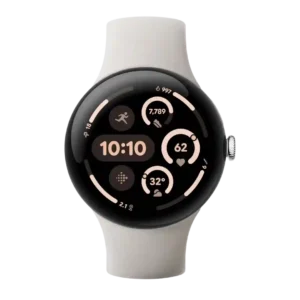
Product 1: Google Pixel Watch 3
4.2
Build quality was generally viewed as premium, solid, and sleek, though reviewers tied some build concerns to glass protection and missing rugged certifications.
P2
Product 2: Garmin Lily 2 Active
2.5
Build quality draws criticism from one reviewer who dislikes the cheaper-material feel.
button controls
P1
Product 1: Google Pixel Watch 3
4.3
Button and crown controls were mostly praised for fluid scrolling, haptics, and quick navigation, though a few reviews wanted more mappable buttons or disliked side-button behavior.
P2
Product 2: Garmin Lily 2 Active
5.0
Button controls are a unanimous strength because they make workouts and navigation much easier than touch-only Lily models.
call handling
P1
Product 1: Google Pixel Watch 3
3.2
Call handling was mixed: reviewers liked mic quality or call features in theory, but some described handoff and speaker limitations as awkward or unreliable.
P2
Product 2: Garmin Lily 2 Active
4.5
Call handling is useful for glancing at calls on the wrist without pulling out a phone.
calorie tracking usefulness
P1
Product 1: Google Pixel Watch 3
2.8
Calorie tracking was treated as usable by some reviewers, but one review strongly criticized the calorie calculations as not making sense compared with other watches.
P2Product 2: Garmin Lily 2 Active
No score yetcharging convenience
P1
Product 1: Google Pixel Watch 3
3.1
Charging convenience was mixed to negative: fast top-ups help, but reviewers disliked the proprietary/pin-based charger, alignment issues, and lack of wireless charging options.
P2
Product 2: Garmin Lily 2 Active
4.5
Charging convenience improves because the watch uses the standard Garmin cable rather than the older Lily clip style.
coaching features
P1
Product 1: Google Pixel Watch 3
4.2
Coaching features improved substantially through custom runs, verbal cues, Cardio Load, and AI-style suggestions, but serious runners may still want Garmin/Coros-level training depth.
P2
Product 2: Garmin Lily 2 Active
4.7
Coaching features are well received, with reviewers praising Garmin Coach, adaptive plans, and guided structured workouts.
comfort
P1
Product 1: Google Pixel Watch 3
4.4
Comfort was consistently praised, including the larger 45mm model; reviewers repeatedly said it felt light, wearable, and comfortable day or night.
P2
Product 2: Garmin Lily 2 Active
4.9
Comfort is one of the most consistent strengths, with reviewers saying the small, light watch is easy to forget on the wrist.
companion app quality
P1
Product 1: Google Pixel Watch 3
3.9
The Fitbit companion app was a strong point for presentation and interpretation, but some reviewers disliked Premium gating or the lack of deeper exports.
P2
Product 2: Garmin Lily 2 Active
4.3
The companion app is useful for setup, coaching, and deeper tracking, with one reviewer preferring it for faster, clearer health logging.
contactless payments
P1
Product 1: Google Pixel Watch 3
4.3
Contactless payments were lightly but positively supported, with reviewers noting prompt Google Pay/Wallet access and broad support among key smartwatch features.
P2
Product 2: Garmin Lily 2 Active
4.0
Garmin Pay is considered useful and easy to set up, though one reviewer notes its value drops if a phone is still needed for music.
cross-platform compatibility
P1
Product 1: Google Pixel Watch 3
3.2
Cross-platform compatibility was mixed: it works well across Android and especially Pixel phones, but the lack of iPhone support and Pixel-exclusive perks frustrated reviewers.
P2
Product 2: Garmin Lily 2 Active
3.0
Cross-platform compatibility is mixed because Android users get quick replies while iPhone users cannot reply from the watch.
customization options
P1
Product 1: Google Pixel Watch 3
4.2
Customization was supported through tiles, watch faces, and layouts, though reviewers wanted more flexibility in faces, complications, and broader workout customizations.
P2
Product 2: Garmin Lily 2 Active
3.8
Customization is mixed-to-good: notifications and data views have useful controls, but watch-face flexibility is more limited than other Garmins.
display quality
P1
Product 1: Google Pixel Watch 3
4.6
Display quality was one of the strongest upgrades, with reviewers praising the larger, sharper, more readable, more immersive screens across both sizes.
P2
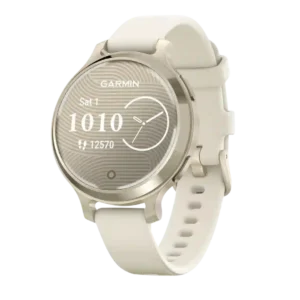
Product 2: Garmin Lily 2 Active
3.8
Display quality is divisive: reviewers like the contrast and hidden-display style, but some dislike the monochrome screen or limited visual richness.
durability
P1
Product 1: Google Pixel Watch 3
3.0
Durability was a common concern because the curved glass lacks a protective bezel; some units stayed pristine, but reviewers reported scratches or recommended screen protectors.
P2
Product 2: Garmin Lily 2 Active
2.0
Durability is a concern for one reviewer, who connects the aluminum casing to easier scratching and reduced durability.
fit
P1
Product 1: Google Pixel Watch 3
4.3
Fit was praised for snug bands, better wrist presence, and a bigger model that finally fits more users, though comfort varies by band and size preference.
P2
Product 2: Garmin Lily 2 Active
5.0
Fit is excellent for the intended user, especially people who want a small watch that sits comfortably on smaller wrists.
fitness tracking accuracy
P1
Product 1: Google Pixel Watch 3
4.2
Exercise tracking was mostly praised for accurate workout, calorie, heart-rate, and activity results, but a few reviews criticized calorie math, data export limits, or workout-mode behavior.
P2
Product 2: Garmin Lily 2 Active
4.7
Fitness tracking accuracy is a major strength, with multiple reviewers finding pace, distance, and overall workout data accurate.
GPS accuracy
P1
Product 1: Google Pixel Watch 3
3.4
GPS accuracy was the most divided fitness metric: some reviewers saw solid or accurate tracking, while others found wobbly, so-so, or clearly behind dual-band Garmin/Apple/Samsung references.
P2
Product 2: Garmin Lily 2 Active
4.7
GPS accuracy is one of the strongest themes, with reviewers repeatedly finding quick locks, solid routes, and close agreement with other devices.
health tracking accuracy
P1
Product 1: Google Pixel Watch 3
4.5
Reviewers found the health suite broadly accurate and useful, with Fitbit-backed data often matching rival wearables; the strongest praise centered on heart-rate, sleep, and holistic health dashboards.
P2
Product 2: Garmin Lily 2 Active
5.0
One review gives the broader health-tracking package a very strong assessment, describing fitness tracking as excellent within Garmin’s health ecosystem.
heart rate accuracy
P1
Product 1: Google Pixel Watch 3
4.5
Heart-rate accuracy was one of the clearest strengths: several reviewers said it closely matched chest straps, Apple Watch, Garmin, or other references, though a few still noted small workout gaps.
P2
Product 2: Garmin Lily 2 Active
4.5
Heart-rate accuracy is consistently praised, with reviewers noting only minor delays or brief misses during harder efforts.
mapping and navigation
P1
Product 1: Google Pixel Watch 3
3.7
Mapping and navigation were useful, especially offline Google Maps and wrist guidance, but reviewers criticized the lack of integrated workout navigation and weaker responsiveness than Apple.
P2
Product 2: Garmin Lily 2 Active
2.7
Mapping and navigation are mixed-to-weak: GPS mapping after workouts works, but reviewers note no detailed map display and no hiking profile.
materials quality
P1
Product 1: Google Pixel Watch 3
3.0
Materials quality was mixed: reviewers liked the feel but repeatedly wished Google used sapphire or tougher materials instead of Gorilla Glass 5.
P2
Product 2: Garmin Lily 2 Active
2.5
Materials quality is criticized by one reviewer for relying on cheaper materials.
menu navigation
P1
Product 1: Google Pixel Watch 3
4.0
Menu navigation improved with the grid launcher, crown, and tiles, but several reviewers still disliked buried settings, round-screen compromises, or less intuitive app-update menus.
P2
Product 2: Garmin Lily 2 Active
4.5
Menu navigation is viewed positively, with one reviewer describing swiping and app opening as smooth.
music controls
P1
Product 1: Google Pixel Watch 3
3.6
Music controls were useful but not a headline strength; reviewers liked access during workouts or media playback but still preferred phone-based browsing in some cases.
P2
Product 2: Garmin Lily 2 Active
4.5
Music controls work well for controlling phone playback from the wrist.
operating system experience
P1
Product 1: Google Pixel Watch 3
4.3
Wear OS was widely described as polished, zippy, and much improved, though some reviewers still noticed quiet updates, occasional stutters, or missing Gemini-era polish.
P2
Product 2: Garmin Lily 2 Active
3.5
The operating experience may feel unusual to traditional Garmin users, but the reviewer says the approach makes sense for this type of watch.
outdoor visibility
P1
Product 1: Google Pixel Watch 3
4.7
Outdoor visibility was excellent in most reviews, with reviewers repeatedly saying the display was easy to read in bright sunlight or direct outdoor conditions.
P2
Product 2: Garmin Lily 2 Active
4.2
Outdoor visibility is mostly strong in sunlight, although one reviewer found bright outdoor conditions could make it harder to read.
pairing reliability
P1
Product 1: Google Pixel Watch 3
4.6
Pairing and setup were praised as quick, easy, and reliable, including one reviewer who transferred between phones without losing data.
P2
Product 2: Garmin Lily 2 Active
4.8
Pairing reliability is praised across sensor use, with reviewers noting easy sensor connections and appreciation for expanded external sensor support.
recovery insights
P1
Product 1: Google Pixel Watch 3
4.4
Readiness, Target Load, Cardio Load, and Morning Brief were repeatedly praised as useful recovery and effort-planning tools, with reviewers saying the scores often matched how they felt.
P2
Product 2: Garmin Lily 2 Active
5.0
Recovery and readiness tools are praised for helping shape training decisions and fine-tune workouts.
reliability
P1
Product 1: Google Pixel Watch 3
4.1
Reliability was generally good, with praise for battery consistency, auto bedtime, and day-to-day stability, though isolated concerns appeared around battery saver or scratches.
P2
Product 2: Garmin Lily 2 Active
4.5
Reliability is positive in one review, with the reviewer saying GPS remained spot-on and did not drop.
safety features
P1
Product 1: Google Pixel Watch 3
4.3
Safety features were praised for fall detection, emergency sharing, loss-of-pulse detection, and related tools, even when reviewers could not practically test emergencies.
P2
Product 2: Garmin Lily 2 Active
5.0
Safety features are praised as reassuring for solo runs and emergency-contact situations.
size options
P1
Product 1: Google Pixel Watch 3
4.5
The new 45mm option was one of the biggest consensus upgrades, expanding usability, readability, and battery potential without ruining the Pixel Watch look.
P2Product 2: Garmin Lily 2 Active
No score yetsleep tracking accuracy
P1
Product 1: Google Pixel Watch 3
4.2
Sleep tracking was generally viewed as solid or very good, especially for basic timing and Fitbit sleep insights, though a few reviewers found it adequate rather than deeply insightful.
P2
Product 2: Garmin Lily 2 Active
4.5
Sleep tracking earns strong marks overall, especially for wake/sleep timing and presentation, though one reviewer wanted more refinement in stages.
smartphone notifications
P1
Product 1: Google Pixel Watch 3
4.5
Notifications were consistently viewed as strong, with reviewers praising instant syncing, easy message handling, and excellent notification flow from an Android phone.
P2
Product 2: Garmin Lily 2 Active
4.5
Smartphone notifications are considered helpful for quickly checking messages during outdoor activity.
smartwatch features
P1
Product 1: Google Pixel Watch 3
4.3
Smartwatch features were a major positive, with reviewers praising Google services, Nest/TV/Recorder/Wallet/Maps integrations, safety tools, and the phone-like wrist experience.
P2
Product 2: Garmin Lily 2 Active
4.0
Smartwatch features are mixed: some reviewers see a well-rounded compact device, while one finds the smart-feature set limited for the price.
software smoothness
P1
Product 1: Google Pixel Watch 3
4.3
Software smoothness was usually strong, with many reviewers reporting snappy apps, zero lag, smooth transitions, or polished scrolling; only a few noticed stutters.
P2
Product 2: Garmin Lily 2 Active
4.5
Software smoothness is positive, with reviewers noting smooth syncing and smooth navigation between widgets.
step counting accuracy
P1
Product 1: Google Pixel Watch 3
3.3
Step counting was acceptable in some tests but inconsistent in others, with one reviewer noting false overnight steps and another saying Apple and Pixel matched reasonably well.
P2
Product 2: Garmin Lily 2 Active
3.5
Step counting is described as close but slightly high, with limitations when the arm is not moving normally.
stress tracking
P1
Product 1: Google Pixel Watch 3
3.6
Stress tracking drew mixed reactions: some reviewers liked cEDA/body-response alerts, while others felt Fitbit still does not explain stress triggers or actions clearly enough.
P2
Product 2: Garmin Lily 2 Active
4.0
Stress tracking is viewed as a useful interpretive metric, especially because it helps explain Body Battery changes.
style and design
P1
Product 1: Google Pixel Watch 3
4.5
Style and design were strongly praised for the clean, rounded, minimalist Pixel aesthetic, though some reviewers still wanted a fresher or more rugged direction.
P2
Product 2: Garmin Lily 2 Active
4.7
Style and design are major strengths, with reviewers repeatedly praising the fashionable, subtle, non-smartwatch look.
third-party app support
P1
Product 1: Google Pixel Watch 3
4.0
Third-party app support was generally strong, especially for Wear OS fitness and smartwatch apps, though app updating and some ecosystem limitations remained less intuitive.
P2
Product 2: Garmin Lily 2 Active
4.5
Third-party app support is positive, especially syncing workout data outward and broadcasting heart rate to other devices.
touchscreen responsiveness
P1
Product 1: Google Pixel Watch 3
3.7
Touchscreen responsiveness was strong when dry, but DC Rainmaker found it struggled noticeably when wet or sweaty compared with Garmin touchscreens.
P2
Product 2: Garmin Lily 2 Active
3.3
Touchscreen responsiveness is split, with one reviewer finding it very sensitive and simple, while another calls the controls finicky.
user interface
P1
Product 1: Google Pixel Watch 3
3.8
The user interface was mostly praised as clear, smooth, and helpful, though some reviewers criticized workout-mode display behavior or round-screen layouts requiring extra scrolling.
P2
Product 2: Garmin Lily 2 Active
4.5
The user interface is praised as simple to learn and easy to swipe through.
value for money
P1
Product 1: Google Pixel Watch 3
3.5
Value for money was mixed: many reviewers called it a strong Android smartwatch, but several flagged the price, Fitbit Premium costs, and cheaper Samsung alternatives.
P2
Product 2: Garmin Lily 2 Active
4.1
Value is mixed-to-positive: many reviewers think the upgrades justify the price, while a few criticize the cost versus fuller smartwatches.
watch face quality
P1
Product 1: Google Pixel Watch 3
3.5
Watch faces received mixed feedback: some liked Active or info-dense options, while others found Google’s native selection limited, monotonous, or constrained by Wear OS changes.
P2
Product 2: Garmin Lily 2 Active
3.0
Watch face quality is mixed, with one reviewer liking the selection and another finding the options very limiting.
water resistance
P1
Product 1: Google Pixel Watch 3
4.3
Water resistance had limited but positive opinionated support, with reviewers saying dips, shower use, or the 5ATM rating inspired confidence.
P2Product 2: Garmin Lily 2 Active
No score yetwellness insights
P1
Product 1: Google Pixel Watch 3
4.5
Wellness insights were a major strength: reviewers repeatedly praised Cardio Load, Target Load, Readiness, Morning Brief, and Fitbit’s health presentation as actionable and easy to digest.
P2
Product 2: Garmin Lily 2 Active
4.9
Wellness insights are a standout, especially Body Battery, women’s health context, sleep, stress, and overall body-awareness feedback.
workout tracking variety
P1
Product 1: Google Pixel Watch 3
3.3
Workout variety is good for casual users but skewed toward running; reviewers repeatedly wanted broader customization for cycling, HIIT, multisport, or other serious training types.
P2
Product 2: Garmin Lily 2 Active
4.6
Workout variety is broadly praised because the Active adds many sports, workout modes, and training tools for a compact Lily watch.