Auto-detection was praised for reliably picking up common activities, with one review calling it a strength and another noting support for common auto-tracked workouts.
Auto-detection is mixed: one review reports recognition for 25 strength movements and 8 sports, while another explicitly notes missing automatic workout detection.
Zepp OS offers a workable app ecosystem and free or paid extras, but reviewers repeatedly said the store is thinner than Apple or Google and lacks many marquee apps.
One reviewer highlights access to more than 400 apps, indicating a broader app catalog than the price suggests.
The strap is functional and stretchy, but one reviewer found it sticky after workouts.
Battery life is a major strength, with reviewers reporting anything from about a week of heavier use to roughly 18 days per charge, even if real results can trail headline claims.
Battery life is a recurring strength, with 12-day typical-use claims and real-world reports ranging from strong week-plus use to shorter endurance under heavier testing.
SpO2 support is present, and one comparison review reported the same 96 percent reading as a higher-end reference watch.
Blood oxygen monitoring is repeatedly listed among the watch’s core all-day health sensors.
Bluetooth support is broad enough for phone use and external sensors, and the connection side was generally described as reliable.
Bluetooth phone linkage is supported for core smartwatch functions such as calls and syncing.
The 3,000-nit display was repeatedly described as very bright and easy to read outdoors.
Screen brightness is praised across reviews, with multiple mentions of strong clarity and easy visibility in bright conditions.
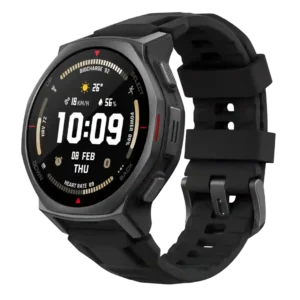
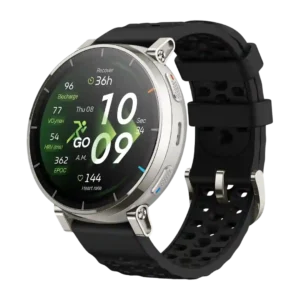
Reviewers liked the rugged, premium feel, though not everyone thought the finish matched pricier rivals.
Build quality is framed as premium for the price, with repeated mentions of stainless steel, sapphire protection, and a durable feel.
Physical buttons are generally useful and glove-friendly, but some reviewers noted stickiness or workflow friction.
The four-button layout is consistently highlighted as a practical control advantage, especially during workouts or sweaty use.
Calls are supported and some reviewers liked the speaker quality, but others said microphone and speaker quality is only okay.
Reviews describe wrist-based calling support over Bluetooth as part of the watch’s smart feature set.
One reviewer found the Zepp app genuinely useful for logging meals and comparing intake with calorie expenditure.
Magnetic pogo-pin charging with USB-C was usually described as easy and secure.
Charging is acceptable but not fast, with multiple reviews calling full top-ups slow or roughly 1 to 2 hours.
Coaching and training plans exist, but several reviews felt Zepp Coach and related training tools still need refinement.
Coaching features are a major selling point, with Zepp Coach, guided workouts, structured plans, and beginner-friendly training support mentioned across reviews.
Comfort is mixed; some found it comfortable and stable, while others felt the large case was noticeable or too big for smaller wrists.
Comfort is a strong point for everyday running use, with reviewers calling out the watch’s light feel and approachable presentation.
The Zepp app is insightful and intuitive for some reviewers, but others called it clunky or not very polished.
The Zepp companion app is generally well received for detail, clarity, and practical presentation of health and training data.
NFC payments are limited by region and processor support, with repeated complaints about Zepp Pay or Curve restrictions.
Contactless payments are supported, though one review notes bank support can still be limited in some regions.
Android and iOS support is a clear plus and was consistently noted.
Cross-platform support exists, but reviewers note smoother integration can vary by phone and some features are platform-specific.
Customization is a plus, with support for reordering widgets and adjusting workout data screens.
Customization is supported through adjustable training plans and user-tailored screens or levels.
The AMOLED display drew praise for clarity and readability, with sapphire protection adding to the premium feel.
Display quality earns consistent praise for a bright, sharp AMOLED presentation that looks more premium than the price suggests.
Ruggedness is a major selling point, with titanium or sapphire hardware and outdoor toughness repeatedly praised.
Durability is supported mainly by sapphire-glass protection and repeated references to a robust, scratch-resistant build.
Reviewers explicitly noted that ECG is missing.
Despite the chunky case, one reviewer said the watch stayed secure and did not slide around during use.
Fit is positively described, with at least one reviewer specifically saying the watch fits very well on wrist.
General activity and workout tracking were usually described as strong, especially for common sports usage.
General fitness tracking is described as accurate in broad use, including positive feedback on activity tracking and gym performance.
Core GPS accuracy is one of the watch’s strengths, with many reviews calling tracks accurate or very solid even when route creation and rerouting remain weaker.
GPS performance is usually described as good or accurate in typical conditions, but not class-leading for tougher trail or dense-cover scenarios.
Broad health metrics were described as generally solid, though not every wellness score felt equally useful.
Heart-rate results were often good to excellent in running and general use, but some reviews still saw weaker performance than top rivals in tougher conditions.
Heart-rate accuracy is mixed: some reviewers saw notable issues, while others found results much stronger or close to chest-strap readings.
Reviews explicitly said there is no LTE or cellular option.
Titanium and sapphire upgrades were repeatedly highlighted as premium, durable material improvements.
Materials quality stands out for the price thanks to repeated references to sapphire glass and stainless steel components.
Menu navigation often takes extra steps, and several reviews found settings placement or flow less efficient than rivals.
Menu navigation is functional but not fully streamlined, with one reviewer calling out extra steps to reach some mapping tools.
Phone music control is supported and useful, but it is basic rather than platform-rich.
Music controls are present as part of the everyday smartwatch feature set.
Local music storage is available for MP3 playback, with multiple reviews noting internal space for audio.
Onboard storage is a clear feature, with 4GB used for maps, playlists, podcasts, and other offline content.
Zepp OS is easy enough to use and fast in places, but several reviews still described the software as less polished than leading platforms.
The Zepp OS experience is presented as familiar and serviceable, with standard Amazfit behavior and features.
Outdoor readability was consistently praised thanks to the bright display.
Outdoor visibility is a strong suit, with reviewers specifically noting easy readability outdoors and in bright sun.
Pairing is mixed; phone-side reliability seems good, but some sensor connections were inconsistent.
Pairing appears straightforward, with at least one reviewer describing setup as quick and successful.
Recovery and readiness features exist but often feel shallow, hard to drill into, or unfinished.
Recovery insights are a repeated theme, including rest guidance, recovery indicators, and post-workout recovery estimates.
The watch can do a lot, but multiple reviews described unfinished software and quirky behavior.
Safety support is limited overall, with reviewers noting missing emergency protections or risky navigation and dive-screen behavior.
The new 44mm and 48mm sizes were welcomed as a practical improvement.
Sleep duration and timing were often decent to good, but confidence in scoring and interpretation was mixed.
Sleep tracking is one of the strongest-reviewed areas, with reviewers praising wake detection, detail, and overall accuracy.
Notifications generally arrive reliably, but handling is basic and can be annoying or noisy.
Smartphone notifications are supported for calls, texts, and apps.
The feature list is large, including calls, flashlight, maps, and voice tools, but polish varies.
Smartwatch features are broad for the price, including maps, phone tools, health widgets, and navigation extras.
Smoothness is uneven; some reviewers saw lag and sluggish responses, while others found general use acceptably snappy.
Software smoothness is positively described, with one reviewer noting little lag in day-to-day use.
Stress tracking is available as part of the health suite, but reviews focused more on presence than deep validation.
Stress tracking is included as part of the watch’s standard health-monitoring suite.
The rugged look appeals to outdoor-focused buyers, but some reviewers found it bulky or not universally attractive.
Style and design get generally positive reactions for looks and premium feel, though at least one reviewer wanted more refined styling options.
This is a weak area, with repeated notes about missing major apps and no streaming services like Spotify.
Third-party platform support is mixed overall: some reviews cite integrations like Strava or TrainingPeaks, while another notes missing links with some training apps.
The touchscreen was usually described as good, though performance can still vary depending on context.
Touch interaction appears responsive, with low-lag behavior noted during use.
The UI is usable once learned, but opinions split between intuitive basics and frustration with changed flows or too many steps.
The user interface is generally described as clear, self-explanatory, and practical for beginners.
Value is one of the strongest positives, with several reviews saying it brings premium outdoor features well below Garmin or Apple pricing.
Value for money is one of the clearest strengths, with reviewers repeatedly calling the watch unusually capable and affordable for under $170.
Zepp Flow can be genuinely useful for commands and simple questions, but reliability and understanding are inconsistent.
Voice assistant support is present for commands and quick interactions, and reviewers treat it as a useful added smart feature.
One reviewer highlighted a large selection of watch faces, many of them free.
Watch face quality is the one design area with a clearer complaint, as one reviewer questioned the look of some faces.
Water resistance is a clear strength, with 10 ATM protection and support for snorkeling or scuba-oriented use.
Water resistance is supported by repeated 5 ATM references and positioning for swimming or shower use.
BioCharge, HRV, and wellness feedback can feel helpful and aligned with how users feel, but some reviewers found readiness-style outputs simplistic or unreliable.
Wellness insights go beyond raw metrics, with recurring praise for detailed sleep data, BioCharge, and readiness-style context.
Wi-Fi support is present for downloads and connectivity features, including map transfers, though setup can feel cumbersome.
Wi-Fi support looks limited, with one reviewer explicitly noting map transfers rely on Bluetooth instead of Wi-Fi.
Sport coverage is huge, with roughly 170 to 187 plus modes commonly praised.
Workout coverage is broad, with repeated mentions of hybrid training support, 170-plus sports modes, and many trackable activities.