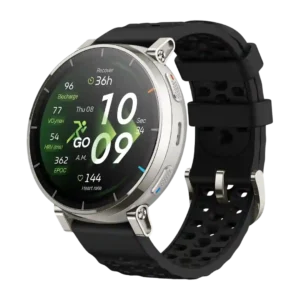
Choose the T-Rex 3 Pro for rugged hardware, long battery life, bright display, accurate GPS and a genuinely useful flashlight at a strong price. Skip it if you need polished mapping, richer apps, LTE, stronger safety tools or Garmin-level refinement.
Best for
Best for outdoor-focused buyers who want long battery life, a bright rugged watch, accurate-enough GPS, lots of sport modes and a real flashlight without paying premium Garmin or Apple prices.
Not for
Not for buyers who need polished rerouting, rich third-party apps, LTE, contactless payments that work broadly, advanced safety features or the most refined smartwatch ecosystem.
Verdict
Reviewers describe the Amazfit T-Rex 3 Pro as a striking value play: it combines a rugged titanium-and-sapphire build, bright AMOLED screen, strong battery life, solid GPS, broad sport tracking and a genuinely useful LED flashlight for far less than many premium adventure watches. The tradeoff is execution. Several reviewers found mapping and rerouting impressive in concept but inconsistent, sometimes clunky, and in the harshest testing unreliable. Smartwatch depth is also uneven, with limited third-party apps, weak contactless payment support in some regions, no LTE, and fewer safety features than Apple, Garmin, Google or Samsung alternatives. The best evidence points to excellent hardware foundations with software that ranges from smooth and useful to unfinished.
Automatic workout recognition was praised in one full review for consistently picking up common activities such as walking, running, cycling and swimming.
Outdoor visibility is a major strength, with multiple reviewers reporting easy viewing in direct sunlight, bright weather or varied outdoor conditions.
Charging convenience is generally positive, with reviewers liking the compact magnetic USB-C puck or reporting easy charging, despite some charger-position caveats elsewhere.
The LED flashlight is one of the most consistently praised features, described as genuinely useful for everyday, travel, outdoor and visibility situations.
Water resistance gets positive evidence from reviewers who accepted the 10 ATM/dive positioning and one who said it worked beyond 45 meters in testing.
Blood oxygen tracking received limited but positive evidence, with one reviewer saying it matched a comparison watch’s 96 percent reading impressively.
Build quality is praised as robust, premium for the price, and materially upgraded, especially where reviewers focus on the titanium-and-sapphire hardware package.
Health tracking accuracy is generally positive in the evidence, with reviewers reporting close alignment with chest straps, comparison watches, Oura data or HRV expectations.
Battery life is one of the strongest points, with reviewers repeatedly getting many days to roughly two weeks or more depending on always-on display, GPS and health-tracking settings.
GPS accuracy is broadly praised across road runs, hikes and route comparisons, with caveats around cycling, tunnels, corners and selecting the right GPS mode.
Brightness is widely praised, especially the 3,000-nit display, although one reviewer noted auto-brightness can be conservative in very bright settings.
Materials quality is mostly praised for titanium, sapphire and premium upgrades, though one reviewer said the finish still does not match more expensive watches.
Value for money is broadly strong, with many reviewers calling it a steal, crazy value, or an excellent feature set for the price, though critical reviews still recommend alternatives for polish.
Wellness insights are mixed-to-positive. BioCharge and HRV can feel useful and aligned with how reviewers felt, but some reviewers wanted deeper or more cohesive detail.
touchscreen responsiveness: 4.0, based on 3 reviews
Touchscreen responsiveness is generally positive in limited evidence, with reviewers calling touch interaction responsive, flawless or well executed alongside buttons.
Smartphone notifications are mixed: they arrive reliably and can be useful, but reviewers criticized limited replies, missing rich interactions or excessive buzzing.
Heart rate accuracy is mixed-to-good. Many reviewers found it solid, close or pleasantly surprising, but others saw sketchy readings, cadence lock, rough-ride drift or weaker accuracy than Garmin.
fitness tracking accuracy: 3.7, based on 6 reviews
Fitness tracking accuracy is generally solid, though not flawless: reviewers praised broad tracking and race/run data, while one reported missed surfing waves and another found exercise recognition only so-so.
Call handling is mixed. Several reviewers found Bluetooth call quality useful or surprisingly good, while others said the speaker and microphone were not loud or high-quality enough.
Voice assistant quality is mixed. Zepp Flow can be powerful and useful for commands, but reviewers also saw failed queries, misheard contacts or limited reliability.
Charging speed is mixed: one review called a full recharge slow at about two hours, while others said the watch charges fast or can be topped up quickly.
Comfort is mixed and size-dependent. Some found the big watch wearable or better than expected, while another could not sleep comfortably with the 48mm case.
The companion app divides reviewers: some call Zepp insightful, intuitive or well presented, while others find it clunky, unpolished or poor for training workflows.
Music controls are limited but usable: reviewers note phone playback control as a nice feature, while warning that streaming-service support is absent.
Mapping and navigation are the most divided area. Reviewers praise full-color/offline maps, but routing, rerouting, route creation and map transfer are often described as clunky, inconsistent or unreliable.
Recovery insights are uneven. Reviewers liked alignment with Garmin or BioCharge concepts, but criticized lack of detail, half-baked insights or needing to wear the watch overnight.
Smartwatch features are mixed. One reviewer found them strong outside Apple/Samsung/Google, while others found them limited, annoying, or less complete than premium ecosystems.
Band feedback is mixed. One reviewer liked the Pro’s improved quick-release setup, while several complained the strap was fiddly, sticky, or not as nice as premium rivals.
Reliability is mixed-to-poor outside core tracking. Some reviewers saw dependable battery and daily use, but several called software, navigation or readouts unfinished and inconsistent.
Software smoothness varies sharply. Some found the interface snappy, but many reviewers reported lag, rough edges, immature software or unfinished features.
Safety features are a weakness overall. The flashlight/SOS modes help somewhat, but reviewers criticize the lack of fall detection, crash detection, SOS, satellite messaging or LTE.
The app ecosystem is mixed-to-weak: reviewers liked having some apps and watch faces, but repeatedly said Zepp’s app store lacks big names and trails Apple or Google.
Coaching features are underdeveloped in the evidence. Reviewers found Zepp Coach suggestions awkward or described training insights as still a work in progress.
Contactless payments are a repeated weakness because Zepp Pay does not work in the United States for one reviewer and drew another dismissive Apple Pay comparison.
LTE connectivity is a weakness because reviewers explicitly call out the lack of LTE, 5G or cellular support as part of the safety and smartwatch tradeoff.
Compared With Category Average
Compared with other Smartwatches, this product is above average in calorie tracking usefulness, charging convenience, size options, near average in value for money, GPS accuracy, below average in menu navigation, coaching features, user interface.
Summary
57 compared features
Above average0.4+ pts higher
17(30%)
Same as averagewithin 0.3 pts
17(30%)
Below average0.4+ pts lower
23(40%)
Largest category differences
Attribute
This product
Category average
Difference
menu navigation
2.0
3.8
-1.8
calorie tracking usefulness
5.0
3.2
+1.8
coaching features
2.3
3.9
-1.7
user interface
2.5
3.9
-1.4
software smoothness
2.7
4.0
-1.3
charging convenience
4.7
3.3
+1.4
size options
4.5
3.2
+1.3
activity auto-detection
5.0
3.6
+1.4
Consider This Instead
If you want better mapping and navigation
Choose Garmin Forerunner 965. It scores 4.6 vs 3.0 for mapping and navigation, with a 3.9 overall score.
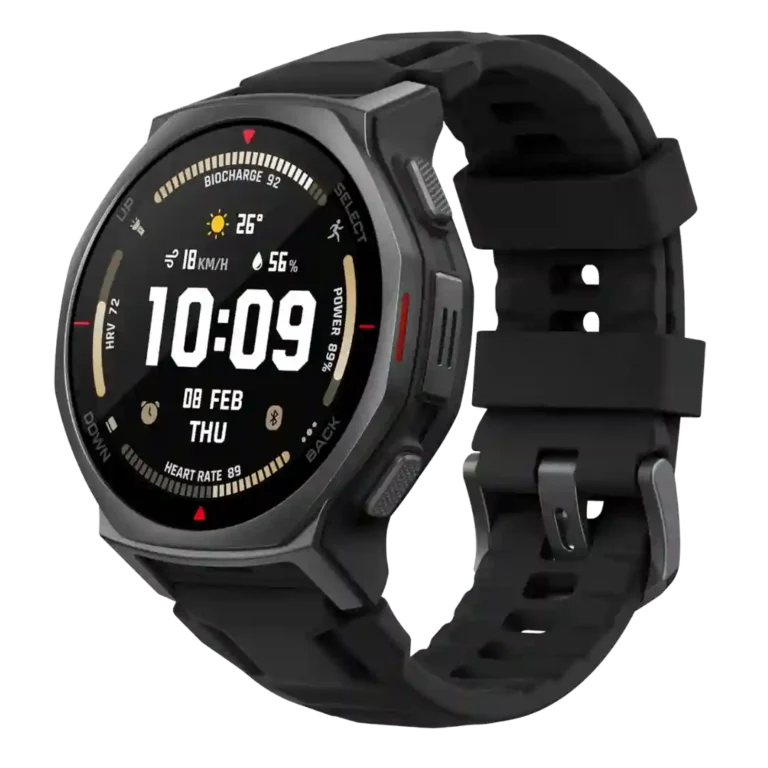
More expensive: price and spec sheetThe T-Rex 3 Pro is described as offering its hardware package at about half the Garmin Fenix 8 price.
Compared: overall target and positioningThe reviewer frames the T-Rex 3 Pro as an attempt to mimic the Garmin Fenix 8, but with many execution problems.
Worse: weightThe T-Rex 3 Pro is said to be lighter than the Samsung Galaxy Watch Ultra with strap.
More expensive: outdoor smartwatch pricingThe T-Rex 3 Pro is described as considerably cheaper than the Samsung Galaxy Watch Ultra.
FAQ
Is the Amazfit T-Rex 3 Pro battery life good?
Yes. Battery life is one of the clearest strengths, with reviewers repeatedly reporting many days of use and strong GPS endurance, though always-on display and heavy GPS reduce runtime.
How accurate are GPS and heart rate tracking?
GPS is generally praised and often close to comparison devices, especially for running and hiking. Heart rate is more mixed: several reviewers found it solid, while others saw drift, cadence lock or weaker performance during cycling and strength workouts.
Are the maps and navigation reliable?
The maps themselves impressed many reviewers, but routing and rerouting are inconsistent. Some found navigation functional, while harsher tests reported failed route creation, highway routing and unfinished rerouting behavior.
Does it work with both Android and iPhone?
Yes. Reviewers specifically praised compatibility with both Android and iOS, which makes it more flexible than platform-specific smartwatch options.
Is the LED flashlight actually useful?
Yes. Reviewers strongly praised the real LED flashlight for everyday use, night movement, visibility, travel and outdoor situations.
What are the biggest smartwatch compromises?
The main compromises are limited major third-party apps, weak or region-limited payment support, no LTE, fewer safety tools, and less polished notification and software behavior than premium rivals.
Sample Expert Reviews We Analyzed
These are a few of the reviews included in our analysis.
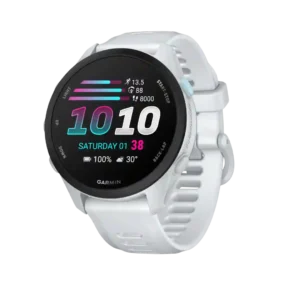
Good if you want premium running features, long battery life, and maps for under $200. Skip it if you need flawless heart-rate data, multiband GPS, LTE, or richer app support.
Best for accurate running metrics, excellent coaching tools, a bright AMOLED display, and dependable battery life. Skip it if you need offline maps, music storage, contactless payments, multi-band GPS, or...
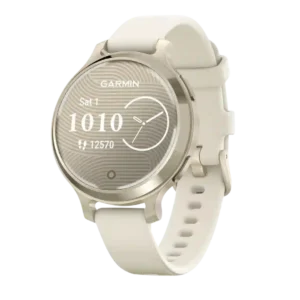
Good if you want a compact, stylish Garmin with strong GPS, comfort, and week-plus battery life. Skip it if you need richer smartwatch apps, onboard music, bright always-on display, or...
Pros: health tracking accuracy, blood oxygen tracking
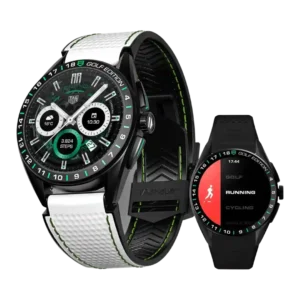
Best for luxury-watch styling, vivid TAG faces, solid build, and casual smartwatch use. Skip it if you need top fitness accuracy, call handling, LTE, or strong value.