activity auto-detection
P1
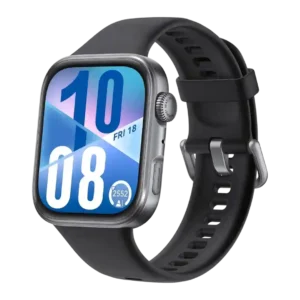
Product 1: Huawei Watch Fit 4
4.0
Workout auto-detection is directly mentioned as handy, though only one review discusses it and notes battery tradeoffs around keeping it enabled.
P2
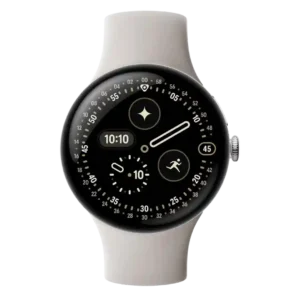
Product 2: Google Pixel Watch 4
4.1
Reviewers found automatic and post-workout activity detection useful for walks, runs and common workouts, though several noted it often confirms activity after the fact rather than during the session.
app ecosystem
P1
Product 1: Huawei Watch Fit 4
3.0
Reviewers describe the core Huawei feature set as useful, but the app ecosystem is limited compared with fuller smartwatch platforms.
P2
Product 2: Google Pixel Watch 4
4.5
The Wear OS and Fitbit/Play Store ecosystem is consistently treated as strong, with robust app support and Fitbit standing out versus several Android-watch alternatives.
band quality
P1
Product 1: Huawei Watch Fit 4
4.2
Bands and strap hardware draw mostly positive comments, with easy removal, secure fit, and good strap quality across several reviews.
P2
Product 2: Google Pixel Watch 4
2.8
Band feedback is mixed to negative: reviewers found the default Active Band dull or proprietary, and several disliked the limited or fiddly band system.
battery life
P1
Product 1: Huawei Watch Fit 4
4.5
Battery life is one of the strongest recurring positives, with reviewers reporting roughly a week or more depending on always-on display and usage.
P2
Product 2: Google Pixel Watch 4
4.3
Battery life is a clear improvement, especially on the 45mm model, with many reviewers reporting roughly two days or more; the 41mm model drew more anxiety.
blood oxygen tracking
P1
Product 1: Huawei Watch Fit 4
4.1
SpO2 tracking is present and repeatedly included among the watch's health metrics, with reviewers treating it as part of a solid wellness set.
P2
Product 2: Google Pixel Watch 4
4.2
Blood oxygen tracking is repeatedly listed as part of the health suite, alongside heart rate, sleep, skin temperature and Fitbit health metrics.
Bluetooth connectivity
P1
Product 1: Huawei Watch Fit 4
4.2
Bluetooth support is generally positive for calls, external sensors, and earbuds, with Bluetooth 5.2 and pairing use cases called out.
P2
Product 2: Google Pixel Watch 4
4.3
Bluetooth connectivity appears reliable for watch-to-phone bike streaming and benefits from Bluetooth 6 in one review, though detailed standalone Bluetooth testing is limited.
brightness
P1
Product 1: Huawei Watch Fit 4
4.7
Brightness is a clear strength, with multiple reviewers highlighting the 2,000-nit peak and comfortable visibility.
P2
Product 2: Google Pixel Watch 4
4.7
Reviewers strongly agree the 3,000-nit display is bright, with repeated praise for outdoor usability and the jump over prior Pixel Watch brightness.
build quality
P1
Product 1: Huawei Watch Fit 4
4.5
Build quality is praised as premium for the price, with aluminum construction and lightweight feel repeatedly mentioned.
P2
Product 2: Google Pixel Watch 4
4.4
Build quality is praised for the repairable screen and battery, premium casing, and improved construction, though exposed glass remains a design concern.
button controls
P1
Product 1: Huawei Watch Fit 4
4.3
The crown and button setup is positively described, with reviewers finding the controls more integrated and handy for scrolling.
P2
Product 2: Google Pixel Watch 4
3.4
Controls are mixed: crown navigation and gesture controls get praise, but manual workout laps, thin buttons and workout button behavior frustrated reviewers.
call handling
P1
Product 1: Huawei Watch Fit 4
4.3
Call handling is good for a budget smartwatch, especially speaker loudness and Bluetooth calling, though one review notes clarity is not the crispest.
P2
Product 2: Google Pixel Watch 4
3.4
Call handling is usable but not a major strength; some reviewers heard calls or Gemini clearly, while others found the speaker too quiet or tinny in public.
calorie tracking usefulness
P1
Product 1: Huawei Watch Fit 4
3.8
Calorie tracking is only lightly supported, but one review values seeing calories alongside steps and heart rate on the watch face.
P2
Product 2: Google Pixel Watch 4
3.1
Calorie tracking is not a reviewer favorite; it is present, but one review found workout calorie burn high and another called calorie tracking personally redundant.
charging convenience
P1
Product 1: Huawei Watch Fit 4
4.2
Charging convenience is mostly positive thanks to fast top-ups, secure magnetic charging, and wireless charging mentions, but proprietary charging is a caveat.
P2
Product 2: Google Pixel Watch 4
4.4
The new side dock is widely praised for reliability, bedside/desk convenience and charging alerts, though some dislike the fixed cable or dock stability.
charging speed
P1
Product 1: Huawei Watch Fit 4
4.4
Charging speed is consistently strong, with several reviews citing a full charge around 75 minutes or a meaningful 30-minute top-up.
P2
Product 2: Google Pixel Watch 4
4.7
Charging speed is one of the strongest points, with many reviews confirming large top-ups in about 15 minutes and full charges in under an hour.
coaching features
P1
Product 1: Huawei Watch Fit 4
4.2
Coaching features are useful, from movement prompts to warmups, cooldowns, training plans, and non-generic feedback.
P2
Product 2: Google Pixel Watch 4
3.7
Coaching features are promising but unfinished: reviewers repeatedly mention the Gemini/Fitbit health coach, while noting availability, timing and Premium limits.
comfort
P1
Product 1: Huawei Watch Fit 4
4.5
Comfort is a major positive, with reviewers repeatedly describing the watch as light, slim, and wearable all day.
P2
Product 2: Google Pixel Watch 4
4.3
Comfort is generally strong despite the domed, somewhat thick body, with most reviewers finding it easy to wear; sleep comfort is more mixed.
companion app quality
P1
Product 1: Huawei Watch Fit 4
3.6
The Huawei Health app is feature-rich and can be easy to use, but several reviewers criticize clutter or bloat.
P2
Product 2: Google Pixel Watch 4
4.2
Fitbit and Watch app experiences are mostly praised for clarity and data presentation, though using two apps and Premium limits remain caveats.
contactless payments
P1
Product 1: Huawei Watch Fit 4
2.5
Contactless payment support is weak because NFC or payment support is limited by region and availability.
P2
Product 2: Google Pixel Watch 4
4.6
Contactless payment support through Google Wallet is treated as reliable and part of the complete smartwatch feature set.
cross-platform compatibility
P1
Product 1: Huawei Watch Fit 4
3.9
Cross-platform compatibility is acceptable across Android and iOS, but reviewers flag missing iOS features such as Petal Maps or music support.
P2
Product 2: Google Pixel Watch 4
3.9
Compatibility is Android-focused: reviewers stress that it will not work with iPhone, but most key functions work on non-Pixel Android phones.
customization options
P1
Product 1: Huawei Watch Fit 4
4.3
Customization is a strength, including watch-face changes, widgets, button mapping, and quick band swaps.
P2
Product 2: Google Pixel Watch 4
3.9
Customization is good for tiles, complications and watch faces, though reviewers still wanted more control over quick settings and richer face options.
display quality
P1
Product 1: Huawei Watch Fit 4
4.6
Display quality is strongly praised, with reviewers repeatedly calling out the AMOLED screen, clarity, resolution, and visual punch.
P2
Product 2: Google Pixel Watch 4
4.7
The domed Actua 360 display is one of the most praised upgrades, described as gorgeous, immersive, tactile and central to the watch’s appeal.
durability
P1
Product 1: Huawei Watch Fit 4
4.2
Durability appears good for everyday use, with Gorilla Glass, water exposure, and daily wear references supporting a positive score.
P2
Product 2: Google Pixel Watch 4
4.1
Durability feedback is mostly positive thanks to repairability and scratch-free testing, but the exposed domed Gorilla Glass still makes some reviewers cautious.
ECG functionality
P1
Product 1: Huawei Watch Fit 4
1.8
ECG functionality is a clear omission from the regular Fit 4, appearing as a Pro-model advantage rather than a base-model feature.
P2
Product 2: Google Pixel Watch 4
4.2
ECG is consistently present in the health feature suite, with reviewers mentioning ECG/AFib assessment as part of the Pixel Watch 4’s capabilities.
fit
P1
Product 1: Huawei Watch Fit 4
4.2
Fit is positive, with strap security, wrist-size accommodation, and a balanced dial size appearing across reviews.
P2
Product 2: Google Pixel Watch 4
4.3
Fit is generally positive, especially with 41mm and 45mm choices, though the 45mm size depends on wrist preference.
fitness tracking accuracy
P1
Product 1: Huawei Watch Fit 4
4.3
Fitness tracking accuracy is generally strong, especially treadmill, GPS, route, and workout-map evidence, with only minor caveats in some contexts.
P2
Product 2: Google Pixel Watch 4
4.5
Fitness tracking accuracy is mostly praised, with strong workout, heart rate and route data, though reviewers still note sports-specific limits and edge cases.
GPS accuracy
P1
Product 1: Huawei Watch Fit 4
4.5
GPS accuracy is one of the best-supported strengths, with dual-band GPS, fast lock, offline maps, and accurate outdoor tracking discussed repeatedly.
P2
Product 2: Google Pixel Watch 4
4.3
GPS accuracy improves noticeably with dual-frequency support, earning strong praise in runs and cities, but DCRainmaker and others found specific cycling/walking issues.
health tracking accuracy
P1
Product 1: Huawei Watch Fit 4
4.2
Health tracking accuracy is broadly positive for everyday use, especially heart rate and health insights, while reviewers still avoid medical-grade claims.
P2
Product 2: Google Pixel Watch 4
4.4
Overall health tracking accuracy is viewed as solid, with several reviewers saying results aligned with Apple Watch, Oura, or their lived experience.
heart rate accuracy
P1
Product 1: Huawei Watch Fit 4
4.4
Heart rate accuracy receives strong support, including comparisons to other watches and a Polar H10 chest strap, with one review noting slower mid-exercise updates.
P2
Product 2: Google Pixel Watch 4
4.5
Heart rate accuracy is usually strong and sometimes excellent against chest straps or rival watches, though TechRadar found it more guideline than pinpoint.
materials quality
P1
Product 1: Huawei Watch Fit 4
4.5
Materials quality is consistently praised, especially the aluminum or metal body and premium construction for the price.
P2
Product 2: Google Pixel Watch 4
4.2
Materials are mostly seen as premium, including aluminum casing and finished metal, but Gorilla Glass 5 drew concern versus sapphire alternatives.
menu navigation
P1
Product 1: Huawei Watch Fit 4
4.3
Menu navigation is well supported by list/grid views, crown scrolling, quick workout access, and smooth app layout options.
P2
Product 2: Google Pixel Watch 4
4.4
Menu navigation is considered easy, with swipe and crown navigation working well in the reviews that focused on everyday interaction.
music controls
P1
Product 1: Huawei Watch Fit 4
4.0
Music controls are useful for phone playback and on-watch playback, though platform support can vary.
P2
Product 2: Google Pixel Watch 4
3.2
Music controls are present but not fully polished; one reviewer noted media-control AOD support was not live, while another used a Spotify shortcut.
operating system experience
P1
Product 1: Huawei Watch Fit 4
4.2
The operating system experience feels polished and Apple-Watch-like in several reviews, though permissions and platform gaps remain tradeoffs.
P2
Product 2: Google Pixel Watch 4
4.6
Wear OS 6 and Material 3 Expressive are praised as polished, playful and one of the best parts of the Pixel Watch 4 experience.
outdoor visibility
P1
Product 1: Huawei Watch Fit 4
4.6
Outdoor visibility is a major strength, with multiple reviewers saying the screen remains visible or clear in sunlight.
P2
Product 2: Google Pixel Watch 4
4.8
Outdoor visibility is a strength, with reviewers repeatedly saying the display remains readable in bright sun, day conditions, or off-axis viewing.
pairing reliability
P1
Product 1: Huawei Watch Fit 4
3.4
Pairing reliability is only lightly supported and somewhat mixed, with one review mentioning rare disconnects over three weeks.
P2
Product 2: Google Pixel Watch 4
3.4
Pairing and transfer reliability are mixed: setup was straightforward for one reviewer, but another had a failed phone transfer requiring a reset.
recovery insights
P1
Product 1: Huawei Watch Fit 4
4.3
Recovery insights are present through recovery time, training load, and training index metrics.
P2
Product 2: Google Pixel Watch 4
4.3
Recovery insights such as Readiness, Cardio Load and Target Load are helpful for many reviewers, though calibration and low-score oddities appear.
reliability
P1
Product 1: Huawei Watch Fit 4
3.9
Reliability is mixed but more positive overall, with one review flagging occasional disconnects and another recommending it as reliable.
P2
Product 2: Google Pixel Watch 4
3.8
Long-term reliability is promising but not flawless: one long-term review found it unchanged since unboxing, while another hit a strange software bug.
safety features
P1
Product 1: Huawei Watch Fit 4
4.0
Safety-adjacent navigation features are supported through route-back and back-to-start functions rather than emergency features.
P2
Product 2: Google Pixel Watch 4
4.4
Safety features are a standout, especially satellite SOS, loss-of-pulse, fall/crash detection and emergency tools, though one fall test did not trigger.
size options
P1
Product 1: Huawei Watch Fit 4
4.4
Style and design are widely praised, with reviewers describing the watch as elegant, premium, stylish, and Apple Watch-like.
P2
Product 2: Google Pixel Watch 4
4.3
Size options are appreciated, with 41mm and 45mm models letting reviewers match wrist size, display needs and battery expectations.
sleep tracking accuracy
P1
Product 1: Huawei Watch Fit 4
4.2
Sleep tracking accuracy is positive overall, with reviews comparing sleep duration, scores, stages, and detection to other wearables.
P2
Product 2: Google Pixel Watch 4
4.1
Sleep tracking accuracy is mostly praised as precise or aligned with other devices, though a few reviewers personally valued it less or wanted more depth.
smartphone notifications
P1
Product 1: Huawei Watch Fit 4
4.0
Notifications are useful, including app selection, quick replies, and message replies, but iOS reply limitations reduce the score.
P2
Product 2: Google Pixel Watch 4
4.0
Notifications are rich and colorful, with cooldown and quick replies praised, but Google Home alerts, haptics and short display timing drew complaints.
smartwatch features
P1
Product 1: Huawei Watch Fit 4
4.3
Smartwatch features are broad for the price, but the watch is still strongest as a fitness tracker rather than a complete smartwatch.
P2
Product 2: Google Pixel Watch 4
4.4
Core smartwatch features are strong, covering messages, calls, apps, notifications, Gemini, safety tools and everyday convenience.
software smoothness
P1
Product 1: Huawei Watch Fit 4
4.4
Software smoothness is a strong point in several reviews, with fluid interfaces, 60 Hz refresh, and smooth animations repeatedly praised.
P2
Product 2: Google Pixel Watch 4
4.4
Software smoothness is a major positive, with reviewers repeatedly describing the interface as snappy, smooth, fast enough or nearly lag-free.
step counting accuracy
P1
Product 1: Huawei Watch Fit 4
4.7
Step counting accuracy is directly praised in one review as matching the prior Fit line's strong performance.
P2
Product 2: Google Pixel Watch 4
4.2
Step counting is promising but imperfect: one test was within 29 steps, while leash/stroller-like scenarios can affect step-based distance calculations.
stress tracking
P1
Product 1: Huawei Watch Fit 4
4.1
Stress tracking is well represented through HRV, all-day stress analysis, emotional well-being, and mood-pattern tracking.
P2
Product 2: Google Pixel Watch 4
2.7
Stress tracking remains one of the weaker health areas, with reviewers calling body-response logging rudimentary, hit-or-miss or less actionable than rivals.
style and design
P1
Product 1: Huawei Watch Fit 4
4.6
Design is one of the clearest strengths, with repeated praise for premium looks, slimness, and everyday wearability.
P2
Product 2: Google Pixel Watch 4
4.3
Design is mostly loved for its elegant pebble form, but one reviewer found it plain and several still want more rugged or traditional options.
third-party app support
P1
Product 1: Huawei Watch Fit 4
2.8
Third-party app support is limited, with AppGallery described as scaled back and one of the main disappointments.
P2
Product 2: Google Pixel Watch 4
4.0
Third-party app support is represented by Strava syncing in the sports review, with broader Play Store strength covered under the app ecosystem.
touchscreen responsiveness
P1
Product 1: Huawei Watch Fit 4
4.1
Touchscreen responsiveness is generally good, especially on the AMOLED touchscreen, though one swimming test found touch use impractical under water.
P2
Product 2: Google Pixel Watch 4
3.8
Touch responsiveness is generally good, especially on the curved edges, but wet touch and corner touches can be inconsistent.
user interface
P1
Product 1: Huawei Watch Fit 4
4.3
The user interface is mostly praised as fluid, intuitive, and smooth, with some permission and organization caveats elsewhere.
P2
Product 2: Google Pixel Watch 4
4.7
The user interface is widely praised for Material 3 Expressive, rich colors, rounded layouts and a more fluid, cohesive watch experience.
value for money
P1
Product 1: Huawei Watch Fit 4
4.6
Value for money is one of the strongest consensus points, with reviewers repeatedly calling the watch affordable, good value, or hard to beat.
P2
Product 2: Google Pixel Watch 4
3.9
Value is good because pricing stayed similar while features improved, but Fitbit Premium, cheaper rivals and desires for an Ultra-style model temper enthusiasm.
voice assistant quality
P1
Product 1: Huawei Watch Fit 4
2.4
Voice assistant quality is weakly supported and negative, because one review says the assistant needs a Huawei phone.
P2
Product 2: Google Pixel Watch 4
4.2
Gemini and Raise to Talk are major highlights, often described as useful, fast and natural, though false positives and Fitbit integration gaps remain.
watch face quality
P1
Product 1: Huawei Watch Fit 4
4.1
Watch face quality is good, with many attractive faces, but paid faces and regional app-store differences create some caveats.
P2
Product 2: Google Pixel Watch 4
3.6
Watch face feedback is mixed: reviewers like customization and many options, but several wanted faces that better exploit the domed screen.
water resistance
P1
Product 1: Huawei Watch Fit 4
4.1
Water resistance is generally positive for swimming and daily wet use, though hot water and Pro diving differences remain caveats.
P2
Product 2: Google Pixel Watch 4
4.5
Water resistance is solid, with repeated mentions of 50m, IP68/5ATM support and a successful short submersion test.
wellness insights
P1
Product 1: Huawei Watch Fit 4
4.2
Wellness insights are a strength, especially health insights, emotional well-being, breathing prompts, and mental-wellness trends.
P2
Product 2: Google Pixel Watch 4
4.2
Wellness insights are useful through Fitbit health metrics, readiness, recommendations and Morning Brief, though some of the best insights are still evolving.
Wi-Fi connectivity
P1
Product 1: Huawei Watch Fit 4
2.0
Wi-Fi connectivity is a limitation because one review says Wi-Fi is added by the Pro model, not the regular Fit 4.
P2
Product 2: Google Pixel Watch 4
4.2
Wi-Fi connectivity is confirmed on base models, but reviewers did not deeply test Wi-Fi performance beyond listing it as a core connection type.
workout tracking variety
P1
Product 1: Huawei Watch Fit 4
4.4
Workout variety is very broad, with 100-plus workout modes and many sport profiles, though one review still wanted a fuller list.
P2
Product 2: Google Pixel Watch 4
4.2
Workout variety is good for mainstream users, with 40-plus to 50-plus modes, bike streaming and new profiles, though triathlon/open-water depth is limited.