Auto-detection is present, but reviewers also reported false positives that logged ordinary movement as exercise.
Auto track detection is a real upgrade, with reviewers calling it out as a useful addition for track sessions.
Wear OS and Play Store access give the watch a broad app catalog, with reviewers specifically calling out apps like Spotify and WhatsApp.
Garmin's app ecosystem remains limited, and extra apps still feel less polished than Apple or Google options.
The upgraded textured band looks better and feels comfortable for some users, though one reviewer said the loop did not keep excess strap secured.
The included silicone band is soft, stretchy, and comfortable enough for long wear.
Battery life is the clearest strength, with repeated reports of roughly four to six days of real-world use and very strong essential-mode endurance.
Battery life is consistently a strength, with most reviewers getting roughly five to ten days depending on display mode and GPS use.
Blood oxygen tracking is feature-rich but mixed in consistency, with some reviewers finding it close enough while others saw erratic readings.
Pulse Ox/SpO₂ is part of the broader health package and is surfaced alongside sleep and health status metrics.
Bluetooth support is standard and generally usable, but one reviewer reported headphone disconnects during Spotify playback.
The AMOLED screen earns praise for strong brightness, though the low-power display is less impressive in tougher lighting.
The AMOLED panel is repeatedly described as much brighter than before and easy to read in bright conditions.
Reviewers consistently described the watch as well built, with a premium feel and strong overall workmanship.
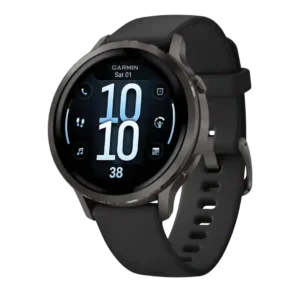
The fuller metal construction makes the watch feel sturdier, more premium, and better finished than the Venu 3.
The larger crown and programmable side button are usually easy to use, though one review found crown input less than perfectly precise.
The two-button layout works, but several reviewers miss the extra button and find it less ideal during workouts.
Phone calls through a paired smartphone are workable and sometimes clear, but call quality was not described as exceptional.
On-wrist calling works and is handy in a pinch, though speaker performance is only adequate.
Calories are shown during workouts, but the evidence here points to basic readouts rather than especially insightful calorie coaching.
Charging works reliably, especially with magnetic alignment, but the proprietary puck and lack of wireless charging are recurring complaints.
Garmin's proprietary charger remains a notable annoyance for convenience.
Fast charging is a clear plus, with multiple reviewers saying a short top-up delivers substantial battery life.
Charging speed is acceptable rather than class-leading, with useful top-ups in short sessions but slower full charges.
Coaching support is basic, with evidence limited to a guided breathing app aimed at lowering stress.
Garmin Coach, training plans, and race-readiness tools are widely praised and feel more advanced than past Venu generations.
Comfort is good for many users thanks to the revised band and airflow-friendly texture, though the large case can still feel noticeable.
Comfort is generally good for all-day wear, but the heavier metal build bothers some users during sleep or extended wear.
The Mobvoi Health app is functional and reasonably capable, but some reviewers still found it basic or restrictive compared with rivals.
Garmin Connect is useful and feature-rich, but some reviewers find newer features tucked away in too many menus.
Contactless payments are a strong point, with Google Wallet support and repeated reports of reliable tap-to-pay performance.
Garmin Pay is convenient when supported, but bank compatibility and extra password friction limit the experience.
Compatibility is limited because the watch is built for Android and does not support iOS mobile apps.
The watch works across iPhone and Android, though Android users get more messaging and smart features.
Customization is broad, including watch-face choices, display color tweaks, and exercise reordering.
Customizable reports, focus modes, and shortcut settings give the watch a solid level of day-to-day personalization.
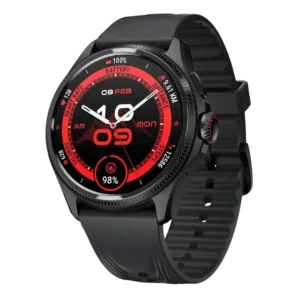
The main OLED display is widely praised for clarity, color, and overall presentation, while the dual-display approach remains a key differentiator.
The AMOLED display is sharp, colorful, and premium-looking.
Durability reviews are very strong, with sapphire glass and rugged construction repeatedly credited for resisting scratches and wear.
The upgraded metal build held up well in regular workouts and swimming with no obvious scratches during testing.
ECG support is absent, and reviewers explicitly noted that the watch does not offer it.
ECG support is a meaningful differentiator, with reviewers highlighting it as a welcome feature absent from some Garmin siblings.
Fit is mixed because the watch is large and one-size, yet several reviewers still found it wearable or more comfortable than expected.
The two-case approach helps most users find a comfortable size and fit.
Fitness tracking is generally good for everyday sports use, though it is not presented as elite-grade across every workout type.
Workout tracking is broadly accurate, with especially positive comments around strength logging and general training data.
GPS performance is mostly solid for routes and general training, but some reviewers saw slow locks or noticeable distance drift.
GPS is one of the Venu 4's strongest areas, with repeated praise for tight tracks, fast lock, and stable route logging.
General health tracking is useful overall, though the evidence shows better results for broad wellness monitoring than for strict precision.
Reviewers generally trust the health metrics, especially once the watch has enough baseline data to interpret trends.
Heart-rate accuracy is mixed: several reviewers found it close or impressive, while others saw clear misses during harder exercise.
Heart-rate accuracy is strong overall and often close to chest straps, though a few reviewers saw brief dips or lag.
LTE is missing entirely, which limits standalone use away from a phone.
There is no LTE option, which limits standalone use away from the phone.
Materials quality stands out, with reviewers highlighting sapphire glass and the upgraded fluororubber strap.
Steel cases and bezels add a noticeably more premium material feel than the prior generation.
Navigation is a strong point thanks to the rotating crown, which reviewers said makes scrolling through menus and data easier.
Navigation is understandable, but the touch-heavy flow can feel cumbersome during wet or sweaty workouts.
Media controls are convenient, including the ability to control phone playback from the watch.
Basic music controls are present, including voice-command shortcuts like skipping songs.
The watch can support phone-free audio use, with reviewers mentioning podcast listening directly on the device.
Offline music storage is useful and well supported, though it costs battery life.
The Wear OS experience is smooth and capable, but the outdated software version is the watch’s most persistent weakness.
The new shared Garmin OS feels more modern and should improve feature parity and long-term support.
Outdoor visibility is generally good on the main screen, though the low-power layer is less convincing in bright sunlight.
Outdoor readability is excellent, with reviewers saying the display stays legible even in direct sun.
Pairing and setup are usually fine, but a few reviewers reported retries, slower connections, or mode-switch reconnection issues.
Recovery metrics such as recovery time and related workout feedback add useful post-exercise context.
Recovery guidance is a standout, with Training Readiness, Body Battery, and related metrics frequently called genuinely useful.
Reliability is mixed: many core functions work well, but some reviewers noted occasional glitches, crashes, or awkward mode behavior.
Day-to-day reliability is mixed: some testers saw freezes or odd distance glitches, while others expect the unified platform to improve stability.
Safety-related extras include water ejection and alerts that can flag suspicious heart-health events.
The built-in flashlight and visibility options are consistently praised as genuinely useful safety and convenience additions.
Size choice is limited because the watch is only offered in a single large case.
Both 41mm and 45mm sizes are available, giving shoppers a real choice between smaller and larger wearables.
Sleep tracking is serviceable but inconsistent, with some reviewers seeing good agreement and others reporting clear undercounts.
Sleep tracking is generally good and often lines up with other wearables, but it can overcount time spent resting awake.
Notification handling is a strength, with prompt delivery and strong vibration feedback noted across reviews.
Notifications are effective and more flexible on Android than on iPhone.
Reviewers describe a full smartwatch feature set, including notifications, calls, messaging, maps, and payments.
Smartwatch features cover the essentials, but they still trail Apple and Google on depth and seamlessness.
Performance is usually smooth and snappy, with only occasional stutters or hiccups mentioned.
The refreshed software is notably snappier and more responsive than older Garmin implementations.
Step counting ranges from very strong to inconsistent depending on the reviewer, so confidence here is moderate rather than absolute.
Step counting looks dependable, with one controlled test hitting exactly 2,000 steps.
Stress tracking is available and reasonably full featured, though the reviews discuss it more as a wellness tool than a clinical one.
Stress data is part of the broader wellness picture and is useful when paired with sleep, HRV, and lifestyle logging.
The design is generally seen as attractive and rugged, with the improved band and premium details helping it look more refined.
Style is a major selling point, with reviewers repeatedly calling the Venu 4 one of Garmin's best-looking watches.
Third-party support is a real advantage, with good Play Store access and specific support for apps like Strava, Spotify, and Nike Run Club.
Third-party support exists, but the selection and polish remain modest by mainstream smartwatch standards.
Touch response is mostly good, but accidental inputs and occasional missed taps were also reported.
The touchscreen is quick and responsive in normal use.
The interface is easy to digest, with cleaner data presentation and simpler daily stat access than earlier Mobvoi implementations.
The updated interface is more polished, easier to navigate, and faster than older Garmin UIs.
Value is mixed: battery life and hardware are strong, but several reviews question the price against cheaper alternatives or the discounted Pro 5.
The feature set is strong, but the $100 price jump makes value a tougher sell unless you specifically want Garmin's training depth.
Voice assistant support is weak because Google Assistant is missing, and reviewers repeatedly called that out.
Voice features are available and sometimes responsive, but reviewers frequently call them clunky, buggy, or basic.
Watch-face support is broad overall, with thousands of options available, even if some included faces are less impressive than others.
Water resistance is good enough for pool use and everyday exposure, but it is not positioned for deeper adventure use.
Water resistance is solid for pool use and showers, with reviewers citing the 5 ATM rating positively.
Wellness insights include broader health summaries such as daily or weekly reports and deeper sleep-oriented analysis.
Wellness insights are a key selling point, especially through Health Status, Lifestyle Logging, and daily readiness-style feedback.
Wi-Fi support is present and can handle tasks like streaming, though connection speed or behavior is not flawless in every review.
Workout variety is a clear strength, with reviewers highlighting the large number of supported exercise profiles.
Workout variety is a major strength, with repeated praise for the very broad sport profile list.