- Similar: GPS route tracking Android Authority found Venu 4 GPS routes aligned closely with the Apple Watch Ultra 3.
- Compared: heart rate accuracy TechRadar found the Apple Watch Ultra 3 closer to the chest strap average, while the Venu 4 was still close enough for training.
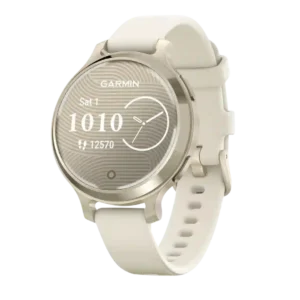
Garmin Venu 4 Review
Bottom Line
Choose the Garmin Venu 4 for long battery life, strong fitness tools, accurate GPS, and a dressier Garmin look. Skip it if you need LTE, full maps, a deep app store, or cheaper smartwatch basics.
Best for fitness-focused smartwatch buyers who want Garmin-level training, recovery, sleep, GPS, and health insights in a polished watch that can work at the gym, office, and overnight.
Not for casual smartwatch users who mainly want a rich app store, LTE independence, full-color maps, low pricing, or button-heavy sports-watch controls.
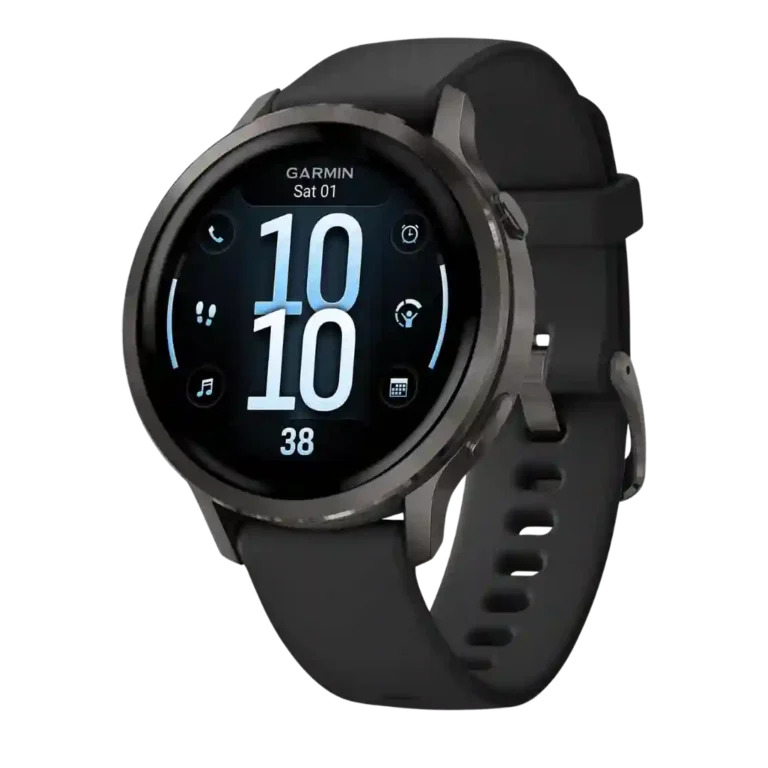
The Garmin Venu 4 comes across as Garmin’s most balanced lifestyle fitness watch in these reviews. Reviewers consistently praise its polished design, bright AMOLED display, long battery life, accurate GPS, strong heart-rate performance, and expanded training tools. The tradeoff is that Garmin has pushed the Venu closer to serious sports-watch territory without matching Apple, Google, or Samsung for apps, LTE independence, or seamless smart features. Touch-first controls also divide reviewers: they help the watch feel sleeker and more smartwatch-like, but several testers prefer more buttons during workouts, swimming, rain, or glove use. Its best case is health and fitness depth in a cleaner package; its weakest case is value for casual users who mainly want phone-like smartwatch features.
Compared in Reviews
Products reviewers directly compared with this model, grouped into quick takeaways.
- Similar: training features Tom’s Guide says the Venu 4 matches the Garmin Forerunner 570 for training features while adding ECG.
- Alternative: buttons versus ECG and flashlight Live Science positions the Forerunner 570 as an alternative with more buttons but fewer Venu extras.
- Worse: GPS battery life Runner’s World says the Venu 4’s GPS endurance beats the Apple Watch Series 11 by a wide margin.
Feature Scorecards
Pros
-
Outdoor visibility is excellent in the evidence, with direct-sunlight readability and outdoor legibility repeatedly praised.
-
Brightness is one of the clearest improvements, with reviewers repeatedly saying the screen is brighter and easy to read.
-
Style and design are standout strengths, with reviewers calling the watch polished, attractive, office-friendly, and less sporty-looking than many Garmin models.
-
Size options are a strength, with 41mm and 45mm versions repeatedly cited as helpful for different wrists and preferences.
-
Workout variety is a major upgrade, with reviewers repeatedly citing dozens of sport profiles, multisport modes, and coverage beyond basic running and cycling.
-
Materials quality is high for the category, with stainless steel, all-metal casing, and a more premium wrist feel recurring across reviews.
-
Coaching features are strong, with Garmin Coach, suggested workouts, Training Readiness, race guidance, and training-status tools pushing the watch beyond casual fitness tracking.
-
Safety features are strong because the built-in flashlight, red mode, strobe, and visibility uses are repeatedly praised for night or low-light situations.
-
Recovery insights are one of the clearest strengths, with Training Readiness, Body Battery, recovery time, and load data helping users decide when to push or rest.
-
Automatic detection evidence centers on track recognition and auto-track detection, which reviewers describe as a helpful upgrade for structured running.
-
Durability appears improved, with stainless steel construction and scratch-free use noted, though only a few reviews discuss long-term toughness directly.
-
ECG is treated as a meaningful advantage for the Venu 4, especially because several comparisons note it is included where some Garmin alternatives lack it.
-
Wellness insights are a core strength, with Lifestyle Logging, Body Battery, Health Status, sleep coaching, and trend interpretation repeatedly described as useful or actionable.
-
GPS accuracy is strongly reviewed overall, especially with dual-band or multi-band support, though one long walking test produced distance hiccups after transit was included.
-
Build quality is strong, with the fuller metal case and premium feel repeatedly cited as upgrades over older Venu models.
-
Band quality is positive in limited evidence, with reviewers liking the understated look and soft, stretchy silicone strap.
-
Display quality is very good overall thanks to a bright AMOLED screen and crisp visuals, though bezels and touch responsiveness draw some criticism.
-
Software smoothness improves over older Garmin experiences, with reviewers citing snappier scrolling, smoother responsiveness, and faster-feeling interfaces.
-
Battery life is a major advantage, usually lasting several days to around a week or more depending on always-on display, GPS, and workout use.
-
The updated Garmin OS is generally praised as more unified, smoother, and more consistent, though not as seamless as watchOS or Wear OS.
-
Health tracking is consistently framed as broad and useful, with reviewers citing Health Status, reliable-looking metrics, and consolidated heart-rate, HRV, temperature, respiration, and oxygen data.
-
Step tracking appears solid in direct tests and day-to-day walking use, including exact 2,000-step results and sound step-count data in longer real-world use.
-
Heart-rate accuracy is generally strong against chest straps and other controls, though a few reviewers observed minor blips, dips, or lag in harder intervals.
-
Fitness tracking is broadly reliable, including workouts, reps, sets, and overall activity data, with occasional hiccups depending on workout type or sensor challenge.
-
Water resistance is adequate for swimming, showers, and 5ATM submersion, with no major water-related complaints in the evidence.
-
Onboard music storage is a real strength among fitness-first watches, with Spotify, Amazon Music, Deezer, and YouTube Music support or offline audio mentioned across reviews.
-
Menu navigation is workable and improved, with swipes, glances, and widgets described as usable, though the touch-first approach creates tradeoffs.
-
Comfort is generally strong for all-day wear, workouts, and sleep, though a few reviewers found the heavier case or skin irritation problematic.
-
Charging speed is acceptable, with one review reporting useful quick top-ups and another citing a full charge around an hour and a half.
-
Pulse Ox and blood-oxygen tracking are repeatedly included as part of the watch’s overnight health-status and wellness stack rather than singled out as a major standalone strength.
-
Customization is a strength, with configurable buttons, reports, focus modes, brightness, notification behavior, and custom lifestyle entries.
-
Sleep tracking is useful and often aligned with other trackers, but several reviews note limitations around wakefulness, sleep stages, or the effort needed for newer sleep-alignment insights.
-
Stress and lifestyle tracking are useful when paired with Lifestyle Logging and Health Status, though manual logging can feel burdensome for some users.
-
Bluetooth connectivity is presented as functional for phone calls in range and Bluetooth earbuds, but the reviews provide only limited direct discussion.
-
Calorie tracking appears as a useful supporting metric in activity summaries, but the reviews do not dwell on calorie estimates as a headline feature.
-
Notifications work, but interaction depth varies by phone and reviewers repeatedly frame Garmin’s notification experience as useful but less advanced than true smartwatches.
-
Watch face support is adequate, including Connect IQ access and spoken watch-face accessibility, but the evidence is limited rather than enthusiastic.
-
Garmin Pay is consistently available, though evidence suggests bank support, password friction, and regional compatibility keep it from being a universal strength.
-
The interface is more user-friendly than older Garmin software, but touch-heavy navigation can become frustrating during wet or intensive activities.
-
Touchscreen responsiveness is mostly good, but reviewers who prefer buttons or exercise in wet conditions found touch control less ideal.
-
Fit is good for many wrists due to size choices and manageable weight, but smaller-screen cramped text and heavier sleep wear create tradeoffs.
-
Music controls get only limited direct evidence, with one review noting voice-command control for skipping songs.
-
Call handling is serviceable for quick use, with the speaker and microphone enabling wrist calls, though volume and dependence on a nearby phone limit the experience.
-
Cross-platform use is mostly positive, but Android receives more reply and smart-notification options while iPhone users face restrictions.
-
Smartwatch features cover the essentials, including calls, notifications, payments, music, and assistant access, but reviewers repeatedly say it is still fitness-first.
Cons
-
Value is the most disputed area: reviewers like the feature depth but repeatedly point to the price hike and tough smartwatch competition.
-
Third-party app support exists through Connect IQ and music services, but reviews describe it as narrower and less polished than full smartwatch stores.
-
Mapping and navigation are useful but limited, with breadcrumb routes and back-to-start tools but no full-color maps.
-
Button controls are the main ergonomic tradeoff: the two-button setup looks cleaner, but many reviewers miss the third or five-button Garmin layout.
-
The companion app adds depth through Garmin Connect and Connect IQ, but reviewers also mention buried menus and extra-app friction.
-
Reliability is mixed: most use is solid, but one review saw freezes during strength workouts and another saw tracking-data hiccups.
-
Voice assistant quality is mixed to weak: one review found it responsive enough, but several others call it clunky, buggy, or unreliable.
-
The app ecosystem is a clear limitation compared with Apple and Google, with reviewers noting limited app depth despite basic Garmin options.
-
Charging convenience is a weakness because multiple reviewers dislike Garmin’s proprietary charger despite the long interval between charges.
-
LTE is absent, and multiple reviewers call out the lack of cellular independence as a smartwatch limitation.
Compared With Category Average
Compared with other Smart Watch, this product is above average in ECG functionality, size options, onboard music storage, below average in app ecosystem, charging convenience, button controls.
| Attribute | This product | Category average | Difference |
|---|---|---|---|
| ECG functionality | 4.5 | 2.3 | +2.2 |
| size options | 4.7 | 3.1 | +1.6 |
| onboard music storage | 4.3 | 2.8 | +1.5 |
| contactless payments | 3.9 | 2.8 | +1.0 |
| app ecosystem | 2.6 | 3.6 | -1.0 |
| charging convenience | 2.5 | 3.5 | -1.0 |
| safety features | 4.6 | 3.8 | +0.8 |
| button controls | 3.2 | 3.9 | -0.7 |
FAQ
Is the Garmin Venu 4 good for runners?
Yes. Reviewers highlight accurate GPS, Training Readiness, suggested workouts, race-oriented tools, and many running metrics, though it lacks full-color maps and some premium Garmin features.
How long does the Garmin Venu 4 battery last?
Reviewers typically report several days to around a week or more depending on always-on display, GPS, and workout use. Several reviews say it lasts far longer than Apple or Samsung mainline watches.
Does the Garmin Venu 4 have LTE?
No. Multiple reviews call out the lack of LTE or cellular capability, so calls and many smart features still depend on a nearby phone.
Is the Garmin Venu 4 comfortable?
Mostly yes. Many reviewers found it comfortable for workouts, sleep, and all-day wear, but some noted the heavier stainless-steel build, cramped smaller screen, or skin irritation after nonstop use.
How accurate is the Garmin Venu 4?
The review evidence is broadly positive for GPS, heart rate, steps, and fitness tracking. A few reviewers still saw heart-rate blips, distance hiccups, or sleep-stage limitations.
Is the Garmin Venu 4 a full smartwatch replacement?
Not quite. It handles notifications, calls, music, Garmin Pay, and assistant access, but reviewers repeatedly say the app ecosystem and smart features trail Apple, Google, and Samsung watches.
What are the main drawbacks reviewers mention?
The repeated concerns are the higher price, no LTE, no full maps, a limited app ecosystem, proprietary charging, and a two-button touch-first design that some reviewers dislike during workouts.
Consider This Instead
If you want better app ecosystem
Choose Apple Watch Ultra 3. It scores 4.9 vs 2.6 for app ecosystem, with a 4.2 overall score.
If you want better value for money
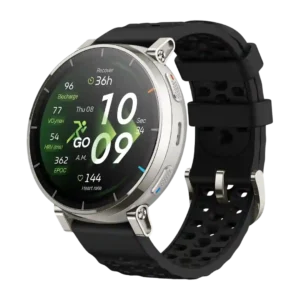
Choose Amazfit Active 2. It scores 4.9 vs 3.4 for value for money, with a 3.8 overall score.
If you want better charging convenience
Choose Suunto Vertical 2. It scores 4.5 vs 2.5 for charging convenience, with a 3.8 overall score.
If you want better button controls
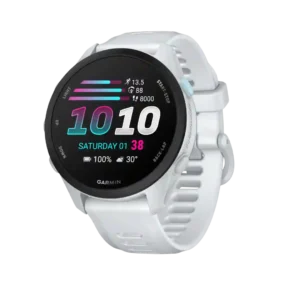
Choose Garmin Forerunner 970. It scores 4.8 vs 3.2 for button controls, with a 4.0 overall score.
Overall Top Smart Watch Alternatives
Good if you want the most rugged Apple Watch, brighter outdoor screen, better battery, LTE, and top apps. Skip it if you need Garmin-like mapping, recovery analytics, smaller sizing, or...
Pros: display quality, heart rate accuracy
Cons: cross-platform compatibility, recovery insights
Choose the Galaxy Watch 6 for a polished Android smartwatch with a bright screen, strong apps, and broad health tracking. Skip it if battery life, iPhone support, or full non-Samsung...
Pros: outdoor visibility, workout tracking variety
Cons: cross-platform compatibility, battery life
Good if you need a rugged Garmin with deep outdoor, tactical, GPS, training, and battery features. Skip it if you want a cheaper lifestyle watch or do not need the...
Pros: materials quality, durability
Cons: LTE connectivity, value for money
Good if you want premium golf maps, virtual caddie tools, health metrics, music, notifications, and long battery life in one watch. Skip it if you only need basic yardages or...
Pros: pairing reliability, brightness
Cons: software smoothness, user interface