Automatic detection is a real strength for basic activities like walking, running, cycling, and swimming, though one reviewer said auto-tracked sessions sometimes needed manual cleanup.
Reviewers like the broader Withings ecosystem, especially the ability to collect watch data alongside other Withings health devices in one app.
Reviews describe a broad app selection, including over 50 applications and a vast widget/app list, indicating a feature-rich built-in software ecosystem.
Band comfort is strong, with positive notes on all-day wear, soft material, secure fit, and low skin irritation.
Band impressions are modestly positive. Reviews mention the stock silicone band, an upgraded silicone strap, and comfort that suits sports use.
Battery life is usually a standout, with many reviewers seeing multi-week endurance, but results vary sharply depending on settings like Quicklook, notifications, and workout use.
Battery life is one of the product’s strongest themes. Reviews cite roughly 16 days on some AMOLED use, 20 days in comparison testing, and 29-30 days on larger or solar-focused scenarios.
Reviewers repeatedly note that the ScanWatch Light lacks SpO2 monitoring, leaving blood-oxygen tracking to higher-end alternatives.
Reviews repeatedly list blood oxygen or oxygen saturation as part of the health suite, but they stop short of detailed validation beyond feature inclusion.
Bluetooth support is directly referenced through Bluetooth calling and voice-assistant use, indicating core wireless audio/phone connectivity is present.
Screen brightness is mixed: one reviewer found it too dim in use, while another found wake behavior too bright at night.
Brightness feedback is favorable, with reviewers describing the screen as easy to read and slightly brighter than earlier models.
Build impressions are strong, with repeated praise for the solid-feeling case and overall hardware execution.
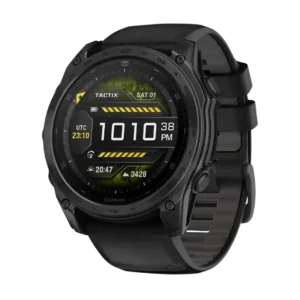
Build quality comes through as premium and rugged, with reviews repeatedly centering the titanium construction and hard-use intent.
Physical controls are the norm here, and reviewers say the crown or dial works well once you adapt to it.
Button feedback is generally positive because the controls are textured and easy to feel in the dark, though one reviewer preferred the older click feel.
Call features are well supported. Multiple reviews say the watch can make, receive, or answer calls when paired with a nearby phone.
Calorie data is present but basic, and reviewers describe it as more of a simple estimate than a standout training metric.
One review specifically credits the watch with accurately calculating calorie consumption for weighted hiking, making the calorie data more useful for rucking-style training.
The proprietary charger is a recurring complaint for feel and convenience, even though some reviewers liked its secure grip or compact shape.
Charging convenience is only lightly covered, but one review explicitly notes magnetic charging.
Charging speed is consistently reported around two hours for a full top-up, with some reviewers noting meaningful recovery in 30 minutes.
Charging speed receives one clear positive mention: a full recharge is said to take about one hour.
Coaching is light but present through guided breathing and premium-app guidance rather than deep on-watch training features.
Coaching support is described through workout suggestions, visual guidance, and daily training suggestions that help structure sessions and recovery decisions.
Comfort is a major positive, with reviewers repeatedly calling the watch light, slim, unobtrusive, and easy to wear to bed or during exercise.
The Health Mate app is generally seen as detailed and easy to navigate, though not every reviewer liked its layout.
Garmin Connect is described positively, with reviewers highlighting personalized dashboards and easy route/app syncing into the watch experience.
Payments are absent, and reviewers explicitly say to look elsewhere if contactless pay is important.
Contactless payments are clearly supported through NFC and Garmin Pay mentions across several reviews, with no major caveats called out.
The watch is consistently described as working with both Android and iPhone, and reviewers also note app availability across mobile platforms.
Customization is modest but useful, covering screen order, watch behavior, and shortcut setup rather than deep personalization.
Customization is a strength. Reviews mention custom strength plans, flexible submenus/settings, and the ability to swap band colors and looks.
The small monochrome/OLED display is functional for basics, but reviewers repeatedly describe it as tiny and limited for dense information.
Display quality is a major highlight. Reviews describe a high-definition or bright AMOLED screen with better contrast, color, and clarity.
Durability looks good in early testing, with scratch resistance and resistance to sweat or rain called out positively.
Durability is one of the clearest positives, with reviewers pointing to military-grade claims, harsh-condition use, and a like-new state after rough outings.
ECG is not included on the ScanWatch Light, and reviewers point to that omission as a clear gap versus pricier models.
Reviews confirm ECG support and mention it alongside other advanced sensors, but they do not provide deep testing beyond availability and general inclusion.
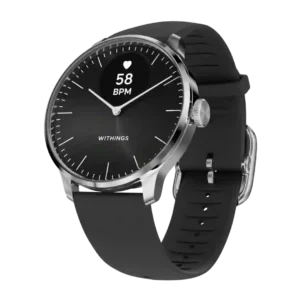
Fit is best for smaller wrists, and multiple reviewers caution that the 37mm case may feel too small or less ideal for some users.
General fitness tracking is serviceable and often close enough for casual use, but auto-detected sessions can need editing and this is not framed as a serious sports watch.
There is no built-in GPS, but connected GPS through the phone was repeatedly described as accurate enough for distance and pace comparisons against Garmin devices.
GPS performance is a standout. Reviews describe precise location tracking, precise route recording, multi-band accuracy, and strong mapping/navigation support.
Broader health readings come across as useful and directionally solid, but at least one reviewer found Oura more precise for sleep timing and staging.
Heart-rate performance is generally strong, with close comparisons to Garmin and Polar in several tests, though one reviewer found average daily readings ran too high.
Across multiple reviews, heart rate tracking is described as more accurate in motion and very close to chest-strap results, with only minimal deviations noted.
Materials are consistently framed as premium for the price, especially the stainless steel and Gorilla Glass construction.
Materials quality is strongly supported by repeated mentions of sapphire crystal or sapphire lens protection and titanium hardware.
Crown-based navigation takes adjustment but is generally easy once learned, and several reviewers say scrolling through screens becomes natural.
One reviewer specifically calls the updated map/navigation flow more user friendly, suggesting menu navigation is easier to work through than before.
Music control is a clear omission, with reviewers calling out the inability to manage playback from the wrist.
One review explicitly says you can control your phone’s music, confirming basic music-control functionality from the watch.
Offline listening is well supported. Reviews mention internal storage plus the ability to load music or podcasts directly onto the watch.
One reviewer found the overall system experience less seamless than a Pixel Watch because watch and phone settings are not deeply synchronized.
Outdoor readability is a weakness, with direct-sun visibility called out as poor.
Outdoor visibility is repeatedly praised. Reviews say the screen remains clear in bright sunlight and is easy to read outside.
Phone pairing and syncing were described as smooth and stress-free in the reviews that directly discussed setup reliability.
Setup and pairing are lightly but positively covered, with one reviewer calling initial smartwatch setup literally a breeze.
Recovery is a recurring strength, with reviews citing recovery tracking, remaining recovery time, suggested recovery times, and training-readiness style guidance.
Core functionality is generally reliable, with one reviewer explicitly calling it solid and another praising battery endurance as dependable.
Reliability is not widely stress-tested in detail, but one review directly frames the watch around reliability, precision, and durability.
Safety-oriented features are mixed: high and low heart-rate alerts are included, but reviewers criticize the lack of AFib detection.
Safety and security features are a defining differentiator, with repeated mentions of stealth mode and a kill switch that erases stored data.
Size flexibility is limited because the ScanWatch Light comes only in a single 37mm case.
Reviews confirm multiple size options, with several sizes/styles available and repeated mention of two primary case sizes.
Sleep duration, stages, and scores were often similar to Garmin, Oura, or other reference devices, but some reviewers saw less precise wake or sleep-time detection.
One long-term reviewer says the sleep results were consistent with lived experience, which supports the watch’s sleep tracking as directionally reliable.
Phone notifications work, but the tiny screen makes longer messages slower to read and the experience varies from acceptable to genuinely good depending on expectations.
One review explicitly mentions smart notifications for messages, emails, and calendar alerts, supporting the watch’s everyday phone-connected utility.
As a smartwatch, the ScanWatch Light is intentionally basic: notifications, timers, and alarms are present, but richer smart features are limited.
Reviewers frame the Tactix 8 as more than a niche tactical device, with one calling it an everything watch and another noting standard smartwatch capabilities.
Software smoothness trends positive but not perfect. One reviewer says lag concerns did not materialize, while another noticed slightly weaker touch pickup than the prior model.
Step counts were directionally useful, but several reviewers saw daily totals run about 1,000 steps away from comparison devices.
One review says the watch includes stress monitoring with personalized relaxation suggestions, framing it as a practical daily wellness tool.
Style is one of the clearest strengths: reviewers repeatedly praise the analog look, elegant feel, and ability to pass as a real watch.
Styling is a real draw, with reviewers emphasizing the rugged outdoor look and distinctive blacked-out tactix design.
Third-party syncing is a plus, with repeated mentions of Apple Health, Google Fit, Strava, and Samsung Health integration.
Third-party support is explicitly backed by Spotify and Amazon Music mentions, showing that outside services are part of the watch experience.
There is no touchscreen at all, so touch responsiveness is effectively absent by design.
Touch response is directly praised by one reviewer, who says the touchscreen feels quite nice during everyday use and setup.
Interface impressions are mixed: some reviewers praise a clean, simple UI, while others found the app busy or cluttered.
User-interface commentary is modest but positive, with reviewers noting a slightly different UI and consistent interface behavior across versions.
Value depends on priorities: reviewers think the price makes sense for the design and battery life, but some still see it as expensive for a basic smartwatch.
Value for money is the main weak point. Multiple reviews call out the hefty price, making the watch easier to justify for niche or demanding users than for casual buyers.
Voice support is presented as useful rather than deeply reviewed: reviewers mention built-in voice commands and access to the phone’s voice assistant.
The analog face looks elegant and the hands smartly move aside for the display, but readability can suffer in some lighting.
Multiple reviewers treated the 5ATM rating as genuinely useful, reporting normal operation after pools, sea use, showers, and swims.
Water resistance is broadly supported, with reviews citing 100-meter resistance and dive readiness down to 40 meters depending on use case.
The watch and app add trend views, HRV, respiratory context, cycle tools, and broader wellness insight, though deeper guidance can sit behind a subscription.
Reviews mention body battery, respiration, jet-lag guidance, and light/sleep/exercise suggestions, showing that wellness insights go beyond raw training stats.
Reviewers consistently highlight broad workout coverage, with roughly 30 to 40-plus activity modes and both manual and some automatic workout support.
Workout coverage is exceptionally broad. Reviews mention rucking plus dozens of built-in workout programs and roughly 80 or more sports modes and profiles.