Reviewers described passive or retroactive auto-tracking as useful for walks and missed workouts, but support is limited and one review said the feature missed a walk.
Reviewers consistently praised Play Store breadth and said the watch has the main apps most Android users are likely to want.
Band quality is polarizing: some reviewers disliked the strap comfort and texture, while others praised later strap improvements.
The included band drew the most criticism in this set, with reviewers calling it dull or overly fiddly rather than premium.
Battery life is acceptable multi-day rather than class-leading, with real-world reports ranging from weak to around four or five days.
Battery life is usually around 1.5 to 2+ days, with several 45mm reviews beating Google’s estimate, while the 41mm model remains shorter-lived.
One review notes the watch is less advanced than rivals that offer blood oxygen readings, indicating this feature is absent here.
SpO2 tracking is part of the standard Fitbit health suite, but reviewers focused more on its inclusion than on deep performance testing.
Bluetooth support is useful for heart-rate broadcasting, headphones, and external sensors.
Screen brightness is a strength, with reviewers noting strong brightness options and a vivid, bright display.
The 3,000-nit screen was repeatedly described as much brighter and easier to use outdoors.
Overall build impressions are positive, with several reviews saying the watch feels solid and not cheap.
Reviewers liked the aluminum construction and generally said the watch feels polished and premium.
Single-button control is a common complaint, with reviewers wanting more physical buttons for easier use.
The crown and side button are functional and tactile, though one review noted the thinner side button feels less substantial.
Call handling is effectively absent, with reviews explicitly saying you cannot answer calls or reply from the watch.
Calls are possible and sometimes clear enough, but speaker output is still a weak point for noisy environments.
Calorie reporting is seen as useful, with workout calorie totals and energy-source breakdowns highlighted as helpful feedback.
Calorie data is present, but confidence was mixed because one reviewer found burn estimates too high and another found calorie tracking redundant.
Charging convenience is mixed because the watch charges easily enough but uses proprietary hardware that some found fiddly.
The new side dock is widely seen as easier and more reliable than older Pixel Watch chargers, though a few reviewers still wanted a sturdier stand.
Charging speed is positively described, including quick wired top-ups and very fast charging comments.
Fast charging is one of the clearest upgrades, with multiple reviews confirming roughly 50% in about 15 minutes.
Coaching is a strong area thanks to FitSpark workout suggestions and built-in training guidance features.
AI coaching sounds promising, but reviews often treated it as early, region-limited, or still rolling out, with Premium gating as a caveat.
Comfort is one of the product’s strongest themes, especially for all-day wear and sleep tracking.
Despite the thicker domed design, reviewers generally found the watch comfortable for long daily wear and even sleep.
Polar Flow offers deep data, but app usability is mixed because some reviews call it busy while others praise it.
Fitbit app feedback was mostly positive for clarity and ease of use, but the split between apps and Premium gates still bothered some reviewers.
Contactless payments are repeatedly called out as missing.
Google Wallet was described as reliable and straightforward to use from the watch.
Cross-platform support is solid, with reviewers explicitly using the watch across both Android and iOS.
Compatibility is good across Android phones, but iPhone support is absent and flexibility outside Android remains limited.
Customization is a clear positive, especially for watch face complications and watch-face setup.
There is good tile, settings, and watch-face customization, though not every reviewer loved the defaults.
Display quality is consistently praised for sharpness, vivid color, and an attractive AMOLED presentation.
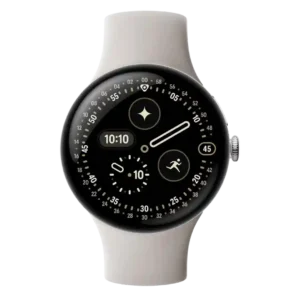
The domed Actua 360 display is the standout feature, repeatedly described as striking, immersive, and among the best on a smartwatch.
Durability feedback is mixed because some reviews saw scratching issues while others reported better scratch resistance.
Early durability impressions are encouraging, with several reviewers reporting minimal wear, though some still expect the exposed glass to pick up scratches over time.
One review contrasts the watch with devices that can take EKG readings, indicating ECG is not offered on this model.
ECG support is available and clearly surfaced in reviews, but it was not deeply validated against medical references here.
Fit is consistently praised for sitting snugly and securely on the wrist.
Both sizes appear wearable, with reviewers saying the case sits well on the wrist, though size preference still matters.
General fitness tracking is usually described as reliable and capable for routine workouts and activity monitoring.
Across mainstream workouts, reviewers generally found exercise tracking accurate, responsive, and detailed.
GPS accuracy is mixed: some reviewers found it solid or reliable, while others saw route drift and poor mapped precision.
GPS performance is mostly strong with dual-band support, but a few reviews still noted isolated edge-case issues.
Reviews describe the watch as accurate for tracking heart rate, sleep, steps, location, and workouts in day-to-day health use.
Reviewers who cross-checked against Oura or other wearables generally found the broader health data aligned well.
Heart rate tracking is generally praised, though a few reviewers report mixed or questionable results in some workouts.
Heart-rate tracking ranged from good to excellent overall, though one run-focused review found it more ballpark than pinpoint.
LTE models enabled phone-free use, and at least one reviewer reported no connection drops during testing.
Materials quality is viewed favorably, especially where titanium and Gorilla Glass are highlighted.
Aluminum and Gorilla Glass materials feel solid, though they are not positioned as the most rugged option in the class.
Navigating menus and functions is workable but often described as sluggish, fiddly, or less user-friendly than it should be.
Navigation is easy, with smooth menu scrolling, clear tiles, and large touch targets.
Music controls work well as phone playback controls, including during workouts.
Onboard music storage is missing, so music use depends on your phone.
The overall OS-like experience is mixed, with some praise for polish but repeated reminders that it still feels limited.
Wear OS 6 and Google’s Pixel-specific presentation were widely praised for polish and cohesion.
Outdoor visibility is rated well, including in bright sunlight and other tougher viewing conditions.
Outdoor legibility is a real strength thanks to the brighter screen.
Pairing and syncing reliability are recurring weak points, with several reviews mentioning pairing or sync issues.
Recovery features are a clear strength, with Nightly Recharge, Cardio Load, and similar analytics helping interpret training strain and recovery.
Readiness and related recovery signals were useful reminders for pacing effort, even if they were not always perfect.
General reliability is a concern due to lag, erratic behavior, and occasional reboot or bug complaints.
Day-to-day stability looks good overall, with reviewers reporting few crashes and solid long-term behavior.
One review explicitly says onboard safety features are missing.
Satellite SOS, fall/crash features, and other safety tools add meaningful coverage, though fall detection did not trigger in every anecdotal case.
Size options are limited at the watch level, although one review noted two strap sizes in the box.
The 41mm and 45mm options give buyers a real choice between size and battery life instead of a single compromise fit.
Sleep tracking is consistently rated strong, with multiple reviews saying its core sleep results aligned well with comparison devices.
Sleep tracking was usually described as accurate or close to competing wearables, though a few reviewers noted occasional quirks.
Phone notifications are available and usable, but several reviews describe them as basic rather than especially interactive.
Notifications are rich and often easy to act on, but haptics, missing previews, and uneven smart replies kept them from feeling flawless.
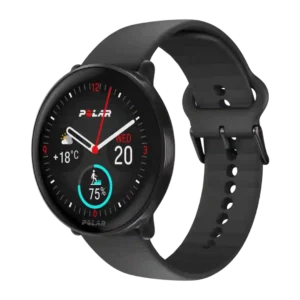
As a smartwatch, the Ignite 3 is repeatedly described as limited or only okay rather than fully featured.
Core smartwatch features are broad and competitive, covering tasks like messaging, maps, payments, and voice assistance well.
Software smoothness is one of the most divisive areas, ranging from notably laggy to improved and smoother on later variants.
Day-to-day performance is consistently smooth and snappy, with only minor slowdowns or early glitches mentioned.
Step counting draws criticism for overcounts or delayed updates, though at least one review still described step tracking positively.
Step tracking looks strong in normal use, with one manual count test landing very close, though edge cases can still affect results.
Stress-related wellness tools are viewed positively through Nightly Recharge feedback and guided breathing features.
Stress and body-response features remain one of the weaker areas because reviewers found the output hard to interpret or not very actionable.
Style and design earn consistent praise, with reviewers repeatedly describing the watch as sleek, slim, or attractive.
The rounded pebble-like design remains one of the watch’s most distinctive strengths.
Third-party app support is missing, with reviewers pointing to the lack of extra apps or app-store style expansion.
Third-party app coverage is strong, with reviewers repeatedly highlighting the main Android and fitness apps.
Touch responsiveness is mixed: some reviewers say it works naturally, while others found it laggy and delayed.
Touch response is quick in normal use, but water can still interfere with touch input.
The UI layout is generally liked for its clarity and screen fit, even if some reviews still see room for refinement.
The Material 3 Expressive interface is colorful, cohesive, and especially well matched to the round screen.
Value is mixed: some reviewers see good value, while others say the price makes the watch hard to recommend.
Same pricing as last generation helps value, though Fitbit Premium still adds some friction.
Reviews explicitly note the lack of smart or digital assistant support.
Gemini is one of the better watch assistants right now, especially with raise-to-talk, but false activations and occasional misses remain.
Watch faces are generally well-liked for looks and information density.
Watch-face selection is decent and improved, though some reviewers wanted more faces that truly exploit the curved display.
Water resistance is adequate for swimming, with repeated mentions of WR30 or 30-meter water protection.
Water resistance and water lock coverage are solid on paper and in light real-world use, though open-water sport depth is limited.
Wellness insights stand out through SleepWise and related guidance that forecast alertness and day-ahead readiness.
Fitbit’s contextual presentation of readiness, trends, and daily guidance was often seen as useful and easy to understand.
Workout variety is a major positive, with repeated mentions of large sport-profile coverage and broad training mode support.
The watch covers a broad range of sports and workout types, even if some niche or gym-specific gaps remain.