- Better: price and app ecosystem DC Rainmaker’s video says the cheaper Apple Watch SE is better for iPhone users unless Polar’s sports tools are the priority.
- Better: overall value and smartwatch features TechAdvisor frames the Apple Watch SE as the stronger buy for many shoppers because of price and smartwatch capability.
Polar Ignite 3 Review
Bottom Line
Choose the Polar Ignite 3 for a slim AMOLED fitness watch with strong sleep and coaching insights. Skip it if you need smooth software, reliable GPS precision, payments, calls, apps, or onboard music.
Best for fitness-focused users who want a thin, attractive AMOLED watch with strong sleep, recovery, and workout guidance rather than a mini-smartphone. It especially suits casual to intermediate training where Polar Flow insights matter more than apps or payments.
Not for shoppers who need smooth smartwatch behavior, reliable urban GPS precision, onboard music, NFC payments, call handling, a voice assistant, or a broad third-party app ecosystem.
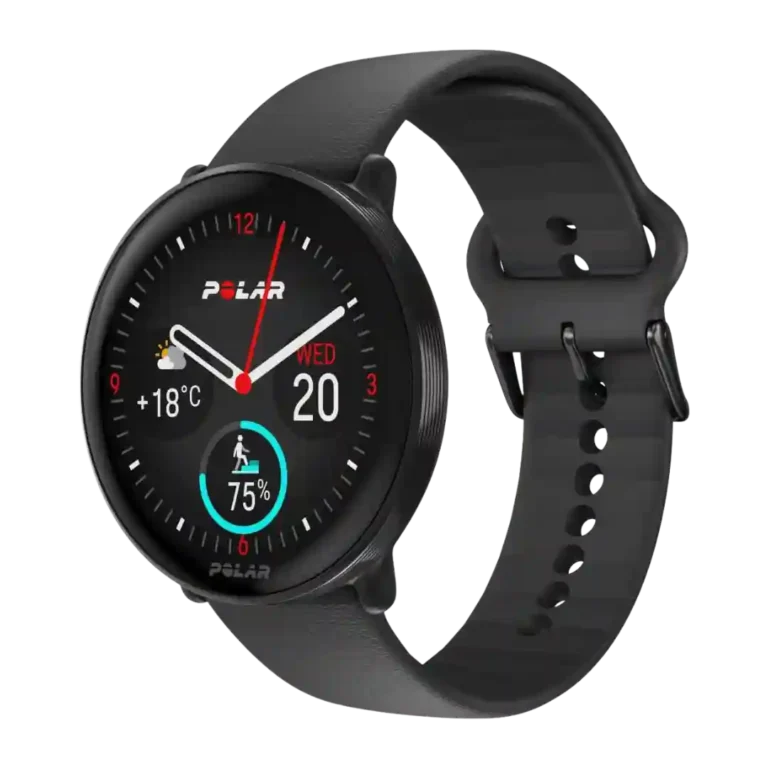
The Polar Ignite 3 stands out as a thin, stylish fitness and wellness watch with a vivid AMOLED display, strong comfort, broad workout modes, and genuinely useful Polar insights such as FitSpark, SleepWise, Nightly Recharge, and Training Load. Its biggest tradeoff is that the same watch that looks modern rarely behaves like a polished smartwatch. Reviewers repeatedly found laggy software, basic notifications, no payments, no onboard music, no real app ecosystem, and uneven GPS accuracy that undercuts the appeal for serious outdoor training. Heart-rate and sleep tracking are generally stronger than GPS, and the Titanium version appears smoother and more wearable, but the product still fits best as a fitness-first tracker rather than a full smartwatch or elite running watch.
Compared in Reviews
Products reviewers directly compared with this model, grouped into quick takeaways.
- Alternative: running-watch value Expert Reviews recommends the Forerunner 255 instead because it gives a better overall experience for less when discounted.
- More expensive: AMOLED sports watch pricing Advnture says the Titanium is a cheaper AMOLED sports-watch route than the Forerunner 265, while still questioning the upgrade value.
Feature Scorecards
Pros
-
Workout variety is a major strength, with around 150 sport profiles and broad indoor, outdoor, swim, and gym tracking options.
-
Display quality is the product’s clearest win: reviewers consistently describe the AMOLED screen as sharp, vibrant, beautiful, and a major upgrade for Polar.
-
Materials are better received on the Titanium version thanks to its bezel, while the standard model’s plastic case is light but less premium.
-
Fit is praised when reviewers discuss the watch sitting snugly, staying low-profile, and avoiding bulk during sleep or training.
-
Only a few reviews directly discuss charging speed, but they describe the updated Polar charger and fast top-ups positively.
-
Style and design are widely praised, with reviewers repeatedly calling the watch sleek, slim, stylish, attractive, or visually stunning.
-
Reviewers consistently praise the AMOLED panel as bright, clear, colorful, and easy to read, including in outdoor settings.
-
Outdoor visibility is a strength because the AMOLED screen is repeatedly described as readable and clear in bright sunlight.
-
Comfort is a consistent strength thanks to the thin, light body and sleep-friendly wear, though the standard strap can undermine that comfort for some reviewers.
-
Cross-platform support is straightforward, with evidence that the watch works with both Android and iOS.
-
Coaching is one of the stronger areas, with FitSpark, Work-Rest Guide, training suggestions, voice guidance, and guided workouts repeatedly framed as useful.
-
Health tracking is broadly useful, especially for heart rate, sleep, wellness, and exercise analysis, but some reviewers stress it is not medical-grade.
-
Wellness insights are a core strength, especially SleepWise, Nightly Recharge, skin temperature trends, alertness forecasts, and lifestyle guidance.
-
Customization is decent for watch face complications, colors, widgets, and replaceable straps, though the watch face catalog remains limited.
-
Sleep tracking is one of the strongest health areas, with many reviewers praising duration, core stats, SleepWise, and alignment with other devices.
-
Heart rate accuracy is mostly praised and often compares well to chest straps, though a few reviews report questionable readings or mixed performance.
-
Bluetooth is useful for heart-rate broadcasting, external sensors, and phone/headphone-linked features, though some audio functions still require carrying the phone.
-
Calorie and energy-use data are presented as useful, especially through workout summaries, Smart Calories, and Energy Sources breakdowns.
-
Water resistance is a clear positive, with multiple reviewers describing WR30/30m protection and swim support.
-
Stress-related features appear through Nightly Recharge, HRV and breathing-change context, and Serene guided breathing.
-
Recovery insights are a strong part of Polar’s appeal, with Nightly Recharge, training load, sleep recovery, and FitSpark using recovery data for suggestions.
-
Build impressions are generally positive for thinness and feel, with the plastic case not feeling cheap, but durability concerns appear in standard-model testing.
-
Only swim tracking provided direct auto-detection evidence, where the watch was described as automatically identifying swim style along with distance, pace, and strokes.
-
Fitness tracking is generally useful and reliable for everyday workouts, though GPS and heart-rate inconsistencies limit confidence for precision-focused athletes.
-
Watch faces and complications are visually appealing and customizable, but the selection is small and no store is available.
-
Music controls work as a phone remote and are generally useful, but they do not compensate for the lack of onboard music playback.
Cons
-
The Polar Flow app is powerful and data-rich, but reviewers split between praising its presentation and criticizing it as busy, complex, or unintuitive.
-
Battery life is context-dependent: reviewers often see about three to five days without always-on display, but always-on mode, sleep tracking, and GPS use cut runtime sharply.
-
Durability evidence is mixed, with Titanium units remaining scratch-free while standard-model reviewers report visible screen scratches.
-
Charging feedback is mixed: some reviewers find the wired magnetic/proprietary setup simple or fast, while others call the cable fiddly, awkward, or not secure enough.
-
Step counting receives mixed to negative evidence, ranging from accurate activity tracking praise to reports of stale updates, desk steps, and large counting errors.
-
Notifications are available and sometimes attractive, but they are basic, laggy, occasionally buggy, and not actionable.
-
The interface is attractive and sometimes streamlined, but repeated lag and touch-heavy navigation keep it from feeling polished across reviews.
-
Touchscreen responsiveness is mixed: several standard reviews describe lag and slow wake behavior, while Titanium and one video review find touch interaction improved.
-
Band feedback is strongly mixed: the Titanium strap is praised as softer and breathable, while several standard Ignite 3 reviewers call the included band stiff, awkward, dusty, or outright uncomfortable.
-
GPS accuracy is the most divisive and commonly criticized tracking feature, with some positive runs but many reports of drifting, corner cutting, or routes through buildings.
-
Polar Flow earns praise for subscription-free fitness data, but the broader ecosystem is limited by the absence of an app store and the richer smartwatch ecosystems competitors offer.
-
Navigation is weakened by lag, slow workout saving, and touch-heavy interaction, though Titanium reviews describe a shorter learning curve and smoother behavior.
-
Value is mixed-to-negative overall: some reviewers see value in the display and fitness tools, but many find better Garmin, Apple, or other alternatives at similar prices.
-
The operating system experience is held back by lag and limited smartwatch software, even though some Titanium reviews say interaction has improved.
-
Software smoothness is the most repeated usability problem on the standard Ignite 3, while Titanium reviewers report improvement but not a best-in-class experience.
-
Smartwatch functionality is limited: the Ignite 3 behaves more like a fitness and wellness tracker than a full smartwatch.
-
Pairing and syncing are a repeated reliability caveat, from needing several tries to first-unit pairing problems that improved only with a second unit.
-
Reliability is mixed: tracking data can be useful, but reviewers mention reboots, crashes, lag, and sync problems.
-
Size options are limited, with one review directly noting that the watch only comes in one size.
-
The one-button design is a repeated complaint because it makes workouts, wet use, and menu control more awkward, even though it keeps the watch visually simple.
-
Onboard music storage is absent; reviewers repeatedly say music requires the phone.
-
Call handling is a major limitation: reviewers repeatedly note that users cannot answer calls or reply to texts directly from the watch.
-
Contactless payments are absent, and multiple reviewers call that omission conspicuous at this price.
-
Third-party app support is absent, with reviewers explicitly saying there is no app store or ability to install apps.
-
Review evidence points to missing or limited advanced blood oxygen support rather than a strong SpO2 feature set.
-
ECG functionality is not presented as a supported advanced health feature; reviewers say users need more advanced trackers for EKG readings.
-
Safety features are not a strength; at least one review explicitly notes that onboard safety features are missing.
-
There is no evidence of a true voice assistant; reviewers instead mention missing digital assistants or phone-based voice guidance, so this scores low overall.
Compared With Category Average
Compared with other Smart Watch, this product is below average in safety features, blood oxygen tracking, third-party app support.
| Attribute | This product | Category average | Difference |
|---|---|---|---|
| safety features | 1.0 | 3.9 | -2.9 |
| blood oxygen tracking | 1.0 | 3.6 | -2.6 |
| third-party app support | 1.0 | 3.1 | -2.1 |
| button controls | 2.0 | 3.9 | -1.9 |
| call handling | 1.1 | 3.1 | -2.1 |
| contactless payments | 1.0 | 2.9 | -1.9 |
| onboard music storage | 1.1 | 2.9 | -1.8 |
| pairing reliability | 2.2 | 4.0 | -1.9 |
FAQ
Is the Polar Ignite 3 good for fitness tracking?
Yes, reviewers generally found it useful for everyday fitness, workouts, sleep, and recovery insights. Its weaknesses are GPS consistency and occasional heart-rate disagreements in some tests.
How good is the display?
The AMOLED display is one of the most praised parts of the watch. Reviewers describe it as sharp, bright, colorful, and easy to read outdoors.
Does the Polar Ignite 3 work well as a smartwatch?
Only in a basic way. It can show notifications and control phone music, but it lacks payments, onboard music, third-party apps, voice assistants, and call handling.
How long does the battery last?
Most evidence points to roughly three to five days in normal use. Always-on display, GPS workouts, and sleep features reduce that sharply, often to around a day or two in heavier use.
Is GPS accurate on the Polar Ignite 3?
GPS feedback is mixed, but more reviewers criticized it than praised it. Several saw drifting, corner cutting, or routes through buildings despite the dual-band GPS hardware.
Is the Polar Ignite 3 comfortable to wear overnight?
Yes. The thin, light body is repeatedly praised for sleep comfort, though the standard band receives multiple complaints for stiffness and awkwardness.
Who should consider the Titanium version?
The Titanium version is mainly for buyers who value the upgraded bezel, improved strap feel, and smoother software reports. Reviewers still say it remains close to the standard Ignite 3 in features.
Consider This Instead
If you want better contactless payments
Choose Apple Watch SE 3. It scores 4.8 vs 1.0 for contactless payments, with a 4.1 overall score.
If you want better third-party app support
Choose Samsung Galaxy Watch 8. It scores 4.8 vs 1.0 for third-party app support, with a 4.0 overall score.
If you want better onboard music storage
Choose Huawei Watch Fit 4. It scores 4.7 vs 1.1 for onboard music storage, with a 4.1 overall score.
If you want better safety features
Choose Google Pixel Watch 3. It scores 4.8 vs 1.0 for safety features, with a 4.2 overall score.
Overall Top Smart Watch Alternatives
Good if you want the most rugged Apple Watch, brighter outdoor screen, better battery, LTE, and top apps. Skip it if you need Garmin-like mapping, recovery analytics, smaller sizing, or...
Pros: display quality, heart rate accuracy
Cons: cross-platform compatibility, recovery insights
Choose the Galaxy Watch 6 for a polished Android smartwatch with a bright screen, strong apps, and broad health tracking. Skip it if battery life, iPhone support, or full non-Samsung...
Pros: outdoor visibility, workout tracking variety
Cons: cross-platform compatibility, battery life
Good if you need a rugged Garmin with deep outdoor, tactical, GPS, training, and battery features. Skip it if you want a cheaper lifestyle watch or do not need the...
Pros: materials quality, durability
Cons: LTE connectivity, value for money
Good if you want premium golf maps, virtual caddie tools, health metrics, music, notifications, and long battery life in one watch. Skip it if you only need basic yardages or...
Pros: pairing reliability, brightness
Cons: software smoothness, user interface