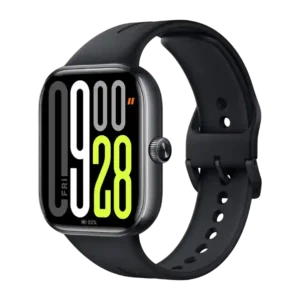
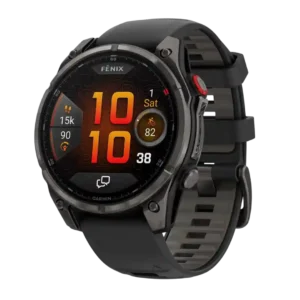
The watch can automatically detect workouts and prompt tracking, though control over the feature appears limited.
The app ecosystem is sparse, with very few extra apps and no broad third-party catalog.
Garmin’s broader app stack and ConnectIQ store expand apps, watch faces, routes, and connected features.
Band quality is serviceable and comfortable, with easy swap-outs, but some reviewers found the strap unremarkable.
Battery life is a standout, ranging from about a week in heavier use to well over two weeks in lighter use, with some reviewers nearing Xiaomi’s 24-day claim.
Battery life is generally strong and sometimes excellent, but usage mode matters and LTE or heavier use can cut endurance sharply.
Blood oxygen monitoring is included and can run continuously, with one reviewer finding readings close enough for general wellness use.
Bluetooth connection is stable enough for calls, syncing, and phone-linked features.
Screen brightness is excellent for the price, with multiple reviewers praising the 1,500-nit panel.
Higher screen brightness is one of the clearest upgrades, with repeated praise over the standard Fenix 8.
The aluminum case helps the watch feel solid and more premium than many budget rivals.
Reviews repeatedly describe the watch as solid, premium, and especially high-end in construction.
The rotating crown is useful and tactile, but it is also the main hardware control and not especially versatile.
Physical buttons and haptics earn positive comments for feel and ease of use.
Bluetooth calling works well enough for quick conversations, though clarity and loudness are not always class-leading.
Calling is workable but mixed: some reviews say voices are clear or good enough, while others mention middling clarity or app-related limitations.
Calorie data is easy to see inside the app and activity rings, but reviews do not suggest especially deep calorie analysis.
Charging works reliably with a magnetic proprietary cable, but reviewers repeatedly noted the dated pogo-pin setup.
Charging is decent rather than exceptional, with reports ranging from useful quick top-ups to roughly one to two hours for a full charge.
The watch offers guided runs, courses, breathing tools, and training prompts, but lacks advanced AI coaching or deep personalization.
Strength plans, Garmin Coach, and adaptive suggested workouts give the watch strong built-in coaching support.
Comfort is one of the strongest traits, with reviewers repeatedly saying it feels light, balanced, and easy to wear for long stretches.
Comfort is mixed: one review says it wears better than expected, while another reports wrist pinch.
The Mi Fitness companion app is polished, simple to use, and stable, though some reviewers still found it basic.
Companion app impressions are split: one review says setup is unusually easy, while another calls activation a faff.
Contactless payments are not available on the global model, which is a clear limitation.
One review explicitly includes NFC payments among the core smart features.
The watch works with both Android and iOS, giving it wider device compatibility than many smartwatch rivals.
Customization is good, especially through watch faces, layout tweaks, and editable elements, though not everything is deeply customizable.
Reviews highlight quick watch-face changes and extensive data-field customization.
Display quality is a major strength, with a sharp AMOLED panel, strong color, and clear visuals.
Reviews praise the sharp AMOLED display and improved clarity and viewing angles.
Durability looks respectable for the price, with water resistance and positive reports on scratch resistance.
The watch is widely framed as rugged and suited to adventurous use.
ECG is not offered, so buyers looking for that health feature will need to look elsewhere.
Multiple reviews note onboard ECG support for rhythm checks through Garmin’s sensor and app setup.
Fit is comfortable for many wearers, but the large case can feel overwhelming on smaller wrists.
Fit is a frequent concern because the case is large and bulky, especially on smaller wrists.
Fitness tracking is good for casual users and general exercise monitoring, but it stops short of sports-watch precision.
Workout data is described as spot-on and trustworthy during training.
GPS is generally solid for everyday runs and walks, but several reviews note occasional overreporting or mild inaccuracies.
GPS performance is a clear strength, with spot-on tracks, no notable errors, and strong race accuracy.
Health tracking is useful for general trends, but the watch is not positioned as a medical-grade or highly advanced tracker.
Heart-rate accuracy is mixed: some reviewers found it reliable or surprisingly strong, while others saw overestimation and inconsistency.
Reviewers consistently describe heart rate readings as close to chest straps, with only minor lag noted during sudden changes.
There is no LTE or standalone cellular support on the global version.
LTE is the headline upgrade and usually works well for calls, texts, LiveTrack, and phone-free use, but not every reviewer found it fully dependable.
Materials are good for a budget watch, with aluminum helping the device feel better than cheap plastic rivals, though not everyone found it premium.
Titanium and sapphire construction is repeatedly cited as hardy and premium.
Menu navigation is easy and helped by the crown, sensible layouts, and accessible widgets.
One review praises quick access to key information without extra swiping, suggesting efficient menu flow.
Music controls are present and useful for basic phone playback management.
Onboard music storage is genuinely useful, but space is limited and transfers can be slow.
Reviews confirm onboard music storage and offline downloads, including linked streaming-service support.
HyperOS is smooth, functional, and easy to learn, but it remains more limited than Wear OS or watchOS.
One reviewer says the watch can be tuned into an experience that serves them well, suggesting a mature overall software experience.
Outdoor visibility is strong, with multiple reviewers saying the screen stays readable in bright sunlight.
Multiple reviews say the screen stays legible in full sun or from awkward angles outdoors.
Pairing and syncing appear dependable, with reviewers reporting stable setup and connection behavior.
In the positive reviews, setup and pairing are described as painless and straightforward.
Recovery-related insights exist through features like Vitality Score, recovery time, and basic analysis, but they are lighter than on pricier wearables.
Training Readiness and related recovery guidance are repeatedly described as useful and standout.
Overall reliability is decent but uneven, with at least one reviewer reporting completely smooth operation.
Reliability feedback is mixed, with one review praising it and another reporting restarts and inconsistency.
Safety features are limited but not absent, with one reviewer highlighting an SOS function.
LiveTrack, SOS, and emergency contact tools add meaningful safety value, though subscription requirements and some limits temper enthusiasm.
Only one case size is offered, which reduces choice and can be a drawback for smaller wrists.
Size choice is a weak point because there is no 43mm Pro and the available models run large.
Sleep tracking is acceptable for broad trends, but deep sleep accuracy and night sensitivity remain inconsistent.
Phone notifications come through reliably and are easy to view, but replies are very limited or unavailable.
The watch covers basic smartwatch needs well, but it is intentionally lighter on advanced features.
One review calls it Garmin’s smartest watch yet, largely because cellular adds more phone-free functions.
Software smoothness is generally good, though several reviewers noticed occasional lag or touch stutter.
Software polish looks uneven: one reviewer calls daily use smooth, while another reports bugs and restarts.
Step counting appears strong in workout mode, though daily totals may drift slightly.
Stress tracking is included, but usefulness is mixed because some reviewers found it slow or not especially refined.
The design looks modern and premium for the price, even if the Apple Watch influence is obvious.
Despite the rugged build, reviews also describe the design as stylish and premium-looking.
Third-party app support is very limited, with major services absent and little extension beyond Xiaomi’s built-ins.
One review explicitly points to ConnectIQ access, indicating some third-party extensibility.
Touch response is usually good, including in wet conditions, but not every reviewer found it perfectly consistent.
The user interface is straightforward, functional, and easy to understand.
One reviewer strongly praises the interface for surfacing a lot of information at a glance.
Value is one of the watch’s biggest strengths for most reviewers, though a minority felt pricing was less compelling in some markets.
Price is the main drawback; reviewers regularly frame it as expensive enough that only users needing its connectivity extras will justify it.
Voice assistant support is absent, so there is little to offer beyond that omission.
Watch face selection is broad and attractive, with many free options and some useful customization.
5ATM water resistance makes the watch suitable for swimming and everyday water exposure.
Multiple reviews explicitly mention 100m water resistance or dive-ready capability.
Wellness insights include sleep suggestions, scores, and basic guidance, but they are lighter and less personalized than premium rivals.
Morning and Evening Reports plus broader training insights are presented as rich and useful.
Wi‑Fi is missing, which limits faster transfers and standalone connectivity options.
Workout variety is excellent, with more than 150 modes and several guided running options.
Reviews say the watch covers a very wide range of sports and offers many customizable activity modes.