Activity auto-detection is limited and inconsistent: one review says workouts are not tracked automatically, while another saw basic auto-detection for some exercise.
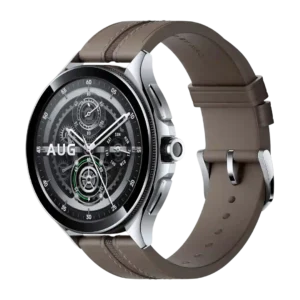
Wear OS gives the watch a strong app ecosystem through Play Store access and much broader software support than earlier Xiaomi models.
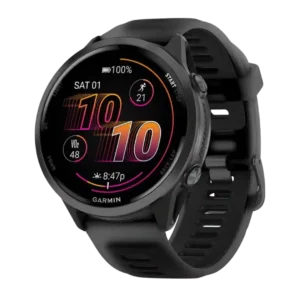
The app ecosystem is useful but not expansive. Reviewers mention ConnectIQ apps and data fields, while also noting that Garmin’s ecosystem feels more limited than watchOS or Wear OS.
Band quality is decent overall, with soft materials and good feel, though not every reviewer loved the strap execution.
Band quality is good, with soft silicone straps and positive comments about long-term wear and durability.
Battery life is heavily disputed, ranging from roughly a day in some use cases to around two days in others.
Battery life is the biggest tradeoff. Some reviewers still found it good in normal use, but many say the brighter screen makes it noticeably weaker than the 265, especially with always-on display.
SpO2 tracking is widely available, can run overnight or all day, and one sports-focused review found about 1% average deviation.
The watch includes blood-oxygen-related health sensing, with reviewers mentioning a pulse oximeter and overnight blood-oxygen or saturation tracking as part of the health stack.
Bluetooth connectivity is described as stable with phones and earbuds.
Bluetooth support is functional for phone-linked features and external sensor pairing, including Bluetooth and ANT+ accessory support.
Screen brightness is consistently praised and remains usable in bright conditions.
Brightness is a standout strength, with multiple reviews describing the screen as one of Garmin’s brightest and easiest to read outdoors.
Build quality is praised for its solid feel and premium construction.
Build quality feels premium for the line, with one review explicitly describing it as a high-quality watch.
Physical buttons and the crown are useful, intuitive, and customizable overall.
Button controls are one of the watch’s practical strengths. Reviewers like the five-button layout and say it works reliably when touch is less convenient.
Call handling is a strength, with reviewers praising microphone and speaker quality for voice use.
Call support is a useful upgrade rather than a must-have killer feature. Reviewers generally found wrist calls workable and clear enough when paired to a phone.
Calorie data and calorie goals are available, but the evidence points to basic utility rather than deeper coaching value.
Charging convenience is mixed because top-ups are quick, but the proprietary setup and alignment requirements are less convenient.
Charging convenience is less impressive. Reviewers specifically wanted wireless charging and also called out the proprietary cable setup.
Charging speed is consistently fast across reviews.
Charging speed is fine in practice, with one long-term reviewer saying it can top up from empty to full during a shower.
Coaching features include tips, intervals, and recovery guidance, but some reviewers found the outputs too rough to trust.
Coaching features are well developed, especially for runners and triathletes. Garmin Coach plans, daily suggestions, and structured guidance were consistently praised.
Comfort is divisive: some reviewers found it bulky or unpleasant for sleep and exercise, while others were happy wearing it.
Comfort is a major plus. Across sizes and use cases, reviewers repeatedly say the watch is easy to wear for workouts, daily use, and even overnight.
Mi Fitness is a recurring weakness, with clutter and buggy presentation noted by reviewers.
Garmin Connect is usually viewed positively for depth and data richness, though the new subscription layer is a recurring annoyance in the reviews.
Contactless payments work well through Google Pay once the watch is set up.
NFC payments are available, giving the watch a useful everyday smartwatch feature beyond training tools.
Compatibility is strongest on Android; support outside that context is more limited or less intuitive.
Cross-platform support looks good overall, with smooth iPhone use noted in one review and phone-assistant access highlighted in another.
There are plenty of personalization options, including watch faces and configurable controls.
Customization is a strength. Reviews mention editable glance folders, assignable shortcuts, and flexible watch-face or data layout changes.
Display quality is one of the watch’s standout strengths, with crisp visuals and strong AMOLED presentation.
Display quality is excellent. Reviewers repeatedly call the AMOLED screen brighter, sharper, clearer, and more vivid than the previous generation.
Durability impressions are positive overall, from staying clean after weeks of use to feeling substantial and well-made.
Durability impressions are positive. Reviewers mention scratch resistance, pristine condition after use, and very little visible wear over time.
Reviewers explicitly state that ECG is not available on the Watch 2 Pro.
ECG is a clear miss. Reviewers repeatedly call out that the Forerunner 570 lacks ECG despite using Garmin’s newer sensor hardware.
Fit can be challenging because the watch’s large size will not suit everyone.
Fit is excellent when sized correctly, with reviewers describing the watch as secure, flush on the wrist, and almost second-skin-like.
Fitness tracking accuracy is mixed: some reviewers found it accurate and responsive, while others reported broader inaccuracies.
Fitness tracking is broadly praised, with one review calling the core tracking accuracy second to none for the watch’s main sports focus.
GPS performance is generally described as accurate or dual-band capable, though some reviews say it falls short of the best sports-watch implementations.
GPS accuracy is one of the strongest areas. Across city runs, trails, and side-by-side tests, reviews consistently describe tracking as excellent, flawless, or near flawless.
Reviews split on health accuracy: one calls it wide of the mark, while another says skin temperature and resting heart-rate ranges are in a good place.
Health stats are generally described as good, with one data-driven review calling overall stat accuracy solid and another saying heart-rate and sleep-stage tracking are pretty good.
Heart-rate accuracy is mixed, ranging from pretty accurate most of the time to sessions averaging 5-7 BPM low.
Heart-rate tracking is a major strength. Multiple reviewers say it stays close to chest straps, performs well in intervals, and is one of Garmin’s better recent sensors.
LTE/eSIM is available on supported models and enables more phone-independent use.
Premium materials, especially stainless steel, give the watch an upscale feel.
Material choices are a step up from older mid-range Forerunners, especially the aluminum bezel and sturdier-feeling case construction.
Menu navigation benefits from the rotating crown and easy scrolling.
Menu navigation is easy to learn and generally straightforward, helped by the refreshed layout and button-plus-touch design.
Music controls are present and usable, including the ability to check what is playing from services like Spotify.
Onboard storage is practical for music and audiobooks, with offline playback support called out in reviews.
Onboard music storage is useful but not generous. Reviews note 8GB of storage and MP3 support, with some calling the capacity a bit stingy.
Wear OS is a major upgrade for apps and features, but Xiaomi’s implementation still feels less polished in some reviews.
The overall software experience is modern and capable. Reviewers describe it as faster, more polished, and close in feel to Garmin’s higher-end models.
Outdoor visibility is strong even on sunny days.
Outdoor visibility is excellent, with reviewers saying the display remains easy to read in bright sunlight and other tough conditions.
The supporting review describes setup and syncing as easy and trouble-free.
Pairing reliability is mixed. One reviewer found syncing smooth and seamless, while another reported repeated disconnect-and-reconnect behavior.
Recovery-time guidance exists, but usefulness is inconsistent and one reviewer found the recovery outputs weak.
Recovery guidance is strong. Reviews highlight training readiness, recovery time, and daily summaries that help frame when to push and when to back off.
Reliability is a clear concern due to bugs, lockups, and inconsistent software behavior.
General reliability is strong, with reviewers saying the watch can be relied on for training and that key controls remain responsive even after submersion.
Safety-related features include abnormal heart-rate alerts and emergency or SOS options.
Safety coverage includes Garmin’s Incident Detection and LiveTrack features for activity sharing and emergency notifications.
Size choice is a weakness because the watch effectively comes in one large format.
Two case sizes broaden the fit range, and multiple reviewers specifically call out the benefit of having both 42mm and 47mm options.
Sleep tracking handles the basics reasonably well, with stage data and auto sleep tracking, but reviewers still note limits in accuracy.
Sleep tracking is useful but not flawless. Reviews say it is reasonably accurate and helpful for readiness, though some found it less robust than the best sleep-focused competitors.
Smartphone notifications are easy to receive and manage on the wrist.
Notifications work, but the experience is mixed. Some reviewers had smooth delivery, while others found text truncated or alerts too persistent on screen.
Reviewers describe the smartwatch feature set as comprehensive, covering health, fitness, and mainstream smart features well.
Smartwatch features are improved meaningfully with the added speaker, microphone, voice tools, and day-to-day conveniences, even if the watch still prioritizes sport over general smartwatch depth.
Software smoothness is a consistent strength, with reviewers calling the watch smooth, fast, and responsive.
Software smoothness is generally strong, but not perfect. Some reviews call the experience polished, while others report crashes or temporary unresponsiveness in edge cases.
Step counting drew criticism for inconsistency and update glitches in the supporting reviews.
Step counting looked solid in direct testing, with one reviewer finding the watch was off by only around 40 steps in repeated checks.
Stress tools are present, including reminders and breathing-style support, but at least one reviewer did not trust the results.
Stress is part of the recovery picture rather than a headline feature, with one reviewer specifically noting that stress levels feed into the watch’s overall readiness guidance.
Style and design are widely praised for looking elegant, premium, and watch-like.
The design is widely liked. Reviewers highlight the brighter colors, more expressive styling, and a look that feels more refined than past Forerunners.
Third-party app support is a clear benefit, including downloadable music and other Wear OS apps.
Third-party service support is solid for a sports watch, with repeated mentions of Spotify, Deezer, Amazon Music, and YouTube Music support.
The supporting review describes touch interaction and app jumping as snappy.
Touch response is consistently described as responsive and easy to use, especially alongside the physical-button setup.
The UI can feel seamless and intuitive, but some reviewers still call out missing polish and awkward behavior.
The interface is widely praised for feeling slicker, cleaner, more intuitive, and more modern than older Garmin implementations.
Value for money is generally strong thanks to Wear OS features and aggressive pricing, though the flaws prevent universal praise.
Value for money is the main weakness. Most reviews say the watch is too expensive for what it adds over the 265, though a small number of owners still felt very happy with the purchase.
Google Assistant support is strong, with good voice pickup and usable on-watch assistant access.
Voice features are mostly good for simple commands, timers, and phone-assistant access, though one reviewer reported crashes and awkward behavior with the phone assistant.
Watch face quality is praised, with customizable options singled out as a strength.
Watch-face customization is strong, with reviewers calling the default face clean and noting that layouts and displayed data can be tailored easily.
Water resistance is good for everyday water exposure and swimming, though one hands-on also notes the lack of IP certification.
Water resistance is solid for swimming use. Reviews mention pool use, open-water suitability, and repeated use in lakes or the ocean without issue.
The watch offers wellness-style scoring, including an overall sleep score out of 100.
Wellness insights are a standout. Body Battery, Sleep Score, energy level, and broader readiness-style insights were repeatedly cited as genuinely useful.
Built-in Wi-Fi supports standalone use at home and standard wireless connectivity.
Workout variety is a strong point, with reviewers repeatedly citing 150-plus activity modes and unusually broad coverage.
Workout coverage is excellent. Reviewers repeatedly mention broad activity support, triathlon and multisport tools, and dozens of sport modes.