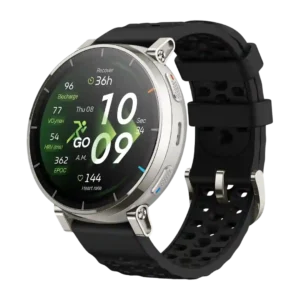
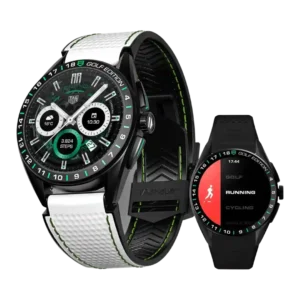
- Better: battery life and offline maps Tom’s Guide said the Coros Pace Pro offers better battery life and offline maps for less.
- Better: battery life and maps Android Central said the COROS Pace Pro offers longer battery life and offline maps.
- Cheaper: price and features TechRadar framed the 570 as pricier than the Coros Pace Pro despite rivals offering maps and battery advantages.
Garmin Forerunner 570 Review
Bottom Line
Choose the Garmin Forerunner 570 for a bright, stylish training watch with excellent GPS, heart-rate accuracy, and coaching. Skip it if value, offline maps, ECG, or long always-on battery life matter most.
Best for runners, triathletes, and Garmin users who want a stylish, bright, accurate training watch with rich coaching and recovery tools. It also suits buyers who value 42mm and 47mm size choices.
Not for shoppers prioritizing the lowest price, full offline mapping, ECG, or maximum always-on battery life. Casual smartwatch users may also find it too sports-focused and expensive.
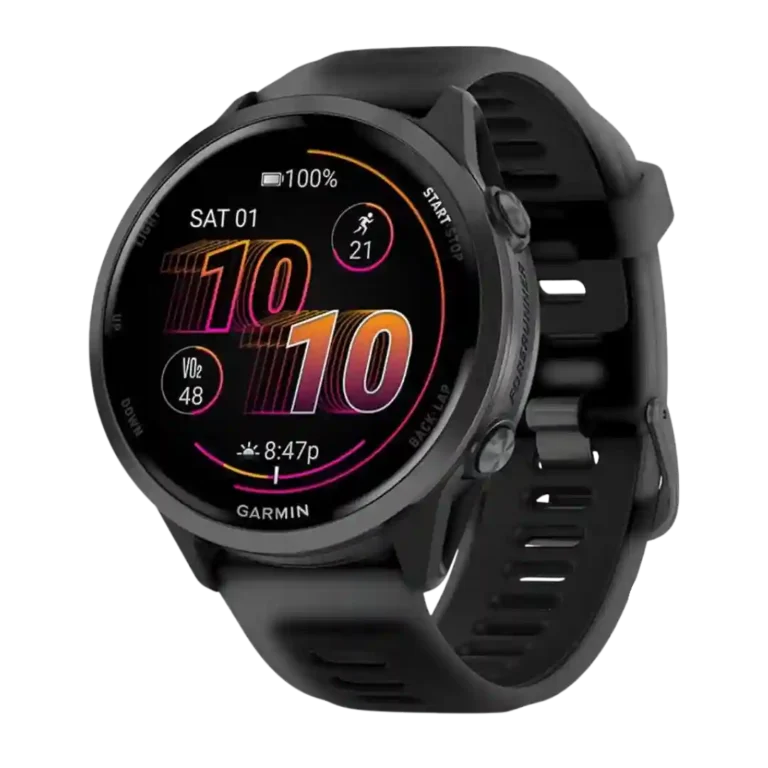
Reviewers consistently framed the Garmin Forerunner 570 as an excellent sports watch with a more polished design, brighter AMOLED display, accurate GPS, and highly trusted heart-rate tracking. Its training tools, recovery guidance, workout variety, and improved smartwatch features make it feel more complete than earlier mid-range Forerunners. The tradeoff is value: many reviewers felt the higher price was hard to justify when battery life regressed with the brighter screen and Garmin still withheld offline maps and ECG. It works best as a premium-feeling runner and triathlon watch, not as the most feature-complete or budget-efficient Garmin.
Compared in Reviews
Products reviewers directly compared with this model, grouped into quick takeaways.
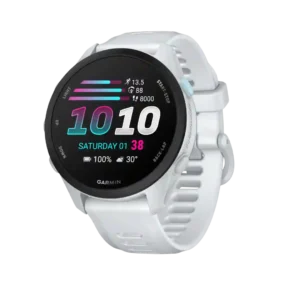
- Better: battery life Tom’s Guide said the 570’s battery life is shorter than the Garmin Forerunner 265.
- Cheaper: value for money Lifehacker argued many buyers could save money with the Forerunner 265.
- Better: battery life TechRadar said the 570 lasts less than the prior Forerunner 265 with comparable use.
- Better: battery life and offline maps Tom’s Guide said the Suunto Race S offers better battery life and offline maps for less.
- Cheaper: price and features TechRadar framed the 570 as pricier than the Suunto Race S, which offers competitive extras.
Feature Scorecards
Summary
48 reviewed features- Very positive 4.5-5.0 44% 21 features
- Positive 3.5-4.4 35% 17 features
- Neutral 2.5-3.4 13% 6 features
- Negative 1.5-2.4 8% 4 features
- Very negative below 1.5 0% 0 features
Pros
-
Charging speed had limited positive evidence, with one reviewer saying a morning-shower charge could refill the watch.
-
GPS accuracy was one of the strongest areas, with repeated praise for near-flawless tracks, reliable distance, and strong multi-band performance.
-
Outdoor visibility was excellent, with reviewers praising bright-sun readability and clarity in varied outdoor conditions.
-
Fitness tracking accuracy was rated very highly, with several reviewers calling the broader tracking experience impeccable or second to none.
-
Brightness was one of the strongest points, with reviewers repeatedly praising the brighter AMOLED panel and outdoor readability.
-
Display quality was a clear highlight: reviewers liked the larger, sharper, vivid AMOLED screen and premium visual feel.
-
Water resistance had limited but positive real-world evidence from swimming in pools, lakes, and the ocean without issues.
-
Workout tracking variety was a major strength, with praise for many sports modes, multisport/triathlon support, and broad training coverage.
-
Recovery insights were a standout for several reviewers, helping them judge readiness, avoid overtraining, and interpret rest.
-
Durability evidence was positive overall, with reviewers reporting pristine bezels, scratch resistance, and little wear after weeks or months.
-
Fit was praised for secure wrist placement, good sizing, ample strap holes, and minimal movement during workouts.
-
Customization was praised for watch-face colors, layouts, widgets, data fields, and Garmin’s flexible display options.
-
Button controls were strongly praised, especially for wet hands, sweaty workouts, swimming, and glove use.
-
Heart-rate accuracy was widely praised, often compared favorably with chest straps, though gym and cycling edge cases remained.
-
Watch face quality received limited positive evidence for clean defaults and strong customization of stats, color, and layout.
-
Touchscreen responsiveness was consistently praised as fast, responsive, and useful when buttons were not needed.
-
Menu navigation was praised for being intuitive, easier to navigate, and enjoyable to interact with after Garmin’s UI refresh.
-
Software smoothness was praised in reviews that found the interface faster, more modern, snappy, and polished.
-
Cross-platform compatibility was good with iPhone syncing, while phone-dependent assistant behavior and iPhone reply limits kept it from being seamless.
-
Step counting accuracy had limited positive evidence, with one controlled walk test missing by only about 40 steps.
-
Wellness insights were highly useful for some reviewers, especially Body Battery, sleep score, readiness, race projections, and evening reports.
-
Size options were praised because the 42mm and 47mm choices helped smaller wrists and broadened appeal.
-
Style and design were widely praised for a more colorful, expressive, premium-looking Forerunner, though one reviewer found it visually familiar.
-
Build quality was generally praised for the aluminum bezel, low weight, and sturdy polymer construction, though it remains mid-range rather than luxury.
-
Coaching features were a major strength, especially training readiness, daily suggested workouts, triathlon plans, and adaptive guidance.
-
Smartwatch features improved meaningfully with mic, speaker, reports, voice tools, and music/payment basics, though the watch is still sports-first.
-
The operating-system experience felt more modern and coherent, though one Apple switcher still found Garmin clunkier.
-
Comfort was mostly praised for lightness and long-wear feel, though larger-case sleep comfort bothered some reviewers.
-
Reviewers saw Garmin’s ecosystem as a strength versus many sports-watch rivals, though not as broad as full smartwatch platforms.
-
The user interface was generally easier, cleaner, and more useful, though some Garmin newcomers still found it clunkier than Apple.
-
Band feedback was mostly positive for comfort, breathability, drying, and odor resistance, with one reviewer noting an imperfect flush fit.
-
Materials quality was viewed as improved thanks to the aluminum bezel, though reviewers still described the watch as mid-range or partly plastic.
-
Strength-workout auto-detection received limited but positive evidence: one reviewer found the watch good at detecting sets and related gym data.
-
The companion app earned praise for deep data and customization, but some reviewers noted subscriptions or a learning curve.
-
Call handling was useful but not essential; reviewers said calls worked and audio was acceptable, though one noted volume limits.
-
Voice assistant quality was mixed: offline voice commands worked well for timers and activities, but phone-assistant behavior was less convincing.
-
Charging convenience was mixed: the connector clicks in reliably, but the lack of wireless charging disappointed an Apple Watch switcher.
-
Reliability was mostly strong for GPS and training use, but one reviewer reported heat-related unresponsiveness.
Cons
-
Pairing reliability was mixed: one reviewer had smooth iPhone syncing, while another saw repeated phone disconnections.
-
Battery life split reviewers: it easily beat daily-charge smartwatches for some, but many noted regression from the 265 and short always-on runtimes.
-
Third-party app support was useful but limited: Connect IQ adds apps and data fields, but trails watchOS and Wear OS.
-
Sleep tracking accuracy was mixed: some found it reasonably accurate, while others found it less robust or weak at REM-stage tracking.
-
Health tracking accuracy was mixed: general metrics were useful, but reviewers criticized illness detection and Garmin’s sleep-stage limitations.
-
Value for money was the main controversy: reviewers loved the watch but often said the price and omitted maps/ECG hurt its case.
-
Mapping and navigation drew the most consistent criticism: breadcrumb routing helped, but reviewers wanted full offline maps at this price.
-
Bluetooth reliability had negative evidence from one reviewer who repeatedly saw phone disconnect and reconnect messages.
-
Smartphone notifications were a drawback in one review because alerts lingered during workouts and vibration controls were limited.
-
ECG functionality was one of the most criticized omissions because the Gen 5 sensor made reviewers expect ECG at this price.
Compared With Category Average
Compared with other Smartwatches, this product is above average in size options, below average in Bluetooth connectivity, mapping and navigation, value for money.
Summary
8 compared features- Above average 0.4+ pts higher 13% 1 feature
- Same as average within 0.3 pts 0% 0 features
- Below average 0.4+ pts lower 88% 7 features
| Attribute | This product | Category average | Difference |
|---|---|---|---|
| Bluetooth connectivity | 2.0 | 3.8 | -1.8 |
| mapping and navigation | 2.1 | 3.4 | -1.3 |
| value for money | 2.7 | 3.8 | -1.2 |
| smartphone notifications | 2.0 | 3.5 | -1.5 |
| size options | 4.4 | 3.2 | +1.3 |
| battery life | 3.3 | 4.2 | -0.9 |
| ECG functionality | 1.6 | 2.6 | -1.0 |
| health tracking accuracy | 2.8 | 3.9 | -1.1 |
FAQ
Is the Garmin Forerunner 570 accurate for running?
Yes. Reviewers repeatedly praised its GPS and heart-rate accuracy, with several comparing it favorably to chest straps and premium Garmin models.
Does the Forerunner 570 have offline maps?
No. It supports breadcrumb-style routing and routes from Garmin Connect, but reviewers consistently criticized the lack of full offline maps at this price.
How good is the battery life?
It depends heavily on display settings. Some reviewers got around a week or more, while several reported only three to four days with always-on display and heavier training.
Is the display a major upgrade?
Yes. The brighter AMOLED screen was one of the most consistently praised upgrades, especially for sunlight visibility and day-to-day readability.
Does the Forerunner 570 support ECG?
No. Reviewers repeatedly called ECG a disappointing omission because the watch uses Garmin’s newer heart-rate sensor and sits at a premium price.
Is it worth the price?
Reviewer opinion was mixed to negative on value. They liked the watch itself, but many felt cheaper or slightly pricier alternatives offered better feature packages.
Sample Expert Reviews We Analyzed
These are a few of the reviews included in our analysis.
Video Reviews
- Review score
- 3.9/5
- Review score
- 3.6/5
- Review score
- 4.6/5
- Review score
- 3.9/5
Article Reviews
- Review score
- 3.4/5
- Review score
- 3.8/5
- Review score
- 4.0/5
- Review score
- 3.6/5
Consider This Instead
If you want better ECG functionality
Choose Apple Watch Series 11. It scores 4.8 vs 1.6 for ECG functionality, with a 4.3 overall score.
If you want better mapping and navigation
Choose Garmin fenix 8 Pro. It scores 5.0 vs 2.1 for mapping and navigation, with a 4.0 overall score.
If you want better value for money
Choose Amazfit Active 2. It scores 5.0 vs 2.7 for value for money, with a 3.8 overall score.
If you want better smartphone notifications
Choose Garmin Forerunner 165. It scores 5.0 vs 2.0 for smartphone notifications, with a 4.2 overall score.
Overall Top Smartwatches Alternatives
Best for rugged outdoor training, long battery life, accurate GPS, maps, calls, and a genuinely useful flashlight. Skip it if the high price, tactical extras, proprietary charging cable, or mixed...
Pros: wellness insights, build quality
Cons: LTE connectivity, band quality
Good if you want the best balanced Apple Watch for an older upgrade, stronger battery, comfort, and health tools. Skip it if you own Series 10, need week-long battery, or...
Pros: ECG functionality, app ecosystem
Cons: cross-platform compatibility, recovery insights
Choose it if you want a rugged Garmin hybrid with real hands, a sharp AMOLED display, strong tracking, and a genuinely useful flashlight. Skip it if price, full maps, onboard...
Pros: heart rate accuracy, GPS accuracy
Cons: onboard music storage, mapping and navigation
Best for bright AMOLED visuals, strong battery life, accurate GPS, maps, and standout value. Skip it if you need rich apps, reliable payments, LTE, ECG, or the cleanest companion app.
Pros: step counting accuracy, menu navigation
Cons: voice assistant quality, contactless payments