Auto detection exists, but one reviewer found it unreliable enough to trigger bike rides while driving.
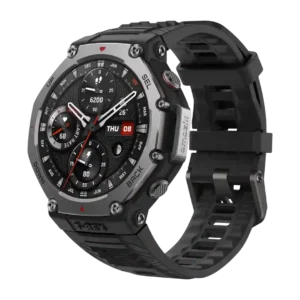
The Zepp app store is present and improving, with extra watch-face and app options, but it remains smaller than major smartwatch ecosystems.
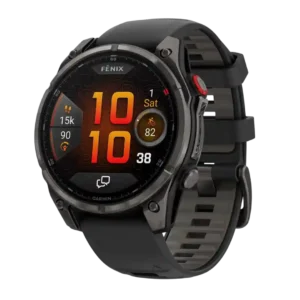
Garmin’s broader app stack and ConnectIQ store expand apps, watch faces, routes, and connected features.
Strap feedback is mixed: some reviewers found it soft and durable, while others found it stiff and sweaty.
Battery life is one of the clearest strengths, with reviewers repeatedly describing multi-day endurance that beats expectations for the price.
Battery life is generally strong and sometimes excellent, but usage mode matters and LTE or heavier use can cut endurance sharply.
Blood oxygen tracking is included in the sensor suite, though most reviews focused on feature availability more than accuracy validation.
Bluetooth support is built in and enables useful external-sensor pairing for workouts and accessories.
Screen brightness is a strong point, with reviewers highlighting a bright AMOLED panel and 2,000-nit peak output.
Higher screen brightness is one of the clearest upgrades, with repeated praise over the standard Fenix 8.
Build quality is rugged and premium for the money, with solid materials and good real-world toughness.
Reviews repeatedly describe the watch as solid, premium, and especially high-end in construction.
Physical buttons are genuinely useful during workouts, even if they do not always integrate cleanly with menus.
Physical buttons and haptics earn positive comments for feel and ease of use.
Call handling is limited because the watch lacks a speaker and cannot make or take calls.
Calling is workable but mixed: some reviews say voices are clear or good enough, while others mention middling clarity or app-related limitations.
Calorie estimates looked broadly in line with rival devices in side-by-side testing.
Charging works reliably, but the small dongle or proprietary cradle is less convenient than standard watch charging setups.
Charging speed is a weak point, with multiple reviewers calling it slow rather than quick top-up friendly.
Coaching tools are plentiful and sometimes helpful, but reviewers disagreed on how mature or useful they feel in practice.
Strength plans, Garmin Coach, and adaptive suggested workouts give the watch strong built-in coaching support.
Comfort is highly wrist-dependent: some reviewers found it surprisingly wearable, while others found it bulky over longer periods.
Comfort is mixed: one review says it wears better than expected, while another reports wrist pinch.
The Zepp companion app has improved, but multiple reviews still describe it as finicky, cluttered, or crash-prone.
Companion app impressions are split: one review says setup is unusually easy, while another calls activation a faff.
Contactless payments exist on paper, but Curve and regional bank limits make the feature restrictive in practice.
One review explicitly includes NFC payments among the core smart features.
The watch works with both Android and iOS, though some features differ by phone platform.
Customization is a strength, with configurable widgets, data pages, and screen layouts.
Reviews highlight quick watch-face changes and extensive data-field customization.
The AMOLED display looks crisp and attractive overall, even if some reviewers felt it falls short of the best premium screens.
Reviews praise the sharp AMOLED display and improved clarity and viewing angles.
Durability is a major positive, with reviewers repeatedly calling the watch rugged and resilient outdoors.
The watch is widely framed as rugged and suited to adventurous use.
Multiple reviews note onboard ECG support for rhythm checks through Garmin’s sensor and app setup.
Fit is better on medium or larger wrists, while smaller wrists may find the case awkward.
Fit is a frequent concern because the case is large and bulky, especially on smaller wrists.
Core fitness tracking is generally solid for the price, especially for mainstream activities.
Workout data is described as spot-on and trustworthy during training.
GPS accuracy is one of the standout strengths, with strong performance across trails, cities, and outdoor routes.
GPS performance is a clear strength, with spot-on tracks, no notable errors, and strong race accuracy.
Health tracking is broadly useful, with stronger confidence in the basics than in every advanced metric.
Heart-rate accuracy is mixed: fine in some conditions, but less trustworthy during harder or more variable efforts.
Reviewers consistently describe heart rate readings as close to chest straps, with only minor lag noted during sudden changes.
LTE is the headline upgrade and usually works well for calls, texts, LiveTrack, and phone-free use, but not every reviewer found it fully dependable.
Materials strike a good value balance, combining stainless steel, polymer, and Gorilla Glass for a sturdy feel.
Titanium and sapphire construction is repeatedly cited as hardy and premium.
Menus can be intuitive at times, but several reviewers still found them confusing or easy to get lost in.
One review praises quick access to key information without extra swiping, suggesting efficient menu flow.
Basic music controls are present and useful for phone-based playback.
Onboard MP3 storage is available, but the lack of streaming support limits convenience.
Reviews confirm onboard music storage and offline downloads, including linked streaming-service support.
The on-watch software feels feature-rich and often pleasant to use, though still less mature than top competitors.
One reviewer says the watch can be tuned into an experience that serves them well, suggesting a mature overall software experience.
Outdoor visibility is strong, with good brightness and readability in bright conditions.
Multiple reviews say the screen stays legible in full sun or from awkward angles outdoors.
Pairing support is broad, but reliability can be inconsistent with some sensors or workflows.
In the positive reviews, setup and pairing are described as painless and straightforward.
Recovery and readiness features are present, but their usefulness and consistency vary a lot by reviewer.
Training Readiness and related recovery guidance are repeatedly described as useful and standout.
Everyday reliability is decent but clearly imperfect, with recurring mentions of quirks, half-finished behavior, or app instability.
Reliability feedback is mixed, with one review praising it and another reporting restarts and inconsistency.
Safety-oriented tools like storm alerts are useful, but one dive-related bug raised a serious caution.
LiveTrack, SOS, and emergency contact tools add meaningful safety value, though subscription requirements and some limits temper enthusiasm.
Size choice is limited because the watch is effectively offered in one large format.
Size choice is a weak point because there is no 43mm Pro and the available models run large.
Basic sleep timing and core sleep tracking perform well once the feature is working properly, but advanced scoring is less trusted.
Notification support is present on both platforms, but wake or gesture behavior can get in the way of smooth message checking.
Smartwatch features are plentiful for the price, covering notifications, weather, music, and more, even if some premium functions are missing.
One review calls it Garmin’s smartest watch yet, largely because cellular adds more phone-free functions.
General navigation is often smooth and responsive, though some screens or map situations still slow down.
Software polish looks uneven: one reviewer calls daily use smooth, while another reports bugs and restarts.
Step counts generally land in the same ballpark as established competitors.
Stress tracking is included as part of the health suite, though reviewers focused more on availability than deep validation.
The rugged hexagonal styling stands out, though some reviewers found the watch bulky or overbuilt.
Despite the rugged build, reviews also describe the design as stylish and premium-looking.
Third-party support is respectable, with apps and services spanning fitness syncing, app-store add-ons, and media controls.
One review explicitly points to ConnectIQ access, indicating some third-party extensibility.
The touchscreen is generally responsive and usable, including during workouts, though not flawless in every scenario.
The UI is feature-rich and sometimes one of the watch’s strengths, but it can also feel overwhelming to less tech-savvy users.
One reviewer strongly praises the interface for surfacing a lot of information at a glance.
Value for money is one of the biggest selling points, with reviewers repeatedly saying the feature set is exceptional for the price.
Price is the main drawback; reviewers regularly frame it as expensive enough that only users needing its connectivity extras will justify it.
Voice assistance is promising but inconsistent, with decent transcription and commands offset by uneven understanding.
Watch faces are a clear positive, with reviewers calling them attractive and well executed.
Water protection is strong, with 10 ATM / 100 m credentials and repeated positive swim or dive mentions.
Multiple reviews explicitly mention 100m water resistance or dive-ready capability.
Wellness and readiness insights add useful context, though they are not always as dependable as the best competing systems.
Morning and Evening Reports plus broader training insights are presented as rich and useful.
Wi-Fi is built in and mainly matters for tasks like downloading maps directly to the watch.
Workout variety is a major strength, with about 177 modes spanning mainstream and niche activities.
Reviews say the watch covers a very wide range of sports and offers many customizable activity modes.