Auto detection exists, but one reviewer found it unreliable enough to trigger bike rides while driving.
Auto workout detection is repeatedly described as reliable and quick for common activities like walking, running, rowing, cycling, and elliptical sessions.
The Zepp app store is present and improving, with extra watch-face and app options, but it remains smaller than major smartwatch ecosystems.
Reviewers consistently praise the Play Store support and broad selection of downloadable apps, noting a deeper ecosystem than most Android smartwatch rivals.
Strap feedback is mixed: some reviewers found it soft and durable, while others found it stiff and sweaty.
The included band is described as soft and secure, and Samsung’s updated band system makes swaps easier even if it is not a dramatic usability leap.
Battery life is one of the clearest strengths, with reviewers repeatedly describing multi-day endurance that beats expectations for the price.
Battery life is the clearest tradeoff: some reviewers saw roughly 18–25 hours with heavier use or always-on display, while lighter-use testing stretched closer to two days.
Blood oxygen tracking is included in the sensor suite, though most reviews focused on feature availability more than accuracy validation.
Blood oxygen support is available on-watch, but multiple reviewers found overnight SpO2 readings lower than expected or unusually low compared with other devices.
Bluetooth support is built in and enables useful external-sensor pairing for workouts and accessories.
Bluetooth performance appears solid in real use, including stable headphone pairing and streaming from the watch during workouts.
Screen brightness is a strong point, with reviewers highlighting a bright AMOLED panel and 2,000-nit peak output.
Brightness is a standout strength, with multiple reviews emphasizing the 2,000-nit peak and excellent readability in bright conditions.
Build quality is rugged and premium for the money, with solid materials and good real-world toughness.
Build quality earns positive marks for its light but solid feel, combining aluminum construction with a durable overall finish.
Physical buttons are genuinely useful during workouts, even if they do not always integrate cleanly with menus.
The physical buttons are useful for navigation and workout control, though they are not as versatile as a full rotating input system.
Call handling is limited because the watch lacks a speaker and cannot make or take calls.
Calling and replying from the wrist are generally smooth, with clear audio and intuitive controls in testing.
Calorie estimates looked broadly in line with rival devices in side-by-side testing.
Calories are easy to surface during daily activity and workouts, making the watch helpful for quick effort snapshots rather than deep coaching on their own.
Charging works reliably, but the small dongle or proprietary cradle is less convenient than standard watch charging setups.
Charging is straightforward thanks to the included magnetic puck and support for reverse wireless top-ups from compatible Galaxy phones.
Charging speed is a weak point, with multiple reviewers calling it slow rather than quick top-up friendly.
Charging speed is consistently praised, with several testers seeing about 50% in 30 minutes and a full charge in roughly 45–90 minutes.
Coaching tools are plentiful and sometimes helpful, but reviewers disagreed on how mature or useful they feel in practice.
Samsung’s sleep coaching and sleep score analysis add guided nudges, multi-week plans, and clearer recovery-focused feedback than past generations.
Comfort is highly wrist-dependent: some reviewers found it surprisingly wearable, while others found it bulky over longer periods.
Comfort is repeatedly highlighted, with reviewers calling the watch light, easy to wear all day, and surprisingly manageable for sleep tracking.
The Zepp companion app has improved, but multiple reviews still describe it as finicky, cluttered, or crash-prone.
Samsung Health and the companion software are generally seen as polished, easy to use, and rich enough to make sense of the watch’s health data.
Contactless payments exist on paper, but Curve and regional bank limits make the feature restrictive in practice.
NFC payments through Samsung Wallet are easy to use and add practical convenience when leaving the phone or wallet behind.
The watch works with both Android and iOS, though some features differ by phone platform.
Compatibility is limited compared with more open rivals: the Watch 6 works with Android phones only, and some features remain Samsung-phone-specific.
Customization is a strength, with configurable widgets, data pages, and screen layouts.
Customization is broad, from text sizing and watch appearance to workout setups and strap choices.
The AMOLED display looks crisp and attractive overall, even if some reviewers felt it falls short of the best premium screens.
The display is one of the watch’s best features, repeatedly described as bright, sharp, colorful, and more immersive thanks to slimmer bezels.
Durability is a major positive, with reviewers repeatedly calling the watch rugged and resilient outdoors.
Durability is a strong point, with IP68/5ATM protection, scratch-resistant sapphire, and positive wear reports after knocks and daily use.
ECG support is present, but several reviews note that access is restricted by Samsung Health Monitor and is best within Samsung’s phone ecosystem.
Fit is better on medium or larger wrists, while smaller wrists may find the case awkward.
With light case sizes and a compact shape, the Watch 6 is generally described as easy to fit and non-bulky on the wrist.
Core fitness tracking is generally solid for the price, especially for mainstream activities.
General workout tracking is viewed as good overall, with several testers reporting close matches for pace, distance, calories, and overall workout logging.
GPS accuracy is one of the standout strengths, with strong performance across trails, cities, and outdoor routes.
GPS results are mixed: some reviews call mapping excellent or route accuracy good, while others report corner-cutting and occasional spotty tracks.
Health tracking is broadly useful, with stronger confidence in the basics than in every advanced metric.
Core health tracking is broadly useful, with sleep and body-composition data often landing in the right ballpark even if some metrics are not lab-grade.
Heart-rate accuracy is mixed: fine in some conditions, but less trustworthy during harder or more variable efforts.
Heart rate accuracy is good at rest and often close to chest straps, but interval spikes and some workouts still show lag or inconsistency.
LTE models add real standalone usefulness, letting the watch handle calls, texts, and data away from the phone.
Materials strike a good value balance, combining stainless steel, polymer, and Gorilla Glass for a sturdy feel.
Materials feel premium for the price, especially the sapphire crystal, while the standard model’s aluminum build still feels well finished.
Menus can be intuitive at times, but several reviewers still found them confusing or easy to get lost in.
Navigation is easy to learn and usually efficient, helped by the touch bezel and straightforward layout.
Basic music controls are present and useful for phone-based playback.
Spotify support gives the watch basic but useful on-wrist music controls rather than a full media-management experience.
Onboard MP3 storage is available, but the lack of streaming support limits convenience.
The watch’s 16GB storage is enough for apps and offline music or podcast downloads, which adds phone-free flexibility.
The on-watch software feels feature-rich and often pleasant to use, though still less mature than top competitors.
Wear OS 4 with Samsung’s One UI skin delivers one of the best Android smartwatch software experiences, with strong integration and feature depth.
Outdoor visibility is strong, with good brightness and readability in bright conditions.
Outdoor readability is excellent, with reviewers repeatedly saying the screen stays easy to read in direct sunlight and low glare.
Pairing support is broad, but reliability can be inconsistent with some sensors or workflows.
Setup and pairing are generally smooth, with reviewers reporting easy device detection and little trouble during onboarding.
Recovery and readiness features are present, but their usefulness and consistency vary a lot by reviewer.
Sleep analysis includes explicit physical and mental recovery factors, giving the watch more actionable recovery framing than a simple sleep total.
Everyday reliability is decent but clearly imperfect, with recurring mentions of quirks, half-finished behavior, or app instability.
Across longer use, reviewers generally describe the Watch 6 as dependable day to day, even if battery behavior can still vary.
Safety-oriented tools like storm alerts are useful, but one dive-related bug raised a serious caution.
Safety coverage is solid, including emergency dialing and fall detection, though not every advanced safety feature is enabled by default.
Size choice is limited because the watch is effectively offered in one large format.
The standard Watch 6 offers two easy-to-shop sizes, making it simpler to match the watch to wrist size and preference.
Basic sleep timing and core sleep tracking perform well once the feature is working properly, but advanced scoring is less trusted.
Sleep tracking is one of the stronger health tools, with good agreement on time in bed and wake detection even if sleep stages are not perfect.
Notification support is present on both platforms, but wake or gesture behavior can get in the way of smooth message checking.
Notifications work well as part of the everyday smartwatch experience, with wrist-based viewing and replies reducing the need to grab a phone.
Smartwatch features are plentiful for the price, covering notifications, weather, music, and more, even if some premium functions are missing.
The Watch 6 covers the smartwatch basics well, combining notifications, apps, health tools, connectivity, and safety features in one polished package.
General navigation is often smooth and responsive, though some screens or map situations still slow down.
Software performance is a clear strength, with reviewers regularly describing the interface as smooth, quick, and low on lag.
Step counts generally land in the same ballpark as established competitors.
Step tracking appears dependable in general-use testing, with one reviewer specifically saying results matched competing watches well.
Stress tracking is included as part of the health suite, though reviewers focused more on availability than deep validation.
Stress monitoring is available as part of Samsung’s broader daily health tracking suite, though it is not a centerpiece feature in most reviews.
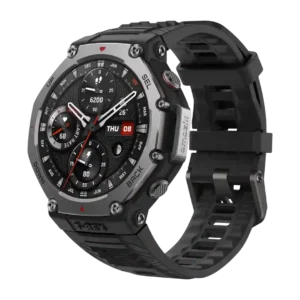
The rugged hexagonal styling stands out, though some reviewers found the watch bulky or overbuilt.
The design lands well for most reviewers, balancing a sporty everyday look with a clean, minimalist shape.
Third-party support is respectable, with apps and services spanning fitness syncing, app-store add-ons, and media controls.
Third-party app support is strong for Wear OS, with reviewers calling out WhatsApp, Spotify, Strava, and the broader Play Store advantage.
The touchscreen is generally responsive and usable, including during workouts, though not flawless in every scenario.
Touch response is usually quick and lag-free, though some reviewers still prefer the Classic’s physical bezel over the standard model’s touch navigation.
The UI is feature-rich and sometimes one of the watch’s strengths, but it can also feel overwhelming to less tech-savvy users.
The interface is easy to understand and well organized, making the watch approachable even for people new to Samsung Health or Wear OS.
Value for money is one of the biggest selling points, with reviewers repeatedly saying the feature set is exceptional for the price.
Value is generally strong thanks to the display, apps, and health features, though the battery and Samsung-only limitations keep it from feeling unbeatable.
Voice assistance is promising but inconsistent, with decent transcription and commands offset by uneven understanding.
Google Assistant support adds useful voice control, and at least one long-term reviewer called it notably fast on the watch.
Watch faces are a clear positive, with reviewers calling them attractive and well executed.
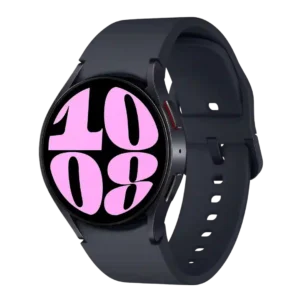
Watch face options are plentiful and visually improved by the larger screen, giving the watch more personality than past generations.
Water protection is strong, with 10 ATM / 100 m credentials and repeated positive swim or dive mentions.
Water resistance is a practical strength, with formal swim-ready protection and repeated confidence that the watch can handle everyday wet conditions.
Wellness and readiness insights add useful context, though they are not always as dependable as the best competing systems.
Beyond raw metrics, the watch gives digestible sleep and wellness insights that help translate data into more understandable daily guidance.
Wi-Fi is built in and mainly matters for tasks like downloading maps directly to the watch.
Wi-Fi support is present and useful for extending notifications and connected features when the phone is not nearby.
Workout variety is a major strength, with about 177 modes spanning mainstream and niche activities.
Workout variety is excellent, with reviewers repeatedly pointing to the very large list of supported activities and niche exercise modes.