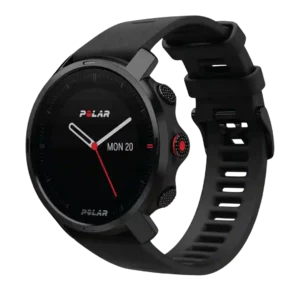
Polar Flow forms a credible app ecosystem around the watch, including syncing with major health and fitness platforms.
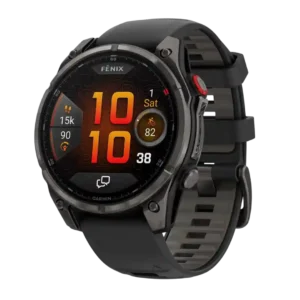
Garmin’s broader app stack and ConnectIQ store expand apps, watch faces, routes, and connected features.
Band execution is mixed: reviewers like the comfortable silicone and interchangeable 22 mm setup, but one review reported a broken clasp.
Battery life is good for a feature-rich multisport watch, with most reviews landing around four to seven days and praising the long GPS modes, even if real-world endurance varies.
Battery life is generally strong and sometimes excellent, but usage mode matters and LTE or heavier use can cut endurance sharply.
Bluetooth support is useful for phone pairing, notifications and sensor connections, and it works well in the core scenarios reviewers described.
Brightness is adequate rather than exceptional; one review found the screen dim indoors without the light, though still readable.
Higher screen brightness is one of the clearest upgrades, with repeated praise over the standard Fenix 8.
Build quality is strong overall, balancing ruggedness with a lighter, more streamlined feel than many outdoor rivals.
Reviews repeatedly describe the watch as solid, premium, and especially high-end in construction.
The physical buttons are a strength, consistently described as easier to press and more reliable than touch when moving.
Physical buttons and haptics earn positive comments for feel and ease of use.
Calling is workable but mixed: some reviews say voices are clear or good enough, while others mention middling clarity or app-related limitations.
Post-workout calorie and fuel-source breakdowns are presented in a genuinely useful way, especially for longer endurance sessions.
Charging is convenient overall thanks to secure magnetic attachment and cable continuity with earlier Polar models.
Charging speed is solid, with one reviewer measuring roughly an hour for a full recharge after a week of use.
Coaching is one of the watch’s standout areas, with FitSpark and related tools serving up adaptive, readiness-based workout suggestions and guidance.
Strength plans, Garmin Coach, and adaptive suggested workouts give the watch strong built-in coaching support.
Comfort is consistently good for a performance watch, with reviewers noting that it sits well on the wrist for long wear.
Comfort is mixed: one review says it wears better than expected, while another reports wrist pinch.
Polar Flow is widely praised for depth and usefulness, though one review found it less attractive and less intuitive than the best rivals.
Companion app impressions are split: one review says setup is unusually easy, while another calls activation a faff.
Reviewers repeatedly note that contactless payments are absent, which is a clear weakness if you expect everyday smartwatch convenience.
One review explicitly includes NFC payments among the core smart features.
Setup support across Android and iOS is directly confirmed, making the watch accessible on both major phone platforms.
Customization is strong in sport profiles, with control over data pages, fields, zones, laps and power-saving behavior.
Reviews highlight quick watch-face changes and extensive data-field customization.
Display quality is good for its category, with solid contrast and clarity, even if it is not as sharp as more smartwatch-like screens.
Reviews praise the sharp AMOLED display and improved clarity and viewing angles.
Durability is one of the watch’s better areas thanks to rugged construction and military-test claims, though one strap-clasp issue was noted elsewhere.
The watch is widely framed as rugged and suited to adventurous use.
Multiple reviews note onboard ECG support for rhythm checks through Garmin’s sensor and app setup.
Fit is well handled despite the outdoor-watch sizing, with reviewers saying it wears lighter and less bulky than expected.
Fit is a frequent concern because the case is large and bulky, especially on smaller wrists.
One review found the watch’s mileage, maps and heart-rate records aligned well with established routes and Garmin comparisons, pointing to strong overall fitness tracking.
Workout data is described as spot-on and trustworthy during training.
GPS is consistently described as accurate or solid in normal use, with fast pickup and good mapping, even if not every route feature is class-leading.
GPS performance is a clear strength, with spot-on tracks, no notable errors, and strong race accuracy.
Heart-rate performance is generally strong and often close to chest-strap or Garmin references, but multiple reviews note spikes or slower response during harder efforts.
Reviewers consistently describe heart rate readings as close to chest straps, with only minor lag noted during sudden changes.
LTE is the headline upgrade and usually works well for calls, texts, LiveTrack, and phone-free use, but not every reviewer found it fully dependable.
Materials feel premium enough for the category, with stainless steel and reinforced polymers repeatedly called out.
Titanium and sapphire construction is repeatedly cited as hardy and premium.
Menu navigation is easy to learn and straightforward, helped by the mix of touch input and physical buttons.
One review praises quick access to key information without extra swiping, suggesting efficient menu flow.
Music support is a major omission, with reviews explicitly calling out the lack of playback-oriented features compared with Garmin rivals.
Onboard music storage is explicitly absent, so offline listening is not part of the Grit X experience.
Reviews confirm onboard music storage and offline downloads, including linked streaming-service support.
The operating system is seen as clean and training-focused, prioritizing clarity over flashy smartwatch behavior.
One reviewer says the watch can be tuned into an experience that serves them well, suggesting a mature overall software experience.
Outdoor visibility is a clear plus, with multiple reviews saying the screen remains readable in bright conditions.
Multiple reviews say the screen stays legible in full sun or from awkward angles outdoors.
Basic phone pairing is straightforward, but route syncing and some app-side syncing can feel clunky or inconsistent.
In the positive reviews, setup and pairing are described as painless and straightforward.
Recovery guidance stands out through Nightly Recharge, Training Load and similar tools that tie sleep and training strain into actionable next-step advice.
Training Readiness and related recovery guidance are repeatedly described as useful and standout.
Reliability feedback is mixed, with one review praising it and another reporting restarts and inconsistency.
LiveTrack, SOS, and emergency contact tools add meaningful safety value, though subscription requirements and some limits temper enthusiasm.
The product offers multiple case and strap-size options, giving buyers some flexibility based on wrist size and color preference.
Size choice is a weak point because there is no 43mm Pro and the available models run large.
Sleep tracking is a clear strength overall, with detailed stage data and useful night-to-night feedback, though one review found it could mistake quiet inactivity for sleep.
Phone notifications work and are generally useful, but they are not especially rich and one review noted intermittent delay issues.
Smartwatch extras are intentionally limited, with the experience focused on training rather than broad lifestyle or media features.
One review calls it Garmin’s smartest watch yet, largely because cellular adds more phone-free functions.
Software polish looks uneven: one reviewer calls daily use smooth, while another reports bugs and restarts.
Step tracking drew a direct criticism in one review for noticeable overcounting, making this a weaker day-to-day metric than the core sport tracking.
Styling is a strong point, blending a sporty outdoor look with a lighter, more attractive design than some bulkier rivals.
Despite the rugged build, reviews also describe the design as stylish and premium-looking.
Third-party service support is strong, with repeated mentions of syncing to platforms like Apple Health, Strava, Nike Run Club, TrainingPeaks and MyFitnessPal.
One review explicitly points to ConnectIQ access, indicating some third-party extensibility.
Touch response is a recurring weak spot, with several reviews calling it laggy, imprecise or hit-and-miss.
The interface layout is logical and well suited to mid-workout use, which helps offset the watch’s simpler smart features.
One reviewer strongly praises the interface for surfacing a lot of information at a glance.
Across reviews, the Grit X is repeatedly framed as good value because it delivers serious training features below comparable Garmin pricing.
Price is the main drawback; reviewers regularly frame it as expensive enough that only users needing its connectivity extras will justify it.
Water resistance is excellent on paper and in reviewer impressions, with repeated mentions of a 100 m rating or equivalent.
Multiple reviews explicitly mention 100m water resistance or dive-ready capability.
The Grit X delivers rich wellness feedback through sleep, recovery and broader activity insights that go beyond simple daily totals.
Morning and Evening Reports plus broader training insights are presented as rich and useful.
Workout coverage is broad, with many sport profiles and solid support for running, swimming, cycling, hiking, multisport and other training modes.
Reviews say the watch covers a very wide range of sports and offers many customizable activity modes.