Reviews mention automatic workout tracking as part of the workout toolset, indicating solid auto-detection support.
The app ecosystem is broad enough for podcasts, Spotify, maps, watch faces, and other add-ons without feeling as deep as a phone-first smartwatch.
Reviewers consistently praised the huge app store and broad app ecosystem, calling it a major advantage over dedicated sports watches.
The supplied band is well executed, with a quick-release design that makes swaps simple.
Band feedback was positive overall, especially for the Trail Loop, which reviewers described as run-friendly, stable, and comfortable for sleep.
Battery life is a major strength, with multi-week smartwatch claims and strong real-world endurance under regular training use.
Battery life is a clear step up for an Apple Watch, typically landing around two to three days or roughly 45 to 49 hours, but it still trails endurance-focused sports watches.
Pulse Ox/SpO2 is part of the watch’s health stack and is used alongside other recovery-related metrics.
Blood oxygen support is present and repeatedly called out as part of the Ultra 3’s health feature set.
Bluetooth connectivity is dependable for phone-linked notifications and everyday smartwatch functions.
Display brightness is improved and easy to glance at, especially compared with weaker older MIP implementations.
Screen brightness was a standout, with reviewers highlighting 3,000-nit visibility and class-leading brightness outdoors.
The physical build is rugged and purpose-built for hard outdoor use.
Build quality was described as rock-solid and premium, with the titanium construction contributing to a refined feel.
Button controls are a genuine asset, offering intuitive navigation when touch is less convenient.
The Action button and physical controls were seen as genuinely useful for quick shortcuts and workout starts.
Call quality feedback was positive, with reviewers saying calls are clear and that voices come through well.
At least one long-term user found calorie estimates weak for weightlifting, saying the watch did not calculate burn properly for that use.
Fast top-ups make the watch easy to live with, with short charging sessions often enough to cover a day or sleep tracking.
Charging speed is merely adequate, with one reviewer specifically calling out nearly two-hour charge times.
Charging is quick for this class, with repeated mentions of 80 percent in about 45 minutes and full charges around an hour.
Training guidance is robust, from guided sessions to adaptive recommendations that can ease off when sleep or load looks poor.
Workout Buddy adds motivation and contextual cues, but multiple reviewers found it inconsistent or still early in execution.
Comfort is very good for a feature-heavy watch, helped by soft straps and balanced daily wear.
Despite the large case, reviewers generally found the watch comfortable for all-day wear, with some bands especially comfortable for sleep.
Garmin Connect is powerful and information-rich, even if some reviewers find it less modern than top rivals.
The Health and Fitness apps unlock useful detail, but at least one reviewer found the post-workout data split between apps disjointed.
Garmin Pay is available and practical for everyday tap-to-pay use where supported.
Apple Pay and Wallet were cited as useful daily conveniences.
The watch works across phone ecosystems, but the experience is better on Android than iPhone because reply features are more limited on iOS.
Compatibility is a major downside, with reviewers repeatedly noting that the Ultra 3 is locked to the iPhone and iOS ecosystem.
Customization is a major strength, from data pages and widgets to flexible screens and activity layouts.
Customization is strong, from data screens and custom workouts to the configurable Action button.
The MIP display is crisp and highly readable, with strong data presentation even if it is less flashy than AMOLED alternatives.
Display quality was repeatedly described in superlatives, with reviewers calling it one of the best watch screens available.
Durability is a strong point, with reviewers noting very good resistance to scratches and hard outdoor handling.
The rugged build and real-world damage resistance were praised, with reviewers noting durable materials and no obvious scuffs after impacts.
Reviews note ECG-capable hardware on the Pro, but the feature was not enabled or certified at review time.
ECG was repeatedly listed among the watch’s core health tools.
Fit is easy to dial in thanks to close buckle spacing and multiple case-size choices.
Fit is more divisive than comfort, with smaller-wrist users reporting that the case can feel oversized or require readjustment.
The watch combines reliable heart-rate and VO2 max reporting for solid workout feedback, especially for endurance use.
Across general fitness use, reviewers described the tracking as accurate and among the best all-round smartwatch performers.
GPS is a standout, with fast locks, stable tracking, and repeated praise for industry-leading accuracy in races and tough terrain.
GPS performance was widely praised for clean, precise tracks, though one race comparison still slightly favored Garmin.
Across health metrics, testing stayed consistent, though reviewers still noted the occasional false nap in sleep logs.
Reviewers described the Ultra 3 as an excellent health tracker with strong overall health monitoring.
Heart-rate performance is strong for a wrist sensor, with minimized spikes and Garmin’s newer sensor showing clearly improved workout accuracy.
Heart-rate performance is strong overall, but not perfectly consistent; some tests matched chest straps closely while one race test showed notable over-reading.
5G and cellular support are meaningful upgrades, with reviewers noting standard 5G inclusion and stronger reception in weak-signal areas.
Materials feel appropriately premium for the price, with titanium/polymer construction helping keep weight in check.
Premium materials such as sapphire glass, ceramic, and titanium were repeatedly highlighted.
Navigation through menus and maps is easy with either touch or buttons, which helps on the move.
Changes to menus and workout controls were seen as logically organized and easier to use.
Music controls are present and useful, fitting the watch’s strong but not ultra-deep smartwatch feature set.
Music use is a strength, with effortless streaming and phone-free Apple Music playback called out positively.
Onboard music support is there for storing music and pairing it with the rest of the watch’s workout-friendly smart features.
The watch includes 64GB of onboard storage, supporting its music and app-heavy use case.
The overall software experience is polished and feature-rich, with one of the better user experiences in the GPS watch category.
watchOS on the Ultra 3 was described as smooth, polished, and tightly integrated with the iPhone.
Outdoor readability is excellent, with map and data legibility holding up well when conditions get bright.
Outdoor readability is excellent, with reviewers repeatedly saying the display is easy to see in bright conditions.
Pairing and syncing were stable in testing, including crowded multi-device setups.
Integration with the iPhone ecosystem was described as frictionless and seamless.
Recovery tools are a clear strength, with recovery time and Training Readiness repeatedly described as useful day-to-day guidance.
Recovery-related insights are present and were described as increasingly comprehensive, though not as deep as sports-watch rivals.
Longer-use testing describes the watch as dependable enough for serious routes and bigger outdoor days.
General reliability was strong, with satellite features and software frequently described as just working smoothly.
Safety features are meaningful, combining the built-in flashlight with sharing and alert tools that add practical utility.
Safety is one of the Ultra 3’s headline strengths, centered on satellite SOS and other off-grid emergency tools.
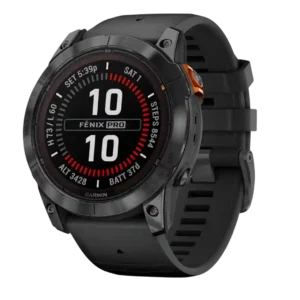
Three case sizes make it easier to match the fenix 7 Pro to different wrists and priorities.
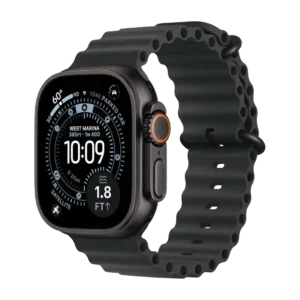
Size flexibility is poor because the Ultra 3 is sold in only one large 49mm case.
Sleep timing is generally accurate and improved, but one reviewer still caught a couple of false nap detections.
Sleep tracking itself was viewed positively, with reviewers saying Apple handles the core sleep detection well.
Phone notifications work well on-wrist for quick awareness, though the experience is closer to glanceable alerts than a full smartwatch reply hub.
Notification handling is solid, with gestures and controls making alerts easy to dismiss or manage from the wrist.
Smartwatch basics are well covered with notifications, music, payments, and everyday tools, but the watch remains sports-first rather than app-first.
As a smartwatch, the Ultra 3 was repeatedly framed as the most complete or capable Apple Watch available.
Menu and settings movement generally feels natural, though the software still reads as functional more than flashy.
Performance feels fluid and fast, with reviewers praising quick app launches, smooth animations, and snappy stats screens.
Stress tracking is present as one of Garmin’s always-on wellness metrics, though reviewers discuss it more as supporting data than a headline feature.
Design impressions are positive overall, though the look skews technical and rugged rather than minimalist.
The design balances ruggedness with polish, earning praise for looking sophisticated without losing its sporty identity.
Third-party support is solid, with integrations spanning Strava, TrainingPeaks, Komoot, GPX workflows, and Connect IQ add-ons.
Third-party app support is a real strength, with reviewers highlighting broad app availability and standout fitness apps.
The touchscreen is responsive and remains usable even in wet conditions.
Touch responsiveness was praised as fast, accurate, and enjoyable to use.
The user interface is easy to understand and well suited to a data-dense sports watch.
The updated interface was generally seen as intuitive and easier to navigate, especially in workout areas.
Value is strongest for serious outdoor or endurance users; the high price is easier to justify there than for casual buyers.
Value is the main weak point: the watch is widely seen as expensive, and several reviews question whether the premium is justified.
Siri performance was described as responsive and useful.
Watch-face support is strong thanks to customizable stock faces and a healthy set of additional options.
Exclusive faces like Waypoint and Modular Ultra were singled out as attractive and genuinely appealing.
Water protection is strong enough for swimming and rough use, backed by explicit ruggedness and resistance claims.
Water performance is excellent, with 100m resistance and dive-ready capability repeatedly emphasized.
Garmin’s wellness layer is broad, spanning sleep, stress, energy, and acclimation insights that reviewers found genuinely useful.
Wellness features such as sleep score, hypertension alerts, and broader health insights were described as comprehensive and useful.
Wi‑Fi adds practical convenience for maps and syncing, even if it is more of a support feature than a headline one.
Reviewers repeatedly describe the fenix 7 Pro as covering an enormous range of sports, with new profiles adding even more breadth.
Workout support is broad, covering many activity types and stronger multisport profiles than standard Apple Watch models.