Detachable cable convenience
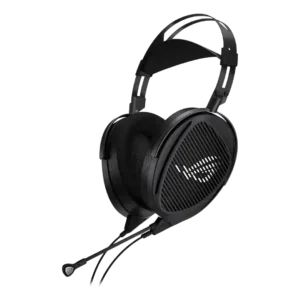
ASUS ROG Kithara
5.0
The mic cable is easy to remove and exchange for the dedicated listening cable, making it simple to move between gaming and music setups.
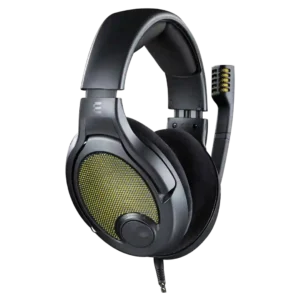
Drop + Epos PC38X
1.8
The cable is detachable, but the deeply recessed proprietary-style 2.5 mm connection limits easy third-party replacement. Multiple reviewers call that restriction inconvenient.
Equalizer customization
ASUS ROG Kithara
4.4
Although there is no dedicated app, the planar drivers respond extremely well to external EQ. Small bass adjustments can add substantial low-end weight without obvious distortion.
Drop + Epos PC38X
1.3
There is no companion software for EQ, and reviewers who want to tune the sound see that as a clear limitation. External EQ or sound-card adjustments are possible, but the headset itself offers no software customization.
Stability
ASUS ROG Kithara
2.1
The headset can slide or drop a notch when the clamp or suspension sliders are loose, especially on smaller heads. Properly adjusted replacement units may remain stable.
Drop + Epos PC38X
5.0
One detailed fit assessment notes that the stronger clamp helps keep the headset stable on the head, even though that pressure can affect comfort.
Earpad replacement ease
ASUS ROG Kithara
2.0
The included pads can be swapped, but the small proprietary clips feel fiddly and potentially fragile. Aftermarket choices are also limited by the mounting system.
Drop + Epos PC38X
4.8
When reviewers discuss the swap process directly, they find the pads easy to pop off and snap back into place. Changing between cloth and velour is quick and fuss-free.
Detachable microphone convenience
ASUS ROG Kithara
5.0
The removable boom mic is useful when switching to music-only listening. Its cable-based design is practical, though balanced listening cannot be combined with the mic in some setups.
Drop + Epos PC38X
2.2
The flip-to-mute boom is convenient, but it is permanently attached and fairly large. Reviewers who want a cleaner everyday headphone or modular setup repeatedly wish the mic could be removed.
Ear cup swivel/rotation range
ASUS ROG Kithara
5.0
The large cups offer generous rotation and can sit naturally on the head or lay flat for packing.
Drop + Epos PC38X
2.7
Ear-cup rotation is limited: the cups may tilt or move slightly, but they do not swivel fully or lay flat. Reviewers who value full swivel see this as a drawback.
Headband adjustability
ASUS ROG Kithara
3.1
The suspension band offers broad sizing and can fit very large heads, but loose early units and slipping sliders are a repeated concern. Later replacement or retail units sometimes hold their position correctly.
Drop + Epos PC38X
5.0
Headband adjustment has a broad range and accommodates a wide span of head sizes. The click-step mechanisms are generally viewed as secure and useful.
Weight comfort
ASUS ROG Kithara
3.6
The 420-gram build is objectively heavy, yet the suspension strap distributes it well for many users. Others feel top pressure, jaw pressure, or fatigue, especially when the fit is loose.
Drop + Epos PC38X
5.0
Low weight is unanimously praised where discussed. Reviewers repeatedly say the light plastic frame reduces fatigue over long gaming sessions.
Volume output
ASUS ROG Kithara
3.5
Volume is highly source-dependent. Some devices drive it extremely loudly, while controllers and motherboard outputs may require the USB-C adapter or a dedicated DAC/amp.
Drop + Epos PC38X
4.9
The PC38X is widely praised as easy to drive from phones, PCs and console controllers without a dedicated amp. One reviewer still wanted a little more headroom from a low-power controller, but output is generally sufficient.
Button control usability
ASUS ROG Kithara
3.0
The inline mute and volume controls are convenient, but the wheel can be overly sensitive and some users heard clicks or artifacts when toggling the mic.
Drop + Epos PC38X
4.2
The simple right-earcup volume wheel is usually praised for being easy to find and adjust quickly. Several reviewers dislike its light resistance or the fact that turning it fully down does not completely mute.
Carry case quality
ASUS ROG Kithara
1.0
A recurring complaint is that no carrying case or hard case is included, despite the large headset and extensive cable bundle.
Drop + Epos PC38X
2.0
The included cloth pouch keeps the headset from getting scratched or dusty, but reviewers say it provides little real impact protection.
Bass performance
ASUS ROG Kithara
3.7
Bass is fast, clean, and easy to separate from the rest of the mix, but stock sub-bass and physical rumble divide listeners. A DAC or modest EQ can add satisfying impact without obvious muddiness.
Drop + Epos PC38X
4.6
Bass is surprisingly full for an open-back headset, with repeated praise for punch, texture and control rather than muddy boom. A few reviewers prefer less bass for competitive play, and sub-bass depth is not universally strong.
Microphone
ASUS ROG Kithara
3.3
The detachable MEMS mic is clear enough for chat, calls, and meetings, but opinions range from excellent to disappointing. Common complaints include nasal tone, plosive sensitivity, position dependence, and room pickup.
Drop + Epos PC38X
4.0
The boom microphone is broadly above average for a gaming headset, with clear speech and convenient flip-to-mute behavior. Criticism focuses on its bulky fixed design, plosives and the gap versus a dedicated microphone.
Connectivity versatility
ASUS ROG Kithara
4.3
The swappable 3.5mm, 4.4mm, 6.3mm, dual-3.5mm, and USB-C options cover PCs, consoles, phones, DACs, and amps. The flexibility comes with more cables and setup complexity than a typical gaming headset.
Drop + Epos PC38X
5.0
Dual analog cables make it easy to move between desktop and portable/controller sources without adapters. Reviewers who discuss the connection options see them as a practical strength.
Packaging quality
ASUS ROG Kithara
4.7
The premium box, sound-signature certificate, and organized presentation make the unboxing feel special, though the large number of parts can initially feel overwhelming.
Drop + Epos PC38X
4.0
Packaging is minimalist and functional rather than premium. Reviewers generally accept the plain presentation because the headset and accessories are protected and the budget appears focused on the product itself.
Microphone noise reduction
ASUS ROG Kithara
4.2
Hardware noise rejection works well in several tests without software processing, especially against steady background noise and keyboards. Other users report substantial room pickup, so placement and environment matter.
Drop + Epos PC38X
3.5
Background-noise handling is decent to very good in many tests, but plosives are a recurring weakness. Several reviewers recommend positioning carefully or adding a windscreen/pop filter for cleaner speech.
Sound leakage
ASUS ROG Kithara
1.4
Sound freely escapes the open earcups and can be audible to people nearby. A few users find leakage less severe than expected, but shared rooms remain a poor fit.
Drop + Epos PC38X
2.0
Sound leakage is an unavoidable open-back tradeoff: nearby people can hear your audio, especially at higher levels. One owner found leakage modest at normal volume, but shared-room use remains less private.
Frequency response accuracy
ASUS ROG Kithara
5.0
Channel matching and overall response consistency are repeatedly praised. The velour pads provide the more linear midrange, while the stock presentation stays close to a neutral studio-style target.
Drop + Epos PC38X
4.4
The tuning is widely viewed as balanced, natural or well judged for gaming, with enough warmth to stay enjoyable. Competitive-FPS preferences create some disagreement about how much upper-mid and treble emphasis is ideal.
Multi-platform compatibility
ASUS ROG Kithara
4.4
PC, PlayStation, Switch, phones, and DAC setups are broadly supported, but the required cable or adapter changes by device. Console microphone support is the main complication.
Drop + Epos PC38X
5.0
Cross-platform use is a consistent strength: reviewers successfully use the PC38X across PC and multiple consoles, with the included cable options making controller connections straightforward.
Build quality
ASUS ROG Kithara
3.7
The metal-heavy frame, hinges, and premium finish impress most users, but several customers report serious quality-control failures such as dead drivers, popping, and defective adapters.
Drop + Epos PC38X
3.1
Build quality is the clearest split in the coverage. Some reviewers find the plastic chassis durable and well assembled, while others call it cheap-feeling, flimsy or chintzy for the price.
Software/setup simplicity
ASUS ROG Kithara
5.0
The analog plug-and-play design requires no Armoury Crate or other app. That simplicity appeals to purists but removes built-in EQ, RGB, and surround controls.
Drop + Epos PC38X
4.5
Setup is mostly simple plug-and-play analog audio with no required drivers or companion software. One later owner reported more Windows and game-level troubleshooting than expected, so ease can depend on the source hardware.
Portability/foldability
ASUS ROG Kithara
2.5
The cups can rotate flat, but the large wired open-back design is desk-bound and poorly suited to commuting or travel.
Drop + Epos PC38X
2.0
Portability is weak. The cups do not fold flat, the pouch offers little protection, and the open-back design plus fixed boom mic make mobile use less convenient.
Treble clarity
ASUS ROG Kithara
4.0
Treble is highly detailed and often cleaner than sharper planar rivals, but the tuning varies with pads and can sound bright, forward, restrained, or fatiguing depending on the listener.
Drop + Epos PC38X
4.3
Treble is generally crisp and detailed without becoming piercing, helping gunfire and positional cues stand out. Pad choice and taste matter: some heard a slightly dull top end, while others found it a bit bright or harsh.
Overall satisfaction
ASUS ROG Kithara
4.2
Most buyers are enthusiastic about the clarity, comfort, and unusual audiophile-gaming blend, often calling it a favorite or endgame headset. Returns and low scores are concentrated around mic limitations, insecure fit, and quality-control failures.
Drop + Epos PC38X
4.5
Overall sentiment is strongly positive, with many reviewers calling the PC38X a favorite, a top-tier gaming headset or an easy recommendation. The dissenting reviews mainly object to price, build feel, clamp or specific FPS tuning rather than the whole product.
Glasses and hat compatibility
ASUS ROG Kithara
4.8
The roomy pads and forgiving planar bass work well with glasses, with little loss of low-end response from an imperfect seal.
Drop + Epos PC38X
5.0
Glasses wearers report excellent results once the clamp settles, with soft pads applying little unwanted temple pressure. The open, cushioned fit is repeatedly singled out as glasses-friendly.
Microphone quality for calls
ASUS ROG Kithara
4.5
Voice clarity is good for Discord, Teams, and ordinary calls, but it still sounds like a headset mic and is not a substitute for a dedicated streaming or podcast microphone.
Drop + Epos PC38X
4.3
Voice quality is one of the PC38X's better traits: calls and chat are typically clear, intelligible and natural for a headset mic. Some reviewers still hear thinness, inconsistent level behavior or a lack of bass compared with dedicated mics.
Comfort during long use
ASUS ROG Kithara
4.7
Most users find the suspension headband and huge pads exceptionally comfortable for multi-hour sessions. Comfort becomes less reliable on smaller heads or for those sensitive to the 420-gram weight.
Drop + Epos PC38X
4.5
Long-session comfort is a major strength: most reviewers can wear the PC38X for hours with little fatigue, helped by low weight and breathable pads. The main exception is firm initial clamp, which often eases after break-in.
Instrument separation
ASUS ROG Kithara
4.8
Layering, detail retrieval, and frequency separation are major strengths. Busy game scenes, instruments, dialogue, and subtle environmental sounds remain easy to distinguish.
Drop + Epos PC38X
4.7
Separation is a strong point in dense mixes, with reviewers praising distinct channels, instruments and game cues. One music-focused take found separation merely average, but the overall pattern is clearly positive.
Replaceable earpads
ASUS ROG Kithara
5.0
Two pad sets are included and meaningfully change comfort and tonality. Velour is softer and smoother, while the hybrid set offers a tighter seal and stronger focus.
Drop + Epos PC38X
4.8
Swappable earpads are a well-liked feature, letting owners choose between the included cloth/mesh and velour options. Reviewers who comment on it appreciate both the flexibility and the easy changeover.
Ear cup padding quality
ASUS ROG Kithara
4.3
Both leatherette-mesh and velour pads are plush, roomy, and generally comfortable. Velour runs cooler, while a few users find the pads scratchy, thin, pressure-inducing, or insufficiently durable.
Drop + Epos PC38X
4.4
The ear pads are generally soft, breathable and deep enough to keep ears off the drivers, with cloth and velour options to suit preference. A few reviewers find the pads smaller or hotter than ideal.
Midrange clarity
ASUS ROG Kithara
4.3
Midrange detail is generally clean and well separated, but pad choice changes the presentation. Velour sounds more linear, while some listeners hear vocals and instruments sitting slightly farther back.
Drop + Epos PC38X
4.4
Mids are usually described as clear, natural and full, especially for voices and in-game detail. A minority found them either too recessed or a little too prominent, so the midrange tuning is not unanimous.
Cable quality
ASUS ROG Kithara
3.7
The modular audiophile cable feels premium and the connection options are extensive. The mic cable draws more criticism for feeling cheaper, being cumbersome, or running slightly short.
Drop + Epos PC38X
3.6
The included braided cables are often praised as sturdy and practical, especially because two lengths/terminations cover different setups. Complaints center on stiffness, tangling and the occasional transmission of rubbing noise.
Positional audio accuracy
ASUS ROG Kithara
4.3
Most users hear footsteps, reloads, and distant movement with excellent precision, making the headset strong for competitive play. A smaller group reports merely average or even poor directional placement, so game and listener fit can affect results.
Drop + Epos PC38X
4.4
Positional audio is usually excellent, with repeated praise for locating direction, distance and movement without virtual surround. A minority found the advantage game-dependent or the imaging hazier than competing headphones.
Noise isolation (passive)
ASUS ROG Kithara
1.4
The extremely open cups provide little to no passive isolation. Household sounds, fans, conversations, and other room noise remain easy to hear.
Drop + Epos PC38X
1.5
Passive isolation is poor by design. Reviewers repeatedly note that the open-back cups let outside noise in, making the headset a better fit for quiet rooms than noisy shared spaces.
Soundstage width
ASUS ROG Kithara
4.8
The open-back planar design creates a broad, airy, highly detailed stage that often feels more speaker-like than conventional gaming headsets. A few FPS users disagree sharply about its directional usefulness.
Drop + Epos PC38X
4.7
The open-back design delivers a consistently praised wide, immersive soundstage that makes games and music feel spacious. A small minority found the stage less expansive or too left-right focused than the hype suggests.
Clamping force comfort
ASUS ROG Kithara
2.9
Clamp is relaxed and comfortable for many large-headed users, but it is often too weak for smaller heads and can let the headset slide during movement.
Drop + Epos PC38X
3.0
Clamp is the most divisive comfort trait. Some reviewers call it perfectly judged, but many find it tight or pinchy out of the box and recommend letting the headset loosen with use.
Design and Aesthetics
ASUS ROG Kithara
4.1
The restrained metal-and-open-grille styling looks premium and mature to many buyers, though the tall frame and oversized cups can look awkward or comically large on smaller heads.
Drop + Epos PC38X
4.1
The restrained Sennheiser-style shape is widely liked, especially the later all-black look, but the original yellow accents are polarizing. Several reviewers appreciate that it looks less aggressively 'gamer' than many alternatives.
Sound quality
ASUS ROG Kithara
4.8
Clarity, speed, detail, and natural presentation are the Kithara’s defining strengths across games, music, and media. Most listeners rate it above typical gaming headsets, though a minority finds the sound underwhelming or poorly suited to music.
Drop + Epos PC38X
4.8
Sound quality is the headline strength: reviewers repeatedly call the PC38X superb, detailed and unusually strong for a gaming headset. Even the more critical takes generally concede that its core audio is good.
Value for money
ASUS ROG Kithara
3.9
At around $299, many buyers see unusually strong audiophile sound, comfort, and accessories for the price. Others consider it too expensive once a DAC/amp is added or when compared with more convenient wireless headsets.
Drop + Epos PC38X
4.0
Value depends heavily on sale price and priorities. Many reviewers consider the sound and comfort worth the premium, while others question paying close to $200 for a wired, plastic headset when cheaper or more feature-rich alternatives exist.
Included accessories
ASUS ROG Kithara
4.9
The box is unusually complete, with two pad sets, multiple cables, modular plugs, a USB-C adapter, and a unit-specific tuning card. Several buyers consider the bundle a major part of the value.
Drop + Epos PC38X
4.9
The accessory bundle is repeatedly praised: two useful cables, two pad sets and a simple pouch cover the main use cases without much filler.
Maximum volume clarity
ASUS ROG Kithara
5.0
The planar drivers maintain very low distortion and tolerate aggressive volume or bass EQ cleanly, providing substantial headroom when properly driven.
Drop + Epos PC38X
5.0
One reviewer found the PC38X keeps its audio quality consistent as volume changes, with no obvious degradation at higher or lower listening levels.
Active noise cancellation
ASUS ROG Kithara
1.0
There is no active noise cancellation. The open-back design is intentionally built for awareness rather than blocking the room.
Drop + Epos PC38XNo score yet
Audio-video sync accuracy
ASUS ROG KitharaNo score yet
Drop + Epos PC38X
5.0
The wired analog connections provide a low-latency gaming experience, with no meaningful audio-video sync concern reported.
Battery
ASUS ROG KitharaNo score yet
Drop + Epos PC38X
5.0
Because the PC38X is wired, there is no battery runtime to manage or recharge. One reviewer explicitly treats that effectively unlimited uptime as a benefit.
Bluetooth
ASUS ROG Kithara
1.0
This is a fully wired headset with no Bluetooth. Buyers who prioritize wireless freedom will need a different model.
Drop + Epos PC38XNo score yet
Built-in DAC and hi-res playback
ASUS ROG Kithara
2.0
The USB-C adapter adds convenient digital connectivity, but its power and quality are inconsistent; the included DAC can feel weak and power-hungry.
Drop + Epos PC38XNo score yet
Cable microphonics
ASUS ROG KitharaNo score yet
Drop + Epos PC38X
3.3
Cable-borne rubbing noise is inconsistent but real: two reviewers notice some microphonics from the braided cable, while another says the deep-set connector largely suppresses vibration noise.
Console compatibility limitations
ASUS ROG Kithara
2.0
Console support is not fully plug-and-play: PlayStation mic use may require USB-C, controllers can sound underpowered, and Xbox microphone support is the biggest gap.
Drop + Epos PC38XNo score yet
Dongle
ASUS ROG Kithara
3.6
The included USB-C adapter improves compatibility and often raises volume, but results vary by device and some users report limited power or inconsistent Windows behavior.
Drop + Epos PC38XNo score yet
Fit/seal reliability
ASUS ROG Kithara
4.0
The oversized frame works especially well for large heads and glasses, but smaller heads may struggle to achieve a secure fit. The low clamp can cause slipping even when the acoustic seal remains forgiving.
Drop + Epos PC38XNo score yet
Footstep sound level scaling feature
ASUS ROG KitharaNo score yet
Drop + Epos PC38X
1.0
Two reviewers specifically found footsteps too subdued in competitive FPS with the stock tuning. They preferred brighter alternatives or EQ when footstep prominence was the priority.
Game/Chat balance control
ASUS ROG Kithara
1.0
There is no dedicated game/chat mix control, which makes the physical control set feel sparse compared with feature-rich gaming headsets.
Drop + Epos PC38XNo score yet
Hinge durability
ASUS ROG Kithara
2.6
The metal headband and hinges usually feel robust, yet broader quality-control failures make long-term confidence uneven.
Drop + Epos PC38XNo score yet
Integrated microphone
ASUS ROG KitharaNo score yet
Drop + Epos PC38X
4.7
The integrated boom mic is unusually capable for an all-in-one gaming headset. Reviewers like having clear built-in communication without needing a separate desk or boom microphone.
Preset EQ profile quality
ASUS ROG Kithara
4.5
The stock tuning favors clarity, speed, and competitive detail over heavy bass. Many enjoy it immediately, while others prefer a small low-shelf boost or find it better for gaming than music.
Drop + Epos PC38XNo score yet
Smudge resistance
ASUS ROG KitharaNo score yet
Drop + Epos PC38X
5.0
The matte plastic finish resists visible fingerprints well in the one review that evaluates smudging, helping the headset stay clean-looking.
Spatial audio
ASUS ROG Kithara
1.8
There is no built-in virtual surround or spatial-audio processing. The natural open-back stage can still feel immersive, and external options such as Dolby Atmos may work well.
Drop + Epos PC38XNo score yet
USB-C
ASUS ROG Kithara
4.5
The included USB-C adapter expands phone, laptop, Switch, PlayStation, and PC compatibility and supports high-resolution playback. It can add volume, but it is not consistently powerful enough to replace a dedicated DAC/amp.
Drop + Epos PC38XNo score yet
Xbox compatibility
ASUS ROG Kithara
1.6
Xbox support is a major limitation: audio can work through a controller, but microphone support is absent or requires awkward workarounds.
Drop + Epos PC38XNo score yet