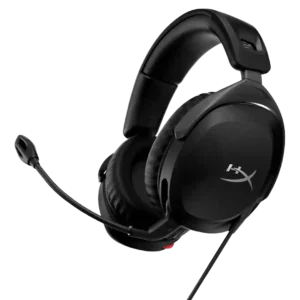
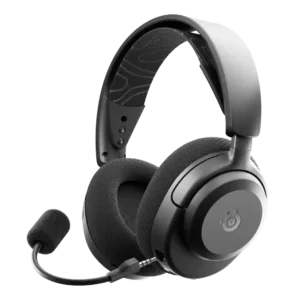
There is no active noise canceling, and multiple reviews call it a missing feature if you plan to use the headset in noisy environments.
Software support existed where applicable, but some reviews treated it as an extra step rather than a seamless out-of-box benefit.
The companion apps (Arctis mobile app and SteelSeries GG/Sonar on PC) are a major differentiator, enabling presets, mic settings, sidetone, and firmware updates; PC features are usually deeper than mobile.
The 2.4GHz dongle mode is repeatedly praised for low-latency gaming and quick switching between wireless modes, keeping audio and on-screen action in sync.
Bass was commonly described as present and impactful, but tuning varied by review, with some hearing punchy low end and others wanting less boom or more control.
Bass is generally punchy and satisfying once tuned, but several impressions note either less sub-bass/thump than premium sets or a stock mid-bass emphasis that can sound a bit boxy until EQ is applied.
Battery life was generally considered solid rather than class-leading, with multiple reviews centering around the 20-hour claim.
Battery life is commonly cited around 30 hours on 2.4GHz and about 40 hours on Bluetooth, though at least one standardized test reported notably lower 2.4GHz runtime.
Bluetooth performance is generally stable with painless switching between devices, and Bluetooth 5.3 is frequently cited across reviews. True simultaneous 2.4GHz plus Bluetooth audio is generally not the norm here; most usage centers on quick-switching, with any simultaneous behavior being limited or platform-dependent.
Build quality was the clearest tradeoff: some reviews thought it was decent for the price, but many others called out flimsy or thin plastic construction.
Build is largely plastic to keep weight down; many reviewers still find it sturdy, but some describe a cheaper in-hand feel and surfaces that can show wear more readily.
Controls were simple and easy to understand, but the volume dial quality and resistance were not universally liked.
Controls cover the essentials (mute, volume, quick-switch), but chat-mix and multifunction control schemes can be less intuitive than headsets with dedicated wheels or simpler routing.
Cable impressions were mixed, with praise for low microphonics and decent handling in some reviews, but complaints about coiling, damage risk, or general cheapness in others.
Cables get mixed feedback: they work, but several reviews complain about short lengths, stiffness, or a proprietary feel that is less convenient than standard cables.
Charging was convenient enough in one review simply because battery life stretched long enough that charging rarely felt urgent.
Fast charging is consistently highlighted, commonly framed as about 15 minutes of charging for around 9 hours of use.
Clamp was consistently described as light or easygoing rather than overly tight.
Clamp is generally secure for gaming; some describe it as snug or tight at first, while others like the stability and seal it creates.
Where codecs are discussed, Bluetooth support is basic (AAC/SBC), prioritizing broad compatibility over advanced high-bitrate options.
Long-session comfort was one of the family’s biggest strengths, although a few reviewers still mentioned heat, ear contact, or pressure depending on fit and pad depth.
Comfort is a standout theme: the headset is very light and the suspension-style headband spreads pressure well for long sessions, though a few users report heat or fabric scratchiness depending on pads and fit.
The wired connection and broad device support gave the headset strong day-to-day connectivity flexibility.
Reviewers usually liked the refreshed look, calling it modern, subtle, or better styled than older Stinger designs.
Design feedback is mostly positive thanks to clean lines and fun color options (like aqua and lavender), with the main critique being that the mostly plastic shell can look or feel less premium.
The wired connection was criticized for being fixed rather than detachable.
Detachable/replaceable cables are appreciated on the wired versions for longevity and easy swapping between USB-C, USB-A, and 3.5mm setups.
The microphone arm was repeatedly criticized for not detaching, even though flip-to-mute helped offset some of that inconvenience.
The detachable boom mic is convenient for travel or a cleaner look, but some users prefer retractable designs to avoid misplacing the mic.
The wireless dongle was described as simple to use and quick to connect.
The slim USB-C 2.4GHz dongle is a key strength for low-latency play and broad device support; a few notes mention port-blocking in tight spaces or wishing for better storage for the dongle.
Pad comfort varied by reviewer: some found the cups breathable and comfortable, while others complained about thin or shallow padding.
Breathable fabric or AirWeave-style pads are widely praised for comfort, but some describe them as stiffer or less plush than premium earpads, and a few note warmth or texture over time.
Swivel range was praised for adding flexibility and easier off-head positioning.
Earcups typically swivel and can lay flatter for fit and storage, helping comfort and making it easier to rest the headset around the neck or pack it away.
One review specifically praised how easy the earpads were to swap.
EQ support was inconsistent in practice: some reviews liked having profiles and controls, while another could not get the equalizer to work properly.
EQ flexibility depends on platform: PC Sonar can be highly adjustable (including parametric-style tuning), while the mobile app is often more preset-driven with simpler tone controls.
Seal reliability was viewed positively in the one review that discussed how firmly the cups closed around the ears without clamping too hard.
The one review that addressed accuracy directly said the tuning was pleasant but not especially accurate.
Game/chat balancing is available via Sonar or headset controls, but the experience can feel finicky compared with headsets that have a dedicated, separate chat-mix wheel.
The numbered adjustment system was seen as practical and easy to dial in for repeatable fit.
The ski-goggle or elastic suspension headband design is effective, but adjustments can feel stiff, and some larger heads may find the sizing range more limited than expected.
One review specifically warned that the hinges looked skinny enough to raise durability concerns.
Included extras were modest but useful, usually centered on items like splitters, pop filters, DTS codes, charging cables, or dongles.
Box contents typically cover the basics (dongle and charging cable), and wired versions often include multiple adapter cables; some reviewers wish included cables were longer or more convenient.
When mixes got busy, several reviews still found instruments and layered sounds easy to separate rather than blurred together.
Separation is adequate for the price, but busy scenes can blend together compared with premium drivers, which can reduce clarity when lots of effects stack up at once.
The attached mic was an integrated, always-present part of the headset design rather than a separate removable piece.
At very high volumes, bass-heavy tracks remain controlled with minimal distortion in testing, helping the headset stay clear when pushed loud.
When reviewers judged the mic as a whole rather than only call clarity, they usually found it better than expected for the price.
Background-noise control was mixed: some mics rejected breathing, taps, or room noise well, while others still let through breathing or keyboard noise.
Noise handling is a strong point: software options (including AI-style noise reduction where available) and mic tuning help cut distractions like keyboard noise and room sounds in typical gaming/office use.
Call quality was usually good enough for chat, school, or Discord, but a few reviews reported muffled capture, low levels, or only serviceable overall quality.
The ClearCast boom mic is generally clear enough for party chat, Zoom, and calls, but it can sound slightly fuzzy or less crisp than the microphones on step-up models or a standalone mic.
Midrange performance came through as serviceable to good overall, though some reviews noted compression or a slightly recessed presentation.
Dialogue and vocals come through clearly for gaming and media, though some tunings sound slightly recessed in the mids until a preset or EQ profile is enabled.
Cross-platform use was a recurring strength, with multiple reviews highlighting support across PCs, consoles, and other 3.5 mm devices.
Compatibility is a strong point across PC, PlayStation, Switch/handhelds, and mobile; the main caveat is selecting the correct variant for Xbox wireless needs.
Multipoint behavior is limited and inconsistent across platforms: many users should expect to switch sources rather than rely on seamless multi-device audio at the same time.
Passive isolation was usually described as acceptable rather than exceptional, with some reviews praising the seal and others wanting stronger blocking of outside noise.
Passive isolation is average: it reduces some higher-frequency noise but leaves plenty of awareness of your environment, and at least one review warns sound leakage can be noticeable.
The swiveling design made the headset easier to rest around the neck between sessions.
Portability is helped by swivel-flat earcups and (on wireless models) a detachable mic, but average isolation and occasional sound leakage mean it is better suited to home or quiet travel than noisy commutes.
Positional performance was one of the most consistently praised gaming traits, with reviewers repeatedly calling out clear footsteps, shots, and directional cues.
The one review that judged preset behavior found a single preset good enough to leave in place.
Game-specific presets are a headline feature and frequently improve footsteps, weapon cues, and dialogue clarity; not every preset is dramatic, but the library depth is a consistent positive.
Earpad replaceability was inconsistent across models and reviews, with some noting removable cushions and others saying pads could not be individually replaced.
Earpads are removable and replaceable, which helps maintenance and allows upgrades to improve isolation or comfort.
RGB features are prominent on the wired model (customizable via software and easy to disable), while wireless models lean more on physical colorways than flashy lighting.
Sidetone and mic monitoring worked for some users, but at least one review reported flaky behavior instead of a stable experience.
Sidetone (mic monitoring) is available and adjustable; some like its clarity, while others find the default-on behavior odd until it is dialed back in the app.
Materials and finishes vary: some surfaces resist fingerprints well, but other plastics and coatings can show scratches or wear if handled roughly.
Setup was usually easy, but the overall experience ranged from true plug-and-play convenience to limited software flexibility depending on model and platform.
Software can be powerful but not always seamless: PC Sonar features add complexity to system audio routing for some, while the mobile app experience is simpler and more 'all upside' for console use.
Most reviews praised the sound for the price, describing it as strong, enjoyable, or better than expected, though a few still framed it as only okay rather than refined.
Overall sound is strong for the price and tends to improve noticeably with presets/EQ; out of the box it can sound flatter or less lively than pricier models, and it is not as resolving in complex scenes as flagship headsets. In wired use (USB/3.5mm on the wired model), sound stays consistent across connections; USB is mainly about enabling software features and RGB rather than a dramatic sonic transformation.
The headset was credited with a wider, more convincing stage than expected in supported modes, especially once spatial processing was enabled.
Soundstage and immersion are respectable for a budget headset, with solid directional cues, but it does not fully 'wrap around' the way higher-end models can.
Spatial audio support was a real selling point, but reactions to DTS and similar processing varied from genuinely helpful to actively unpleasant.
Spatial/positional audio support and tuned presets help competitive play, making footsteps and directional cues easier to place, though overall immersion still trails top-tier headsets.
One review explicitly criticized head stability, saying the headset did not grip securely enough during movement.
Treble was generally clear and airy, but some reviewers also noted mild boost or unevenness rather than a perfectly smooth top end.
Treble varies by tuning: some reviews describe softer highs, while others note brighter peaks that can be fatiguing; presets and EQ help balance sparkle versus harshness.
USB-C support was present on the wireless model, though cable quality and included charging length drew criticism.
USB-C is central for charging and connectivity, and adapters are commonly included to support USB-A or other setups depending on model and use case.
Value for money was a major positive overall, especially at the lower price points, though a few reviewers still thought competing options offered safer or better-rounded buys.
Volume output drew mixed feedback: some reviewers found it very loud, while others said the maximum level felt limited.
Volume is typically sufficient for gaming, but some note it is quieter out of the box or lower-sensitivity than rivals; software settings and volume boost can help, and high volumes may worsen sound leak in public spaces.
Low weight was repeatedly framed as a comfort advantage and a major reason the headset stayed easy to wear.
Weight is repeatedly described as extremely light for an over-ear gaming headset (often around 250-260g), which helps reduce fatigue over multi-hour use.
Xbox support was straightforward on the wired models thanks to the standard controller jack connection.
Xbox support is tied to the 3X variant and its dongle switch, while other versions focus on PlayStation; choosing the right model matters if you want wireless Xbox compatibility.