- Alternative: budget gaming headset alternative SoundGuys presents the Razer Barracuda X (2022) as a strong alternative under $100.
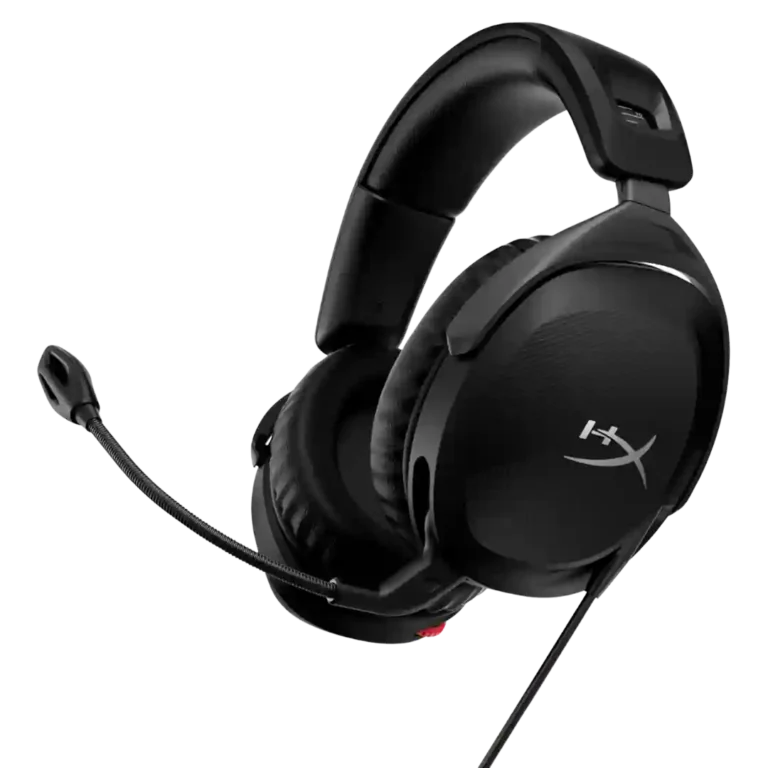
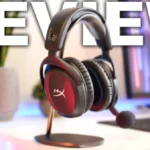
HyperX Cloud Stinger 2 Review
Bottom Line
Choose the HyperX Cloud Stinger 2 for low-cost gaming sound, comfort, and simple plug-and-play use. Skip it if you need premium build, detachable parts, stronger isolation, or dependable mic quality.
Best for budget-focused gamers who want simple setup, comfortable lightweight wear, and strong-enough game audio without chasing premium materials or deep customization. Wired buyers get the broadest platform compatibility, while wireless buyers get dongle convenience.
Not for users who need rugged construction, detachable cables or microphones, strong ANC, Bluetooth, polished app control, or a consistently high-quality microphone. It is also risky for large ears, glasses wearers, or anyone sensitive to heat from leatherette pads.
The HyperX Cloud Stinger 2 earns its budget reputation through enjoyable game audio, broad wired compatibility, light weight, and generally comfortable long-session wear. Reviewers often praise its value, positional detail, and simple controls, especially the flip-to-mute mic and volume dial. The tradeoff is clear: the headset keeps cost down with plastic construction, shallow or thin pads, limited customization, and fixed cables or microphones on many versions. Microphone impressions are split, ranging from excellent for the price to muffled, quiet, or breath-sensitive. Wireless versions add dongle convenience, NGENUITY options, and 20-hour battery life, but not class-leading endurance or Bluetooth.
Compared in Reviews
Products reviewers directly compared with this model, grouped into quick takeaways.
Astro A10 Gen 2
- Alternative: durability for kids GadgetryTech suggests the Astro A10 Gen 2 when durability matters more than the Stinger 2’s comfort and sound.
Cloud 2
- Worse: features and value at about the same price CNET says HyperX Cloud 2 delivers more at about $50, weakening the Stinger 2 value case.
Feature Scorecards
Pros
-
Xbox support is directly supported through 3.5mm compatibility and DTS Sound Unbound/Xbox mentions.
-
Latency is only directly supported in the wired discussion, where one review says the wired connection ensures zero latency.
-
Multi-platform compatibility is a strength of the wired 3.5mm versions, with consoles, PCs, phones, and controllers repeatedly mentioned.
-
Positional audio is one of the strongest gaming results, with multiple reviewers hearing footsteps, shots, direction, and distance accurately.
-
Wireless dongle feedback is positive overall, especially for quick setup, strong connection, and impressive range.
-
Setup is usually easy and plug-and-play, especially with the wireless dongle, though software and firmware steps add complexity for some features.
-
Low weight is repeatedly praised and often offsets less plush pads or budget materials during longer sessions.
-
Connectivity is strong for the wired model via 3.5mm and for wireless via dongle, but variants differ and the wireless version lacks a 3.5mm jack.
-
Clamp is generally light and comfortable, creating enough seal without feeling tight in the better comfort reports.
-
Instrument separation earns positive comments, with reviewers hearing distinct instruments or guitar parts despite the budget price.
-
Headband adjustability is a clear positive, especially the numbered or labeled adjustment markings that help restore a preferred fit.
-
Comfort is one of the more repeated strengths, especially because of low weight, although glasses wearers and hot ears appear as caveats.
-
Sound quality is broadly praised for the price, with caveats around bass balance, treble emphasis, shallow depth, or model-to-model differences.
-
Value is the clearest consensus strength: most reviewers call it a good budget headset, though durability and feature compromises affect recommendations.
-
Included accessories are solid for the price, commonly including splitters, pop filters, dongles, charging cables, or DTS activation codes.
-
Soundstage is better than expected for some reviewers, especially with DTS or wider Stinger 2 tuning, though it is not universally praised.
-
DTS Headphone:X is the main codec-like audio enhancement discussed, with PC Gamer explicitly calling it a spatial audio codec.
-
Swivel support is generally appreciated, with many wired and wireless reviews noting 90-degree rotation or fold-flat/fold-in behavior.
-
Microphone quality is sharply mixed, ranging from excellent for the price to muffled, quiet, or merely serviceable depending on model and reviewer.
-
The integrated microphone is a core feature, usually a flexible flip-to-mute boom that stays attached to the headset.
-
The design is usually described as simple, modernized, and more attractive than older Stingers, though still plainly budget or gamer-styled.
-
Wireless reviews repeatedly cite about 20 hours of battery life, viewed as useful but not exceptional against longer-lasting competitors.
-
Spatial audio is widely discussed and often praised, but a few reviewers could not enable it or disliked DTS processing.
-
For calls, chat, and conferences, reviewers generally find the mic understandable, though some note low output or inconsistent levels.
-
Bass impressions vary by model and reviewer, ranging from punchy and strong to lacking, coarse, or less prominent than competitors.
-
Controls are simple and usually useful, especially the volume dial and flip-to-mute mic, though some reviewers call the dial cheap or too easy to bump.
-
Volume output depends on variant and reviewer, ranging from very loud and easy to drive to too quiet or lacking output.
-
Console support is better than some packaging suggests, with one Core review noting that the box only lists PC despite broader console compatibility.
-
Microphone noise reduction often helps with keyboards and background noise, but breathing, room noise, and inconsistent suppression remain concerns.
Cons
-
Midrange clarity ranges from clear and detailed to scooped or compressed, making it more reliable for gaming detail than natural music reproduction.
-
Replaceable earpad support differs by model: some reviewers found removable or easily interchangeable pads, while one wireless unit was not individually replaceable.
-
USB-C appears on wireless charging, but the most repeated comment is that the supplied cable is too short.
-
Treble is one of the most variable tuning areas, described as smooth or clean by some and overly prominent, compressed, or over-boosted by others.
-
Fit and seal are generally acceptable, but glasses and loose-feeling wireless fit can break the seal or reduce stability for some users.
-
Sidetone/mic monitoring exists on wireless software and can work well, but one reviewer reports audible hiss and persistence issues.
-
Measured and subjective frequency-response comments point to budget tuning with bass/treble deviations rather than strict accuracy.
-
Build quality is the biggest split: some reviewers find it sturdy for the price, while many criticize the plastic frame, hinges, and flimsy feel.
-
Ear pads are a common comfort tradeoff: some find them soft and breathable, while others say they are thin, shallow, stiff, or warm.
-
Maximum-volume clarity is uneven: one review notes congestion with layered instruments, so high-volume or complex playback is not always clean.
-
Portability is limited but present, mostly through inward-folding or swiveling earcups rather than a fully rugged travel design.
-
Software support is mixed: wireless models can use NGENUITY, wired/Core coverage leans on DTS or notes limited/no app support.
-
Passive isolation is only moderate: some tests and seal reports are favorable, while others say external noise remains distracting.
-
Cable feedback is mixed to negative: the wired cable can be simple and low-noise, but multiple reviews call it non-premium, coily, or fragile.
-
EQ support is inconsistent: NGENUITY and DTS can expose EQ options, but some reviews report no EQ controls or ineffective customization.
-
Packaging is plainly budget, from bare plastic unboxing to simple boxes, though one wireless review describes the box as attractive.
-
Wireless variants use a 2.4 GHz dongle, while at least one reviewer explicitly notes there is no Bluetooth connectivity.
-
Earpad handling varies, with one reviewer saying removal is easy but remounting is hard and another saying interchange is very easy.
-
Charging is functional on wireless units, but reviewers repeatedly complain about the extremely short USB-C charging cable.
-
Hinge durability is a repeated concern, with reviewers calling out skinny plastic hinges, loose rotation points, or fragile-feeling swivels.
-
Physical and wireless stability are mixed: some fits feel too loose, and one wireless reviewer reports occasional connection drops.
-
Reviewers consistently describe the headset as relying on passive isolation or mic noise filtering rather than true active noise cancellation.
-
Game/chat balance is a limitation, with reviewers noting no chatmix or no mic gain / separate audio control on certain versions.
-
Preset audio quality is a weakness where discussed, especially DTS headset presets that reviewers said worsened the sound.
-
The microphone is usually integrated and flip-to-mute, but several reviewers object that it cannot be removed.
-
The cable is repeatedly described as fixed or non-detachable, making repair and replacement a clear limitation.
-
RGB lighting is explicitly absent, matching the no-frills design rather than a customization-heavy gaming headset.
Compared With Category Average
Compared with other Headsets, this product is above average in Xbox compatibility, below average in Detachable microphone convenience, Detachable cable convenience, Preset EQ profile quality.
| Attribute | This product | Category average | Difference |
|---|---|---|---|
| Detachable microphone convenience | 1.2 | 3.9 | -2.8 |
| Detachable cable convenience | 1.1 | 3.8 | -2.7 |
| Preset EQ profile quality | 1.3 | 3.8 | -2.6 |
| Charging | 2.3 | 4.4 | -2.2 |
| Game/Chat balance control | 1.3 | 3.4 | -2.1 |
| Hinge durability | 2.2 | 4.1 | -2.0 |
| Xbox compatibility | 5.0 | 3.2 | +1.8 |
| Stability | 2.0 | 3.8 | -1.8 |
FAQ
Is the HyperX Cloud Stinger 2 good for gaming?
Yes, most reviewers found it good for budget gaming, especially for hearing dialogue, effects, footsteps, and directional cues. It is not consistently tuned like a premium headset, but it generally handles games well for the price.
Is the HyperX Cloud Stinger 2 comfortable for long sessions?
Usually yes. Reviewers often praise the light weight and comfort, though some mention shallow pads, heat buildup, glasses-seal issues, or ears touching the driver cover.
How good is the microphone?
The microphone is mixed. Some reviewers call it clear or excellent for the money, while others report muffled sound, low output, breath pickup, or limited recording quality.
Does it work with consoles?
The wired 3.5mm versions are repeatedly described as working with consoles through controllers or headphone jacks, including PlayStation, Xbox, and Switch references. One Core review noted the packaging only listed PC support even though the headset worked with consoles.
Does the wireless version have Bluetooth?
No reviewer evidence supports Bluetooth. The wireless version is described as using a 2.4 GHz USB dongle, and one review explicitly says there is no Bluetooth connectivity.
What are the main downsides?
The most repeated concerns are plastic build, hinge durability, fixed cable or microphone, shallow pads, limited software/customization, and inconsistent microphone quality. Wireless reviews also criticize the short USB-C charging cable and ordinary battery life.
Consider This Instead
If you want better Detachable cable convenience
Choose HyperX Cloud Alpha. It scores 4.8 vs 1.1 for Detachable cable convenience, with a 3.9 overall score.
If you want better Detachable microphone convenience
Choose RIG R5 Spear MAX HD. It scores 4.6 vs 1.2 for Detachable microphone convenience, with a 3.9 overall score.
If you want better Game/Chat balance control
Choose Razer BlackShark V3 Pro. It scores 4.6 vs 1.3 for Game/Chat balance control, with a 4.0 overall score.
If you want better Preset EQ profile quality
Choose EKSA E1000 Gaming Headset. It scores 4.6 vs 1.3 for Preset EQ profile quality, with a 3.6 overall score.
Overall Top Headsets Alternatives
Good if you want top-tier wireless sound, ANC, battery swapping, and four-source mixing across a serious multi-platform setup. Skip it if $600 feels steep or you mostly play one console.
Pros: Audio-video sync accuracy, Hinge durability
Cons: aptX, Smudge resistance
Choose the Arctis Nova Pro Wireless for do-everything connectivity and a no-downtime swappable-battery system; Skip it if the premium price and only middling stock boom-mic quality are dealbreakers.
Pros: Replaceable battery, Simultaneous wireless + Bluetooth audio
Cons: aptX, LDAC
Best for clear positional gaming audio, 60+ hour battery life, and a convenient charging dock. Skip it if you need ANC, a removable mic, wired 3.5mm use, or seamless Xbox-and-PS5...
Pros: Earpad replacement ease, Wireless latency
Cons: Active noise cancellation, Carry case quality
Choose the MMX 150 Wireless for all-day comfort and long battery life; Skip if you want bass-heavy tuning without EQ or a more premium, non-plasticky build.
Pros: Battery, Multipoint connectivity reliability
Cons: Active noise cancellation effectiveness, Xbox compatibility