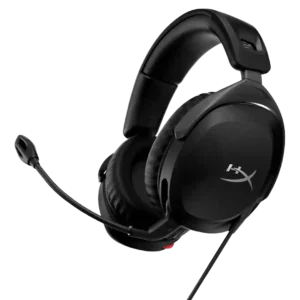
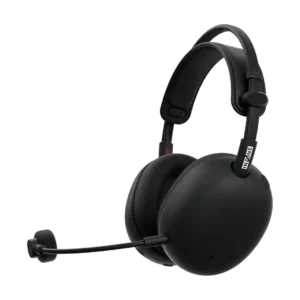
Across reviews, ANC is consistently described as unusually strong for a gaming headset, effectively cutting low rumbles and much of the surrounding office or home noise. Several reviewers say it helps them miss voices and distractions even at moderate volume. Noise canceling can be toggled and adjusted via onboard controls and companion software. Tuning options exist, but some reviewers note mode feedback relies on chimes rather than clear voice prompts, which can be confusing.
Software support existed where applicable, but some reviews treated it as an extra step rather than a seamless out-of-box benefit.
App support includes a PC-focused hub and a mobile companion, giving access to EQ, profiles, and certain feature toggles. Several reviewers mention that settings can overwrite between apps or feel barebones, but the core control options are there.
Audio-video sync and latency performance are repeatedly praised when using the 2.4GHz dongle or wired connection, making it well-suited to competitive play. Bluetooth is positioned as secondary, with LE Audio helping but not replacing the dongle for lowest latency.
Bass was commonly described as present and impactful, but tuning varied by review, with some hearing punchy low end and others wanting less boom or more control.
Bass is generally punchy for explosions and gunfire, but impressions vary by default profile: some find it underwhelming, others say it can get muddy or overbearing in certain mixes. Most agree EQ can dial in a better balance.
Battery life was generally considered solid rather than class-leading, with multiple reviews centering around the 20-hour claim.
Battery life is commonly rated average for the price: about 30 hours quoted, but real-world results vary widely by ANC and usage, with heavy ANC sessions dropping into the teens and ANC-off testing stretching much longer. Many comparisons note rivals at similar prices last significantly longer or offer hot-swap batteries.
Bluetooth connectivity is generally described as quick and reliable for phones and secondary devices. It is often used for music or chat while gaming through the dongle. Simultaneous dongle plus Bluetooth audio is a major highlight, enabling dual-source setups for game audio plus phone audio. Reviewers generally find it genuinely useful for modern gaming routines.
Build quality was the clearest tradeoff: some reviews thought it was decent for the price, but many others called out flimsy or thin plastic construction.
Build quality gets a generally positive but not luxury verdict: the headset is light and often described as well-made, yet its plastic construction can feel hollow or less premium than heavier competitors. Durability is usually considered adequate for normal use.
Controls were simple and easy to understand, but the volume dial quality and resistance were not universally liked.
Control usability is mostly praised thanks to distinct shapes, spacing, and tactile buttons, especially for mic mute and game-chat balance. Complaints center on a finicky volume wheel in some contexts and chime-based feedback that can be hard to interpret.
Cable impressions were mixed, with praise for low microphonics and decent handling in some reviews, but complaints about coiling, damage risk, or general cheapness in others.
Carrying case quality is typically described as a soft pouch or bag, sometimes with useful pockets, but not as protective as a hardshell case at this price. It is functional for light travel rather than rugged protection.
Charging was convenient enough in one review simply because battery life stretched long enough that charging rarely felt urgent.
Fast charging is a clear plus, with multiple reviews citing a short top-up yielding meaningful play time. Full charge times and use-while-charging behavior are reported inconsistently across sources, but quick top-ups are broadly praised.
Clamp was consistently described as light or easygoing rather than overly tight.
Clamping force is generally low, which improves comfort and reduces hotspots. The tradeoff is that a few reviewers experienced minor shifting during movement.
Codec support is functional rather than audiophile-focused: reviews mention standard Bluetooth codecs plus LE Audio support, but also note the absence of premium options like LDAC or aptX. This aligns with its gaming-first positioning.
Long-session comfort was one of the family’s biggest strengths, although a few reviewers still mentioned heat, ear contact, or pressure depending on fit and pad depth.
Comfort during long use is one of the strongest consensus positives, with many calling it among the most comfortable premium headsets they have tested. The lightweight chassis and breathable materials are repeatedly credited for marathon sessions.
The wired connection and broad device support gave the headset strong day-to-day connectivity flexibility.
Reviewers usually liked the refreshed look, calling it modern, subtle, or better styled than older Stinger designs.
Design is often described as understated and premium-looking for a gaming headset, especially with the mic removed, and available in multiple colorways. Some dislike the headband aesthetic or note finishes that show marks easily.
The wired connection was criticized for being fixed rather than detachable.
The microphone arm was repeatedly criticized for not detaching, even though flip-to-mute helped offset some of that inconvenience.
The detachable boom mic is a practical plus for portability and aesthetics, letting the headset look more like regular headphones when removed. Some reviewers still prefer a stowable design to avoid misplacing the mic.
The wireless dongle was described as simple to use and quick to connect.
The USB-C 2.4GHz dongle is consistently valued for low-latency, stable wireless on PC and supported consoles. Its PC/Other switch is frequently mentioned as convenient for moving between devices.
Pad comfort varied by reviewer: some found the cups breathable and comfortable, while others complained about thin or shallow padding.
Earcup padding is widely praised for being plush, deep, and often breathable fabric, helping reduce heat build-up. The extra depth also helps keep ears from pressing into inner surfaces compared with some Sony over-ears.
Swivel range was praised for adding flexibility and easier off-head positioning.
Earcup swivel range is a standout, with several reviewers noting full rotation and the ability to lay the cups flat in both directions. This helps with neck resting and storage in the included pouch.
One review specifically praised how easy the earpads were to swap.
EQ support was inconsistent in practice: some reviews liked having profiles and controls, while another could not get the equalizer to work properly.
Equalizer customization is robust enough to meaningfully change the headset, typically via a 10-band EQ and saved profiles. Many reviews recommend using EQ to broaden the headset beyond its FPS-oriented default sound.
Seal reliability was viewed positively in the one review that discussed how firmly the cups closed around the ears without clamping too hard.
The one review that addressed accuracy directly said the tuning was pleasant but not especially accurate.
Frequency response accuracy is a recurring critique: several reviews describe a non-neutral, gaming-first curve with missing ear-gain style presence and other deviations. This is a major reason music listening is often rated only okay without EQ.
Game-chat balance controls are appreciated on compatible platforms for quick in-match tuning. However, there are reports of limited functionality or weaker integration on certain consoles, reducing its usefulness outside PC play.
The numbered adjustment system was seen as practical and easy to dial in for repeatable fit.
Headband adjustability is generally innovative and secure, using a suspension-style system. Some reviewers love the quick locking adjustment, while others find fine-tuning while wearing the headset a bit fiddly.
One review specifically warned that the hinges looked skinny enough to raise durability concerns.
Hinge durability is typically considered solid for a lightweight design, with spring-like mechanisms and enough flex to handle normal handling. A few notes suggest the adjustment mechanism can be finicky rather than fragile.
Included extras were modest but useful, usually centered on items like splitters, pop filters, DTS codes, charging cables, or dongles.
Included accessories are generally strong, commonly including the low-latency dongle, detachable mic, charging cable, and an analog cable. Several reviewers appreciate the long analog cable and the storage pouch layout.
When mixes got busy, several reviews still found instruments and layered sounds easy to separate rather than blurred together.
Instrument separation and imaging are frequently highlighted as strengths for positional awareness, helping footsteps and directional cues stand out. A few reviewers still say top competitive headsets can render footsteps even more distinctly.
The attached mic was an integrated, always-present part of the headset design rather than a separate removable piece.
Maximum-volume clarity is generally viewed as solid, with reviewers noting low harshness and reduced fatigue even when playing loud, high-intensity FPS content. Some treble roughness can appear depending on preset, but it is not widely described as piercing.
When reviewers judged the mic as a whole rather than only call clarity, they usually found it better than expected for the price.
Background-noise control was mixed: some mics rejected breathing, taps, or room noise well, while others still let through breathing or keyboard noise.
Microphone noise reduction is often praised for isolating voice and suppressing background noise, including fans and nearby activity. A few real-world tests in loud, crowded spaces suggest performance can vary and may not remove all ambient chatter.
Call quality was usually good enough for chat, school, or Discord, but a few reviews reported muffled capture, low levels, or only serviceable overall quality.
Microphone quality is widely viewed as good to excellent for in-game chat, Discord, and even work calls, with a noticeable jump over the original H9. A minority describe it as only serviceable in very noisy environments or slightly muffled compared with the very best mics.
Midrange performance came through as serviceable to good overall, though some reviews noted compression or a slightly recessed presentation.
Midrange presence can feel recessed or muted in default tuning, especially for music and lead instruments. Reviewers who used the custom EQ report it can restore clarity and presence.
Cross-platform use was a recurring strength, with multiple reviews highlighting support across PCs, consoles, and other 3.5 mm devices.
Multi-platform compatibility is strong for PC and PlayStation, with support also discussed for Nintendo Switch when docked and typical Bluetooth devices. The notable exception is Xbox compatibility.
Multipoint is repeatedly called out as not supported, which is a downside for users who want seamless multi-device switching. The headset instead leans on dual-connection workflows with the dongle and Bluetooth.
Passive isolation was usually described as acceptable rather than exceptional, with some reviews praising the seal and others wanting stronger blocking of outside noise.
Passive isolation is mixed: the pads and seal help, but the light clamp and airy fit mean it is not the most cocooning on its own. Many reviewers frame ANC as the key to strong isolation on this model.
The swiveling design made the headset easier to rest around the neck between sessions.
Portability is decent but not compact: the cups lay flat and rotate well, but the headset does not fold down like some travel headphones. It is easy enough to pack in a bag, just not optimized for small cases.
Positional performance was one of the most consistently praised gaming traits, with reviewers repeatedly calling out clear footsteps, shots, and directional cues.
The one review that judged preset behavior found a single preset good enough to leave in place.
Preset EQ profiles are frequently criticized as too FPS-centric and limited in variety, even if some presets help highlight footsteps. Several reviews wish for better presets for music, RPGs, or cinematic games.
Earpad replaceability was inconsistent across models and reviews, with some noting removable cushions and others saying pads could not be individually replaced.
Replaceable earpads are confirmed and appreciated by multiple reviewers, including reports of easy pad removal and replacement. A few sources still wish the overall serviceability were more standard across the whole headset.
Sidetone and mic monitoring worked for some users, but at least one review reported flaky behavior instead of a stable experience.
Sidetone control exists but is not perfectly tuned out of the box, with reports of a low default level and a robotic quality when pushed too high. Many users will want to adjust it to a comfortable middle setting.
Smudge resistance is a consistent nitpick on certain finishes, with multiple mentions of surfaces showing fingerprints or marks easily. Buyers who care about keeping gear pristine may need to wipe it down often.
Setup was usually easy, but the overall experience ranged from true plug-and-play convenience to limited software flexibility depending on model and platform.
Setup is often described as fast and straightforward, especially via the dongle. The software experience is more mixed, with some calling it basic, confusingly organized, or requiring extra steps for spatial personalization.
Most reviews praised the sound for the price, describing it as strong, enjoyable, or better than expected, though a few still framed it as only okay rather than refined.
Overall sound quality is praised for competitive play with clear cues and satisfying impact, but default tuning is often viewed as FPS-focused rather than all-purpose. For music and non-FPS games, several reviewers recommend EQ tweaks to avoid a dark or uneven presentation.
The headset was credited with a wider, more convincing stage than expected in supported modes, especially once spatial processing was enabled.
Soundstage width is generally regarded as good, creating convincing left-right placement in games. Some reviews note vertical positioning is less precise than horizontal placement.
Spatial audio support was a real selling point, but reactions to DTS and similar processing varied from genuinely helpful to actively unpleasant.
Spatial features include virtual surround and Sony 360-style personalization options, plus PS5 3D audio support in some setups. Benefits are mixed: some enjoy wider immersion, while others find the ear-photo personalization process cumbersome or not worth the effort.
One review explicitly criticized head stability, saying the headset did not grip securely enough during movement.
Fit stability impressions vary: some reviewers find it secure and stable thanks to the new headband and low weight, while others report the earcups can shift slightly because of the gentle clamp. Overall stability is good, just not vice-like.
The headset offers an ambient or awareness mode, but multiple reviews say it is not a true, voice-forward transparency mode. It can let in general room sound, yet holding real conversations is often easier by removing the headset.
Treble was generally clear and airy, but some reviewers also noted mild boost or unevenness rather than a perfectly smooth top end.
Treble is commonly described as safe and fatigue-resistant for long FPS sessions, but can sound crunchy, dull, or lacking sparkle depending on the preset. EQ adjustments tend to improve perceived detail for broader listening.
USB-C support was present on the wireless model, though cable quality and included charging length drew criticism.
USB-C is used for charging and the included low-latency dongle. Some reviewers call out limitations like the lack of USB audio in certain scenarios.
Value for money was a major positive overall, especially at the lower price points, though a few reviewers still thought competing options offered safer or better-rounded buys.
Volume output drew mixed feedback: some reviewers found it very loud, while others said the maximum level felt limited.
Volume output is typically sufficient and can get loud, though a couple of reviewers describe it as slightly quieter than expected compared with older models. Overall, most report enough headroom for gaming and media.
Low weight was repeatedly framed as a comfort advantage and a major reason the headset stayed easy to wear.
Weight comfort is excellent, with multiple reviews emphasizing the very light feel around 260g and how little it disappears during play. This low weight is frequently framed as a major advantage over heavier rivals.
Xbox support was straightforward on the wired models thanks to the standard controller jack connection.
Multiple reviews explicitly state the dongle does not work with Xbox consoles, limiting native Xbox compatibility. Wired fallback may exist, but the main low-latency wireless path is not Xbox-ready.