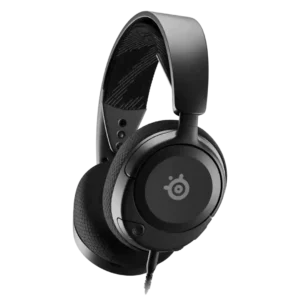
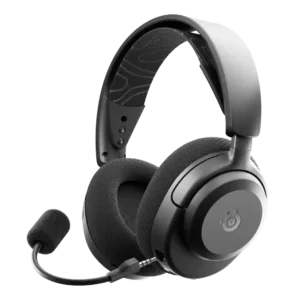
Average score
P1
Product 1: SteelSeries Arctis Nova 1
3.8
P2
Product 2: SteelSeries Arctis Nova 3 Gaming...
3.9
Active noise cancellation
P1Product 1: SteelSeries Arctis Nova 1
No score yet
P2
Product 2: SteelSeries Arctis Nova 3 Gaming...
2.5
ANC was a weakness because reviewers noted its absence and framed that omission as disappointing or baffling at this price.
Android compatibility
P1
Product 1: SteelSeries Arctis Nova 1
3.8
Android compatibility is limited to phones with headphone jacks or adapters, but one review still gives it credit for working with compatible Android phones.
P2Product 2: SteelSeries Arctis Nova 3 Gaming...
No score yetApp
P1
Product 1: SteelSeries Arctis Nova 1
4.1
Software/app support is strong on PC through Sonar or GG, but weaker for analog-only use or non-PC setups.
P2
Product 2: SteelSeries Arctis Nova 3 Gaming...
4.4
The app/software was a major value driver because reviewers praised mobile presets, Sonar, GG customization, and usefulness, despite a few complexity complaints.
Bass performance
P1
Product 1: SteelSeries Arctis Nova 1
3.4
Bass impressions are mixed: some reviewers praise controlled or punchy low end, while others call it weak, restrained, dull, bloated, or overpowering in competitive play.
P2
Product 2: SteelSeries Arctis Nova 3 Gaming...
3.6
Bass feedback was mixed: wireless reviews often praised boom and thump, while several wired or measurement-focused reviews noted restrained sub-bass, boxiness, or less low-end impact.
Battery
P1Product 1: SteelSeries Arctis Nova 1
No score yet
P2
Product 2: SteelSeries Arctis Nova 3 Gaming...
4.3
Battery life was generally strong for the wireless model, commonly described as enough for days or long sessions, though one lab test found less than the advertised 2.4GHz rating.
Bluetooth
P1
Product 1: SteelSeries Arctis Nova 1
2.5
Bluetooth is a limitation rather than a strength, with one review noting that TV or mobile use may suffer because many devices rely on Bluetooth.
P2
Product 2: SteelSeries Arctis Nova 3 Gaming...
4.2
Bluetooth was viewed positively when tested, especially for painless switching, mobile use, and fallback connectivity.
Build quality
P1
Product 1: SteelSeries Arctis Nova 1
4.1
Build quality is mostly good for the price, with praise for solidity and durability despite plastic; some reviewers note it does not feel premium.
P2
Product 2: SteelSeries Arctis Nova 3 Gaming...
3.9
Build quality was mostly solid for plastic construction, but reviewers also noted plasticky feel or merely steady construction.
Built-in DAC and hi-res playback
P1Product 1: SteelSeries Arctis Nova 1
No score yet
P2
Product 2: SteelSeries Arctis Nova 3 Gaming...
4.0
The wired model’s USB DAC was useful mainly for extra volume and software access rather than a broad hi-res claim.
Button control usability
P1
Product 1: SteelSeries Arctis Nova 1
4.1
Controls are usually considered simple and convenient, but a few reviewers criticize mute button location or feedback.
P2
Product 2: SteelSeries Arctis Nova 3 Gaming...
3.9
Control usability was mostly simple and easy, but some reviewers disliked crowded or less intuitive one-hand control layouts.
Cable quality
P1
Product 1: SteelSeries Arctis Nova 1
2.7
Cable impressions are mixed: the included cable can feel good, but one reviewer dislikes the semi-proprietary connector and another finds the cable short.
P2
Product 2: SteelSeries Arctis Nova 3 Gaming...
2.3
Cable comments were negative, mostly because reviewers disliked the short charging cable or stiff wired headset cables.
Charging
P1Product 1: SteelSeries Arctis Nova 1
No score yet
P2
Product 2: SteelSeries Arctis Nova 3 Gaming...
4.9
Fast charging was one of the clearest strengths, with reviewers repeatedly praising the 15-minute charge usefulness.
Clamping force comfort
P1
Product 1: SteelSeries Arctis Nova 1
3.4
Clamp force divides reviewers: several find it comfortable or secure, while others call it excessive, tight, or pressure-inducing.
P2
Product 2: SteelSeries Arctis Nova 3 Gaming...
4.0
Clamp comfort was mostly positive, balancing secure fit and comfort, though one review described the fit as tight.
Comfort during long use
P1
Product 1: SteelSeries Arctis Nova 1
4.2
Comfort is the strongest consensus area, with most reviewers praising long-session wear, while a minority report warmth, tightness, or serious discomfort.
P2
Product 2: SteelSeries Arctis Nova 3 Gaming...
4.5
Comfort over long sessions was one of the strongest consensus positives, with many reviewers wearing it for full workdays, long gaming sessions, or glasses use comfortably.
Connectivity versatility
P1
Product 1: SteelSeries Arctis Nova 1
3.5
Connectivity versatility is mixed: analog 3.5mm works well in many setups, but mobile, docked, or modern-device limitations reduce flexibility.
P2
Product 2: SteelSeries Arctis Nova 3 Gaming...
4.4
Connectivity versatility was a clear strength, with reviewers praising broad platform use, USB-C, Bluetooth, 2.4GHz, and wired options depending on model.
Console compatibility limitations
P1
Product 1: SteelSeries Arctis Nova 1
2.5
Console limitations recur because software features are PC-focused, some systems lack ideal support, and one PSVR2 setup loses mic function.
P2
Product 2: SteelSeries Arctis Nova 3 Gaming...
4.0
Console compatibility limitations were limited in current evidence; one Switch 2 concern was followed by successful firmware testing.
Design and Aesthetics
P1
Product 1: SteelSeries Arctis Nova 1
4.2
Design is usually praised as sleek, minimalist, neutral, or attractive, though some reviewers find it plain or uninspired.
P2
Product 2: SteelSeries Arctis Nova 3 Gaming...
4.4
Design and aesthetics were broadly liked, especially the soft color options, clean look, and less aggressive gaming style.
Detachable cable convenience
P1
Product 1: SteelSeries Arctis Nova 1
4.2
Detachable cable convenience is mostly positive, with reviewers appreciating easier travel, replacement, and cable flexibility.
P2
Product 2: SteelSeries Arctis Nova 3 Gaming...
3.5
Detachable cable convenience was split between praise for replaceable/removable cables and criticism of a nonstandard aux-style cable.
Detachable microphone convenience
P1Product 1: SteelSeries Arctis Nova 1
No score yet
P2
Product 2: SteelSeries Arctis Nova 3 Gaming...
3.7
Detachable mic convenience was mixed: reviewers liked the cleaner/travel-friendly look, but some preferred retractable mics or worried about losing the boom.
Dongle
P1Product 1: SteelSeries Arctis Nova 1
No score yet
P2
Product 2: SteelSeries Arctis Nova 3 Gaming...
3.7
Dongle feedback was mixed: reviewers liked the low-latency, slim, offset design, but some disliked port blocking or lack of onboard storage.
Ear cup padding quality
P1
Product 1: SteelSeries Arctis Nova 1
4.1
Ear cup padding is usually praised for softness, breathability, and fit, though some reviewers note warmth or low-quality cloth feel.
P2
Product 2: SteelSeries Arctis Nova 3 Gaming...
4.2
Ear cup padding was usually praised for memory foam, fabric, breathability, and glasses comfort, though one reviewer found the material hot and not plush enough.
Ear cup swivel/rotation range
P1
Product 1: SteelSeries Arctis Nova 1
4.2
Rotating and lay-flat earcups are repeatedly treated as useful for fit, neck wear, and storage.
P2
Product 2: SteelSeries Arctis Nova 3 Gaming...
4.3
Swivel and rotation were praised for comfort, neck wear, and fit flexibility.
Earpad replacement ease
P1
Product 1: SteelSeries Arctis Nova 1
4.8
Earpad replacement is praised where discussed, with reviewers noting easy removal or replacement.
P2
Product 2: SteelSeries Arctis Nova 3 Gaming...
4.0
Earpad replacement ease was supported by a reviewer calling the pads easily replaceable.
Equalizer customization
P1
Product 1: SteelSeries Arctis Nova 1
4.6
Equalizer customization is a major PC-side upside, with reviewers saying Sonar can significantly improve or personalize the sound.
P2
Product 2: SteelSeries Arctis Nova 3 Gaming...
4.3
EQ customization was a strength overall, especially on PC and mobile, although some mobile implementations lacked a true custom equalizer.
Fit/seal reliability
P1
Product 1: SteelSeries Arctis Nova 1
3.3
Fit and seal depend on head and ear size; some reviews praise fit while others warn about large heads, large ears, or narrow suitability.
P2
Product 2: SteelSeries Arctis Nova 3 Gaming...
3.0
Fit/seal reliability was a small caveat because one lab review found sound quality sensitive to positioning and fit.
Footstep sound level scaling feature
P1Product 1: SteelSeries Arctis Nova 1
No score yet
P2
Product 2: SteelSeries Arctis Nova 3 Gaming...
4.5
Footstep-focused preset evidence was positive, with one reviewer saying the preset made footsteps more pronounced in stealth gameplay.
Frequency response accuracy
P1
Product 1: SteelSeries Arctis Nova 1
3.8
Measured or described frequency response is viewed as good for the price by one review, but another calls it serviceable with missed nuance.
P2
Product 2: SteelSeries Arctis Nova 3 Gaming...
3.3
Frequency-response commentary was mixed: the tuning served gaming clarity, but some reviewers found music tonal balance less accurate or less pleasant.
Game/Chat balance control
P1Product 1: SteelSeries Arctis Nova 1
No score yet
P2
Product 2: SteelSeries Arctis Nova 3 Gaming...
4.0
Game/chat balance was useful where available, though one reviewer disliked the hold-and-wheel implementation compared with a dedicated wheel.
Headband adjustability
P1
Product 1: SteelSeries Arctis Nova 1
3.7
Headband adjustability is generally useful, but some reviewers dislike the imprecise adjustment, elastic concerns, or strap comfort.
P2
Product 2: SteelSeries Arctis Nova 3 Gaming...
4.0
Headband feedback was mostly positive for pressure distribution and adjustability, but some reviewers noted sweet-spot or large-head limitations.
Hinge durability
P1
Product 1: SteelSeries Arctis Nova 1
4.5
Durability around hinges and yokes is mostly positive, with reviewers praising reinforced or double-fork designs.
P2
Product 2: SteelSeries Arctis Nova 3 Gaming...
4.5
Durability evidence around hinges and arms was positive, with reviewers highlighting flexible construction and stress-resistant support.
Included accessories
P1
Product 1: SteelSeries Arctis Nova 1
4.1
Included accessories are modest but appreciated, especially the splitter/extension cable and occasional sticker pack.
P2
Product 2: SteelSeries Arctis Nova 3 Gaming...
2.5
Included accessories were a weak point in one review because the included charging cable fell short of expectations.
Instrument separation
P1
Product 1: SteelSeries Arctis Nova 1
2.9
Detail separation is a recurring weakness in more complex audio, with reviewers noting limited layering and less distinct sound separation versus better headsets.
P2
Product 2: SteelSeries Arctis Nova 3 Gaming...
3.8
Separation was generally adequate, but one reviewer noted it could feel jumbled during dense action scenes.
Integrated microphone
P1
Product 1: SteelSeries Arctis Nova 1
4.0
The retractable integrated microphone is mostly praised for tucking away neatly, though a few reviewers report wobble or retraction problems.
P2
Product 2: SteelSeries Arctis Nova 3 Gaming...
4.5
The integrated retractable mic on the wired model was praised as convenient and clean when not in use.
Maximum volume clarity
P1
Product 1: SteelSeries Arctis Nova 1
3.1
Maximum-volume clarity is inconsistent: some hear distortion or higher-volume struggle, while one review praises bass that does not distort loudly.
P2
Product 2: SteelSeries Arctis Nova 3 Gaming...
4.5
One reviewer praised maximum-volume bass clarity, noting thump without distortion.
Microphone
P1
Product 1: SteelSeries Arctis Nova 1
4.2
The microphone is generally viewed as capable and good for the price, with some software dependence and one lower-confidence assessment.
P2
Product 2: SteelSeries Arctis Nova 3 Gaming...
4.1
Microphone feedback was generally good for gaming chat, ranging from exceptional to adequate, with some caveats about fuzziness or headset-like tone.
Microphone noise reduction
P1
Product 1: SteelSeries Arctis Nova 1
3.4
Noise reduction is mixed: several reviewers praise background-noise suppression, while others report hiss, weak isolation, or background noise still coming through.
P2
Product 2: SteelSeries Arctis Nova 3 Gaming...
4.4
Microphone noise reduction was one of the stronger mic-related areas, with multiple reviewers praising barking, room, episode, keyboard, or background-noise suppression.
Microphone quality for calls
P1
Product 1: SteelSeries Arctis Nova 1
4.1
Microphone voice quality is usually praised as clear, intelligible, and strong for the price, with a few caveats around passable or overly sensitive performance.
P2
Product 2: SteelSeries Arctis Nova 3 Gaming...
4.2
Call and chat voice quality was generally clear, with reviewers reporting adequate Zoom/call performance and clear detailed mic sound.
Midrange clarity
P1
Product 1: SteelSeries Arctis Nova 1
3.9
Midrange is generally described as clear or balanced, but a few reviews note vocal clutter, reduced airiness, or a merely adequate mid presentation.
P2
Product 2: SteelSeries Arctis Nova 3 Gaming...
3.8
Midrange was usually clear enough for voices and dialogue, though one measurement-focused reviewer found it recessed before tuning.
Multi-platform compatibility
P1
Product 1: SteelSeries Arctis Nova 1
4.5
Multi-platform compatibility is a core strength thanks to the 3.5mm connection across PC, consoles, handhelds, and compatible mobile devices.
P2
Product 2: SteelSeries Arctis Nova 3 Gaming...
4.6
Multi-platform compatibility was one of the strongest positives, especially for the 3X model and cross-console/mobile use.
Multipoint connectivity reliability
P1Product 1: SteelSeries Arctis Nova 1
No score yet
P2
Product 2: SteelSeries Arctis Nova 3 Gaming...
2.7
Multipoint reliability was a caveat: reviewers liked switching modes, but several criticized the lack of true simultaneous Bluetooth or device limitations.
Noise isolation (passive)
P1
Product 1: SteelSeries Arctis Nova 1
2.7
Passive isolation is a weak point; reviewers say it is modest and not especially effective at blocking outside noise.
P2
Product 2: SteelSeries Arctis Nova 3 Gaming...
3.1
Passive isolation was acceptable for quieter rooms but not strong, with reviewers saying it blocked some outside sound while leaving plenty of awareness.
Packaging quality
P1
Product 1: SteelSeries Arctis Nova 1
4.0
Packaging gets a small positive mention for protecting the headset in an unboxing review.
P2Product 2: SteelSeries Arctis Nova 3 Gaming...
No score yetPortability/foldability
P1
Product 1: SteelSeries Arctis Nova 1
4.2
Portability is helped by low weight and lay-flat earcups, though the headset does not fully fold.
P2
Product 2: SteelSeries Arctis Nova 3 Gaming...
4.0
Portability was helped by folding/flat ear cups and an understated look, though this was more prominent on wired or travel-adjacent comments.
Positional audio accuracy
P1
Product 1: SteelSeries Arctis Nova 1
3.7
Positional audio is sharply mixed, ranging from accurate enemy placement to weak direction and distance cues in competitive scenarios.
P2
Product 2: SteelSeries Arctis Nova 3 Gaming...
4.3
Positional audio was a strength for gaming, with many reviewers hearing footsteps, gunfire, reloads, and directional cues clearly.
Preset EQ profile quality
P1
Product 1: SteelSeries Arctis Nova 1
4.6
Preset EQ support is praised in one review for strongly affecting microphone and sound quality.
P2
Product 2: SteelSeries Arctis Nova 3 Gaming...
4.4
Preset EQ profiles were repeatedly praised for game-specific tuning and live switching, with only minor caveats that not every preset made a big difference.
Replaceable earpads
P1
Product 1: SteelSeries Arctis Nova 1
4.5
Replaceable earpads get one positive mention as a way to swap fragile parts without trouble.
P2
Product 2: SteelSeries Arctis Nova 3 Gaming...
4.8
Replaceable earpads were praised for interchangeability and long-term support.
RGB lighting customization
P1Product 1: SteelSeries Arctis Nova 1
No score yet
P2
Product 2: SteelSeries Arctis Nova 3 Gaming...
4.2
RGB customization was mostly praised on wired models as subtle, customizable, and tasteful, with one reviewer saying options were limited.
Sidetone adjustment quality
P1
Product 1: SteelSeries Arctis Nova 1
1.9
Sidetone or mic-monitoring support is a weakness, with reviewers complaining about no indicator, no sidetone, or no microphone monitoring.
P2
Product 2: SteelSeries Arctis Nova 3 Gaming...
4.5
Sidetone quality was a strength in the few reviews that discussed it, especially for real-time, clear monitoring.
Smudge resistance
P1
Product 1: SteelSeries Arctis Nova 1
4.0
Smudge resistance gets one positive mention for the black model resisting fingerprints.
P2
Product 2: SteelSeries Arctis Nova 3 Gaming...
4.5
Smudge resistance had limited but positive evidence from one reviewer praising the non-fingerprint-prone ear plate surface.
Software/setup simplicity
P1
Product 1: SteelSeries Arctis Nova 1
4.2
Setup is often praised as easy plug-and-play, though software reliance can make the headset less competitive away from PC.
P2
Product 2: SteelSeries Arctis Nova 3 Gaming...
3.3
Setup simplicity was mixed: wired setup was plug-and-play, but PC software routing could become confusing.
Sound leakage
P1Product 1: SteelSeries Arctis Nova 1
No score yet
P2
Product 2: SteelSeries Arctis Nova 3 Gaming...
1.0
Sound leakage was the clearest serious drawback, with one reviewer calling leakage shockingly bad even at low volumes.
Sound quality
P1
Product 1: SteelSeries Arctis Nova 1
4.1
Reviewers broadly say the Nova 1 sounds good for a budget wired headset, especially for gaming, though several describe it as only adequate, compressed, or less detailed than pricier options.
P2
Product 2: SteelSeries Arctis Nova 3 Gaming...
4.4
Reviewers generally liked the sound, especially after EQ, describing it as detailed, immersive, or impressive for the price; a few wired-model notes called the default profile merely fine.
Soundstage width
P1
Product 1: SteelSeries Arctis Nova 1
3.6
The soundstage is described as intimate rather than wide, though not so cramped that games or music become unusable.
P2
Product 2: SteelSeries Arctis Nova 3 Gaming...
3.5
Soundstage was serviceable but not universally expansive, with one review saying it lacked full wraparound immersion and another calling the stage wide enough.
Spatial audio
P1
Product 1: SteelSeries Arctis Nova 1
4.6
Spatial audio receives strong praise when supported by PS5 Tempest, Microsoft Spatial Sound, virtual surround, or Sonar.
P2
Product 2: SteelSeries Arctis Nova 3 Gaming...
4.4
Spatial audio was praised for gaming immersion and directionality, especially through Sonar or console spatial systems.
Stability
P1
Product 1: SteelSeries Arctis Nova 1
4.2
Stability is positive where mentioned, with reviewers saying the headset stays secure without slipping.
P2
Product 2: SteelSeries Arctis Nova 3 Gaming...
4.5
Stability evidence was positive in one review that said the headset did not slip accidentally.
Treble clarity
P1
Product 1: SteelSeries Arctis Nova 1
3.7
Treble often earns praise for clarity and balance, but reviewers also report low-treble dips, higher-volume strain, and inconsistent treble tuning.
P2
Product 2: SteelSeries Arctis Nova 3 Gaming...
3.4
Treble drew mixed responses: some heard clearer highs, but others found high tones shouty, recessed, or occasionally irritating.
USB-C
P1
Product 1: SteelSeries Arctis Nova 1
2.2
USB-C support is treated as a miss in one review because modern devices increasingly need USB-C or an adapter.
P2
Product 2: SteelSeries Arctis Nova 3 Gaming...
4.0
USB-C was viewed as a useful upgrade because it enabled better connectivity and subtle sound/software advantages.
Value for money
P1
Product 1: SteelSeries Arctis Nova 1
4.2
Value is generally strong, especially at budget or sale prices, but a few reviewers argue competing headsets offer better value.
P2
Product 2: SteelSeries Arctis Nova 3 Gaming...
4.5
Value was a strong consensus positive across nearly every review, with reviewers repeatedly calling it a good budget or midrange buy.
Volume output
P1
Product 1: SteelSeries Arctis Nova 1
3.0
One reviewer says the headset can get loud enough for them, but it is among the quieter budget options they compared.
P2
Product 2: SteelSeries Arctis Nova 3 Gaming...
3.0
Volume output was a mild weakness in the evidence, with reviewers calling the default output quieter or less efficient than some competitors.
Weight comfort
P1
Product 1: SteelSeries Arctis Nova 1
4.7
The headset’s light weight is consistently praised as a comfort and portability advantage.
P2
Product 2: SteelSeries Arctis Nova 3 Gaming...
4.8
Weight comfort was a major strength, with many reviewers emphasizing the headset’s lightness and reduced fatigue.
Wireless latency
P1Product 1: SteelSeries Arctis Nova 1
No score yet
P2
Product 2: SteelSeries Arctis Nova 3 Gaming...
4.5
Wireless latency was consistently praised, with 2.4GHz and Bluetooth testing producing low-latency or no-lag impressions.
Xbox compatibility
P1Product 1: SteelSeries Arctis Nova 1
No score yet
P2
Product 2: SteelSeries Arctis Nova 3 Gaming...
4.5
Xbox compatibility was positive for the 3X variant, though buyers must choose the Xbox-capable version.