Average score
P1
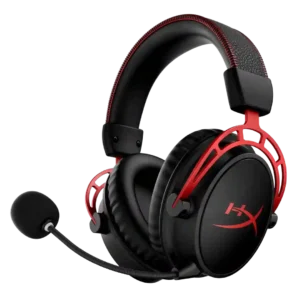
Product 1: HyperX Cloud Alpha
3.9
P2
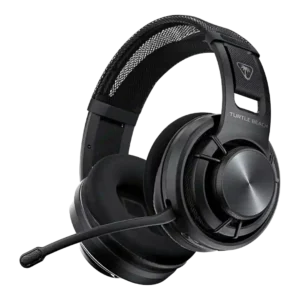
Product 2: Turtle Beach Atlas Air Wireless...
3.7
Active noise cancellation
P1
Product 1: HyperX Cloud Alpha
1.0
Reviewers explicitly note the lack of active noise cancellation; isolation comes from passive earcup sealing instead.
P2
Product 2: Turtle Beach Atlas Air Wireless...
1.5
Reviewers treat noise cancellation as a poor fit because the open-back design does not block the room and cannot substitute for ANC headphones.
Android compatibility
P1Product 1: HyperX Cloud Alpha
No score yet
P2
Product 2: Turtle Beach Atlas Air Wireless...
4.0
Android support is viewed positively where discussed through the Swarm II app, which reviewers said offers robust customization across Android, iOS, Windows, and PC.
App
P1
Product 1: HyperX Cloud Alpha
3.2
NGenuity adds battery, EQ, DTS, and control options, but reviewers call it PC-only, sparse, or glitchy in places.
P2
Product 2: Turtle Beach Atlas Air Wireless...
3.2
Swarm II app feedback is mixed: reviewers like its customization depth when it works, but report PC-only limits, navigation problems, connection issues, and bugs.
Bass performance
P1
Product 1: HyperX Cloud Alpha
4.3
Bass is generally full, deep, and impactful, but reviewers vary on whether it is boosted, restrained, or slightly lacking thump.
P2
Product 2: Turtle Beach Atlas Air Wireless...
3.4
Bass impressions are mixed: some reviewers found punch and clean low end, but many said open-back tuning limits rumble, impact, and bass-heavy excitement.
Battery
P1
Product 1: HyperX Cloud Alpha
4.9
Battery life is the standout Wireless feature, repeatedly cited around 300 hours and in one test exceeding 327 hours.
P2
Product 2: Turtle Beach Atlas Air Wireless...
4.6
Battery life is one of the clearest strengths, with reviewers reporting multi-day use, 50-plus-hour endurance, and little need to worry about charging.
Bluetooth
P1
Product 1: HyperX Cloud Alpha
1.0
Bluetooth is a consistent missing feature on Wireless, repeatedly framed as a limitation or lack of backup connectivity.
P2
Product 2: Turtle Beach Atlas Air Wireless...
3.6
Bluetooth is useful for phones and switching, but reviewers repeatedly note it is weaker than the dongle for gaming or lacks simultaneous audio.
Build quality
P1
Product 1: HyperX Cloud Alpha
4.5
Reviewers usually describe the headset as sturdy, premium, or durable, with metal/aluminum reinforcement; a few wireless-video reviews call the build merely okay rather than luxurious.
P2
Product 2: Turtle Beach Atlas Air Wireless...
4.3
Build quality is generally good for a lightweight plastic headset, with praise for durability and flexibility balanced by a few less-premium feel complaints.
Built-in DAC and hi-res playback
P1Product 1: HyperX Cloud Alpha
No score yet
P2
Product 2: Turtle Beach Atlas Air Wireless...
4.6
Hi-res and 24-bit PC playback are praised for adding detail and clarity, especially when high-bandwidth audio is enabled on PC.
Button control usability
P1
Product 1: HyperX Cloud Alpha
4.4
Controls are usually easy to find and use, with accessible volume, mute, and power controls, though some controls are minimal.
P2
Product 2: Turtle Beach Atlas Air Wireless...
3.4
Controls are split: several reviewers liked the easy left-cup layout, while others criticized similar-feeling buttons, stiff presses, cheap volume feel, or delayed adjustment.
Cable quality
P1
Product 1: HyperX Cloud Alpha
4.1
Wired reviews praise the braided or protected cable, though one notes the bundled cable is short and another calls it only okay.
P2
Product 2: Turtle Beach Atlas Air Wireless...
4.8
Cable quality receives consistent praise, especially for braided USB and analog cables that feel premium and avoid distracting cable noise.
Carry case quality
P1
Product 1: HyperX Cloud Alpha
3.0
Wired reviews mention a basic velour pouch, while Wireless reviews criticize the lack of a travel bag or case at the price.
P2
Product 2: Turtle Beach Atlas Air Wireless...
3.0
The included pouch is appreciated for scratch protection but not considered a highly protective travel case.
Charging
P1
Product 1: HyperX Cloud Alpha
4.5
Charging feedback is positive overall, with USB-C charging, quick top-ups, overnight recharge, or only a few hours needed.
P2
Product 2: Turtle Beach Atlas Air Wireless...
4.4
Charging is viewed positively because full charges are quick, quick charge helps, and the headset can be used for long stretches between charges.
Clamping force comfort
P1
Product 1: HyperX Cloud Alpha
4.3
Clamp is generally comfortable or minimal, with isolated notes of snugness or stronger grip depending on head shape.
P2
Product 2: Turtle Beach Atlas Air Wireless...
4.5
Most reviewers praise the light clamp for comfort, especially with glasses, though a few say the loose clamp can hurt stability.
Comfort during long use
P1
Product 1: HyperX Cloud Alpha
4.6
Comfort is one of the strongest consensus points, with many reviewers wearing it for long gaming sessions, though a few note heat or pad limitations.
P2
Product 2: Turtle Beach Atlas Air Wireless...
4.8
Comfort is the strongest consensus point: reviewers repeatedly call it extremely comfortable, featherweight, cool-wearing, and suitable for long sessions.
Connectivity versatility
P1
Product 1: HyperX Cloud Alpha
2.5
Connectivity is a split story: wired 3.5mm is very versatile, while Wireless is limited by dongle-only operation and no wired fallback.
P2
Product 2: Turtle Beach Atlas Air Wireless...
4.3
Connectivity is versatile across dongle, Bluetooth, wired use, and quick switching, though some reviewers want simultaneous source mixing.
Console compatibility limitations
P1
Product 1: HyperX Cloud Alpha
2.1
Wireless reviews repeatedly mention platform limitations, especially missing analog fallback, limited console feature support, or restricted compatibility.
P2
Product 2: Turtle Beach Atlas Air Wireless...
2.3
Console limitations center on Xbox wireless and PC-only software features, while wired fallback keeps it usable beyond PC and PlayStation.
Design and Aesthetics
P1
Product 1: HyperX Cloud Alpha
3.9
The HyperX red-and-black gaming look is seen as stylish or familiar by some, but one wireless review calls it dated.
P2
Product 2: Turtle Beach Atlas Air Wireless...
4.4
The design is widely seen as distinctive, clean, and innovative thanks to the open-back floating earcup layout, though restrained styling is not flashy.
Detachable cable convenience
P1
Product 1: HyperX Cloud Alpha
4.8
Several wired reviews like that the cable can be detached or replaced, making the headset easier to maintain and use across setups.
P2
Product 2: Turtle Beach Atlas Air Wireless...
4.0
The detachable/wired cable option is a practical convenience for backup wired use, especially when wireless or Xbox support is limited.
Detachable microphone convenience
P1
Product 1: HyperX Cloud Alpha
4.6
The removable boom mic is repeatedly treated as convenient for travel, casual listening, replacement, or removing the gaming look.
P2
Product 2: Turtle Beach Atlas Air Wireless...
4.6
The detachable flip-to-mute microphone is considered convenient, easy to set up, and useful when users want to remove or quickly mute it.
Dongle
P1
Product 1: HyperX Cloud Alpha
4.4
The wireless USB dongle is simple and useful, but also central to the headset’s compatibility limits because it is the main or only connection path.
P2
Product 2: Turtle Beach Atlas Air Wireless...
3.0
The dongle works well for low-latency wireless, but one reviewer disliked the always-flashing transmitter light.
Ear cup padding quality
P1
Product 1: HyperX Cloud Alpha
4.2
Memory-foam/leatherette pads are widely praised for softness, but some reviewers note warmth, shallow pads, or heat buildup.
P2
Product 2: Turtle Beach Atlas Air Wireless...
4.8
Earcup padding is a major comfort strength, with reviewers praising the soft cloth, memory foam, plush feel, and glasses-friendly cushioning.
Ear cup swivel/rotation range
P1
Product 1: HyperX Cloud Alpha
2.0
Reviewers repeatedly flag limited swivel or no 90-degree lay-flat rotation, making this a consistent portability and fit limitation.
P2
Product 2: Turtle Beach Atlas Air Wireless...
2.5
Swivel and foldability are limited because the floating cups do not rotate flat, which hurts desk, neck, and travel convenience.
Earpad replacement ease
P1
Product 1: HyperX Cloud Alpha
4.7
One hands-on review shows the pads popping off easily for cushion replacement.
P2
Product 2: Turtle Beach Atlas Air Wireless...
4.4
Earpad replacement is viewed positively where mentioned because the pads can be removed, cleaned, or swapped.
Equalizer customization
P1
Product 1: HyperX Cloud Alpha
4.0
EQ is mostly a Wireless/software feature, offering presets and custom profiles; wired reviews instead emphasize no required software.
P2
Product 2: Turtle Beach Atlas Air Wireless...
3.8
EQ customization is powerful but inconsistent: reviewers value the 10-band EQ, yet some report preset overwrites, artifacts, or app-related limits.
Fit/seal reliability
P1
Product 1: HyperX Cloud Alpha
4.6
Reviewers highlight a reliable seal and secure hold that helps stability, bass response, and passive isolation.
P2
Product 2: Turtle Beach Atlas Air Wireless...
2.7
Fit reliability is mixed because the light clamp is comfortable but can shift, budge, or feel too loose for movement.
Footstep sound level scaling feature
P1Product 1: HyperX Cloud Alpha
No score yet
P2
Product 2: Turtle Beach Atlas Air Wireless...
3.2
The footstep-enhancing Superhuman Hearing feature is divisive, with some benefit for cues but frequent complaints about artificial or fatiguing sound.
Frequency response accuracy
P1
Product 1: HyperX Cloud Alpha
4.7
Frequency response is described as relatively faithful or clear, with dual-chamber separation helping avoid muddiness.
P2
Product 2: Turtle Beach Atlas Air Wireless...
4.1
Frequency response is generally natural and well-measured, but reviewers mention treble unevenness, limited sub-bass, or non-studio accuracy caveats.
Game/Chat balance control
P1
Product 1: HyperX Cloud Alpha
3.5
One transcript mentions a chat/game mix rocker, but the broader review set mostly discusses volume and mic mute rather than detailed balance controls.
P2
Product 2: Turtle Beach Atlas Air Wireless...
2.0
Game/chat balance is a recurring weakness because controls are mostly software-based, lack physical mixing, or fail to feel useful in practice.
Headband adjustability
P1
Product 1: HyperX Cloud Alpha
4.4
Headband adjustment is described as straightforward, with sliders/notches and enough size range for fit.
P2
Product 2: Turtle Beach Atlas Air Wireless...
4.0
Headband adjustability is comfortable and clever, but the Velcro-style adjustment raises concerns about convenience and long-term tension stability.
Hinge durability
P1
Product 1: HyperX Cloud Alpha
4.8
One review specifically praises durability features around joints and replacement parts, supporting confidence in hinge and moving-part longevity.
P2
Product 2: Turtle Beach Atlas Air Wireless...
4.0
Hinge durability is a relative strength because the floating elastic design avoids traditional hinge failure points, though metal sturdiness is limited.
Included accessories
P1
Product 1: HyperX Cloud Alpha
4.4
Wired-package reviews report the expected essentials, including the headset, detachable mic, main cable, splitter or extender cable.
P2
Product 2: Turtle Beach Atlas Air Wireless...
4.7
Included accessories are considered generous and premium for the price, especially the braided cables, pouch, mic, dongle, and cable options.
Instrument separation
P1
Product 1: HyperX Cloud Alpha
4.7
Layering and separation are a recurring strength, with reviewers crediting dual-chamber design or the ability to distinguish audio layers.
P2
Product 2: Turtle Beach Atlas Air Wireless...
4.6
Instrument separation is praised for keeping busy mixes, instruments, vocals, and game effects identifiable instead of blurred together.
Maximum volume clarity
P1
Product 1: HyperX Cloud Alpha
4.7
At high volumes, reviewers usually report loud output with minimal or no distortion.
P2
Product 2: Turtle Beach Atlas Air Wireless...
4.5
Maximum volume clarity is good when loud enough, with no distortion reported at maximum in one review, though volume output itself is uneven.
Microphone
P1
Product 1: HyperX Cloud Alpha
4.0
Microphone feedback is mixed-positive: many call it clear or usable, while others say it is wonky, thin, or not ideal for serious recording.
P2
Product 2: Turtle Beach Atlas Air Wireless...
4.0
Microphone quality is generally good to great for a gaming headset, but some reviewers report tinny sound, Bluetooth weakness, or minor artifacts.
Microphone noise reduction
P1
Product 1: HyperX Cloud Alpha
4.4
Mic noise reduction is generally effective for fans or background noise, though one review says mechanical keyboards remain a challenge.
P2
Product 2: Turtle Beach Atlas Air Wireless...
3.9
Microphone noise reduction is useful and often effective, but not perfect; reviewers mention compression dips, artifacts, and background noise limits.
Microphone quality for calls
P1
Product 1: HyperX Cloud Alpha
3.8
For calls and chat, reviewers generally find the mic understandable and usable, but not a replacement for a dedicated recording microphone.
P2
Product 2: Turtle Beach Atlas Air Wireless...
4.4
Call and chat quality is strong overall, with Discord and party-chat users reporting clear, understandable voice capture.
Midrange clarity
P1
Product 1: HyperX Cloud Alpha
4.3
Midrange is usually described as clear or well-tuned, with one reviewer emphasizing the absence of murky low-mid congestion.
P2
Product 2: Turtle Beach Atlas Air Wireless...
4.4
Midrange clarity is a strength, especially for dialogue and busy game mixes, with reviewers saying mids stay clean and detailed.
Multi-platform compatibility
P1
Product 1: HyperX Cloud Alpha
4.2
Wired models are broadly cross-platform through 3.5mm; Wireless reviews limit stronger compatibility mainly to PC and PlayStation.
P2
Product 2: Turtle Beach Atlas Air Wireless...
3.7
Multi-platform compatibility is good across PC, PlayStation, Switch, mobile, and wired Xbox, but full feature support is not equal everywhere.
Multipoint connectivity reliability
P1Product 1: HyperX Cloud Alpha
No score yet
P2
Product 2: Turtle Beach Atlas Air Wireless...
2.2
Multipoint and simultaneous connectivity are weak because reviewers repeatedly wanted Bluetooth plus game audio at the same time.
Noise isolation (passive)
P1
Product 1: HyperX Cloud Alpha
4.3
Passive isolation is repeatedly praised, with reviewers saying outside sound is blocked or muffled despite no active noise cancellation.
P2
Product 2: Turtle Beach Atlas Air Wireless...
1.8
Passive isolation is intentionally poor due to the open-back design, making the headset best for quiet rooms rather than noisy spaces.
Packaging quality
P1Product 1: HyperX Cloud Alpha
No score yet
P2
Product 2: Turtle Beach Atlas Air Wireless...
2.5
Packaging drew limited criticism from one reviewer who felt the folder insert was unnecessary rather than useful.
Portability/foldability
P1
Product 1: HyperX Cloud Alpha
1.9
The headset is not built around folding or compact travel; reviewers mention the lack of portability or contractable design.
P2
Product 2: Turtle Beach Atlas Air Wireless...
2.5
Portability is limited because the open-back design is poor for streets or noisy public spaces and the cups do not fold flat.
Positional audio accuracy
P1
Product 1: HyperX Cloud Alpha
4.5
Positional cues are often strong for footsteps, gunfire, and environmental sounds, though one review prefers realism over tactical emphasis.
P2
Product 2: Turtle Beach Atlas Air Wireless...
4.6
Positional accuracy is a major strength, with reviewers hearing footsteps, distance, direction, and spatial cues clearly in games.
Preset EQ profile quality
P1
Product 1: HyperX Cloud Alpha
4.2
EQ presets can improve mids, gaming cues, or overall tuning, though at least one reviewer prefers the default sound.
P2
Product 2: Turtle Beach Atlas Air Wireless...
3.3
Preset EQ quality is mixed: Signature Sound earns praise, while Superhuman Hearing and preset handling draw complaints.
Replaceable earpads
P1
Product 1: HyperX Cloud Alpha
3.0
Earpad replaceability is mixed in the evidence: one review says stock pads are not detachable, while another demonstrates replacing cushions.
P2
Product 2: Turtle Beach Atlas Air Wireless...
4.4
Replaceable earpads are a convenience win where mentioned, since reviewers note the pads can be removed or interchanged.
Sidetone adjustment quality
P1
Product 1: HyperX Cloud Alpha
2.4
Sidetone and mic monitoring are limited: wired lacks it, and wireless implementations exist but with little or no adjustment.
P2
Product 2: Turtle Beach Atlas Air Wireless...
2.8
Sidetone or mic monitoring is mixed to weak: some reviewers like the lack of hiss, while others find it too quiet, eerie, or ineffective.
Software/setup simplicity
P1
Product 1: HyperX Cloud Alpha
4.3
Setup is usually simple and plug-and-play, but the wireless software/driver experience receives some reliability criticism.
P2
Product 2: Turtle Beach Atlas Air Wireless...
2.6
Software and setup are inconsistent; some reviewers found Swarm II simple and easy, while others hit bugs, confusing navigation, or default-setting issues.
Sound leakage
P1
Product 1: HyperX Cloud Alpha
4.1
Leakage is mostly controlled at normal volumes, though at higher volumes one reviewer says it becomes noticeable.
P2
Product 2: Turtle Beach Atlas Air Wireless...
2.2
Sound leakage is an unavoidable tradeoff, with reviewers repeatedly warning that audio leaks out and can be heard nearby.
Sound quality
P1
Product 1: HyperX Cloud Alpha
4.6
The overall sound receives broad praise across gaming and music, with only a few reviewers describing it as merely good rather than exceptional.
P2
Product 2: Turtle Beach Atlas Air Wireless...
4.8
Sound quality is broadly praised as detailed, natural, balanced, spacious, and unusually strong for a wireless gaming headset.
Soundstage width
P1
Product 1: HyperX Cloud Alpha
4.2
Soundstage is described as wide or decent, especially for a closed-back gaming headset.
P2
Product 2: Turtle Beach Atlas Air Wireless...
4.5
Soundstage is one of the defining strengths, with reviewers describing wider, more open, more immersive presentation than typical closed-back headsets.
Spatial audio
P1
Product 1: HyperX Cloud Alpha
3.7
Spatial audio depends on model and platform: wired lacks built-in surround, while Wireless DTS/spatial processing can work well on PC.
P2
Product 2: Turtle Beach Atlas Air Wireless...
4.3
Spatial audio is strong overall, especially on PC with Waves 3D, though not every reviewer found it more precise than alternatives.
Stability
P1
Product 1: HyperX Cloud Alpha
4.3
Stability is strong on-head and, in some wireless reviews, connection stability is good, though one reviewer reports range degradation.
P2
Product 2: Turtle Beach Atlas Air Wireless...
3.0
Stability is mixed because the headset feels secure enough for desk gaming but can shift with stronger movement due to the light clamp.
Treble clarity
P1
Product 1: HyperX Cloud Alpha
4.5
Treble is mostly praised as crisp, clean, and detailed without harshness, though one wireless review says highs can be overshadowed by bass.
P2
Product 2: Turtle Beach Atlas Air Wireless...
3.7
Treble clarity is mixed: highs can be clean and non-piercing, but several reviewers mention brightness, sibilance, or harshness.
USB-C
P1
Product 1: HyperX Cloud Alpha
4.5
USB-C appears mainly on the Wireless model for charging or adapter support, and reviewers treat it as useful.
P2Product 2: Turtle Beach Atlas Air Wireless...
No score yetValue for money
P1
Product 1: HyperX Cloud Alpha
4.2
Value is strongest for the wired model under $100; wireless value is more mixed because the high price buys battery life but limited features.
P2
Product 2: Turtle Beach Atlas Air Wireless...
4.4
Value is favorable for users who want wireless open-back sound and comfort under $200, but software and feature tradeoffs keep it from universal appeal.
Volume output
P1
Product 1: HyperX Cloud Alpha
4.4
Volume output is generally strong and easy to adjust, though one wireless review says the maximum is not class-leading.
P2
Product 2: Turtle Beach Atlas Air Wireless...
2.6
Volume output is a recurring complaint because several reviewers found the range too quiet below high settings or too uneven to fine-tune.
Weight comfort
P1
Product 1: HyperX Cloud Alpha
4.2
Most reviewers find the weight manageable or well distributed, though one notes the materials add noticeable weight.
P2
Product 2: Turtle Beach Atlas Air Wireless...
4.9
Weight comfort is excellent, with reviewers repeatedly praising the lightweight 300g-class build for long gaming sessions and glasses use.
Wireless latency
P1
Product 1: HyperX Cloud Alpha
4.5
Wireless responsiveness is positive in limited evidence, with one reviewer reporting low latency and another hearing no static or digital noise.
P2
Product 2: Turtle Beach Atlas Air Wireless...
4.7
Wireless latency and stability are good over the 2.4GHz dongle, with reviewers reporting low-latency gaming and no dropout issues.
Xbox compatibility
P1
Product 1: HyperX Cloud Alpha
1.8
Xbox support is mixed by model: wired evidence includes Xbox use through a headphone jack, while Wireless reviews say Xbox is unsupported or problematic.
P2
Product 2: Turtle Beach Atlas Air Wireless...
2.8
Xbox compatibility is a limitation because wireless Xbox support is absent, though wired analog use still works well.