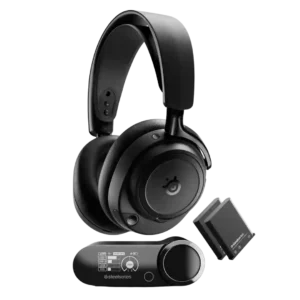
- Alternative: features and surround sound The Cloud II is presented as a related affordable option with extra features.
HyperX Cloud Alpha Review
Bottom Line
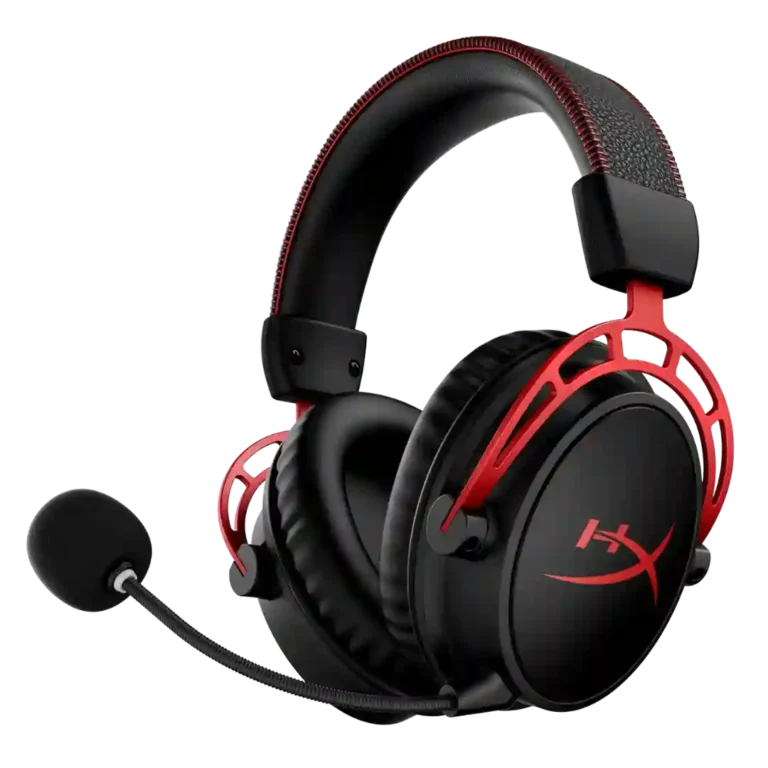
Choose the HyperX Cloud Alpha for strong gaming sound, long-wearing comfort, sturdy construction, and, on Wireless, extraordinary battery life. Skip it if you need Bluetooth, Xbox support, active noise cancellation, or a feature-rich app.
Best for gamers who want strong stereo sound, soft padding, sturdy construction, and simple controls. The Wireless model fits PC and PlayStation users who want extraordinary battery life more than Bluetooth or analog backup.
Not for buyers who need active noise cancellation, broad wireless connectivity, Xbox-ready wireless support, or a feature-rich companion app. Heat-sensitive users may also dislike the leatherette pads during long sessions.
Reviewers consistently frame the HyperX Cloud Alpha family as a headset that wins on fundamentals: durable construction, comfortable memory-foam padding, clear gaming audio, and useful detachable parts. The wired model earns especially strong value praise because it works broadly through 3.5mm and avoids software fuss. The Wireless version adds standout battery life and convincing PC spatial/EQ features, but that strength comes with a tradeoff: its USB dongle-only design limits Xbox, Bluetooth, analog, and mobile flexibility. Sound is usually praised as full, detailed, and easy to game with, though bass emphasis, heat buildup, and microphone quality draw some mixed notes. Overall, the evidence favors buyers who prioritize comfort, sound, durability, and battery over extra connectivity features.
Compared in Reviews
Products reviewers directly compared with this model, grouped into quick takeaways.
SteelSeries Arctis Nova 7 Wireless
- Better: microphone quality The Nova 7 is said to have the better microphone.
- Worse: battery life The reviewer says the Cloud Alpha Wireless solves battery anxiety far beyond the Nova 7.
9P
- Compared: wireless gaming alternatives BGR names SteelSeries as the main competition but still favors the Cloud Alpha Wireless for basic wireless gaming.
Feature Scorecards
Pros
-
Battery life is the standout Wireless feature, repeatedly cited around 300 hours and in one test exceeding 327 hours.
-
Several wired reviews like that the cable can be detached or replaced, making the headset easier to maintain and use across setups.
-
One review specifically praises durability features around joints and replacement parts, supporting confidence in hinge and moving-part longevity.
-
Layering and separation are a recurring strength, with reviewers crediting dual-chamber design or the ability to distinguish audio layers.
-
At high volumes, reviewers usually report loud output with minimal or no distortion.
-
One hands-on review shows the pads popping off easily for cushion replacement.
-
Frequency response is described as relatively faithful or clear, with dual-chamber separation helping avoid muddiness.
-
Reviewers highlight a reliable seal and secure hold that helps stability, bass response, and passive isolation.
-
The removable boom mic is repeatedly treated as convenient for travel, casual listening, replacement, or removing the gaming look.
-
The overall sound receives broad praise across gaming and music, with only a few reviewers describing it as merely good rather than exceptional.
-
Comfort is one of the strongest consensus points, with many reviewers wearing it for long gaming sessions, though a few note heat or pad limitations.
-
Positional cues are often strong for footsteps, gunfire, and environmental sounds, though one review prefers realism over tactical emphasis.
-
Charging feedback is positive overall, with USB-C charging, quick top-ups, overnight recharge, or only a few hours needed.
-
USB-C appears mainly on the Wireless model for charging or adapter support, and reviewers treat it as useful.
-
Wireless responsiveness is positive in limited evidence, with one reviewer reporting low latency and another hearing no static or digital noise.
-
Reviewers usually describe the headset as sturdy, premium, or durable, with metal/aluminum reinforcement; a few wireless-video reviews call the build merely okay rather than luxurious.
-
Treble is mostly praised as crisp, clean, and detailed without harshness, though one wireless review says highs can be overshadowed by bass.
-
The wireless USB dongle is simple and useful, but also central to the headset’s compatibility limits because it is the main or only connection path.
-
Volume output is generally strong and easy to adjust, though one wireless review says the maximum is not class-leading.
-
Controls are usually easy to find and use, with accessible volume, mute, and power controls, though some controls are minimal.
-
Mic noise reduction is generally effective for fans or background noise, though one review says mechanical keyboards remain a challenge.
-
Wired-package reviews report the expected essentials, including the headset, detachable mic, main cable, splitter or extender cable.
-
Headband adjustment is described as straightforward, with sliders/notches and enough size range for fit.
-
Midrange is usually described as clear or well-tuned, with one reviewer emphasizing the absence of murky low-mid congestion.
-
Passive isolation is repeatedly praised, with reviewers saying outside sound is blocked or muffled despite no active noise cancellation.
-
Setup is usually simple and plug-and-play, but the wireless software/driver experience receives some reliability criticism.
-
Bass is generally full, deep, and impactful, but reviewers vary on whether it is boosted, restrained, or slightly lacking thump.
-
Clamp is generally comfortable or minimal, with isolated notes of snugness or stronger grip depending on head shape.
-
Stability is strong on-head and, in some wireless reviews, connection stability is good, though one reviewer reports range degradation.
-
Most reviewers find the weight manageable or well distributed, though one notes the materials add noticeable weight.
-
Wired models are broadly cross-platform through 3.5mm; Wireless reviews limit stronger compatibility mainly to PC and PlayStation.
-
EQ presets can improve mids, gaming cues, or overall tuning, though at least one reviewer prefers the default sound.
-
Soundstage is described as wide or decent, especially for a closed-back gaming headset.
-
Memory-foam/leatherette pads are widely praised for softness, but some reviewers note warmth, shallow pads, or heat buildup.
-
Value is strongest for the wired model under $100; wireless value is more mixed because the high price buys battery life but limited features.
-
Leakage is mostly controlled at normal volumes, though at higher volumes one reviewer says it becomes noticeable.
-
Wired reviews praise the braided or protected cable, though one notes the bundled cable is short and another calls it only okay.
-
Microphone feedback is mixed-positive: many call it clear or usable, while others say it is wonky, thin, or not ideal for serious recording.
-
EQ is mostly a Wireless/software feature, offering presets and custom profiles; wired reviews instead emphasize no required software.
-
The HyperX red-and-black gaming look is seen as stylish or familiar by some, but one wireless review calls it dated.
-
For calls and chat, reviewers generally find the mic understandable and usable, but not a replacement for a dedicated recording microphone.
-
Spatial audio depends on model and platform: wired lacks built-in surround, while Wireless DTS/spatial processing can work well on PC.
-
One transcript mentions a chat/game mix rocker, but the broader review set mostly discusses volume and mic mute rather than detailed balance controls.
Cons
-
NGenuity adds battery, EQ, DTS, and control options, but reviewers call it PC-only, sparse, or glitchy in places.
-
Wired reviews mention a basic velour pouch, while Wireless reviews criticize the lack of a travel bag or case at the price.
-
Earpad replaceability is mixed in the evidence: one review says stock pads are not detachable, while another demonstrates replacing cushions.
-
Connectivity is a split story: wired 3.5mm is very versatile, while Wireless is limited by dongle-only operation and no wired fallback.
-
Sidetone and mic monitoring are limited: wired lacks it, and wireless implementations exist but with little or no adjustment.
-
Wireless reviews repeatedly mention platform limitations, especially missing analog fallback, limited console feature support, or restricted compatibility.
-
Reviewers repeatedly flag limited swivel or no 90-degree lay-flat rotation, making this a consistent portability and fit limitation.
-
The headset is not built around folding or compact travel; reviewers mention the lack of portability or contractable design.
-
Xbox support is mixed by model: wired evidence includes Xbox use through a headphone jack, while Wireless reviews say Xbox is unsupported or problematic.
-
Bluetooth is a consistent missing feature on Wireless, repeatedly framed as a limitation or lack of backup connectivity.
-
Reviewers explicitly note the lack of active noise cancellation; isolation comes from passive earcup sealing instead.
Compared With Category Average
Compared with other Headsets, this product is above average in Detachable cable convenience, Noise isolation (passive), below average in Bluetooth, Connectivity versatility, Ear cup swivel/rotation range.
| Attribute | This product | Category average | Difference |
|---|---|---|---|
| Bluetooth | 1.0 | 3.1 | -2.1 |
| Connectivity versatility | 2.5 | 4.4 | -1.9 |
| Ear cup swivel/rotation range | 2.0 | 3.6 | -1.7 |
| Xbox compatibility | 1.8 | 3.3 | -1.5 |
| Detachable cable convenience | 4.8 | 3.5 | +1.3 |
| Replaceable earpads | 3.0 | 4.3 | -1.4 |
| Noise isolation (passive) | 4.3 | 3.3 | +1.0 |
| Portability/foldability | 1.9 | 2.9 | -1.0 |
FAQ
Does the HyperX Cloud Alpha sound good for games?
Yes. Reviewers repeatedly praise its clear, full gaming sound, bass impact, separation, and positional cues, though a few note bass balance or tactical footstep emphasis can vary by model and tuning.
How good is the battery life on the Wireless version?
Battery life is one of the strongest findings in the reviews. Multiple reviewers cite the 300-hour claim, and one measured more than 327 hours of constant playback.
Does it work with Xbox?
The wired Cloud Alpha is described as working with Xbox through a headphone jack. The Wireless model is repeatedly criticized for not supporting Xbox because it lacks Xbox Wireless and 3.5mm fallback.
Does the Wireless model have Bluetooth?
No. Several reviews call out the lack of Bluetooth and analog backup as a major limitation, especially at the $199 wireless price.
Is the microphone good enough for chat and calls?
Generally yes for Discord, game chat, and video calls. Reviewers still caution that it is not the best choice for podcasts, streaming, or serious recording.
Is the headset comfortable for long sessions?
Most reviewers say it is comfortable for hours thanks to soft memory-foam pads and a padded headband. The main comfort caveat is heat buildup from leatherette pads and limited swivel.
Does it have active noise cancellation?
No. Reviews explicitly note the lack of active noise cancellation, but several say the earcups provide useful passive isolation.
Consider This Instead
If you want better Bluetooth
Choose Razer BlackShark V3 Pro. It scores 4.7 vs 1.0 for Bluetooth, with a 4.0 overall score.
If you want better Active noise cancellation
Choose Sony INZONE H9 II Wireless Gaming Headset. It scores 4.4 vs 1.0 for Active noise cancellation, with a 3.7 overall score.
If you want better Xbox compatibility
Choose SteelSeries Arctis Nova Elite. It scores 4.9 vs 1.8 for Xbox compatibility, with a 4.2 overall score.
If you want better Ear cup swivel/rotation range
Choose Sony Inzone H6 Air. It scores 4.8 vs 2.0 for Ear cup swivel/rotation range, with a 3.9 overall score.
Overall Top Headsets Alternatives
Good if you want top-tier wireless sound, ANC, battery swapping, and four-source mixing across a serious multi-platform setup. Skip it if $600 feels steep or you mostly play one console.
Pros: Audio-video sync accuracy, Hinge durability
Cons: aptX, Smudge resistance
Choose the Arctis Nova Pro Wireless for do-everything connectivity and a no-downtime swappable-battery system; Skip it if the premium price and only middling stock boom-mic quality are dealbreakers.
Pros: Replaceable battery, Simultaneous wireless + Bluetooth audio
Cons: aptX, LDAC
Best for clear positional gaming audio, 60+ hour battery life, and a convenient charging dock. Skip it if you need ANC, a removable mic, wired 3.5mm use, or seamless Xbox-and-PS5...
Pros: Earpad replacement ease, Wireless latency
Cons: Active noise cancellation, Carry case quality
Choose the MMX 150 Wireless for all-day comfort and long battery life; Skip if you want bass-heavy tuning without EQ or a more premium, non-plasticky build.
Pros: Battery, Multipoint connectivity reliability
Cons: Active noise cancellation effectiveness, Xbox compatibility