Average score
P1
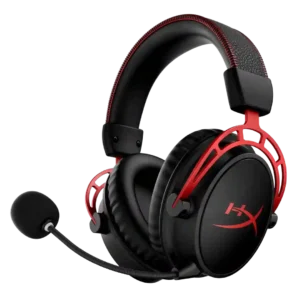
Product 1: HyperX Cloud Alpha
3.9
P2
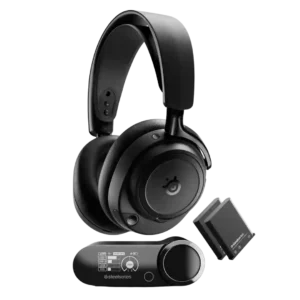
Product 2: SteelSeries Arctis Nova Elite
4.2
Active noise cancellation
P1
Product 1: HyperX Cloud Alpha
1.0
Reviewers explicitly note the lack of active noise cancellation; isolation comes from passive earcup sealing instead.
P2
Product 2: SteelSeries Arctis Nova Elite
4.4
ANC is one of the strongest areas: reviewers repeatedly call it excellent for a gaming headset, with a few noting consumer ANC flagships can still do better.
Android compatibility
P1Product 1: HyperX Cloud Alpha
No score yet
P2
Product 2: SteelSeries Arctis Nova Elite
4.0
Android compatibility is supported by platform lists and direct Android use.
App
P1
Product 1: HyperX Cloud Alpha
3.2
NGenuity adds battery, EQ, DTS, and control options, but reviewers call it PC-only, sparse, or glitchy in places.
P2
Product 2: SteelSeries Arctis Nova Elite
4.2
The app ecosystem is powerful and flexible, though some reviewers find GG/Sonar setup or software behavior intrusive.
aptX
P1Product 1: HyperX Cloud Alpha
No score yet
P2
Product 2: SteelSeries Arctis Nova Elite
2.0
aptX support is a weakness because the transcript evidence expresses a wish for it rather than confirming support.
Audio-video sync accuracy
P1Product 1: HyperX Cloud Alpha
No score yet
P2
Product 2: SteelSeries Arctis Nova Elite
5.0
Wireless gaming showed no notable delay in the cited review, supporting strong audio-video sync.
Bass performance
P1
Product 1: HyperX Cloud Alpha
4.3
Bass is generally full, deep, and impactful, but reviewers vary on whether it is boosted, restrained, or slightly lacking thump.
P2
Product 2: SteelSeries Arctis Nova Elite
4.3
Bass is generally praised for precision, depth, and tightness, though one reviewer felt it could be a little much depending on preference.
Battery
P1
Product 1: HyperX Cloud Alpha
4.9
Battery life is the standout Wireless feature, repeatedly cited around 300 hours and in one test exceeding 327 hours.
P2
Product 2: SteelSeries Arctis Nova Elite
4.9
Battery is a major strength due to the swappable dual-battery system and long per-battery runtime.
Bluetooth
P1
Product 1: HyperX Cloud Alpha
1.0
Bluetooth is a consistent missing feature on Wireless, repeatedly framed as a limitation or lack of backup connectivity.
P2
Product 2: SteelSeries Arctis Nova Elite
4.5
Bluetooth support is widely documented and praised, including simultaneous use, LE Audio/LC3 mentions, and phone or mobile use.
Build quality
P1
Product 1: HyperX Cloud Alpha
4.5
Reviewers usually describe the headset as sturdy, premium, or durable, with metal/aluminum reinforcement; a few wireless-video reviews call the build merely okay rather than luxurious.
P2
Product 2: SteelSeries Arctis Nova Elite
4.9
Build quality is consistently praised, with repeated evidence of metal construction, sturdiness, and premium feel.
Built-in DAC and hi-res playback
P1Product 1: HyperX Cloud Alpha
No score yet
P2
Product 2: SteelSeries Arctis Nova Elite
4.9
Hi-res playback and the GameHub/DAC system are core strengths, with many reviews citing 96kHz/24-bit wireless audio and DAC support.
Button control usability
P1
Product 1: HyperX Cloud Alpha
4.4
Controls are usually easy to find and use, with accessible volume, mute, and power controls, though some controls are minimal.
P2
Product 2: SteelSeries Arctis Nova Elite
4.6
Button and physical control usability is a strength, with repeated praise for intuitive controls, tactile wheels, and useful feedback.
Cable quality
P1
Product 1: HyperX Cloud Alpha
4.1
Wired reviews praise the braided or protected cable, though one notes the bundled cable is short and another calls it only okay.
P2Product 2: SteelSeries Arctis Nova Elite
No score yetCarry case quality
P1
Product 1: HyperX Cloud Alpha
3.0
Wired reviews mention a basic velour pouch, while Wireless reviews criticize the lack of a travel bag or case at the price.
P2
Product 2: SteelSeries Arctis Nova Elite
3.0
The included pouch is useful but underwhelming at the price because several reviewers wanted a more protective hard case.
Charging
P1
Product 1: HyperX Cloud Alpha
4.5
Charging feedback is positive overall, with USB-C charging, quick top-ups, overnight recharge, or only a few hours needed.
P2
Product 2: SteelSeries Arctis Nova Elite
4.4
Charging is strong, especially through the base-station battery slot and quick-charge claims, despite one reviewer disliking cable charging on-head.
Clamping force comfort
P1
Product 1: HyperX Cloud Alpha
4.3
Clamp is generally comfortable or minimal, with isolated notes of snugness or stronger grip depending on head shape.
P2
Product 2: SteelSeries Arctis Nova Elite
2.5
Clamp comfort is mixed to negative, with several reviewers describing a tight clamp or stronger clamping force.
Codec support
P1Product 1: HyperX Cloud Alpha
No score yet
P2
Product 2: SteelSeries Arctis Nova Elite
4.3
Codec support is strong around LC3/LC3+, but aptX/LDAC evidence is absent or negative.
Comfort during long use
P1
Product 1: HyperX Cloud Alpha
4.6
Comfort is one of the strongest consensus points, with many reviewers wearing it for long gaming sessions, though a few note heat or pad limitations.
P2
Product 2: SteelSeries Arctis Nova Elite
4.3
Comfort is mostly positive for long sessions, but not unanimous because one reviewer reported soreness after a long day.
Connectivity versatility
P1
Product 1: HyperX Cloud Alpha
2.5
Connectivity is a split story: wired 3.5mm is very versatile, while Wireless is limited by dongle-only operation and no wired fallback.
P2
Product 2: SteelSeries Arctis Nova Elite
4.9
Connectivity versatility is the product's clearest differentiator, with many reviews emphasizing multi-source, multi-platform mixing.
Console compatibility limitations
P1
Product 1: HyperX Cloud Alpha
2.1
Wireless reviews repeatedly mention platform limitations, especially missing analog fallback, limited console feature support, or restricted compatibility.
P2
Product 2: SteelSeries Arctis Nova Elite
2.8
Console limitations are real because the highest Hi-Res mode is PC-focused and PS5/Xbox/Switch cannot fully use it.
Design and Aesthetics
P1
Product 1: HyperX Cloud Alpha
3.9
The HyperX red-and-black gaming look is seen as stylish or familiar by some, but one wireless review calls it dated.
P2
Product 2: SteelSeries Arctis Nova Elite
4.5
Design is consistently praised as premium, mature, and attractive, especially the sage/gold colorway.
Detachable cable convenience
P1
Product 1: HyperX Cloud Alpha
4.8
Several wired reviews like that the cable can be detached or replaced, making the headset easier to maintain and use across setups.
P2Product 2: SteelSeries Arctis Nova Elite
No score yetDetachable microphone convenience
P1
Product 1: HyperX Cloud Alpha
4.6
The removable boom mic is repeatedly treated as convenient for travel, casual listening, replacement, or removing the gaming look.
P2Product 2: SteelSeries Arctis Nova Elite
No score yetDongle
P1
Product 1: HyperX Cloud Alpha
4.4
The wireless USB dongle is simple and useful, but also central to the headset’s compatibility limits because it is the main or only connection path.
P2Product 2: SteelSeries Arctis Nova Elite
No score yetEar cup padding quality
P1
Product 1: HyperX Cloud Alpha
4.2
Memory-foam/leatherette pads are widely praised for softness, but some reviewers note warmth, shallow pads, or heat buildup.
P2
Product 2: SteelSeries Arctis Nova Elite
4.4
Earcup padding is widely praised as plush and soft, though one review notes faux leather can become sweaty.
Ear cup swivel/rotation range
P1
Product 1: HyperX Cloud Alpha
2.0
Reviewers repeatedly flag limited swivel or no 90-degree lay-flat rotation, making this a consistent portability and fit limitation.
P2
Product 2: SteelSeries Arctis Nova Elite
4.0
The cups rotate flat for storage, but the headset does not fold, making rotation range useful but limited for travel.
Earpad replacement ease
P1
Product 1: HyperX Cloud Alpha
4.7
One hands-on review shows the pads popping off easily for cushion replacement.
P2
Product 2: SteelSeries Arctis Nova Elite
4.7
Earpad replacement is easy and positively supported by multiple mentions of removable or replaceable pads.
Equalizer customization
P1
Product 1: HyperX Cloud Alpha
4.0
EQ is mostly a Wireless/software feature, offering presets and custom profiles; wired reviews instead emphasize no required software.
P2
Product 2: SteelSeries Arctis Nova Elite
4.8
EQ customization is a major strength, including parametric EQ, detailed settings, and meaningful adjustment options.
Fit/seal reliability
P1
Product 1: HyperX Cloud Alpha
4.6
Reviewers highlight a reliable seal and secure hold that helps stability, bass response, and passive isolation.
P2
Product 2: SteelSeries Arctis Nova Elite
4.5
Fit and seal reliability improved with better cup movement, but this is supported by limited evidence.
Footstep sound level scaling feature
P1Product 1: HyperX Cloud Alpha
No score yet
P2
Product 2: SteelSeries Arctis Nova Elite
4.0
Footstep support is supported by evidence that footsteps became easy to hear and position, though the exact scaling feature is not deeply discussed.
Frequency response accuracy
P1
Product 1: HyperX Cloud Alpha
4.7
Frequency response is described as relatively faithful or clear, with dual-chamber separation helping avoid muddiness.
P2
Product 2: SteelSeries Arctis Nova Elite
3.0
Frequency response is mixed because one review measured notable scoop-and-peak behavior that may require EQ correction.
Game/Chat balance control
P1
Product 1: HyperX Cloud Alpha
3.5
One transcript mentions a chat/game mix rocker, but the broader review set mostly discusses volume and mic mute rather than detailed balance controls.
P2
Product 2: SteelSeries Arctis Nova Elite
4.4
Game/chat balance is a strong feature through ChatMix, source mixing, and game-versus-voice balancing.
Headband adjustability
P1
Product 1: HyperX Cloud Alpha
4.4
Headband adjustment is described as straightforward, with sliders/notches and enough size range for fit.
P2
Product 2: SteelSeries Arctis Nova Elite
4.3
Headband adjustability is good, with staged sizing and smoother, more rugged adjustment called out.
Hinge durability
P1
Product 1: HyperX Cloud Alpha
4.8
One review specifically praises durability features around joints and replacement parts, supporting confidence in hinge and moving-part longevity.
P2
Product 2: SteelSeries Arctis Nova Elite
5.0
Hinge and yoke durability is strongly supported by the full metal yoke construction evidence.
Included accessories
P1
Product 1: HyperX Cloud Alpha
4.4
Wired-package reviews report the expected essentials, including the headset, detachable mic, main cable, splitter or extender cable.
P2
Product 2: SteelSeries Arctis Nova Elite
4.3
Accessories are generally generous, especially USB cables and included extras, but some reviewers criticize the lack of a hard case.
Instrument separation
P1
Product 1: HyperX Cloud Alpha
4.7
Layering and separation are a recurring strength, with reviewers crediting dual-chamber design or the ability to distinguish audio layers.
P2
Product 2: SteelSeries Arctis Nova Elite
4.5
One review specifically notes improved ability to separate low drum impact from bass-guitar notes.
Integrated microphone
P1Product 1: HyperX Cloud Alpha
No score yet
P2
Product 2: SteelSeries Arctis Nova Elite
4.1
The built-in microphones are useful when the boom is retracted, but generally sit below the boom mic in quality.
Maximum volume clarity
P1
Product 1: HyperX Cloud Alpha
4.7
At high volumes, reviewers usually report loud output with minimal or no distortion.
P2
Product 2: SteelSeries Arctis Nova Elite
4.5
Maximum-volume clarity is supported by a review noting loud, clear bullet impacts during testing.
Microphone
P1
Product 1: HyperX Cloud Alpha
4.0
Microphone feedback is mixed-positive: many call it clear or usable, while others say it is wonky, thin, or not ideal for serious recording.
P2
Product 2: SteelSeries Arctis Nova Elite
4.5
The boom microphone is mostly praised as clear, improved, and among the better wireless gaming headset mics, though one reviewer found it compressed.
Microphone noise reduction
P1
Product 1: HyperX Cloud Alpha
4.4
Mic noise reduction is generally effective for fans or background noise, though one review says mechanical keyboards remain a challenge.
P2
Product 2: SteelSeries Arctis Nova Elite
4.5
Microphone noise reduction is strong overall, with reviewers noting less hiss, strong rejection, and effective control of unwanted background sounds.
Microphone quality for calls
P1
Product 1: HyperX Cloud Alpha
3.8
For calls and chat, reviewers generally find the mic understandable and usable, but not a replacement for a dedicated recording microphone.
P2
Product 2: SteelSeries Arctis Nova Elite
4.5
Call quality is positively supported by coworker feedback that the reviewer sounded very clear.
Midrange clarity
P1
Product 1: HyperX Cloud Alpha
4.3
Midrange is usually described as clear or well-tuned, with one reviewer emphasizing the absence of murky low-mid congestion.
P2
Product 2: SteelSeries Arctis Nova Elite
4.5
Midrange clarity is supported by notes about detailed mids and cleaner reproduction versus prior SteelSeries models.
Multi-platform compatibility
P1
Product 1: HyperX Cloud Alpha
4.2
Wired models are broadly cross-platform through 3.5mm; Wireless reviews limit stronger compatibility mainly to PC and PlayStation.
P2
Product 2: SteelSeries Arctis Nova Elite
5.0
Multi-platform compatibility is broad, covering PC, PlayStation, Xbox, Switch, mobile, and other devices.
Multipoint connectivity reliability
P1Product 1: HyperX Cloud Alpha
No score yet
P2
Product 2: SteelSeries Arctis Nova Elite
4.5
Multipoint is positively supported by evidence that pairing and managing multiple devices is easier.
Noise isolation (passive)
P1
Product 1: HyperX Cloud Alpha
4.3
Passive isolation is repeatedly praised, with reviewers saying outside sound is blocked or muffled despite no active noise cancellation.
P2
Product 2: SteelSeries Arctis Nova Elite
4.0
Passive isolation is consistently good to strong, helped by sealed cups and dense padding, though not every review treats it as a standalone strength.
Packaging quality
P1Product 1: HyperX Cloud Alpha
No score yet
P2
Product 2: SteelSeries Arctis Nova Elite
4.0
Packaging/unboxing receives limited positive support from a reviewer who described the experience as premium-feeling.
Portability/foldability
P1
Product 1: HyperX Cloud Alpha
1.9
The headset is not built around folding or compact travel; reviewers mention the lack of portability or contractable design.
P2
Product 2: SteelSeries Arctis Nova Elite
3.0
Portability is mixed: the cups rotate or articulate, but reviewers also call the headset bulky and not foldable.
Positional audio accuracy
P1
Product 1: HyperX Cloud Alpha
4.5
Positional cues are often strong for footsteps, gunfire, and environmental sounds, though one review prefers realism over tactical emphasis.
P2
Product 2: SteelSeries Arctis Nova Elite
4.6
Positional audio is a strong gaming feature, with reviewers praising cue location, directional audio, and close/distant sound placement.
Preset EQ profile quality
P1
Product 1: HyperX Cloud Alpha
4.2
EQ presets can improve mids, gaming cues, or overall tuning, though at least one reviewer prefers the default sound.
P2
Product 2: SteelSeries Arctis Nova Elite
4.8
Preset EQ quality is strong, with hundreds of game presets and countless audio profiles mentioned.
Replaceable earpads
P1
Product 1: HyperX Cloud Alpha
3.0
Earpad replaceability is mixed in the evidence: one review says stock pads are not detachable, while another demonstrates replacing cushions.
P2
Product 2: SteelSeries Arctis Nova Elite
4.5
Replaceable earpads are supported by reviews noting removable or replaceable memory foam pads.
Replaceable ear plates
P1Product 1: HyperX Cloud Alpha
No score yet
P2
Product 2: SteelSeries Arctis Nova Elite
4.0
Replaceable ear plates are lightly supported through compatibility with SteelSeries Booster Packs.
Sidetone adjustment quality
P1
Product 1: HyperX Cloud Alpha
2.4
Sidetone and mic monitoring are limited: wired lacks it, and wireless implementations exist but with little or no adjustment.
P2
Product 2: SteelSeries Arctis Nova Elite
4.5
Sidetone adjustment is supported for both boom and built-in microphones.
Smudge resistance
P1Product 1: HyperX Cloud Alpha
No score yet
P2
Product 2: SteelSeries Arctis Nova Elite
2.0
Smudge resistance is weak because one review calls the metallic finish a fingerprint magnet.
Software/setup simplicity
P1
Product 1: HyperX Cloud Alpha
4.3
Setup is usually simple and plug-and-play, but the wireless software/driver experience receives some reliability criticism.
P2
Product 2: SteelSeries Arctis Nova Elite
3.7
Setup/software simplicity is mixed: menus can be clear and automatic connection works, but one reviewer found Sonar a headache.
Sound leakage
P1
Product 1: HyperX Cloud Alpha
4.1
Leakage is mostly controlled at normal volumes, though at higher volumes one reviewer says it becomes noticeable.
P2
Product 2: SteelSeries Arctis Nova Elite
5.0
Sound leakage control is excellent in the cited review, which notes protection against audio spillage.
Sound quality
P1
Product 1: HyperX Cloud Alpha
4.6
The overall sound receives broad praise across gaming and music, with only a few reviewers describing it as merely good rather than exceptional.
P2
Product 2: SteelSeries Arctis Nova Elite
4.7
Reviewers broadly praise the Elite's sound as rich, detailed, crisp, and unusually strong for both games and music, with only a few caveats about tuning.
Soundstage width
P1
Product 1: HyperX Cloud Alpha
4.2
Soundstage is described as wide or decent, especially for a closed-back gaming headset.
P2
Product 2: SteelSeries Arctis Nova Elite
4.4
Soundstage is a major strength, with reviewers describing width, depth, spaciousness, and well-supported game soundscapes.
Spatial audio
P1
Product 1: HyperX Cloud Alpha
3.7
Spatial audio depends on model and platform: wired lacks built-in surround, while Wireless DTS/spatial processing can work well on PC.
P2
Product 2: SteelSeries Arctis Nova Elite
4.3
Spatial audio is generally strong, especially for immersive or cinematic gaming, though one comparison notes sharper esports alternatives.
Stability
P1
Product 1: HyperX Cloud Alpha
4.3
Stability is strong on-head and, in some wireless reviews, connection stability is good, though one reviewer reports range degradation.
P2
Product 2: SteelSeries Arctis Nova Elite
4.0
Wireless stability is good within normal range, though one review notes audio wavering only after multiple walls.
Touch control responsiveness
P1Product 1: HyperX Cloud Alpha
No score yet
P2
Product 2: SteelSeries Arctis Nova Elite
4.0
Touch/control responsiveness is lightly supported through Bluetooth/media control from the headset.
Transparency mode quality
P1Product 1: HyperX Cloud Alpha
No score yet
P2
Product 2: SteelSeries Arctis Nova Elite
4.0
Transparency mode is supported as a practical way to hear surroundings without removing the headset, though evidence is limited.
Treble clarity
P1
Product 1: HyperX Cloud Alpha
4.5
Treble is mostly praised as crisp, clean, and detailed without harshness, though one wireless review says highs can be overshadowed by bass.
P2
Product 2: SteelSeries Arctis Nova Elite
3.3
Treble is clear but mixed: reviewers note detail and width, yet also report sharpness, fatigue, or a desire for more air.
USB-C
P1
Product 1: HyperX Cloud Alpha
4.5
USB-C appears mainly on the Wireless model for charging or adapter support, and reviewers treat it as useful.
P2
Product 2: SteelSeries Arctis Nova Elite
3.8
USB-C is present for charging and base connections, but one review notes USB-C does not support direct headset audio.
Value for money
P1
Product 1: HyperX Cloud Alpha
4.2
Value is strongest for the wired model under $100; wireless value is more mixed because the high price buys battery life but limited features.
P2
Product 2: SteelSeries Arctis Nova Elite
2.8
Value is the most divisive attribute: reviewers admire the feature set but repeatedly stress the extreme $600 price and narrow target audience.
Volume output
P1
Product 1: HyperX Cloud Alpha
4.4
Volume output is generally strong and easy to adjust, though one wireless review says the maximum is not class-leading.
P2
Product 2: SteelSeries Arctis Nova Elite
3.5
Volume output is functionally controlled through the hub/headset, but one reviewer disliked losing normal Windows output control.
Weight comfort
P1
Product 1: HyperX Cloud Alpha
4.2
Most reviewers find the weight manageable or well distributed, though one notes the materials add noticeable weight.
P2
Product 2: SteelSeries Arctis Nova Elite
3.3
Weight comfort is mixed: some reviewers say the 380g weight is manageable, while others call it heavy.
Wireless latency
P1
Product 1: HyperX Cloud Alpha
4.5
Wireless responsiveness is positive in limited evidence, with one reviewer reporting low latency and another hearing no static or digital noise.
P2
Product 2: SteelSeries Arctis Nova Elite
5.0
Wireless latency is excellent in the cited reviews, with no notable lag or delay reported.
Xbox compatibility
P1
Product 1: HyperX Cloud Alpha
1.8
Xbox support is mixed by model: wired evidence includes Xbox use through a headphone jack, while Wireless reviews say Xbox is unsupported or problematic.
P2
Product 2: SteelSeries Arctis Nova Elite
4.9
Xbox compatibility is a strength, with multiple reviews noting Xbox support through the GameHub or platform list.