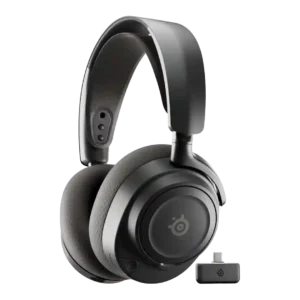
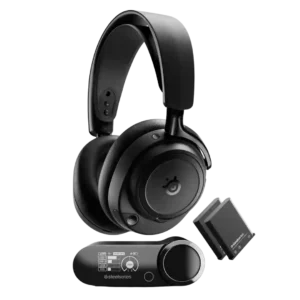
Average score
P1
Product 1: SteelSeries Arctis Nova 7 Wireless...
4.0
P2
Product 2: SteelSeries Arctis Nova Elite
4.2
Active noise cancellation
P1
Product 1: SteelSeries Arctis Nova 7 Wireless...
1.8
The headset lacks ANC, and reviewers framed that as expected at the price but still a limitation versus some alternatives.
P2
Product 2: SteelSeries Arctis Nova Elite
4.5
ANC is one of the most consistently praised features, with reviewers calling it class-leading for gaming headsets, though a few compare it less favorably to consumer ANC flagships.
App
P1
Product 1: SteelSeries Arctis Nova 7 Wireless...
4.7
The app and GG/Sonar ecosystem were major strengths, especially mobile preset control, though a few advanced features still require desktop.
P2
Product 2: SteelSeries Arctis Nova Elite
3.9
The app ecosystem is mixed: reviewers like mobile/console control and deep options, but some find the desktop software intrusive or frustrating.
Audio-video sync accuracy
P1
Product 1: SteelSeries Arctis Nova 7 Wireless...
3.7
A/V sync depended heavily on connection type: 2.4GHz was praised as near-latency-free, while Bluetooth could lag or drift out of sync.
P2Product 2: SteelSeries Arctis Nova Elite
No score yetBass performance
P1
Product 1: SteelSeries Arctis Nova 7 Wireless...
4.2
Bass was widely described as powerful and immersive, but a few reviewers found it overemphasized or thick without EQ.
P2
Product 2: SteelSeries Arctis Nova Elite
4.4
Bass is generally praised for precision, texture, and depth, though a few reviewers note the stock tuning can be bass-heavy or excessive in some contexts.
Battery
P1
Product 1: SteelSeries Arctis Nova 7 Wireless...
4.7
Battery life was repeatedly praised as long, often around or above 50 hours, with low-battery beeps being the main annoyance.
P2
Product 2: SteelSeries Arctis Nova Elite
4.8
Battery performance is strongly praised because the two-battery system largely removes runtime anxiety, despite one reviewer disputing true hot-swap behavior.
Bluetooth
P1
Product 1: SteelSeries Arctis Nova 7 Wireless...
3.8
Bluetooth was valued for simultaneous phone use, but reviewers noted SBC-only support, lag, pairing quirks, or power-management annoyances.
P2
Product 2: SteelSeries Arctis Nova Elite
4.5
Bluetooth is generally useful and flexible, especially for simultaneous phone/app use, though codec and platform limitations still appear in nearby reviewer comments.
Build quality
P1
Product 1: SteelSeries Arctis Nova 7 Wireless...
4.5
Build quality was mostly praised for sturdy metal, solid plastics, and durability, with a minority complaint about control finish.
P2
Product 2: SteelSeries Arctis Nova Elite
4.8
Build quality is consistently praised as premium, sturdy, metal-rich, and solid, with only isolated complaints about small squeaks or finish details.
Built-in DAC and hi-res playback
P1
Product 1: SteelSeries Arctis Nova 7 Wireless...
4.0
Hi-res playback evidence was limited, but 24-bit/48kHz support over the dongle was considered enough for casual audiophile use.
P2
Product 2: SteelSeries Arctis Nova Elite
4.7
Hi-res playback and the GameHub/DAC are major strengths, though some reviewers question whether the hi-res benefit matters outside PC and music use.
Button control usability
P1
Product 1: SteelSeries Arctis Nova 7 Wireless...
4.3
Physical controls were usually praised as tactile, easy to reach, and intuitive, though one reviewer disliked cheap-feeling dials.
P2
Product 2: SteelSeries Arctis Nova Elite
4.4
Physical controls are usually praised for tactile wheels, intuitive placement, and good feedback, though one reviewer says smaller buttons feel less premium.
Cable quality
P1
Product 1: SteelSeries Arctis Nova 7 Wireless...
3.8
Cable quality received limited but positive evidence for useful lengths, with one reviewer preferring braided sheaths.
P2Product 2: SteelSeries Arctis Nova Elite
No score yetCarry case quality
P1Product 1: SteelSeries Arctis Nova 7 Wireless...
No score yet
P2
Product 2: SteelSeries Arctis Nova Elite
2.9
The carry case is repeatedly criticized as too soft or insufficiently protective for the price, despite a few reviewers calling the pouch nice.
Charging
P1
Product 1: SteelSeries Arctis Nova 7 Wireless...
4.7
Charging was strongly praised for fast top-ups, USB-C, and the ability to keep playing while charging.
P2
Product 2: SteelSeries Arctis Nova Elite
4.5
Charging is viewed positively thanks to fast charging, the hub battery slot, and quick swaps that reduce the need to tether the headset.
Clamping force comfort
P1
Product 1: SteelSeries Arctis Nova 7 Wireless...
3.9
Clamp force was generally manageable or comfortable, but glasses wearers in some reviews experienced pressure after hours.
P2
Product 2: SteelSeries Arctis Nova Elite
2.9
Clamping force is a repeated comfort caveat, with multiple reviewers calling it tight or stronger than expected even when the headset remains wearable.
Codec support
P1
Product 1: SteelSeries Arctis Nova 7 Wireless...
2.7
Codec support was weak because reviewers repeatedly noted SBC-only Bluetooth and wished for better codec options.
P2
Product 2: SteelSeries Arctis Nova Elite
4.2
Codec support is viewed as robust thanks to LC3/LC3+ and hi-res wireless, though one reviewer wanted additional support such as aptX-like options.
Comfort during long use
P1
Product 1: SteelSeries Arctis Nova 7 Wireless...
4.6
Comfort was one of the strongest themes, with most reviewers praising long-session wear, though glasses and very long sessions caused issues for some.
P2
Product 2: SteelSeries Arctis Nova Elite
4.2
Comfort is highly polarized: many reviewers call it plush and long-session friendly, while others report tightness, sweating, pressure, or fatigue.
Connectivity versatility
P1
Product 1: SteelSeries Arctis Nova 7 Wireless...
4.9
Connectivity versatility was a major strength, with reviewers praising dual wireless, analog fallback, and broad device coverage.
P2
Product 2: SteelSeries Arctis Nova Elite
4.9
Connectivity versatility is the clearest consensus strength: reviewers repeatedly praise multi-device support, four-source mixing, and broad setup flexibility.
Console compatibility limitations
P1
Product 1: SteelSeries Arctis Nova 7 Wireless...
3.2
Platform/version limitations mattered: Xbox compatibility depends on the 7X model, PlayStation variants lose some controls, and wired/USB behavior has caveats.
P2
Product 2: SteelSeries Arctis Nova Elite
3.0
Console limitations are a recurring caveat because the highest hi-res benefits are PC-only and some chat behavior is not fully compatible.
Design and Aesthetics
P1
Product 1: SteelSeries Arctis Nova 7 Wireless...
4.1
Design impressions were mostly positive for clean, mature aesthetics, but some reviewers criticized the lack of visible Gen 2 changes or mid-range feel.
P2
Product 2: SteelSeries Arctis Nova Elite
4.8
Design and aesthetics are widely praised for the sage/gold look, mature styling, and premium visual finish.
Detachable cable convenience
P1Product 1: SteelSeries Arctis Nova 7 Wireless...
No score yet
P2
Product 2: SteelSeries Arctis Nova Elite
4.0
The analog cable option is useful in at least one real use case, where the reviewer said it worked well when directly powered.
Detachable microphone convenience
P1Product 1: SteelSeries Arctis Nova 7 Wireless...
No score yet
P2
Product 2: SteelSeries Arctis Nova Elite
4.5
The retractable mic mechanism is convenient in the scored review, where it is easy to pull out and position.
Dongle
P1
Product 1: SteelSeries Arctis Nova 7 Wireless...
2.7
The dongle was the most repeated design complaint: reviewers disliked its width, port blocking, or merely adequate range, despite functional wireless use.
P2Product 2: SteelSeries Arctis Nova Elite
No score yetEar cup padding quality
P1
Product 1: SteelSeries Arctis Nova 7 Wireless...
4.4
Earpads were mostly praised as soft, breathable, and high quality, though a few reviewers said they could get warm.
P2
Product 2: SteelSeries Arctis Nova Elite
4.4
Earpad padding is broadly praised for plushness and softness, but several reviewers warn faux leather can get sweaty or may wear over time.
Ear cup swivel/rotation range
P1
Product 1: SteelSeries Arctis Nova 7 Wireless...
4.5
Cup rotation and articulation were praised for fit, neck wear, and natural positioning.
P2
Product 2: SteelSeries Arctis Nova Elite
4.5
Ear cup rotation is praised in one review for freer movement that improves seal behavior compared with previous models.
Earpad replacement ease
P1Product 1: SteelSeries Arctis Nova 7 Wireless...
No score yet
P2
Product 2: SteelSeries Arctis Nova Elite
4.5
Earpad replacement ease is positive in one review that says the design should be easy enough to repair.
Equalizer customization
P1
Product 1: SteelSeries Arctis Nova 7 Wireless...
4.3
EQ customization was powerful, especially desktop parametric EQ and saved profiles, but mobile custom EQ limitations were a recurring caveat.
P2
Product 2: SteelSeries Arctis Nova Elite
4.6
EQ customization is a major strength, with repeated praise for parametric EQ, per-source profiles, and on-the-fly tuning across app, hub, and PC software.
Fit/seal reliability
P1
Product 1: SteelSeries Arctis Nova 7 Wireless...
3.6
Fit and seal were mixed: some praised consistent seal, while glasses-related gaps and fit instability hurt audio in other reviews.
P2
Product 2: SteelSeries Arctis Nova Elite
4.5
Fit and seal reliability is positive in one review, where freer ear cup movement is said to maintain a better seal.
Footstep sound level scaling feature
P1
Product 1: SteelSeries Arctis Nova 7 Wireless...
4.6
Footstep-focused tuning and presets were praised for competitive awareness, though one reviewer said heavy bass could mask subtle cues.
P2
Product 2: SteelSeries Arctis Nova Elite
4.5
Footstep-focused EQ evidence is positive, with the Valorant preset said to make footsteps more detailed and enemy positions easier to localize.
Frequency response accuracy
P1
Product 1: SteelSeries Arctis Nova 7 Wireless...
3.6
Frequency-response comments were mixed, pointing to balanced or gamer-friendly tuning alongside bass emphasis, recesses, and a strong treble peak.
P2
Product 2: SteelSeries Arctis Nova Elite
4.3
Frequency-response impressions are mixed: one review praises balanced warmth, depth, and clarity, while another notes ANC and tuning changes affect consistency.
Game/Chat balance control
P1
Product 1: SteelSeries Arctis Nova 7 Wireless...
4.3
Game/chat balance controls were praised as handy for multiplayer, although function depends on version and platform.
P2
Product 2: SteelSeries Arctis Nova Elite
4.5
Game/chat balance works well on PC and via the base station, but PlayStation chat compatibility is a limitation.
Headband adjustability
P1
Product 1: SteelSeries Arctis Nova 7 Wireless...
4.6
The headband was praised for distributing pressure and helping adjust fit across head sizes.
P2
Product 2: SteelSeries Arctis Nova Elite
4.3
Headband adjustability is positively described as adjustable, smoother, and more rugged, though coverage is limited.
Hinge durability
P1Product 1: SteelSeries Arctis Nova 7 Wireless...
No score yet
P2
Product 2: SteelSeries Arctis Nova Elite
5.0
Hinge durability is supported by one review that praises the full metal yoke construction as more durable.
Included accessories
P1
Product 1: SteelSeries Arctis Nova 7 Wireless...
4.2
Included accessories were viewed positively, especially the useful cable set and extension/adapter options.
P2
Product 2: SteelSeries Arctis Nova Elite
4.5
Included accessories are generally considered generous, though another review frames them as goodies rather than luxury-level extras.
Instrument separation
P1
Product 1: SteelSeries Arctis Nova 7 Wireless...
3.7
Instrument and layer separation was mixed: some heard clean layering, while others said dense tracks or pricier drivers separate better.
P2
Product 2: SteelSeries Arctis Nova Elite
3.9
Instrument separation is mostly praised for detail retrieval and the ability to pick out subtle sounds, but one review specifically says separation is lacking.
Integrated microphone
P1
Product 1: SteelSeries Arctis Nova 7 Wireless...
4.6
The integrated retractable microphone was widely appreciated because it stores cleanly and avoids the hassle of detachable mics.
P2
Product 2: SteelSeries Arctis Nova Elite
4.0
Integrated microphones are convenient and surprisingly good for calls or discreet use, though they are still secondary to the boom mic.
Maximum volume clarity
P1
Product 1: SteelSeries Arctis Nova 7 Wireless...
4.0
Maximum-volume clarity was mixed, with one reviewer praising improved lack of distortion and another warning of harsh loudness.
P2
Product 2: SteelSeries Arctis Nova Elite
5.0
Maximum-volume clarity is supported by one review that found loud game effects remained clear.
Microphone
P1
Product 1: SteelSeries Arctis Nova 7 Wireless...
3.5
Microphone opinions were mixed: clear enough for chat and calls, but often described as tinny, fuzzy, hissy, or not streamer-grade.
P2
Product 2: SteelSeries Arctis Nova Elite
4.4
Microphone performance is broadly strong, often described as excellent or improved, though one reviewer still finds it compressed and unspectacular.
Microphone noise reduction
P1
Product 1: SteelSeries Arctis Nova 7 Wireless...
4.5
Noise reduction was praised when using ClearCast or Sonar processing, though baseline mic performance still varied.
P2
Product 2: SteelSeries Arctis Nova Elite
4.5
Microphone noise reduction is praised for suppressing hiss, vacuums, washing machines, and background noise, with only minor processing caveats.
Microphone quality for calls
P1
Product 1: SteelSeries Arctis Nova 7 Wireless...
3.8
Call and chat intelligibility was usually fine, with voices heard clearly even when fidelity was not especially natural.
P2
Product 2: SteelSeries Arctis Nova Elite
4.4
Call and chat mic quality is strong overall, with reviewers reporting clear voice quality and a mic competitive with top wireless headset microphones.
Midrange clarity
P1
Product 1: SteelSeries Arctis Nova 7 Wireless...
4.2
Midrange was praised for clear voices and dialogue, with one reviewer noting it was fairly flat but detailed.
P2
Product 2: SteelSeries Arctis Nova Elite
4.5
Midrange clarity is viewed positively, with reviewers noting cleaner mids and detailed reproduction; one technical review still flags tuning choices that affect perceived clarity.
Multi-platform compatibility
P1
Product 1: SteelSeries Arctis Nova 7 Wireless...
4.8
Multi-platform compatibility was one of the headset's strongest areas, especially when choosing the 7X variant.
P2
Product 2: SteelSeries Arctis Nova Elite
5.0
Multi-platform compatibility is very strong, with reviewers calling it an all-systems or premium multi-platform solution.
Multipoint connectivity reliability
P1
Product 1: SteelSeries Arctis Nova 7 Wireless...
4.6
Simultaneous 2.4GHz and Bluetooth was one of the most consistently praised features, enabling smooth dual-source use.
P2
Product 2: SteelSeries Arctis Nova Elite
5.0
Multipoint and simultaneous-source behavior is praised as seamless or unusually capable, especially when combining Bluetooth, USB, and aux sources.
Noise isolation (passive)
P1
Product 1: SteelSeries Arctis Nova 7 Wireless...
3.3
Passive isolation split reviewers: some found it useful for immersion, while others said voices, keyboards, and outside noise still came through.
P2
Product 2: SteelSeries Arctis Nova Elite
4.5
Passive isolation is widely strong, credited to sealed pads and dense cushions, though one review only calls it moderate.
Packaging quality
P1
Product 1: SteelSeries Arctis Nova 7 Wireless...
4.0
Packaging had limited positive evidence, with the package described as simple and clean.
P2
Product 2: SteelSeries Arctis Nova Elite
4.5
Packaging quality is supported by one review that found the unboxing experience premium.
Portability/foldability
P1Product 1: SteelSeries Arctis Nova 7 Wireless...
No score yet
P2
Product 2: SteelSeries Arctis Nova Elite
2.5
Portability is a weakness in the one scored review, which calls the headset bulky compared with high-end headphones.
Positional audio accuracy
P1
Product 1: SteelSeries Arctis Nova 7 Wireless...
4.8
Positional audio was consistently strong, with reviewers repeatedly hearing enemy direction and cues accurately.
P2
Product 2: SteelSeries Arctis Nova Elite
4.6
Positional audio is generally strong, with praise for footsteps, directional cues, and spatial detail; one review finds it merely good enough.
Preset EQ profile quality
P1
Product 1: SteelSeries Arctis Nova 7 Wireless...
4.4
Preset EQ profiles were generally useful and sometimes game-changing, especially for footsteps, though one reviewer was skeptical of per-game tuning.
P2
Product 2: SteelSeries Arctis Nova Elite
4.6
Preset EQ profiles are praised for quantity and game-specific usefulness, though their value depends on users being willing to switch or tune profiles.
Replaceable earpads
P1
Product 1: SteelSeries Arctis Nova 7 Wireless...
4.1
Replaceable earpads had limited but positive evidence for replacement and aftermarket compatibility.
P2
Product 2: SteelSeries Arctis Nova Elite
4.3
Replaceable earpads are positive overall, extending service life, though one review flags pleather wear as a long-term concern.
Replaceable ear plates
P1
Product 1: SteelSeries Arctis Nova 7 Wireless...
4.4
Replaceable ear plates were appreciated mainly for easy aesthetic customization.
P2
Product 2: SteelSeries Arctis Nova Elite
4.5
Replaceable ear plates are positively mentioned as a fan-favorite design element.
Sidetone adjustment quality
P1
Product 1: SteelSeries Arctis Nova 7 Wireless...
3.6
Sidetone was useful on the 7P version, but reviewers criticized loudness, hiss, or activation quirks.
P2
Product 2: SteelSeries Arctis Nova Elite
4.0
Sidetone is useful and clear, but reviewers also describe it as overpowering or only comfortable at moderate levels.
Smudge resistance
P1Product 1: SteelSeries Arctis Nova 7 Wireless...
No score yet
P2
Product 2: SteelSeries Arctis Nova Elite
2.5
Smudge resistance is weak in one review, where the metallic finish is described as a fingerprint magnet.
Software/setup simplicity
P1
Product 1: SteelSeries Arctis Nova 7 Wireless...
4.0
Setup and software were usually approachable, with plug-and-play use and beginner-friendly UI, though Sonar can feel complex at first.
P2
Product 2: SteelSeries Arctis Nova Elite
3.6
Setup and software simplicity is mixed: the GameHub and menus can be easy, but OLED choice, Windows volume behavior, and app friction draw criticism.
Sound leakage
P1
Product 1: SteelSeries Arctis Nova 7 Wireless...
2.5
Sound leakage was a weakness in the one direct review that discussed it, with audio bleeding through even with a seal.
P2
Product 2: SteelSeries Arctis Nova Elite
5.0
Sound leakage is excellent in the one scored review, which reports zero spillage even at loud volume.
Sound quality
P1
Product 1: SteelSeries Arctis Nova 7 Wireless...
4.4
Reviewers generally liked the sound for gaming and everyday media, often calling it good to great, though some noted it is not as resolving as pricier competitors.
P2
Product 2: SteelSeries Arctis Nova Elite
4.8
Reviewers repeatedly describe the sound as elite, hi-fi, detailed, or best-in-class, with only one notably price-sensitive review saying the audio still does not justify $600.
Soundstage width
P1
Product 1: SteelSeries Arctis Nova 7 Wireless...
3.8
Soundstage was considered decent for a closed-back headset, useful for games but sometimes enclosed for music.
P2
Product 2: SteelSeries Arctis Nova Elite
4.2
Soundstage is considered wide or exceptional by several reviewers, though one review notes stock single-player presentation can feel somewhat tight.
Spatial audio
P1
Product 1: SteelSeries Arctis Nova 7 Wireless...
4.2
Spatial audio was generally useful for immersion and positional effects, though one reviewer preferred avoiding it for competitive play.
P2
Product 2: SteelSeries Arctis Nova Elite
4.5
Spatial audio is generally praised for immersion, depth, and open-world presentation, though the tuning is more cinematic than strictly esports-focused.
Stability
P1
Product 1: SteelSeries Arctis Nova 7 Wireless...
4.5
Connection stability was mostly good over 2.4GHz, though a few reviewers reported limited range or Bluetooth/device-switching quirks.
P2
Product 2: SteelSeries Arctis Nova Elite
3.5
Stability is mixed: the headset is secure enough in normal use but can slip with sudden movement or have wireless breakup at longer range.
Touch control responsiveness
P1Product 1: SteelSeries Arctis Nova 7 Wireless...
No score yet
P2
Product 2: SteelSeries Arctis Nova Elite
4.0
Touch control responsiveness is lightly positive, with the touch-sensitive GameHub button described as easy enough for menu navigation.
Transparency mode quality
P1
Product 1: SteelSeries Arctis Nova 7 Wireless...
1.5
A reviewer reported painful feedback at maximum transparency-style settings, making that control a clear caveat.
P2Product 2: SteelSeries Arctis Nova Elite
No score yetTreble clarity
P1
Product 1: SteelSeries Arctis Nova 7 Wireless...
3.4
Treble helped with detail and competitive cues, but several reviewers found upper treble sharp, bright, or potentially fatiguing.
P2
Product 2: SteelSeries Arctis Nova Elite
3.3
Treble receives mixed reactions: several reviewers hear smoother or clearer highs, but others find peaks, sharpness, or fatigue that benefit from EQ correction.
USB-C
P1
Product 1: SteelSeries Arctis Nova 7 Wireless...
4.5
USB-C was praised for charging convenience and fast charging, while the broader USB-C dongle design drew separate complaints.
P2
Product 2: SteelSeries Arctis Nova Elite
2.5
USB-C is a limitation in one review because the headset charges over USB-C but does not support direct USB audio.
Value for money
P1
Product 1: SteelSeries Arctis Nova 7 Wireless...
4.3
Value was generally positive, especially for comfort, battery, EQ, and connectivity, though some reviewers thought it should be cheaper or bought on sale.
P2
Product 2: SteelSeries Arctis Nova Elite
3.3
Value for money is the most divided attribute: reviewers praise the elite feature set but repeatedly warn that $600 is only sensible for a narrow audience.
Volume output
P1
Product 1: SteelSeries Arctis Nova 7 Wireless...
4.6
Volume output was strong, with reviewers noting loud playback and enough headroom, though extreme settings could become uncomfortable.
P2
Product 2: SteelSeries Arctis Nova Elite
4.5
Volume output is supported by one review describing full, rich playback without detail loss.
Weight comfort
P1
Product 1: SteelSeries Arctis Nova 7 Wireless...
4.7
Weight comfort was widely praised because the headset felt light or well balanced despite being a wireless over-ear model.
P2
Product 2: SteelSeries Arctis Nova Elite
3.4
Weight comfort is mixed: some reviewers say the headset does not feel cumbersome, while others call it heavy or not among the lightest.
Wireless latency
P1
Product 1: SteelSeries Arctis Nova 7 Wireless...
4.8
Wireless latency was excellent over the 2.4GHz dongle, while Bluetooth was not recommended for timing-sensitive gaming or video.
P2
Product 2: SteelSeries Arctis Nova Elite
5.0
Wireless latency is consistently excellent in the scored reviews, with reviewers reporting no notable lag or no skips.
Xbox compatibility
P1
Product 1: SteelSeries Arctis Nova 7 Wireless...
4.2
Xbox compatibility was praised on the 7X version, but reviewers warned buyers that other versions do not fully support Xbox.
P2
Product 2: SteelSeries Arctis Nova Elite
5.0
Xbox compatibility is positive where discussed, with reviewers noting Xbox support through the hub and no need for a separate Xbox variant.