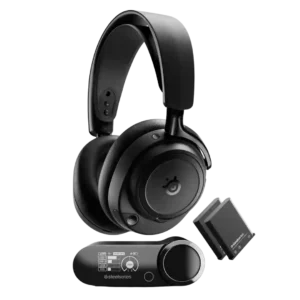
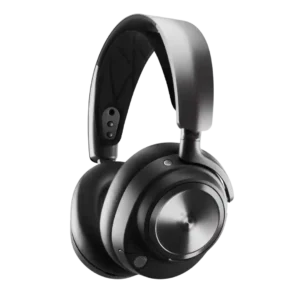
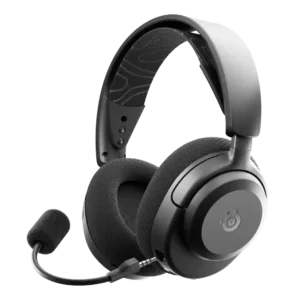
- Better: latency, mic, ANC value SoundGuys frames the Razer as a better deal for a modest price increase.
- Better: microphone fullness PCWorld says competitor mics in this class sound fuller than the Nova 7 Gen 2 mic.
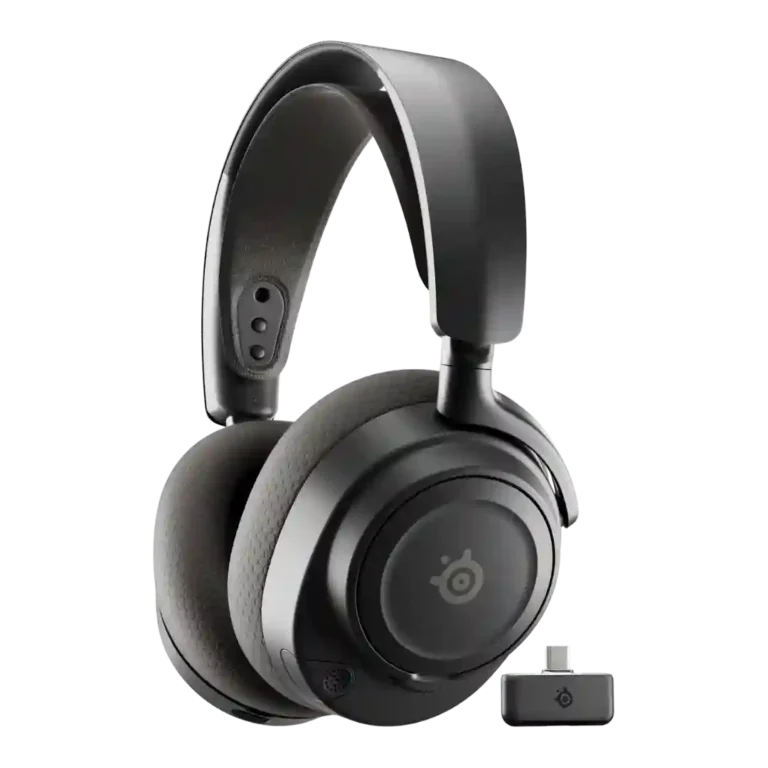
SteelSeries Arctis Nova 7 Wireless Gen 2 Review
Bottom Line
Choose it for comfort, 50-plus-hour battery life, dual wireless, and strong app EQ across platforms. Skip it if you need ANC, a slim dongle, premium mic quality, or the lowest price.
Best for gamers who want one comfortable headset for PC, console, phone, Discord, and travel-style headphone use, especially if they value simultaneous 2.4 GHz plus Bluetooth and EQ presets.
Not for buyers who need active noise cancellation, broadcast-quality microphone audio, advanced Bluetooth codecs, or a dongle that will not block neighboring ports.
The SteelSeries Arctis Nova 7 Wireless Gen 2 lands as a versatile midrange headset built around comfort, long battery life, and unusually flexible connectivity. Across reviews, its strongest case is practical: simultaneous 2.4 GHz and Bluetooth audio, broad platform support, fast charging, and SteelSeries GG/Sonar or Arctis app tuning make it easy to adapt for PC, console, mobile, and chat. Sound quality is generally strong for gaming, especially positional cues and bass impact, but the tuning is not neutral and treble can become sharp without EQ. The main tradeoff is that the headset feels feature-rich but not fully premium: the wide dongle, lack of ANC, and merely acceptable microphone keep it below top-tier rivals.
Compared in Reviews
Products reviewers directly compared with this model, grouped into quick takeaways.
- Better: tonal separation and drivers Tom's Guide suggests stepping up to the Audeze for higher-end drivers if separation matters.
Arctis Nova 3
- Better: transmitter range and microphone GadgetryTech notes the cheaper Nova 3 had better transmitter range and mic performance.
Feature Scorecards
Pros
-
Multi-platform compatibility was excellent, especially with the right version, covering PC, consoles, mobile devices, and handhelds.
-
Wireless latency over the 2.4 GHz dongle was consistently praised as effectively latency-free or wired-like.
-
Replaceable earpad evidence was positive but limited, based on compatibility with aftermarket pads on the Gen 2.
-
Charging was excellent thanks to fast-charge claims and repeated reports that 15 minutes can restore hours of playback.
-
Connectivity versatility was a standout strength, with reviewers praising 2.4 GHz, Bluetooth, 3.5 mm, and broad device support.
-
Battery life was one of the clearest strengths, with reviewers repeatedly confirming roughly 50-plus hours or multi-day use.
-
Weight comfort was excellent, with reviewers repeatedly calling the headset lightweight or well-balanced despite being around 325 to 326 grams.
-
Positional audio was a major strength, with reviewers repeatedly saying footsteps and enemy directions were easy to locate.
-
The app ecosystem was a major strength, with SteelSeries GG, Sonar, and the mobile Arctis app repeatedly praised for control and convenience.
-
Xbox compatibility was strongest on the 7X version, which reviewers repeatedly recommended for cross-platform use.
-
Simultaneous 2.4 GHz plus Bluetooth was one of the most consistently praised features, with most reviewers reporting useful, reliable dual audio.
-
Earpad replacement evidence was positive, with reviewers noting pads can come off and aftermarket or replacement pads remain compatible.
-
Comfort was one of the strongest areas overall, with most reviewers saying it remained easy to wear through long sessions, though glasses fit varied.
-
The integrated retractable boom mic was a strong convenience feature, letting the headset work as normal headphones when the mic is hidden.
-
USB-C support was broadly useful for the dongle and charging, though not every connection type supported direct USB audio.
-
Preset EQ profiles were widely praised as useful and plentiful, especially for game-specific tuning and console use.
-
Ear cup rotation and swivel evidence was positive, with reviewers noting rotating cups, full swivel, and easy adjustment.
-
Included accessories were solid, with reviewers listing useful cables, adapters, the dongle, and a carrying bag.
-
One reviewer found maximum volume cleaner than the prior model, noting the new unit did not distort at max volume.
-
Portability evidence was limited but positive, based on the cups rotating flat for desk or neck use.
-
Bluetooth was praised for simultaneous-device use and app access, though codec limits and occasional power or latency quirks kept it from being flawless.
-
Noise reduction was a real strength when using ClearCast or Sonar features, with reviewers repeatedly noting reduced background noise.
-
Design impressions were generally positive, emphasizing a clean, understated, mature SteelSeries look with few flashy gaming cues.
-
Game/chat balance controls were widely praised for quick multiplayer adjustment, although exact wheel function varies by model and platform.
-
Build quality was generally strong thanks to the metal headband and solid materials, with a few concerns about controls or plastic finish.
-
Headband adjustability was a strength, with elastic bands, multiple positions, and extendable arms helping fit a range of heads.
-
Value was generally positive at around $200, though some reviewers advised waiting for a sale or considering cheaper alternatives.
-
Ear padding was widely praised for soft fabric, foam, pleather sealing, and breathable comfort.
-
Equalizer customization was strong, especially on desktop with parametric EQ, though mobile custom EQ creation was repeatedly limited.
-
Physical controls were generally praised for tactile feedback, sensible placement, and quick operation, with one reviewer criticizing cheap-feeling dials.
-
Reviewers broadly found the headset strong for gaming sound, with good all-around audio and only a few caveats around tuning and driver detail.
-
Spatial audio support was considered useful for immersion, though a few reviewers preferred stereo or custom tuning for competitive play.
-
Android support was directly evidenced through USB-C dongle compatibility with Android and smartphones or tablets.
-
Durability evidence focused on the metal frame and durable hinge/headset construction, which reviewers generally trusted.
-
The limited soundstage evidence was positive, describing a spacious or three-dimensional presentation for a closed-back gaming headset.
-
Footstep-oriented tuning and profiles were useful for competitive play, but too much bass could still interfere with subtle cues for one reviewer.
-
Replaceable ear plates were positively noted as a cosmetic customization option, though they do not hide functional parts.
-
Bass was consistently described as punchy, deep, or immersive, though a few reviewers found it overemphasized or capable of masking subtler cues.
-
The detachable wired cable option was useful as an analog fallback, especially for controller or console connections.
-
Stability evidence was positive but limited, pointing to stable wireless use and no interference in the tested setups.
-
Hi-res playback evidence was limited to one reviewer noting 24-bit/48 kHz support over the dongle.
-
Packaging evidence was positive but limited, with one reviewer describing the package as simple and clean.
-
Cable evidence was mostly practical: reviewers liked the included wired and extension options, though one preferred braided sheaths.
-
Setup was mostly friendly and plug-and-play, although Sonar and app configuration could feel complex or desktop-dependent.
-
Midrange evidence was generally positive for voices and dialogue, but lab-style impressions noted dips or less fullness in some vocal ranges.
-
Fit and seal reliability was mixed, with one reviewer praising consistent seal while another reported gaps and pressure.
-
Instrument separation was mixed: some reviewers praised layered game sound, while others found tonal separation or chaotic scenes less clean than higher-end models.
-
Volume output was generally strong, but the evidence includes warnings about harsh beeps or extreme settings becoming unpleasant.
-
Sidetone was useful but uneven; some liked the dedicated wheel, while others found high settings loud or hissy.
-
Treble helped with detail and competitive cues, but several reviewers also found it sharp, bright, or potentially tiring without EQ.
-
Call and chat intelligibility was usually acceptable or clear, but several reviewers described the mic tone as tinny, limited, or not streamer-grade.
-
The microphone was acceptable for chat but not a highlight; reviewers split between clear enough and noticeably tinny, airy, or midrange.
-
Sound leakage was mixed: some padding reduced leakage, but another review said sound still bleeds through with a seal.
-
Carry-case evidence was limited to the included canvas carrying bag, with no deeper durability testing.
Cons
-
Passive isolation was serviceable but not complete; reviewers said noise was muffled or reasonably reduced, while loud surroundings still came through.
-
Clamping comfort was mixed: some found the clamp light and comfortable, while glasses wearers reported pressure after longer sessions.
-
Console limitations depend on model choice: the Xbox version is the most universal, while other versions have compatibility tradeoffs.
-
Frequency-response evidence was mixed, with reviewers measuring or hearing bass-forward tuning, midrange recesses, and treble peaks rather than strict neutrality.
-
The mic is retractable but not detachable; reviewers liked the hidden boom design but confirmed it remains attached.
-
The dongle was the most repeated hardware complaint, with reviewers frequently saying its wide shape blocks adjacent ports.
-
Audio-video sync was context-dependent: Bluetooth lag or sync drift was noted, while the 2.4 GHz dongle avoided the issue.
-
Codec support was weak because multiple reviewers noted Bluetooth is limited to SBC, with no higher-quality codec support discussed.
-
Reviewers consistently noted the headset lacks active noise cancellation, making this a clear absent feature rather than a strength.
-
RGB lighting customization was not a strength; one review explicitly noted there is no classic RGB lighting.
-
The only water-resistance evidence says there is no IP rating, so the headset should not be treated as sweat- or water-resistant.
Compared With Category Average
Compared with other Headsets, this product is above average in Bluetooth, Portability/foldability, Multipoint connectivity reliability, below average in Audio-video sync accuracy, Dongle.
| Attribute | This product | Category average | Difference |
|---|---|---|---|
| Audio-video sync accuracy | 2.3 | 4.4 | -2.2 |
| Dongle | 2.3 | 4.0 | -1.7 |
| Bluetooth | 4.5 | 3.0 | +1.5 |
| Portability/foldability | 4.5 | 2.7 | +1.8 |
| Multipoint connectivity reliability | 4.7 | 3.2 | +1.5 |
| Xbox compatibility | 4.7 | 3.2 | +1.5 |
| App | 4.7 | 3.5 | +1.3 |
| Game/Chat balance control | 4.4 | 3.1 | +1.2 |
FAQ
Is the SteelSeries Arctis Nova 7 Wireless Gen 2 comfortable for long sessions?
Yes. Most reviewers praised the light weight, suspended headband, and soft pads for long gaming sessions, though some glasses wearers reported pressure or fit issues.
How good is the battery life?
Battery life is one of the strongest points. Reviews repeatedly cited roughly 50-plus hours of use, with fast charging adding several hours from a short charge.
Does it have active noise cancellation?
No. Multiple reviewers explicitly noted there is no ANC, so outside noise reduction depends on passive isolation from the pads.
Is the microphone good enough for gaming chat?
Yes for normal chat, Discord, calls, and team communication. It is not a standout for streaming or professional recording because several reviewers described it as tinny, nasal, airy, or midrange.
Can it connect to a console and phone at the same time?
Yes. Simultaneous 2.4 GHz wireless and Bluetooth was one of the most praised features, letting reviewers hear game audio and phone audio together.
Which version should Xbox players buy?
Reviewers repeatedly pointed to the 7X version for Xbox compatibility. The PlayStation and standard versions have platform-specific limitations.
What is the biggest design complaint?
The USB-C dongle is the most repeated complaint because several reviewers said its wide shape can block adjacent ports.
Consider This Instead
If you want better Active noise cancellation
Choose Sony INZONE H9 II Wireless Gaming Headset. It scores 4.4 vs 1.0 for Active noise cancellation, with a 3.7 overall score.
If you want better RGB lighting customization
Choose RIG Spectre R8 Pro. It scores 3.9 vs 1.0 for RGB lighting customization, with a 4.0 overall score.
If you want better Audio-video sync accuracy
Choose SteelSeries Arctis Nova Elite. It scores 5.0 vs 2.3 for Audio-video sync accuracy, with a 4.2 overall score.
If you want better Dongle
Choose Cherry XTRFY H3 Wireless Gaming Headset. It scores 4.7 vs 2.3 for Dongle, with a 3.9 overall score.
Overall Top Headsets Alternatives
Good if you want top-tier wireless sound, ANC, battery swapping, and four-source mixing across a serious multi-platform setup. Skip it if $600 feels steep or you mostly play one console.
Pros: Audio-video sync accuracy, Hinge durability
Cons: aptX, Smudge resistance
Choose the Arctis Nova Pro Wireless for do-everything connectivity and a no-downtime swappable-battery system; Skip it if the premium price and only middling stock boom-mic quality are dealbreakers.
Pros: Replaceable battery, Simultaneous wireless + Bluetooth audio
Cons: aptX, LDAC
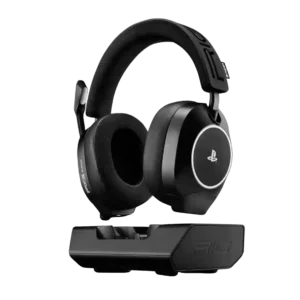
Best for clear positional gaming audio, 60+ hour battery life, and a convenient charging dock. Skip it if you need ANC, a removable mic, wired 3.5mm use, or seamless Xbox-and-PS5...
Pros: Earpad replacement ease, Wireless latency
Cons: Active noise cancellation, Carry case quality
Choose the MMX 150 Wireless for all-day comfort and long battery life; Skip if you want bass-heavy tuning without EQ or a more premium, non-plasticky build.
Pros: Battery, Multipoint connectivity reliability
Cons: Active noise cancellation effectiveness, Xbox compatibility