Reviews explicitly note there is no ANC on the OpenFit 2.
At least one review explicitly notes companion-app support on Android.
The app is widely seen as useful for EQ, controls, and setup, though one review says it is not especially deep.
Sony's Sound Connect app is widely seen as polished and useful, especially for changing modes, managing features, and handling firmware or device settings.
One review says codec support is limited to SBC and AAC, so aptX support is not indicated.
One review reports no lip-sync delay when watching video.
Bass is repeatedly described as improved, richer, and stronger for an open-ear design, but reviewers still note it cannot match the punch of good in-ear earbuds.
Bass is the recurring compromise. Reviewers consistently describe low-end as light or limited, with fit and EQ helping only a little.
Battery life is one of the clearest strengths, with repeated 11-hour and 48-hour figures and several reviewers saying it easily lasts through long days or multiple workouts.
Battery life is a clear plus, usually landing around full-workday territory, though a few independent tests fell short of Sony's headline claim.
Bluetooth 5.4 is repeatedly cited, with reviewers describing stable connections and strong behavior in busy signal environments.
Bluetooth stability is generally solid in normal use, though a few reviews report stutters, range limits, or buggy behavior in certain setups.
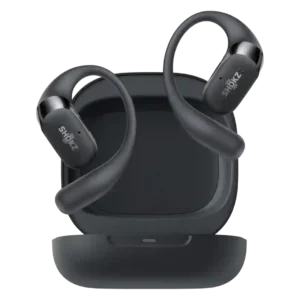
One review highlights the upgraded flexible nickel-titanium ear-hook construction as a build improvement.
Physical buttons are one of the most praised upgrades, with reviewers repeatedly calling them easier and more reliable than touch-only controls.
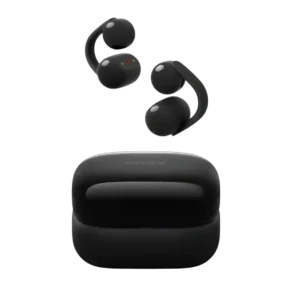
Reviewers find the case functional and generally good, though it is not highlighted as a standout feature.
The case is small enough for daily carry, but reviews frequently mention awkward orientation, bulk for its shape, fingerprints, or the missing wireless charging.
Quick charging is a real plus, with reviews repeatedly citing roughly 2 hours of playback from a short top-up.
Charging is a mixed bag: fast top-ups and USB-C are appreciated, but the lack of wireless charging is one of the most common complaints.
One review explicitly says codec support is limited to SBC and AAC.
Codec support is basic, with AAC and SBC covering mainstream use but offering little appeal to spec-driven buyers.
Comfort is one of the strongest themes, with many reviewers saying they can wear the OpenFit 2 all day or through very long workouts.
Comfort is one of the strongest themes. Many reviewers wore them for hours, though some ears experienced pinching or needed the included cushions to get there.
The design gets positive marks for looking premium or refined rather than flashy.
Design gets high marks for colors, finish, and the stylish cuff concept, even if some reviewers find the look generic or a little odd.
Reviews consistently confirm app-based EQ customization, including manual adjustment and control setup.
The EQ tools are a standout software perk. Reviewers repeatedly praise the 10-band EQ, presets, and extra tuning features as meaningful rather than token.
Earbud-finding features exist in the app, but reviewers note the feature is limited and does not fully solve case-finding.
Measured commentary in one review suggests the tuning tracks fairly close through the midrange, with restrained treble.
One review notes that a USB-C cable is included in the box, but bundled extras appear minimal.
Reviewers say the dual-driver approach helps vocals, instruments, guitars, and acoustics sound more defined than before.
Reviews confirm integrated microphones and call controls are built in.
One review says codec support is limited to SBC and AAC, so LDAC support is not indicated.
LDAC support is absent, and multiple reviews call that omission out at this price.
It can stay fairly clear at moderate to high volume, but several reviews still mention distortion or muddiness once volume is pushed too hard.
Multiple reviews say the microphones do a good job reducing background noise during calls or voice notes.
Noise reduction during calls performs better than raw call tone. Wind and street noise are often suppressed well, even when voice timbre itself is only average.
Call quality is repeatedly described as clear and usable, including outdoors and during movement.
Call quality is mixed overall. Several reviewers praise it as a strength, but others hear tinny or muffled voices, so results seem highly dependent on fit and environment.
Mids are regularly described as clearer and more detailed than before, helping vocals and general listening come through more cleanly.
The OpenFit 2 is used successfully across phones, laptops, watches, and other wearables, suggesting broad everyday compatibility.
Multipoint is a major strength, with repeated praise for quick and reliable switching between two connected devices.
Multipoint is useful and usually reliable once configured, but setup and behavior are not entirely foolproof across all devices.
Passive isolation is intentionally minimal, keeping ears open rather than blocking outside noise.
Passive isolation is essentially absent by design. The open fit keeps you aware, but it does almost nothing to block external noise.
The case is described as easy to carry or pocketable, even if open-ear designs are not ultra-compact.
Preset EQ modes are useful, with Standard, Bass Boost, and Vocal options specifically called out, though some reviewers still preferred Standard.
Multiple reviews call out the lack of wear detection, making sensor features a weak spot.
One review says the light-colored case picks up dirt quickly, though marks can be wiped away.
Pairing and initial setup are described as quick, easy, and friendly even for less technical users.
Setup is mostly straightforward, though some features need the app to make sense, and a few reviewers ran into quirks or extra fiddling.
Leakage is improved and often limited at normal volume, but several reviews still report audible bleed at higher levels or in quieter spaces.
Reviews consistently describe the OpenFit 2 as a clear upgrade in sound, with richer, clearer audio than earlier OpenFit models, though it still does not beat strong sealed in-ear earbuds.
Across reviews, sound is better than expected for open earbuds: clear, balanced, and good for podcasts and casual music, but still not immersive or competitive with sealed earbuds.
One reviewer describes the presentation as wide and open for this style of earbud.
One review explicitly says there is no 3D or spatial audio feature on the OpenFit 2.
Fit security is excellent in review after review, with the buds staying put for running, workouts, and daily movement.
Stability is generally good once positioned correctly, and the optional cushions help, but fit still varies more than with conventional earbuds.
Touch input is more limited than the physical buttons and can be finicky for some reviewers, though others say it works once configured.
Controls are divisive. Some found the tap area responsive, but many disliked the finicky targeting, repeated taps for volume, and limited remapping.
A dedicated transparency mode is not present; awareness comes from the open-ear design instead.
Treble is generally described as crisper and restrained enough to avoid harshness or sibilance.
USB-C charging is explicitly confirmed in reviews.
USB-C charging is present and expected, with no notable complaints about the port itself.
Value is mixed: some reviewers think the performance justifies the price, while others see the regular model as harder to recommend near the 2+ or discounted rivals.
Voice assistant support exists, but activation is button or touch based rather than truly hands-free, so the implementation feels basic.
The OpenFit 2 gets notably louder than the original and louder than many open earbuds, which helps outdoors.
Maximum loudness is enough indoors for many listeners, but several reviewers say the buds run out of steam in noisy streets, trains, or other loud environments.
The IP55 rating is repeatedly called out as enough for sweat, rain, and workout use.
The IPX4 rating is enough for sweat, workouts, and light rain, but nobody treats them as more than basic splash resistance.
Reviewers describe the buds as light or light-feeling on the ear, with weight distributed comfortably for longer wear.