There is no active noise cancellation, and several reviews flag this as a major missing feature at the premium price.
One WT review reports the same strong listening experience on an Android phone, indicating solid mobile compatibility when used that way.
WT reviews consistently mention an optional PC app or SoundBase software for sound tweaks, and they generally describe it as useful rather than bloated.
Logitech G Hub (PC) and the mobile app provide core tuning and routing controls; experiences are mostly positive, though some reviewers mention occasional software hiccups or limited mobile functionality.
The WT reviews that discuss lag explicitly say audio and video stay in sync, with around 30 ms latency claims and no noticeable delay in use.
HDMI 2.1 passthrough and switching generally work well once configured, but multiple sources mention occasional signal drops, flicker, or device-specific quirks that firmware updates may improve.
Bass is usually presented as punchy and enjoyable for games, with several reviews calling out strong low-end impact even if it is not truly premium.
Bass is frequently described as punchy and textured without obvious distortion, though a few reviewers prefer a leaner low end and rely on EQ to tailor it.
Wireless battery life is mixed: several WT reviews report roughly 30 to 36 hours or acceptable endurance, while one finds real-world life shorter than hoped.
Battery life is commonly cited around a full day of play (roughly 24 hours), and the docked charging routine makes it feel effectively always ready for many owners. There is no hot-swappable/replaceable battery system like some direct rivals, which is often mentioned as a missing premium feature.
Bluetooth is functional and often stable near the base station, but reviewers repeatedly note it is constrained by base-station range and can cut out when you move away or out of line of sight. Simultaneous wireless game audio plus Bluetooth is widely confirmed and useful for calls or background audio, with the main downside being dependence on base-station range.
Build impressions are mixed, with repeated comments about plastic or cheap-feeling materials alongside several notes that the headset still feels sturdy enough for everyday use.
Build quality is generally described as sturdy and premium-feeling for a gaming headset, though a few reviews raise long-term durability concerns about joints, coatings, or specific moving parts.
Controls are repeatedly described as simple and easy to use, with physical wheels or buttons handling volume, mute, power, and surround without much learning curve.
On-headset controls are widely praised for being accessible and useful, but some users report accidental presses or easy-to-bump balance/rocker inputs during normal adjustments.
Wired reviews generally like the thick braided cable and its durability, though one reviewer also criticizes the stock cable for being too short.
Cable needs are a common pain point: the system can require multiple HDMI and USB runs plus a split power/PC cable, making cable management a real part of ownership.
WT charging is treated as acceptable rather than exceptional, with repeated references to roughly 2.5-hour full charges and quick-charge support in one review.
Dock charging is convenient and central to the product experience, but multiple reviews mention that aligning contacts can be slightly finicky depending on headset positioning.
Clamp pressure is a consistent drawback in the wired E1000 coverage, with reviewers describing a tight fit that presses on the head or ears.
Clamping force impressions vary: some call it well-tuned and secure for long sessions, while others find it initially tight or more fatiguing with certain hats/glasses setups.
Comfort is mixed overall. Several reviewers say the headset is wearable for hours, but just as many report pressure, digging pads, or frequent adjustments over longer sessions.
Most reviewers find it comfortable enough for extended sessions, but a minority report heat buildup, scratchiness, or headband pressure that can require pad swaps or adjustments.
WT coverage strongly favors connectivity versatility, with repeated praise for having both low-latency wireless and 3.5 mm wired use across several devices.
WT reviews note a real console caveat: wireless mode is not universal, especially on Xbox, so some console use falls back to wired connections.
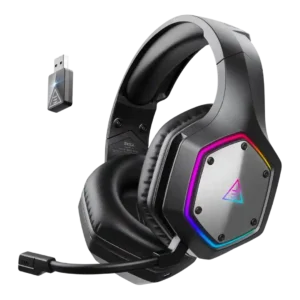
The styling is unmistakably gamer-focused, with RGB lighting and flashy accents drawing both praise for visual flair and criticism for looking kitschy or overly loud.
The design keeps the classic Astro look with a premium gamer aesthetic; opinions are broadly positive, with occasional notes about glossy parts and fingerprints.
The wired E1000 is marked down for its fixed cable, while the WT gets positive feedback because the detachable 3.5 mm cable adds flexibility.
WT reviewers consistently describe the USB dongle as an easy, useful part of the wireless setup and a core reason the headset feels plug-and-play.
Padding quality is generally decent for the money, with soft or thick cushions called out positively, though at least one review says the foam is not especially premium.
Fabric earpads are often described as plush and comfortable, but they can run warm and they leak more sound and block less external noise than sealed alternatives.
The wired E1000 is specifically criticized for not letting the cups move or rotate, which limits fit flexibility.
One WT review explicitly says the software allows custom sound profiles, giving users real EQ control instead of fixed presets only.
EQ control is a major strength, with multi-band tuning and community profiles frequently praised for making it easy to tailor sound for competitive or cinematic play.
Fit and seal are mixed. Some reviewers say the cups sit snugly with few gaps, while others say the angle can sit awkwardly or needs repositioning for the best seal.
Tonality is one of the shakier areas: several reviews describe the headset as muffled, indistinct, or not especially balanced, even when overall gaming use remains acceptable.
No summary yet.
Headband adjustment is generally handled well, with reviews noting firm clicks or usable extension hardware that helps dial in fit.
Adjustment is simple and repeatable with sliding rails, though at least one review argues the range may be limiting for larger heads compared with more adjustable rivals.
Hinges and rotating parts feel solid to many, but some reviewers notice uneven joint feel or worry about long-term wear in the swivel/rail mechanisms.
Accessory bundles are decent for the price, with repeated mentions of items like a pouch, manuals, dongle, cables, or a velcro wrap.
Included cables are frequently criticized because many full setups require extra HDMI and/or additional USB cables beyond what ships in the box.
Instrument separation and positional detail are repeatedly praised, helping both competitive shooters and busy music mixes remain intelligible.
Reviews that mention the mic design treat the attached boom as straightforward and practical for gaming use.
One detailed review says the headset sounds fuller and performs better when pushed louder, suggesting acceptable clarity once volume is raised.
At high volumes, reviewers commonly report strong clarity with minimal audible distortion, supporting loud gaming sessions without falling apart sonically.
Mic quality is highly mixed across the file. Several reviewers call it clear or good for the price, but others describe it as scratchy, tinny, or only okay.
Noise handling is one of the stronger recurring points, with multiple reviews saying background noise is filtered well or that ENC meaningfully cleans up chat.
Noise reduction is described as decent rather than perfect; environmental noise can still slip through, but software noise-gate options help depending on the scenario.
Call and voice-chat quality ranges from very good for the money to disappointing, but the balance of direct call-style tests leans positive overall.
Microphone quality is a standout strength, often described as broadcast-like for a headset mic, with only minor caveats such as placement sensitivity or mild sibilance out of box.
Midrange clarity is only lightly covered, and the reviews that do mention it point to muddiness or an emphasis that is more serviceable than clean.
Midrange clarity is consistently strong, with voices and key game cues coming through cleanly and without being buried by bass.
Across wired and WT reviews, the headset family is repeatedly described as working with multiple platforms, though exact features vary by connection type.
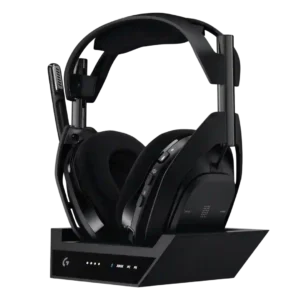
True multi-platform support is the product’s headline feature, especially for PS5 + Xbox switching, but it works best when devices are physically close and routed through the base station.
Passive isolation is mixed. Some reviewers say the headset shuts out outside noise well enough for immersive play, while others say isolation is only average or seal-dependent.
Passive isolation is weaker than many premium competitors because of the fabric pads and semi-open feel; this improves comfort for some but hurts immersion in loud rooms.
One WT review explicitly says the headset does not fold or rotate, so portability is limited despite wired and wireless flexibility.
Portability is limited: the headset’s best features rely on the base station, and multiple reviewers consider it a stay-at-home setup rather than a travel-friendly option.
Positional performance is usually a strength, with many reviewers saying footsteps, enemy positions, or directional cues are easy to place, though one review wanted better depth.
WT software coverage says the built-in game and music presets are useful and meaningfully change the presentation.
Preset quality is generally strong, especially with community downloads, though some note the stock presets are few and the discovery experience can vary by app/platform.
One video review explicitly identifies the pads as replaceable, which is a plus for long-term maintenance.
Replaceable earpads are a clear win: multiple reviews highlight the magnetic attachment and the ability to swap pads for comfort or isolation preferences.
RGB is more decorative than customizable. Multiple reviews say the lighting is fixed, limited, or only switchable on and off rather than truly programmable.
Sidetone control is unusually granular in software and is generally well-liked, though a few users report occasional quirks requiring a quick toggle/reset.
Some finishes and coatings are prone to fingerprints or scuffing, and at least one reviewer worries about cosmetic wear near buttons over time.
Setup is usually framed as easy or plug-and-play, but one WT review says the pairing instructions are incomplete enough to cause initial confusion.
Setup is frequently described as awkward or cable-heavy, especially with multiple consoles, though many also note it becomes painless once everything is routed correctly.
Overall sound quality is mixed but generally decent for budget gaming. Reviewers often like the immersion, impact, or game performance, while more critical takes call it muddy, boxy, or merely average for music.
Overall sound quality is consistently rated among the best in wireless gaming headsets, with strong detail, impactful bass when needed, and competitive positional performance. Multiple sources note the headset is not intended for wired audio use; the USB-C port is typically framed as charging rather than a true wired listening mode.
When reviewers discuss space, they usually describe the E1000 as wider-sounding than expected for the class, especially with surround processing engaged.
Soundstage is often described as spacious and well-separated, supporting both immersive single-player audio and directional competitive cues.
Virtual surround and spatial presentation are widely praised in the reviews that test them, with repeated comments that they add dimension and immersion for games.
Spatial audio support (notably Dolby Atmos on PC/Xbox and platform-specific 3D processing on PS5) is a key strength, though some note consistency varies across platforms.
Fit stability is inconsistent: one review says the headset can slip on the head, while another says the clamp keeps it planted well.
Wireless stability is usually strong, but base-station HDMI passthrough can introduce occasional display dropouts or switching quirks for some setups.
One detailed music-oriented review says higher frequencies are limited, so treble detail is not a strong point.
Treble is generally clear and detailed, but a few reviews describe the highs as slightly muted or less exciting out of the box until EQ is applied.
WT reviews clearly mention USB-C charging, which modernizes the wireless model's charging setup.
USB-C is central to the system for power and device connections, and reviewers repeatedly reference the USB-C routing as part of both the feature set and the setup complexity.
Value comes across as solid but not unanimous. Several reviews like the price-to-performance balance, while others say better options exist in the same budget range.
Volume output is usually strong, with several reviews saying the headset gets plenty loud, though one PS5 test felt it was not as loud as expected.
Volume output is commonly described as plenty loud, with enough headroom for action-heavy games without immediately turning harsh.
WT reviewers who discuss weight generally find it light enough to wear comfortably.
Weight is often considered acceptable and reasonably distributed for long sessions, but at least one reviewer finds the headband padding insufficient for the headset’s mass.
WT wireless latency is consistently praised, with repeated comments that lag is unnoticeable or fast enough for gaming.
WT coverage says Xbox use is supported via 3.5 mm cable, but wireless support is not presented as equally straightforward.
Xbox compatibility is a major pillar of the product, especially when paired with HDMI + USB routing to enable full functionality and Dolby Atmos support.