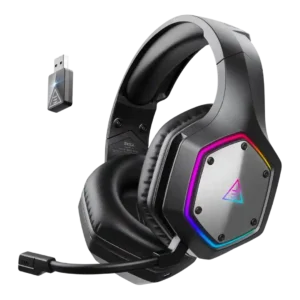
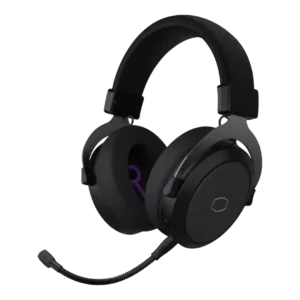
Average score
P1
Product 1: EKSA E1000 Gaming Headset
3.7
P2
Product 2: Cooler Master CH351 Gaming Headset
3.4
Android compatibility
P1
Product 1: EKSA E1000 Gaming Headset
4.5
Android compatibility had limited but positive evidence from one reviewer who reported the same good listening experience on Android.
P2Product 2: Cooler Master CH351 Gaming Headset
No score yetApp
P1
Product 1: EKSA E1000 Gaming Headset
4.0
The app/software experience was useful and simple on PC, but one reviewer flagged PC-only access as a limitation.
P2
Product 2: Cooler Master CH351 Gaming Headset
1.0
The CH351-specific review treats the missing companion app as a clear drawback because it prevents customization.
Audio-video sync accuracy
P1
Product 1: EKSA E1000 Gaming Headset
4.7
Wireless sync/lag evidence was positive, with reviewers reporting no noticeable latency in their tests.
P2Product 2: Cooler Master CH351 Gaming Headset
No score yetBass performance
P1
Product 1: EKSA E1000 Gaming Headset
3.8
Bass was often described as punchy, boomy, or strong for explosions, though one review found the low end muddy.
P2
Product 2: Cooler Master CH351 Gaming Headset
4.0
Game effects such as distant chatter, explosions and bangs are described as clear, supporting strong bass-impact performance in gameplay.
Battery
P1
Product 1: EKSA E1000 Gaming Headset
3.7
Battery life was mixed across WT reviews, ranging from disappointment versus advertised numbers to 30-plus-hour satisfaction.
P2Product 2: Cooler Master CH351 Gaming Headset
No score yetBluetooth
P1Product 1: EKSA E1000 Gaming Headset
No score yet
P2
Product 2: Cooler Master CH351 Gaming Headset
1.5
Wireless connectivity is judged poorly because it did not work as intended and produced distracting static.
Build quality
P1
Product 1: EKSA E1000 Gaming Headset
3.4
Build quality was mixed: some reviews called it sturdy or better than expected, while others emphasized plastic, cheap feel, or durability tradeoffs.
P2
Product 2: Cooler Master CH351 Gaming Headset
4.5
Build quality is praised, with the headset described as high-quality plastic with a soft-touch, premium finish.
Button control usability
P1
Product 1: EKSA E1000 Gaming Headset
4.0
Controls were generally easy and useful, especially physical buttons and volume wheels, though one inline controller felt damage-prone.
P2
Product 2: Cooler Master CH351 Gaming Headset
1.5
Controls are criticized as cluttered and unreliable, with buttons sometimes failing to register commands.
Cable quality
P1
Product 1: EKSA E1000 Gaming Headset
4.1
Cable feedback was mostly positive for braided feel, length, and durability, though one review wanted a longer cable.
P2Product 2: Cooler Master CH351 Gaming Headset
No score yetCarry case quality
P1
Product 1: EKSA E1000 Gaming Headset
4.1
Carry pouches and bags were generally liked for protection, travel, or presentation.
P2Product 2: Cooler Master CH351 Gaming Headset
No score yetCharging
P1
Product 1: EKSA E1000 Gaming Headset
3.5
Charging had limited but positive evidence, with the 2.5-hour charge time described as about right.
P2Product 2: Cooler Master CH351 Gaming Headset
No score yetClamping force comfort
P1
Product 1: EKSA E1000 Gaming Headset
2.5
Clamping comfort was a common caveat, with multiple reviews noting pressure or tightness despite one snug-fit compliment.
P2Product 2: Cooler Master CH351 Gaming Headset
No score yetComfort during long use
P1
Product 1: EKSA E1000 Gaming Headset
3.8
Comfort was highly divided: some wore it for hours comfortably, while others reported tightness, hard pads, or fatigue over longer sessions.
P2
Product 2: Cooler Master CH351 Gaming Headset
2.0
Long-session comfort is weak because the reviewer felt pressure on the top of the head after about an hour.
Connectivity versatility
P1
Product 1: EKSA E1000 Gaming Headset
4.3
Connectivity versatility was praised on the WT model for combining wireless and wired options across different devices.
P2
Product 2: Cooler Master CH351 Gaming Headset
3.0
Connectivity is mixed: the headset supports multiple connection options, but the reviewer says its strengths work best over aux.
Console compatibility limitations
P1
Product 1: EKSA E1000 Gaming Headset
2.8
Console limitations centered on cable-only use, lights turning off, or setup confusion on certain devices.
P2Product 2: Cooler Master CH351 Gaming Headset
No score yetDesign and Aesthetics
P1
Product 1: EKSA E1000 Gaming Headset
3.7
Design opinions were split between praise for RGB/gamer styling and criticism that the look felt cheap, generic, or too gamer-focused.
P2
Product 2: Cooler Master CH351 Gaming Headset
4.5
The design earns praise for fun colorways, especially the macaron teal-and-pink finish.
Detachable cable convenience
P1
Product 1: EKSA E1000 Gaming Headset
3.0
The fixed cable on the wired E1000 was criticized, while the WT version's detachable 3.5 mm option was praised as more flexible.
P2Product 2: Cooler Master CH351 Gaming Headset
No score yetDetachable microphone convenience
P1Product 1: EKSA E1000 Gaming Headset
No score yet
P2
Product 2: Cooler Master CH351 Gaming Headset
4.5
The detachable mic is treated as convenient, particularly because it can be removed for easier transport.
Dongle
P1
Product 1: EKSA E1000 Gaming Headset
3.8
Dongle experience was mixed: plug-and-play use was praised, but one PC pairing instruction issue created friction.
P2Product 2: Cooler Master CH351 Gaming Headset
No score yetEar cup padding quality
P1
Product 1: EKSA E1000 Gaming Headset
3.5
Earcup padding drew both praise for softness and comfort and criticism for cheap, hard, or lower-grade materials.
P2
Product 2: Cooler Master CH351 Gaming Headset
4.0
The earcups are a positive comfort point, with protein leather pads described as comfy.
Ear cup swivel/rotation range
P1
Product 1: EKSA E1000 Gaming Headset
2.0
Fixed earcup positioning was a repeated ergonomic complaint in the WT reviews that mentioned it.
P2Product 2: Cooler Master CH351 Gaming Headset
No score yetEqualizer customization
P1
Product 1: EKSA E1000 Gaming Headset
4.3
EQ customization was praised where available, especially for adjusting game, music, bass, and treble profiles.
P2
Product 2: Cooler Master CH351 Gaming Headset
1.0
Equalizer customization is poor because the reviewer specifically criticizes the lack of a companion app for EQ tweaking.
Fit/seal reliability
P1
Product 1: EKSA E1000 Gaming Headset
3.5
Fit and seal were mixed, from snug sealing to gaps caused by fixed earcup geometry.
P2Product 2: Cooler Master CH351 Gaming Headset
No score yetFootstep sound level scaling feature
P1Product 1: EKSA E1000 Gaming Headset
No score yet
P2
Product 2: Cooler Master CH351 Gaming Headset
5.0
Footstep scaling is a standout because the reviewer could judge which footsteps were closest and farthest away.
Frequency response accuracy
P1
Product 1: EKSA E1000 Gaming Headset
2.6
Frequency response was mixed, with one review saying it was better than expected and others describing muffled, limited, or less detailed reproduction.
P2
Product 2: Cooler Master CH351 Gaming Headset
4.5
Frequency accuracy is praised through the reviewer’s judgment that the headset produces nearly every sound accurately.
Headband adjustability
P1
Product 1: EKSA E1000 Gaming Headset
4.3
Headband adjustability was praised for clicky, stable adjustment and helpful sizing touches.
P2Product 2: Cooler Master CH351 Gaming Headset
No score yetIncluded accessories
P1
Product 1: EKSA E1000 Gaming Headset
3.6
Included accessories were mixed: some reviewers liked the extras and cables, while one noted the sparse box contents.
P2Product 2: Cooler Master CH351 Gaming Headset
No score yetInstrument separation
P1
Product 1: EKSA E1000 Gaming Headset
2.5
One reviewer found the headset less suited to finer-detail listening than action-heavy gaming.
P2Product 2: Cooler Master CH351 Gaming Headset
No score yetIntegrated microphone
P1
Product 1: EKSA E1000 Gaming Headset
4.0
Integrated microphone hardware was mostly liked for rotation, pliability, flip-up behavior, or focused pickup.
P2Product 2: Cooler Master CH351 Gaming Headset
No score yetMaximum volume clarity
P1Product 1: EKSA E1000 Gaming Headset
No score yet
P2
Product 2: Cooler Master CH351 Gaming Headset
4.0
Loud effects are reported clearly, supporting good clarity during louder in-game moments.
Microphone
P1
Product 1: EKSA E1000 Gaming Headset
3.6
Microphone impressions varied widely, but most reviewers found it serviceable or good for chat, with one major negative outlier.
P2
Product 2: Cooler Master CH351 Gaming Headset
4.5
The microphone is praised as working very well in the CH351-specific review.
Microphone noise reduction
P1
Product 1: EKSA E1000 Gaming Headset
4.4
Microphone noise reduction was generally praised, with reviewers reporting good background filtering and cleaner voice pickup.
P2
Product 2: Cooler Master CH351 Gaming Headset
5.0
Microphone noise rejection is a strength because nearby background noise was not picked up.
Microphone quality for calls
P1
Product 1: EKSA E1000 Gaming Headset
3.7
Call and chat mic quality ranged from very good to tinny or low-volume, but most reviewers considered it usable for gaming or calls.
P2
Product 2: Cooler Master CH351 Gaming Headset
4.5
Call or voice capture quality is strong, with the microphone described as loud and clear.
Midrange clarity
P1
Product 1: EKSA E1000 Gaming Headset
2.0
Midrange clarity drew criticism where reviewers heard muddiness, weak ranges, or indistinct reproduction.
P2
Product 2: Cooler Master CH351 Gaming Headset
4.5
Midrange dialogue clarity is praised because dialogue avoids the hollow or echoing character the reviewer dislikes elsewhere.
Multi-platform compatibility
P1
Product 1: EKSA E1000 Gaming Headset
4.3
Multi-platform support was broadly praised, with caveats around wireless support depending on platform.
P2Product 2: Cooler Master CH351 Gaming Headset
No score yetNoise isolation (passive)
P1
Product 1: EKSA E1000 Gaming Headset
3.5
Passive isolation was split: some reviewers felt external noise was reduced well, while others found sealing and isolation lacking.
P2Product 2: Cooler Master CH351 Gaming Headset
No score yetPackaging quality
P1
Product 1: EKSA E1000 Gaming Headset
4.0
Packaging evidence was limited but positive, with the pouch presentation described as nice.
P2Product 2: Cooler Master CH351 Gaming Headset
No score yetPortability/foldability
P1
Product 1: EKSA E1000 Gaming Headset
2.5
Portability/foldability was a weakness where discussed, since reviewers noted the headset does not fold or rotate flat.
P2Product 2: Cooler Master CH351 Gaming Headset
No score yetPositional audio accuracy
P1
Product 1: EKSA E1000 Gaming Headset
4.4
Positional audio was often strong for footsteps and enemy location, though one written review wanted better directional depth.
P2
Product 2: Cooler Master CH351 Gaming Headset
5.0
Positional audio is excellent because the reviewer could judge footstep distance and direction while playing.
Preset EQ profile quality
P1
Product 1: EKSA E1000 Gaming Headset
4.0
Preset EQ profiles received positive but limited evidence, with reviewers preferring FPS or finding preset tests surprisingly good.
P2
Product 2: Cooler Master CH351 Gaming Headset
1.0
Preset EQ support is poor because the reviewer complains that the CH351 lacks Music, Movie or Game mode-style presets.
RGB lighting customization
P1
Product 1: EKSA E1000 Gaming Headset
2.8
RGB lighting was visually liked by several reviewers, but customization was a recurring limitation, especially fixed colors or no off switch on wired units.
P2Product 2: Cooler Master CH351 Gaming Headset
No score yetSoftware/setup simplicity
P1
Product 1: EKSA E1000 Gaming Headset
4.3
Setup was usually praised as plug-and-play or easy, though one WT review noted incomplete pairing instructions.
P2
Product 2: Cooler Master CH351 Gaming Headset
1.0
Software support is weak because there is no app for customization.
Sound leakage
P1
Product 1: EKSA E1000 Gaming Headset
4.0
Sound leakage evidence was limited but positive, with one reviewer noting few gaps for sound to escape.
P2Product 2: Cooler Master CH351 Gaming Headset
No score yetSound quality
P1
Product 1: EKSA E1000 Gaming Headset
3.8
Reviewers usually found the headset enjoyable for gaming at the price, with strong praise from several tests, but a few criticized muffled or boxy playback.
P2
Product 2: Cooler Master CH351 Gaming Headset
4.0
Core sound quality is praised, especially because games still sound great even without spatial audio enabled.
Soundstage width
P1
Product 1: EKSA E1000 Gaming Headset
4.1
Soundstage was a recurring strength, with reviewers calling it wider, improved, or airy for gaming use.
P2
Product 2: Cooler Master CH351 Gaming Headset
4.5
Soundstage is a strength, with the reviewer crediting its width for accurate sound reproduction.
Spatial audio
P1
Product 1: EKSA E1000 Gaming Headset
4.5
Surround/spatial audio was one of the strongest areas, with reviewers describing immersive, dimensional, or out-of-head gaming effects.
P2
Product 2: Cooler Master CH351 Gaming Headset
5.0
Spatial audio is one of the clearest strengths and is described as making games sound fantastic.
Stability
P1
Product 1: EKSA E1000 Gaming Headset
3.5
Stability evidence split between head slippage on the wired model and strong wireless stability with no cutouts on WT.
P2Product 2: Cooler Master CH351 Gaming Headset
No score yetTreble clarity
P1
Product 1: EKSA E1000 Gaming Headset
2.5
Treble/high-frequency detail was limited in the reviews that discussed it, with comments about missing highs or no crisp top end.
P2Product 2: Cooler Master CH351 Gaming Headset
No score yetUSB-C
P1
Product 1: EKSA E1000 Gaming Headset
4.0
USB-C evidence was limited but positive in one WT unboxing comment about the included charging cable.
P2Product 2: Cooler Master CH351 Gaming Headset
No score yetValue for money
P1
Product 1: EKSA E1000 Gaming Headset
4.0
Value was generally positive because reviewers saw useful gaming performance for a low price, though weak sound or comfort reduced value in some reviews.
P2
Product 2: Cooler Master CH351 Gaming Headset
2.0
Value is undermined because the reviewer still found it hard to recommend despite the low price.
Volume output
P1
Product 1: EKSA E1000 Gaming Headset
3.8
Volume impressions varied: some reviewers found it loud enough or very loud, while one PS5 test thought it was not especially loud.
P2
Product 2: Cooler Master CH351 Gaming Headset
4.5
Volume output is strong for gameplay cues, with footsteps described as loud and clear.
Weight comfort
P1
Product 1: EKSA E1000 Gaming Headset
4.3
Weight comfort was generally positive for the WT, with comments about lightness or even weight distribution, though one review noted a heavier feel.
P2
Product 2: Cooler Master CH351 Gaming Headset
2.0
Weight comfort is weak because the headset is described as being on the heavy side.
Wireless latency
P1
Product 1: EKSA E1000 Gaming Headset
4.6
Wireless latency was consistently praised in WT reviews, with no noticeable lag or hiccups reported.
P2Product 2: Cooler Master CH351 Gaming Headset
No score yetXbox compatibility
P1
Product 1: EKSA E1000 Gaming Headset
2.5
Xbox compatibility was limited by the need to use the 3.5 mm cable rather than the wireless dongle.
P2Product 2: Cooler Master CH351 Gaming Headset
No score yet