ANC effectiveness is widely viewed as a meaningful upgrade for the BlackShark line, especially for low-frequency noise like AC or transit rumble. However, multiple reviewers note it is not class-leading compared with top lifestyle ANC headphones, and fit and pad material can limit real-world performance. ANC controls are flexible, with app-based level adjustment and on-headset cycling between ANC, ambient, and off. Reviewers generally like having multiple options rather than a simple on/off implementation.
One WT review reports the same strong listening experience on an Android phone, indicating solid mobile compatibility when used that way.
WT reviews consistently mention an optional PC app or SoundBase software for sound tweaks, and they generally describe it as useful rather than bloated.
Razer Synapse on PC and the Razer Audio mobile app provide useful control for EQ, mic settings, ANC, and wheel behavior. Reviews note the tools are powerful, though occasional quirks, connection-mode requirements, or finicky behavior can slow setup.
The WT reviews that discuss lag explicitly say audio and video stay in sync, with around 30 ms latency claims and no noticeable delay in use.
Bass is usually presented as punchy and enjoyable for games, with several reviews calling out strong low-end impact even if it is not truly premium.
Bass is generally described as punchy and impactful for games without overwhelming everything else. A few reviewers call it only above-average for music, and some note bass balance changes depending on ANC or EQ settings.
Wireless battery life is mixed: several WT reviews report roughly 30 to 36 hours or acceptable endurance, while one finds real-world life shorter than hoped.
Battery life is frequently described as excellent, with the 70-hour PC claim often treated as believable and strong in real use. Heavy feature use, like ultra-low latency and ANC, can reduce runtime notably, especially on console variants. Access to a replaceable battery is noted as a welcome repairability move, especially with the magnetic faceplate design. Reviewers still point out it is not as seamless as systems with official hot-swap batteries, but it is a meaningful step toward longer lifespan.
Bluetooth stability is usually reported as reliable, including for calls and background audio while gaming. A few reviewers mention the mode switching and app behavior can be less intuitive than competitors, but dropouts are not a dominant complaint.
Build impressions are mixed, with repeated comments about plastic or cheap-feeling materials alongside several notes that the headset still feels sturdy enough for everyday use.
Build quality is commonly described as solid and premium-feeling, with sturdy yokes, refined stitching, and a secure overall structure. Some parts are still plastic and long-term hinge durability is discussed, but most impressions are positive.
Controls are repeatedly described as simple and easy to use, with physical wheels or buttons handling volume, mute, power, and surround without much learning curve.
Physical controls are generally considered comprehensive and responsive, including dedicated ANC and a configurable wheel. Some reviewers find multiple similarly-shaped buttons hard to identify by touch, so there can be a learning curve.
Wired reviews generally like the thick braided cable and its durability, though one reviewer also criticizes the stock cable for being too short.
Included cables are generally appreciated, with some calling out a quality braided USB-C cable. A few reviewers complain the USB-C to 3.5mm cable can transmit clothing or handling noise into the earcups, which hurts perceived cable quality.
WT charging is treated as acceptable rather than exceptional, with repeated references to roughly 2.5-hour full charges and quick-charge support in one review.
USB-C charging is convenient, and several reviews note you can keep using the headset while it charges in supported modes. Charging is not a major pain point across the review set.
Clamp pressure is a consistent drawback in the wired E1000 coverage, with reviewers describing a tight fit that presses on the head or ears.
Clamp force is generally described as moderate and non-fatiguing, helping the headset feel comfortable for long sessions and with glasses. The tradeoff is that lighter clamp can reduce seal consistency for ANC and isolation on some heads.
Comfort is mixed overall. Several reviewers say the headset is wearable for hours, but just as many report pressure, digging pads, or frequent adjustments over longer sessions.
Long-session comfort is a consistent highlight, with multiple reviewers reporting hours of wear without pain or hot spots. A minority report heat buildup or fit drift, but overall comfort is repeatedly described as top-tier for a gaming headset.
WT coverage strongly favors connectivity versatility, with repeated praise for having both low-latency wireless and 3.5 mm wired use across several devices.
WT reviews note a real console caveat: wireless mode is not universal, especially on Xbox, so some console use falls back to wired connections.
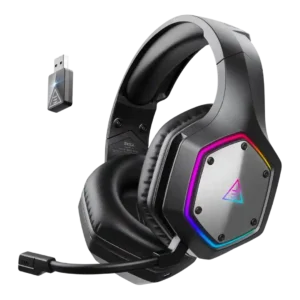
The styling is unmistakably gamer-focused, with RGB lighting and flashy accents drawing both praise for visual flair and criticism for looking kitschy or overly loud.
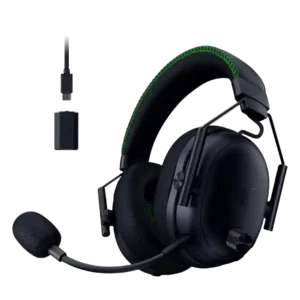
The BlackShark pilot-style look is consistently praised as sleek and professional, with a premium, understated aesthetic. Custom faceplates and refined stitching add personality without turning it into a flashy RGB headset.
The wired E1000 is marked down for its fixed cable, while the WT gets positive feedback because the detachable 3.5 mm cable adds flexibility.
Having both USB and analog wired paths adds versatility and makes the headset usable even when the battery is low. The main caveat is that using a wired connection can override wireless features, which limits simultaneous use cases.
The detachable boom mic is convenient for swapping between gaming and casual use, and positioning is generally easy thanks to the flexible arm. A few reviewers dislike the size or note limited backward compatibility with older mics, but the detachable design is broadly appreciated.
WT reviewers consistently describe the USB dongle as an easy, useful part of the wireless setup and a core reason the headset feels plug-and-play.
The wireless dongle design is one of the most common complaints, because it often requires a cable connection and creates desk or console clutter. On the upside, reviewers note it can help positioning for stable signal, but many still want a cleaner plug-in solution.
Padding quality is generally decent for the money, with soft or thick cushions called out positively, though at least one review says the foam is not especially premium.
The memory foam pads and breathable materials are frequently praised for softness and reduced sweat compared with pleather pads. Some users still find the pads warm over time or dislike the fabric feel, so comfort is excellent but not universal.
The wired E1000 is specifically criticized for not letting the cups move or rotate, which limits fit flexibility.
The added swivel helps the headset conform better than earlier BlackShark models, improving seal and comfort. It still does not rotate fully flat, and the limited swivel can affect portability and neck-rest convenience.
Most reviews do not flag major pad noise, but a few mention comfort-related warmth or that handling noise can become noticeable depending on cables and movement. Any noise issues tend to be situational rather than constant.
One WT review explicitly says the software allows custom sound profiles, giving users real EQ control instead of fixed presets only.
EQ customization is widely praised, with 10-band controls, per-game profiles, onboard storage, and separate mic EQ options. Many reviews suggest the best results come from dialing in EQ rather than sticking to defaults.
Fit and seal are mixed. Some reviewers say the cups sit snugly with few gaps, while others say the angle can sit awkwardly or needs repositioning for the best seal.
Tonality is one of the shakier areas: several reviews describe the headset as muffled, indistinct, or not especially balanced, even when overall gaming use remains acceptable.
Measurements and subjective impressions suggest the default tuning is gaming-optimized rather than strictly neutral. Reviewers commonly recommend EQ to smooth peaks and achieve a more balanced frequency response for mixed use.
Game and chat balance control is consistently praised, especially with the physical wheel or roller for quick adjustments. This feature is often singled out as a practical upgrade for competitive play and communication-heavy sessions.
Headband adjustment is generally handled well, with reviews noting firm clicks or usable extension hardware that helps dial in fit.
Adjustment is straightforward, with yoke-based sizing that works once set. Some reviewers note it lacks notches or reference marks and can feel stiff, but it does allow a secure, stable fit for many users.
Several reviews mention redesigned or reinforced hinges and smoother motion versus prior generations. Long-term durability is still an open question for some, but overall build reinforcements are viewed positively.
Accessory bundles are decent for the price, with repeated mentions of items like a pouch, manuals, dongle, cables, or a velcro wrap.
Included accessories are seen as generous for a gaming headset, typically covering the dongle, detachable mic, pop filter, USB-C cable, and an analog cable or adapter. Few reviewers complain about missing essentials, aside from wishing the dongle solution were cleaner.
Instrument and effect separation is a standout strength, with many reviewers highlighting how easily they can pick out layers like footsteps, reloads, engines, and ambient details. This separation is often cited as a key reason the headset excels in competitive titles.
Reviews that mention the mic design treat the attached boom as straightforward and practical for gaming use.
One detailed review says the headset sounds fuller and performs better when pushed louder, suggesting acceptable clarity once volume is raised.
At higher volumes, many reviews report the headset stays clear for games, but a subset hears treble-related artifacts that can reduce perceived cleanliness. Clarity tends to improve with sensible EQ and avoiding overly aggressive preset profiles.
Mic quality is highly mixed across the file. Several reviewers call it clear or good for the price, but others describe it as scratchy, tinny, or only okay.
Noise handling is one of the stronger recurring points, with multiple reviews saying background noise is filtered well or that ENC meaningfully cleans up chat.
Noise reduction on the mic is generally effective for lowering steady background noise like fans and keyboards, especially when using the software controls. Some reviewers still hear more environmental bleed than expected in busy office conditions, but voice intelligibility remains strong.
Call and voice-chat quality ranges from very good for the money to disappointing, but the balance of direct call-style tests leans positive overall.
Microphone quality reviews are mixed: some call it clear, loud, and among the better headset mics, while others describe it as a step down from the V2 Pro with a muffled or fuzzy character. Several sources note mic EQ, noise processing, and firmware updates can improve results substantially.
Midrange clarity is only lightly covered, and the reviews that do mention it point to muddiness or an emphasis that is more serviceable than clean.
Midrange comes through cleanly for dialogue, footsteps, and callouts, and many reviewers find it better-balanced than older models. Some tuning choices still lean toward competitive clarity rather than a neutral music profile.
Across wired and WT reviews, the headset family is repeatedly described as working with multiple platforms, though exact features vary by connection type.
Multi-platform compatibility is a major selling point, with support spanning PC and major consoles plus mobile use via Bluetooth. Reviewers still emphasize that features and compatibility details can vary by model and connection method.
Multipoint or dual-connection behavior is often praised in practice, particularly for maintaining two sources while mixing. Limitations mainly come from mode rules, such as wired connections overriding wireless and some app controls requiring a specific connection mode.
Passive isolation is mixed. Some reviewers say the headset shuts out outside noise well enough for immersive play, while others say isolation is only average or seal-dependent.
Passive isolation is helped by the over-ear seal, but the fabric-style pads and lighter clamp can make results inconsistent across head shapes. Some reviewers find it good enough without ANC, while others say the seal is harder to maintain, especially with the yoke design.
One WT review explicitly says the headset does not fold or rotate, so portability is limited despite wired and wireless flexibility.
Portability is limited by the non-folding design and lack of full flat swivel, making it less ideal for travel. It is better suited to desk and console setups than commuting or packing.
Positional performance is usually a strength, with many reviewers saying footsteps, enemy positions, or directional cues are easy to place, though one review wanted better depth.
WT software coverage says the built-in game and music presets are useful and meaningfully change the presentation.
Preset EQ profiles are a mixed bag: esports and game-focused presets can help with footsteps and competitive emphasis, while some music or movie presets are criticized for exaggerating bass or treble. Reviewers often recommend tweaking presets into a personal custom profile.
One video review explicitly identifies the pads as replaceable, which is a plus for long-term maintenance.
Earpads are replaceable, which is a plus for longevity, but some reviewers note the attachment method is less elegant than magnetic systems and can feel stiff. Still, having serviceable pads supports long-term ownership.
RGB is more decorative than customizable. Multiple reviews say the lighting is fixed, limited, or only switchable on and off rather than truly programmable.
Sidetone controls are useful for avoiding shouting and monitoring your own voice, and several reviews like having the adjustment available on the headset or in software. A few reviewers dislike the sidetone sound character or latency, so quality varies by preference and setup.
Setup is usually framed as easy or plug-and-play, but one WT review says the pairing instructions are incomplete enough to cause initial confusion.
Basic setup is often plug-and-play, but software complexity can be a drawback for people who want everything to be obvious without reading a manual. Some reviewers describe Synapse as finicky or unintuitive, especially for mode switching and advanced features.
Overall sound quality is mixed but generally decent for budget gaming. Reviewers often like the immersion, impact, or game performance, while more critical takes call it muddy, boxy, or merely average for music.
Across reviews, the V3 Pro is praised for highly detailed, competitive gaming sound with strong positional cues. Several sources note it is less consistent for music, with some treble harshness or distortion that benefits from EQ tuning. Wired audio options are seen as a valuable fallback for controllers, consoles, and dead-battery situations. Most reviewers find wired sound acceptable, though a few mention cable-related handling noise or platform-specific wired limitations.
When reviewers discuss space, they usually describe the E1000 as wider-sounding than expected for the class, especially with surround processing engaged.
Soundstage is generally wide enough to create an immersive, directional gaming presentation, but it is not an expansive open-back style stage. Some reviewers say ANC can make the presentation feel more closed-in, and a few call the stage relatively tight for music.
Virtual surround and spatial presentation are widely praised in the reviews that test them, with repeated comments that they add dimension and immersion for games.
Spatial audio support is frequently highlighted as a real strength for immersion and competitive awareness, especially on PC with THX spatial processing. Some reviewers prefer stereo for music and note certain esports presets may not work simultaneously with spatial modes.
Fit stability is inconsistent: one review says the headset can slip on the head, while another says the clamp keeps it planted well.
Transparency or ambient mode is commonly described as useful for awareness and in-room callouts while still wearing the headset. It is not the same as an open-back feel, but it is functional and easy to toggle.
One detailed music-oriented review says higher frequencies are limited, so treble detail is not a strong point.
Treble performance is the most polarizing part of the tuning. Multiple reviewers report peaks, harshness, or distortion at higher volumes or on certain tracks, often recommending EQ adjustments to tame fatigue.
WT reviews clearly mention USB-C charging, which modernizes the wireless model's charging setup.
USB-C is central to charging and some wired use, and reviewers generally like the convenience. A few note platform restrictions or mode rules depending on how USB is used, but the port itself is not controversial.
Value comes across as solid but not unanimous. Several reviews like the price-to-performance balance, while others say better options exist in the same budget range.
Volume output is usually strong, with several reviews saying the headset gets plenty loud, though one PS5 test felt it was not as loud as expected.
Overall loudness is usually sufficient for gaming and media, but a couple of reviewers mention the out-of-box configuration can feel quieter until settings are adjusted. Once configured, the headset has enough headroom for most users.
WT reviewers who discuss weight generally find it light enough to wear comfortably.
Despite being heavier than some competitors and prior versions, most reviewers say the weight is well-distributed and does not feel burdensome. A few still notice the added mass compared with the V2 Pro, but it rarely becomes a dealbreaker.
WT wireless latency is consistently praised, with repeated comments that lag is unnoticeable or fast enough for gaming.
WT coverage says Xbox use is supported via 3.5 mm cable, but wireless support is not presented as equally straightforward.
Xbox support depends on getting the correct model, and reviews frequently remind buyers to choose the right variant for full wireless console compatibility. When matched correctly, console support is generally strong.