Compare Corsair K70 PRO vs Epomaker RT100

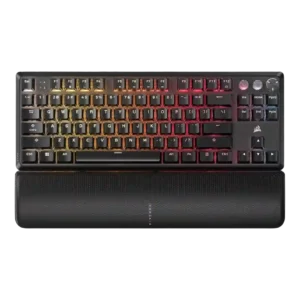
P1 Corsair K70 PRO
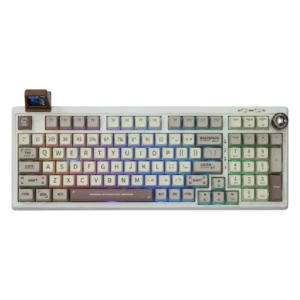
P2 Epomaker RT100

Comparison Takeaways

Corsair K70 PRO

Where It Has the Edge

  • rapid trigger support is 4.5 vs 1.5. Rapid Trigger support was praised on Hall effect TKL coverage as a real competitive feature for fast repeated...
  • reliability is 4.5 vs 2.8. Reliability was strong overall, with no chatter, no dropped keystrokes, anti-ghosting, n-key rollover, and consistent registration reported.
  • software quality is 3.9 vs 2.9. Software quality was powerful and broad, especially iCUE, but reviewers varied between calling it intuitive, complex, heavy, or...
  • onboard memory is 4.9 vs 4.0. Onboard memory was consistently praised for storing up to 50 profiles or lighting layers without needing software running...

Epomaker RT100

Where It Has the Edge

  • noise level is 4.8 vs 2.8. Noise level is a standout strength with Sea Salt Silent switches, often described as extremely quiet or nearly...
  • wireless performance is 4.5 vs 2.5. Wireless performance is mostly strong on 2.4GHz and Bluetooth for productivity, with little or no lag reported by...
  • hot-swappable switches is 4.5 vs 2.6. Hot-swappable switch support is one of the clearest strengths, with several reviewers citing 3-pin and 5-pin compatibility.
  • acoustics is 4.4 vs 2.6. Reviewers generally liked the RT100's sound, especially its deep thock or quiet muted profile, though the result depends...
Average score
Product 1: Corsair K70 PRO
3.8
Product 2: Epomaker RT100
4.0
acoustics
Product 1: Corsair K70 PRO
2.6

Acoustics were the most common weakness, with repeated reports of ping, harsh clacking, hollow sound, or stabilizer-related noise.

Product 2: Epomaker RT100
4.4

Reviewers generally liked the RT100's sound, especially its deep thock or quiet muted profile, though the result depends heavily on switch choice.

actuation consistency
Product 1: Corsair K70 PRO
3.9

Actuation evidence was mixed: some tests found forces within spec or highly adjustable, while others found sensitive switches or inconsistent switch mixes.

Product 2: Epomaker RT100
4.5

The direct evidence centers on NKRO registration, with one reviewer noting that each keypress registers independently for multi-key use.

analog input support
Product 1: Corsair K70 PRO
3.5

Analog-style input support appears limited to Hall effect depth/actuation features such as adjustable travel and multi-action keypress mapping rather than broad analog control.

Product 2: Epomaker RT100
No score yet
backlight brightness
Product 1: Corsair K70 PRO
3.8

Backlight brightness was serviceable to bright, with hotkeys and direct controls, though not every reviewer found it exceptionally bright.

Product 2: Epomaker RT100
3.6

Backlighting is mixed: some reviewers called it bright and vibrant, while others found it subdued by the non-shine-through keycaps.

battery life
Product 1: Corsair K70 PRO
2.5

Battery life evidence only appeared for the wireless Mini variant, where RGB-on runtime was rated modestly compared with lights-off use.

Product 2: Epomaker RT100
3.7

Battery life ranges from middling with RGB or the mini display enabled to strong when lighting is reduced or disabled.

build quality
Product 1: Corsair K70 PRO
4.0

Build quality was mostly praised for solid aluminum construction and a premium feel, with a few newer TKL critiques around cost-cutting.

Product 2: Epomaker RT100
4.3

Reviewers largely described the RT100 as solid, sturdy, and well built despite its plastic shell.

cable quality
Product 1: Corsair K70 PRO
4.0

Cable quality was positive, with detachable USB-C, braided or removable cables, and easier transport or replacement repeatedly noted.

Product 2: Epomaker RT100
4.4

The included cable was repeatedly praised as unusually premium, thick, flexible, or thoughtfully styled.

compatibility
Product 1: Corsair K70 PRO
3.9

Compatibility was broad across Windows, macOS, Xbox, Linux, and devices in some reviews, but console support was not universal.

Product 2: Epomaker RT100
4.0

Compatibility is a strength for Windows and Mac users thanks to a hardware toggle and software support, with Linux use limited by app support.

connectivity
Product 1: Corsair K70 PRO
3.4

Connectivity centered on wired USB-C for performance, with reviewers praising detachable routing but also noting the lack of wireless on several models.

Product 2: Epomaker RT100
4.5

Connectivity is consistently strong, with USB-C, Bluetooth, and 2.4GHz wireless appearing across reviews as flexible and easy to use.

customization options
Product 1: Corsair K70 PRO
4.1

Customization options were extensive, spanning actuation, lighting, macros, profiles, key assignments, and dial or game-mode behavior.

Product 2: Epomaker RT100
3.6

Customization is broad for keys, RGB, macros, and the screen, but reviewers often wanted deeper control over the mini display's fixed information layout.

desk space efficiency
Product 1: Corsair K70 PRO
3.5

Desk space efficiency was mixed: full-size boards used more space, while removable wrist rests or smaller wireless layouts improved desk flexibility.

Product 2: Epomaker RT100
4.5

The 95/96% or 1800-style layout preserves a numpad while using less desk space than a full-size board.

durability
Product 1: Corsair K70 PRO
4.3

Durability was supported by PBT keycaps, strong legends, high keystroke ratings, and extended hands-on use without visible degradation.

Product 2: Epomaker RT100
4.5

Durability impressions are positive, especially for thick PBT keycaps, fade-resistant legends, hot-swap sockets, and sturdy construction.

ease of switch replacement
Product 1: Corsair K70 PRO
2.8

Ease of switch replacement was limited overall because several models were not hot-swappable or only partially interchangeable.

Product 2: Epomaker RT100
4.4

Switch replacement is generally easy due to hot-swap sockets, though one reviewer cautioned that the plate can make installation a little careful.

ergonomics
Product 1: Corsair K70 PRO
3.4

Ergonomics were mostly acceptable with feet, wrist rests, and comfort options, but a palm rest angle issue was reported in one review.

Product 2: Epomaker RT100
4.1

Ergonomics are helped by two-stage feet, a comfortable compact layout, and reported comfort for wrist or carpal tunnel concerns.

extra gaming features
Product 1: Corsair K70 PRO
4.2

Extra gaming features were strong, including Tournament Mode, Game Mode, FlashTap/SOCD, anti-ghosting, and rapid-trigger-related controls.

Product 2: Epomaker RT100
3.9

Extra features such as NKRO and the detachable screen add utility and personality, but the screen's angle and usefulness are not universally praised.

frame rigidity
Product 1: Corsair K70 PRO
3.8

Frame rigidity was generally good, with multiple reviews noting low flex or rigid construction, though some feet or chassis details drew criticism.

Product 2: Epomaker RT100
3.6

Frame and plate rigidity are mostly strong, with reviewers noting little flex, though that also limits the expected gasket bounce.

gaming performance
Product 1: Corsair K70 PRO
4.3

Gaming performance was consistently strong, with reviewers describing responsive, accurate, and pressure-ready play across genres.

Product 2: Epomaker RT100
3.8

Gaming performance is good for casual and light competitive play, but the Sea Salt switches can cause false inputs in faster shooters for some users.

hot-swappable switches
Product 1: Corsair K70 PRO
2.6

Hot-swappable switch support was mostly a weakness on RGB Pro and TKL variants, though the Mini Wireless review noted hot-swap capability.

Product 2: Epomaker RT100
4.5

Hot-swappable switch support is one of the clearest strengths, with several reviewers citing 3-pin and 5-pin compatibility.

keycap quality
Product 1: Corsair K70 PRO
4.2

Keycap quality was a major positive, especially the double-shot PBT caps, durable legends, texture, and shine resistance.

Product 2: Epomaker RT100
4.3

Keycap quality is repeatedly praised for thick PBT construction and comfortable MDA profile, though a few reviewers disliked legend styling or profile height.

key responsiveness
Product 1: Corsair K70 PRO
4.4

Key responsiveness was one of the strongest themes, with reviewers reporting fast, precise, and reliably registered inputs during gaming and typing.

Product 2: Epomaker RT100
3.7

Key responsiveness is split: several reviewers reported fast, precise registration or wired-like responsiveness, while one saw false inputs with Sea Salt switches.

key spacing
Product 1: Corsair K70 PRO
4.0

Key spacing was adequate, with reviewers calling the keys a good size or well spaced, despite some wobble concerns.

Product 2: Epomaker RT100
4.4

Key spacing is praised as comfortable and not cramped despite the compact full-size layout.

key stability
Product 1: Corsair K70 PRO
3.3

Key stability was mixed, with some reviewers noting wobble or different switch feel across key groups.

Product 2: Epomaker RT100
3.6

Key stability is mostly positive, though one reviewer experienced spacebar rebound causing accidental double spaces.

latency
Product 1: Corsair K70 PRO
4.2

Latency was rated highly on paper and in several reviews, although some reviewers considered the real-world gains from ultra-low latency hard to perceive.

Product 2: Epomaker RT100
4.3

Latency is strong on 2.4GHz and wired modes, while Bluetooth can show noticeable gaming latency in at least one review.

layout options
Product 1: Corsair K70 PRO
4.0

Layout options covered full-size, TKL, and compatible standard layouts, with reviewers often valuing the numpad, common key sizes, or function rows.

Product 2: Epomaker RT100
4.2

Reviewers liked the layout and color/layout choices, especially the compact full-size arrangement with numpad and arrow keys.

legend visibility
Product 1: Corsair K70 PRO
3.5

Legend visibility was mostly good, with readable fonts noted, but some reviewers found indicator symbols or RGB shine-through imperfect.

Product 2: Epomaker RT100
2.7

Legend visibility is mixed: large legends are easy to see in daylight, but crowded number-row legends and opaque caps hurt low-light readability.

macro customization
Product 1: Corsair K70 PRO
4.2

Macro customization was strong, with onboard recording, programmable keys, remapping, and easy assignment mentioned across reviews.

Product 2: Epomaker RT100
4.0

Macro customization is supported through Epomaker's driver and appears in multiple reviews alongside remapping and RGB controls.

materials quality
Product 1: Corsair K70 PRO
4.3

Materials quality was strong where aluminum, PBT, and solid plastic were used, giving the boards a premium or battle-ready feel.

Product 2: Epomaker RT100
3.8

Materials are better than the all-plastic shell might suggest, with thick plastic and PBT keycaps praised, but some knobs felt cheap.

media controls
Product 1: Corsair K70 PRO
4.4

Media controls were a clear strength, with dedicated buttons, media rows, and easy-to-find controls appearing across reviews.

Product 2: Epomaker RT100
4.1

Media controls are useful and accessible through the rotary knob, typically handling volume and play/pause or mute.

noise level
Product 1: Corsair K70 PRO
2.8

Noise level depended heavily on switch choice, but multiple reviewers warned about ping, clickiness, or overwhelming sound in normal use.

Product 2: Epomaker RT100
4.8

Noise level is a standout strength with Sea Salt Silent switches, often described as extremely quiet or nearly inaudible.

onboard memory
Product 1: Corsair K70 PRO
4.9

Onboard memory was consistently praised for storing up to 50 profiles or lighting layers without needing software running constantly.

Product 2: Epomaker RT100
4.0

Onboard memory is directly supported in one review as a place to save remaps and macros.

passthrough features
Product 1: Corsair K70 PRO
1.8

Passthrough features were a drawback because reviewers noted USB passthrough was removed or absent compared with older K70 models.

Product 2: Epomaker RT100
No score yet
per-key lighting control
Product 1: Corsair K70 PRO
4.5

Per-key lighting control was directly supported and repeatedly highlighted as useful for custom effects and individual key programming.

Product 2: Epomaker RT100
4.4

Per-key lighting is directly called out in reviews, with RGB modes and static colors available through software.

polling rate
Product 1: Corsair K70 PRO
4.2

The 8,000Hz polling rate was widely mentioned as a flagship gaming feature, but several reviewers treated it as niche or not clearly noticeable.

Product 2: Epomaker RT100
No score yet
portability
Product 1: Corsair K70 PRO
4.0

Portability was helped by detachable cables and onboard profiles, but full-size boards were not positioned as highly portable.

Product 2: Epomaker RT100
3.6

Portability is mixed: the board is not overly heavy for a full layout, but the protruding screen and desktop-oriented design limit travel appeal.

profile management
Product 1: Corsair K70 PRO
4.4

Profile management was a strength, with hardware profile switching and many profiles saved to onboard memory.

Product 2: Epomaker RT100
No score yet
rapid trigger support
Product 1: Corsair K70 PRO
4.5

Rapid Trigger support was praised on Hall effect TKL coverage as a real competitive feature for fast repeated inputs.

Product 2: Epomaker RT100
1.5

Rapid trigger support is weak for the tested Sea Salt switches, with one reviewer explicitly saying rapid trigger inputs were effectively off the table.

reliability
Product 1: Corsair K70 PRO
4.5

Reliability was strong overall, with no chatter, no dropped keystrokes, anti-ghosting, n-key rollover, and consistent registration reported.

Product 2: Epomaker RT100
2.8

Reliability is mixed because wireless connections are often stable, but software, mini display behavior, dongle handling, and spacebar rebound drew complaints.

RGB customization
Product 1: Corsair K70 PRO
4.3

RGB customization was a clear strength, with per-profile lighting, many effects, layers, zones, and software or onboard control.

Product 2: Epomaker RT100
4.0

RGB customization is widely supported through the driver, including effects, macros-adjacent controls, and community presets.

RGB lighting quality
Product 1: Corsair K70 PRO
4.1

RGB lighting quality was generally attractive, bright, and colorful, though a few reviews found brightness or LED uniformity less impressive.

Product 2: Epomaker RT100
3.9

RGB lighting quality is attractive and visible, though its value is limited by opaque non-shine-through keycaps.

size and form factor
Product 1: Corsair K70 PRO
3.5

Size and form factor varied by version, from large full-size boards to TKL and 60 percent wireless designs.

Product 2: Epomaker RT100
4.3

The RT100's compact full-size 95/96% form factor was consistently recognized as a practical way to keep a numpad without a huge footprint.

software quality
Product 1: Corsair K70 PRO
3.9

Software quality was powerful and broad, especially iCUE, but reviewers varied between calling it intuitive, complex, heavy, or needing setup.

Product 2: Epomaker RT100
2.9

Software quality is divisive: some found it functional or straightforward, while others called it clunky, slow, finicky, or not intuitive.

sound dampening
Product 1: Corsair K70 PRO
3.0

Sound dampening was uneven: newer TKL designs used silicone layers, but other K70 versions lacked foam or still sounded loud.

Product 2: Epomaker RT100
4.5

Sound dampening is a major strength, with foam, gasket-style mounting, and internal dampening repeatedly linked to reduced hollowness and smoother sound.

stabilizer quality
Product 1: Corsair K70 PRO
3.2

Stabilizer quality was one of the more mixed areas, ranging from minimal rattle to noticeable ping, rattly spacebars, or inconsistent tuning.

Product 2: Epomaker RT100
4.2

Stabilizers are generally decent to good, but not flawless; some reviews praised them while one noted ticks that might need tuning.

switch feel
Product 1: Corsair K70 PRO
4.1

Switch feel was generally positive, with reviewers praising smooth Cherry, Hall effect, or linear/tactile options, though some noted scratchiness or preference differences.

Product 2: Epomaker RT100
4.2

Switch feel depends on switch choice: Wisteria and Flamingo were often praised, while Sea Salt Silent was quiet and smooth but sometimes mushy or too soft.

switch options
Product 1: Corsair K70 PRO
4.3

Reviewers repeatedly noted a broad Cherry MX switch selection, including Red, Brown, Blue, Silent, and Speed variants depending on model.

Product 2: Epomaker RT100
4.3

Switch options are broad for the price, with multiple Epomaker and Gateron choices repeatedly noted.

typing comfort
Product 1: Corsair K70 PRO
3.6

Typing comfort was generally good for users who liked the switches and wrist rest, but ping or underwhelming feel reduced comfort for some.

Product 2: Epomaker RT100
3.8

Typing comfort is usually positive thanks to soft switches and layout, though taller MDA keycaps bothered at least one reviewer.

typing feel
Product 1: Corsair K70 PRO
3.6

Typing feel ranged from outstanding or smooth to underwhelming, mainly depending on switch choice and tolerance for ping or hollow sound.

Product 2: Epomaker RT100
4.3

Typing feel is one of the RT100's biggest strengths, with many reviewers calling it soft, excellent, or cloud-like despite some switch-specific caveats.

value for money
Product 1: Corsair K70 PRO
3.5

Value for money was mixed: reviewers often liked the feature set and quality, but price concerns appeared repeatedly.

Product 2: Epomaker RT100
4.4

Value for money is strongly positive across reviews because the RT100 combines wireless, hot-swap, premium-feeling accessories, RGB, and the screen around the $100-$120 range.

volume control
Product 1: Corsair K70 PRO
4.5

Volume control was consistently praised, especially the roller or knob for texture, precision, and convenient adjustment.

Product 2: Epomaker RT100
3.8

Volume control is useful and tactile, but several reviewers disliked the knob's plastic look or feel.

wireless performance
Product 1: Corsair K70 PRO
2.5

Wireless performance was mostly a limitation for wired variants, while the Mini Wireless review reported no wireless signal issues.

Product 2: Epomaker RT100
4.5

Wireless performance is mostly strong on 2.4GHz and Bluetooth for productivity, with little or no lag reported by many reviewers.

wrist rest quality
Product 1: Corsair K70 PRO
3.8

Wrist rest quality was highly divisive, praised for magnetic convenience and comfort by many but criticized for texture, material, or looseness by others.

Product 2: Epomaker RT100
No score yet