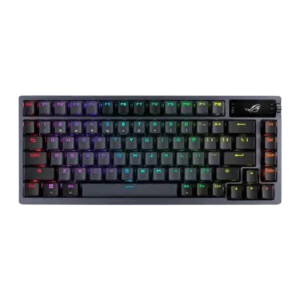
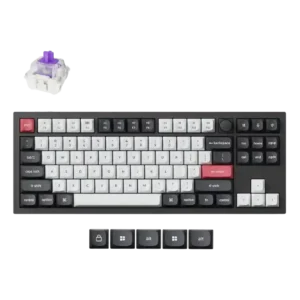
Compare ASUS ROG Azoth vs Keychron Q3 HE

P1 ASUS ROG Azoth
P2 Keychron Q3 HE

Comparison Takeaways

ASUS ROG Azoth

Where It Has the Edge

  • switch options is 4.6 vs 2.9. Switch options are good, with reviewer evidence for red, brown, blue, linear, tactile, and clicky variants.
  • ease of switch replacement is 4.7 vs 3.8. Switch replacement is repeatedly described as easy thanks to hot-swap sockets and the included pullers, opener, lube kit,...
  • hot-swappable switches is 4.8 vs 4.0. Hot-swappable switches are a standout feature, with reviewers praising both compatibility and the enthusiast-style flexibility.
  • per-key lighting control is 4.6 vs 3.9. Per-key lighting control is strong in the software evidence, with direct support for key-by-key backlight adjustment.

Keychron Q3 HE

Where It Has the Edge

  • software quality is 4.6 vs 2.4. Software quality was a standout, with reviewers praising the web-based Keychron Launcher as easy, slick, and improved.
  • legend visibility is 4.4 vs 2.6. Legend visibility was generally adequate, with crisp legends and visible keys noted despite non-shine-through caps.
  • key spacing is 4.5 vs 2.8. Key spacing and separation were treated as advantages of the full TKL layout, especially compared with more compressed...
  • volume control is 4.8 vs 3.5. Volume control was a clear strength, with the dedicated knob repeatedly praised for convenience and feel.
Average score
Product 1: ASUS ROG Azoth
4.2
Product 2: Keychron Q3 HE
4.4
acoustics
Product 1: ASUS ROG Azoth
4.6

Reviewers consistently liked the Azoth's tuned sound, describing it as quiet, marbled, and more refined than typical gaming keyboards.

Product 2: Keychron Q3 HE
4.6

Reviewers consistently described the Q3 HE as unusually refined for a mechanical keyboard, with quiet, satisfying, or brilliant sound rather than harsh clickiness.

actuation consistency
Product 1: ASUS ROG Azoth
4.7

The strongest actuation-consistency evidence is positive, with one reviewer saying keystrokes felt consistent and measured after switch changes.

Product 2: Keychron Q3 HE
4.6

The Hall Effect implementation earned strong marks for adjustable actuation, fine sensitivity, and detectable light presses across gaming and typing use.

analog input support
Product 1: ASUS ROG Azoth
No score yet
Product 2: Keychron Q3 HE
3.9

Analog-style control is supported indirectly through variable Hall Effect travel, with one reviewer highlighting steering-style partial input behavior.

backlight brightness
Product 1: ASUS ROG Azoth
4.0

Backlighting is useful and bright enough for dim settings, though one review noted a slight reddish hue in white lighting.

Product 2: Keychron Q3 HE
3.9

Backlighting is present and usable, but reviewers described it as subtle rather than extremely bright.

battery life
Product 1: ASUS ROG Azoth
4.5

Battery life is one of the Azoth's clearest strengths, with reviews reporting days, weeks, or very high remaining charge depending on RGB and OLED use.

Product 2: Keychron Q3 HE
4.3

Battery feedback was positive overall, including long claimed runtime and one reviewer reporting only occasional charging, though RGB wireless use can drain it faster.

build quality
Product 1: ASUS ROG Azoth
4.7

Build quality receives broad praise for solidity, weight, premium feel, and a sturdy top structure, even where the plastic bottom is noted.

Product 2: Keychron Q3 HE
4.8

Build quality was one of the strongest points, with repeated praise for the heavy aluminum construction and premium feel.

cable quality
Product 1: ASUS ROG Azoth
4.3

The included braided USB-C cable is treated as a solid premium accessory rather than a bare-minimum pack-in.

Product 2: Keychron Q3 HE
4.2

The included cable was described positively in the hands-on reviews, with braided USB-C cabling and adapters noted.

compatibility
Product 1: ASUS ROG Azoth
4.1

Compatibility is mostly positive across Windows, Mac, and even Linux mentions, but customization support is stronger on Windows than on Mac.

Product 2: Keychron Q3 HE
4.7

Compatibility was a clear strength, with reviewers noting Mac and Windows modes, alternate keycaps, and cross-device use.

connectivity
Product 1: ASUS ROG Azoth
4.8

Connectivity is repeatedly praised for offering wired, Bluetooth, and 2.4GHz modes with easy switching and dependable operation.

Product 2: Keychron Q3 HE
4.8

Connectivity was widely praised because the board supports wired, Bluetooth, and 2.4GHz wireless modes, often across multiple devices.

customization options
Product 1: ASUS ROG Azoth
4.6

Customization is a major selling point, spanning switch work, lighting, OLED/dial controls, profiles, and included enthusiast tools.

Product 2: Keychron Q3 HE
4.7

Customization is extensive, covering actuation, key layers, key mapping, lighting, macros, and deep per-key behavior through the web tool.

desk space efficiency
Product 1: ASUS ROG Azoth
4.5

The 75% layout is repeatedly valued for saving desk space while preserving arrows, function keys, and practical navigation keys.

Product 2: Keychron Q3 HE
4.3

Desk efficiency was mixed: reviewers liked the compact TKL footprint, but one noted it still takes more mouse space than smaller layouts.

durability
Product 1: ASUS ROG Azoth
4.8

Durability evidence is strong, including long-term use reports and reviewer impressions that the keyboard feels built to last.

Product 2: Keychron Q3 HE
4.8

Durability was supported by the aluminum body and PBT keycaps, with reviewers describing the materials as built to last.

ease of switch replacement
Product 1: ASUS ROG Azoth
4.7

Switch replacement is repeatedly described as easy thanks to hot-swap sockets and the included pullers, opener, lube kit, and tools.

Product 2: Keychron Q3 HE
3.8

Switch replacement is possible for compatible magnetic switches, but reviewers repeatedly stressed that traditional or non-Keychron/Gateron options are limited.

ergonomics
Product 1: ASUS ROG Azoth
3.7

Ergonomics are mixed: adjustable feet help comfort, but the high-profile design can become tiring without a wrist rest.

Product 2: Keychron Q3 HE
4.0

Ergonomics were mostly positive for comfort, though one reviewer found the fixed angle made a palm rest necessary.

extra gaming features
Product 1: ASUS ROG Azoth
4.0

Extra gaming features are strong overall, including OLED/dial functions, stealth mode, Windows lock, macro recording, and software-backed key control, though one reviewer disliked the screen/knob implementation.

Product 2: Keychron Q3 HE
4.8

Gaming extras were a major strength, especially Rapid Trigger, Snap Tap, multi-action actuation, and rapid-fire style input behavior.

frame rigidity
Product 1: ASUS ROG Azoth
4.7

Frame rigidity is excellent in the available evidence, with a reviewer noting almost no flex.

Product 2: Keychron Q3 HE
4.7

Frame rigidity was repeatedly praised through descriptions of the sturdy aluminum body, heavy weight, and lack of desk movement.

gaming performance
Product 1: ASUS ROG Azoth
4.7

Gaming performance is repeatedly praised for responsiveness, smooth gameplay, reliability, and no noticeable lag or missed inputs.

Product 2: Keychron Q3 HE
4.6

Gaming performance was strong in reviewer testing, with responsive inputs, useful Hall Effect behavior, and fast actuation for shooters and rapid actions.

hot-swappable switches
Product 1: ASUS ROG Azoth
4.8

Hot-swappable switches are a standout feature, with reviewers praising both compatibility and the enthusiast-style flexibility.

Product 2: Keychron Q3 HE
4.0

Hot-swappable magnetic switches were noted, but the benefit is narrowed by compatibility limits.

keycap quality
Product 1: ASUS ROG Azoth
4.4

Keycap quality is generally strong thanks to PBT doubleshot construction, texture, and durability, though one reviewer found them a little slippery.

Product 2: Keychron Q3 HE
4.7

Keycap quality was praised for PBT material, OSA profile, crisp legends, and a non-cheap feel.

key responsiveness
Product 1: ASUS ROG Azoth
4.6

Responsiveness evidence is strongly positive, with reviews describing snappy typing, fast inputs, and low-latency operation.

Product 2: Keychron Q3 HE
4.8

Key responsiveness was praised across reviews, especially the Hall Effect switches, short actuation, rapid triggering, and light-press detection.

key spacing
Product 1: ASUS ROG Azoth
2.8

Key spacing has a specific drawback: one reviewer found the compressed F-row harder to hit without looking.

Product 2: Keychron Q3 HE
4.5

Key spacing and separation were treated as advantages of the full TKL layout, especially compared with more compressed layouts.

key stability
Product 1: ASUS ROG Azoth
4.6

Key stability is positive, especially around the spacebar, stabilized keys, and shorter stems intended to reduce wobble.

Product 2: Keychron Q3 HE
4.6

Key stability was positive in everyday use thanks to weight and stabilizers, though not every large key was flawless.

latency
Product 1: ASUS ROG Azoth
4.7

Latency is repeatedly praised, with reviews reporting no noticeable delay and test-based references to very low 2.4GHz latency.

Product 2: Keychron Q3 HE
4.4

Latency impressions were positive in testing, especially over wired and 2.4GHz modes, with no input lag noted by one reviewer.

layout options
Product 1: ASUS ROG Azoth
4.5

The compact layout is praised for keeping a function row and dedicated everyday keys while avoiding the restrictions of smaller boards.

Product 2: Keychron Q3 HE
4.3

Layout feedback favored the TKL/80% format for retaining arrows and navigation keys while omitting the numpad.

legend visibility
Product 1: ASUS ROG Azoth
2.6

Legend visibility is a repeated weakness when lighting is off or dim, even though the shine-through caps support RGB.

Product 2: Keychron Q3 HE
4.4

Legend visibility was generally adequate, with crisp legends and visible keys noted despite non-shine-through caps.

macro customization
Product 1: ASUS ROG Azoth
3.3

Macro customization is useful but limited: reviews praise on-the-fly recording and software assignment while criticizing the lack of function-layer remapping.

Product 2: Keychron Q3 HE
4.6

Macro customization is well supported through the web software and multi-actuation key behavior.

materials quality
Product 1: ASUS ROG Azoth
4.8

Materials quality is high, with reviews pointing to aluminum, steel, durable PBT, and premium-feeling construction.

Product 2: Keychron Q3 HE
4.8

Materials quality was consistently praised, especially the aluminum body and premium-feeling construction.

media controls
Product 1: ASUS ROG Azoth
4.3

Media controls are useful through the OLED/dial system, though some reviewers prefer a simpler dedicated knob.

Product 2: Keychron Q3 HE
4.6

Media controls were a clear plus because reviewers liked the dedicated knob and clickable mute behavior.

noise level
Product 1: ASUS ROG Azoth
4.7

Noise level is a strength, especially with NX Red or dampened builds, with multiple reviewers describing the board as quiet or nearly silent.

Product 2: Keychron Q3 HE
4.7

Noise level was a strength, with reviewers calling it quiet, subtle, office-friendly, and free from harsh echo.

onboard memory
Product 1: ASUS ROG Azoth
4.6

Onboard memory is supported by evidence of stored default and custom profiles, making profile use possible without constant software interaction.

Product 2: Keychron Q3 HE
4.6

Onboard memory support was confirmed through the ability to save up to three profiles.

passthrough features
Product 1: ASUS ROG Azoth
1.0

Passthrough features are weak: reviews explicitly note the lack of extra USB ports, audio jacks, or similar passthrough hardware.

Product 2: Keychron Q3 HE
No score yet
per-key lighting control
Product 1: ASUS ROG Azoth
4.6

Per-key lighting control is strong in the software evidence, with direct support for key-by-key backlight adjustment.

Product 2: Keychron Q3 HE
3.9

Per-key lighting hardware was noted through per-key RGB and south-facing LEDs, though detailed per-key lighting control was less emphasized.

polling rate
Product 1: ASUS ROG Azoth
4.0

Polling-rate evidence confirms a mainstream 1,000 Hz rate over wired or 2.4GHz modes, which reviewers generally considered sufficient.

Product 2: Keychron Q3 HE
3.9

Polling rate was mixed: 1,000Hz was described as responsive, but reviewers criticized the lack of 8,000Hz found on rivals.

portability
Product 1: ASUS ROG Azoth
3.1

Portability is mixed: the compact layout helps, but the heavy, sturdy chassis makes it less travel-friendly for some users.

Product 2: Keychron Q3 HE
3.2

Portability was mixed because the compact layout can fit in a backpack, but the heavy metal body makes it a poor travel board.

profile management
Product 1: ASUS ROG Azoth
4.4

Profile management is useful, with evidence of quick profile switching and software profile setup, though execution depends on Armoury Crate.

Product 2: Keychron Q3 HE
4.6

Profile management is supported, with internal memory able to save three profiles for games or work.

rapid trigger support
Product 1: ASUS ROG Azoth
No score yet
Product 2: Keychron Q3 HE
4.8

Rapid Trigger support was repeatedly highlighted as a core gaming advantage for fast reset and rapid repeated inputs.

reliability
Product 1: ASUS ROG Azoth
4.3

Reliability is mostly positive in gaming use, but long-term evidence includes occasional double or triple letters from aging switches.

Product 2: Keychron Q3 HE
4.0

Reliability looked generally good, especially software support and daily use, though one reviewer reported rare Bluetooth reconnection issues.

RGB customization
Product 1: ASUS ROG Azoth
4.7

RGB customization is strong, with keyboard shortcuts, software control, and multiple built-in lighting modes.

Product 2: Keychron Q3 HE
4.2

RGB customization was positively received through numerous effects and praised Pixel Rain lighting, though one review noted a preset limit.

RGB lighting quality
Product 1: ASUS ROG Azoth
4.6

RGB lighting quality is generally praised for sharp per-key lighting and attractive effects, with minor caveats around color tint elsewhere.

Product 2: Keychron Q3 HE
4.4

RGB lighting quality was generally liked for its gorgeous or aesthetically pleasing look, even when not extremely bright.

size and form factor
Product 1: ASUS ROG Azoth
4.5

The 75% form factor is repeatedly seen as a good compact size that keeps everyday usability.

Product 2: Keychron Q3 HE
4.3

The 80%/TKL form factor was seen as a useful middle ground that keeps arrows and navigation keys without a numpad.

software quality
Product 1: ASUS ROG Azoth
2.4

Software quality is the most consistent complaint: Armoury Crate is often described as bloated, slow, buggy, or limiting despite some positive experiences.

Product 2: Keychron Q3 HE
4.6

Software quality was a standout, with reviewers praising the web-based Keychron Launcher as easy, slick, and improved.

sound dampening
Product 1: ASUS ROG Azoth
4.8

Sound dampening is one of the board's strongest enthusiast traits, with foam, silicone, and gasket layers repeatedly credited for the sound and feel.

Product 2: Keychron Q3 HE
4.6

Sound dampening was well supported by gasket construction, padding, foam, and low resonance.

stabilizer quality
Product 1: ASUS ROG Azoth
4.7

Stabilizer quality is strong, with reviews praising pre-lubed stabilizers, spacebar treatment, and good out-of-box behavior.

Product 2: Keychron Q3 HE
4.5

Stabilizer quality was mostly strong, with smooth, rattle-free stabilizers praised, though one review noted some spacebar wobble.

switch feel
Product 1: ASUS ROG Azoth
4.7

Switch feel is praised across switch variants for smoothness, tactile feedback, and strong factory tuning.

Product 2: Keychron Q3 HE
4.7

Switch feel was praised as tactile or smooth, bouncy, and satisfying, with Hall Effect switches giving a distinctive response.

switch options
Product 1: ASUS ROG Azoth
4.6

Switch options are good, with reviewer evidence for red, brown, blue, linear, tactile, and clicky variants.

Product 2: Keychron Q3 HE
2.9

Switch options were the most repeated limitation, since reviewers noted proprietary or Gateron-only magnetic switch compatibility.

typing comfort
Product 1: ASUS ROG Azoth
4.7

Typing comfort is strong where reviewers focus on cushioned feel, pleasant travel, and long-form typing satisfaction.

Product 2: Keychron Q3 HE
4.7

Typing comfort was consistently strong, with reviewers reporting soft keycaps, little fatigue, and comfortable typing after adjustment.

typing feel
Product 1: ASUS ROG Azoth
4.5

Typing feel is one of the Azoth's standout strengths, though one review found the stock gasket feel firmer than expected.

Product 2: Keychron Q3 HE
4.8

Typing feel was praised as highly enjoyable, with the board producing strong typing scores and a satisfying daily typing experience.

value for money
Product 1: ASUS ROG Azoth
3.4

Value is divisive: some reviewers justify the premium through features and quality, while others say the price remains prohibitive.

Product 2: Keychron Q3 HE
4.1

Value was mixed: reviewers respected the premium execution, but several noted that the high price faces cheaper rivals with stronger specs.

volume control
Product 1: ASUS ROG Azoth
3.5

Volume control is mixed because the OLED/dial can handle volume and media, but several reviewers found the control less precise or easy to mispress.

Product 2: Keychron Q3 HE
4.8

Volume control was a clear strength, with the dedicated knob repeatedly praised for convenience and feel.

wireless performance
Product 1: ASUS ROG Azoth
4.8

Wireless performance is a major strength, with reviewers reporting reliable Bluetooth, strong 2.4GHz performance, and no dropouts or input lag.

Product 2: Keychron Q3 HE
4.5

Wireless performance was mostly positive, especially the accurate 2.4GHz experience, though Bluetooth had minor hiccups in one review.

wrist rest quality
Product 1: ASUS ROG Azoth
2.0

Wrist-rest evidence is negative because reviewers note the high-profile board can tire users and no wrist rest is included.

Product 2: Keychron Q3 HE
No score yet