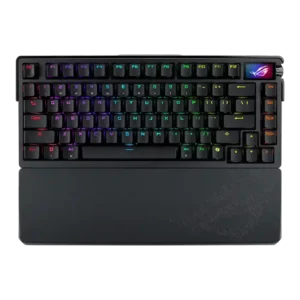
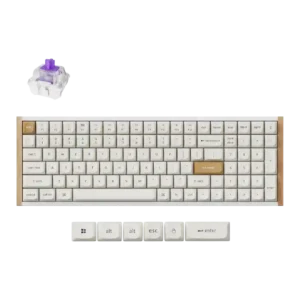
Compare ASUS ROG Azoth Extreme vs Keychron K4 HE

P1 ASUS ROG Azoth Extreme
P2 Keychron K4 HE

Comparison Takeaways

ASUS ROG Azoth Extreme

Where It Has the Edge

  • per-key lighting control is 4.4 vs 2.0. Per-key lighting is directly supported by the specs and reviewers' references to per-key RGB shine-through.
  • media controls is 4.5 vs 2.5. Media controls are strong, with reviewers praising or documenting the control knob for volume, media, brightness, and lighting.
  • volume control is 4.6 vs 2.7. Volume control is directly available through the dial and on-the-fly controls.
  • stabilizer quality is 4.6 vs 3.0. Stabilizer quality is strong, especially around the spacebar, with little rattle and well-lubed or well-tuned stabilizers.

Keychron K4 HE

Where It Has the Edge

  • rapid trigger support is 4.9 vs 1.2. Rapid Trigger is one of the most praised gaming features, repeatedly described as enabling faster reset and repeated...
  • analog input support is 4.7 vs 1.5. Analog input support is a strong specialty feature, with reviewers calling out gamepad-style control for racing, flying, or...
  • value for money is 4.6 vs 2.1. Value for money is very strong across reviews, especially because the K4 HE offers Hall Effect features at...
  • software quality is 4.5 vs 2.2. Software quality is mostly strong because Keychron Launcher is easy and web-based, but wired-only configuration and some clutter...
Average score
Product 1: ASUS ROG Azoth Extreme
4.1
Product 2: Keychron K4 HE
4.1
acoustics
Product 1: ASUS ROG Azoth Extreme
4.5

Acoustics are strongly praised, with reviewers describing enthusiast-level sound, refined muted tone, and premium sound profile.

Product 2: Keychron K4 HE
4.6

Acoustics are a strong point, with reviews describing thocky, warm, pleasant sound and little case rattle or ping.

actuation consistency
Product 1: ASUS ROG Azoth Extreme
4.6

Actuation consistency is supported by smooth linear keypresses, consistent actuation, and the Snow switch's matching actuation and reset point.

Product 2: Keychron K4 HE
4.8

Actuation behavior is described as consistent and precise, especially with Hall Effect sensing, rapid reset, and fine adjustment increments.

analog input support
Product 1: ASUS ROG Azoth Extreme
1.5

Analog input support is also weak because reviewers point to analogue or Hall Effect features as missing competitive-gaming capabilities.

Product 2: Keychron K4 HE
4.7

Analog input support is a strong specialty feature, with reviewers calling out gamepad-style control for racing, flying, or pressure-sensitive actions.

backlight brightness
Product 1: ASUS ROG Azoth Extreme
3.4

Backlight brightness is mixed, with reviewers finding it visible enough but not especially bright and sometimes lackluster.

Product 2: Keychron K4 HE
3.2

Backlight brightness is split: one reviewer calls it great, while another says it is too dim in daylight.

battery life
Product 1: ASUS ROG Azoth Extreme
4.5

Battery life is strong, with evidence ranging from long weekly use to 1,600-hour claims with lighting and OLED off.

Product 2: Keychron K4 HE
4.1

Battery life is good but not class-leading, with reviewers citing a large battery and 110-hour claim while comparing some rivals favorably.

build quality
Product 1: ASUS ROG Azoth Extreme
4.7

Build quality is a major strength, repeatedly described through aluminum construction, premium frame design, and solid execution.

Product 2: Keychron K4 HE
4.6

Build quality is one of the clearest strengths, with reviewers repeatedly calling the keyboard sturdy, premium, or exceptional for the price.

cable quality
Product 1: ASUS ROG Azoth Extreme
4.1

Cable quality is adequate to good, backed by a braided 2m USB-C to USB-A cable and listed 6.6-foot length.

Product 2: Keychron K4 HE
2.9

Cable quality is mixed: reviewers like the right-angle cable feel, but multiple reviews complain that the included cable is too short.

compatibility
Product 1: ASUS ROG Azoth Extreme
3.9

Compatibility is mixed-positive: it supports multiple devices and stabilizer/keycap paths, but north-facing switch compatibility can be limiting.

Product 2: Keychron K4 HE
4.7

Compatibility is strong across Windows and macOS, with reviewers also mentioning included OS keycaps and broad software support.

connectivity
Product 1: ASUS ROG Azoth Extreme
4.7

Connectivity is very strong, with wired, 2.4GHz, Bluetooth, and multi-device Bluetooth evidence across reviews.

Product 2: Keychron K4 HE
4.7

Connectivity is a strength, with wired, 2.4GHz, and Bluetooth modes plus multi-device Bluetooth support.

customization options
Product 1: ASUS ROG Azoth Extreme
4.6

Customization options are broad, including tweakable controls, adjustable gasket feel, OLED customization, and physical tuning.

Product 2: Keychron K4 HE
4.9

Customization options are extensive, especially actuation distance, rapid trigger, remapping, RGB, macros, and Hall Effect gaming modes.

desk space efficiency
Product 1: ASUS ROG Azoth Extreme
4.4

Desk space efficiency is supported by the 75% layout's balance of compactness and functionality.

Product 2: Keychron K4 HE
4.6

Desk space efficiency is strong because the 96% layout saves room while keeping the number pad and most full-size functions.

durability
Product 1: ASUS ROG Azoth Extreme
4.6

Durability evidence is positive overall, with reviewers citing sturdy construction, durable-feeling materials, and resilient magnetic feet.

Product 2: Keychron K4 HE
4.4

Durability evidence is limited but positive, with Hall Effect technology and keycap materials framed as reducing wear or lasting well.

ease of switch replacement
Product 1: ASUS ROG Azoth Extreme
4.2

Ease of switch replacement is positive because reviewers mention included pullers, hot-swap switches, and easy access or interchangeability.

Product 2: Keychron K4 HE
3.6

Ease of switch replacement is mixed: tools and hot-swap support help, but switch compatibility is narrow.

ergonomics
Product 1: ASUS ROG Azoth Extreme
4.4

Ergonomics are positive, helped by the wrist rest, adjustable feel, stable positioning, and comfortable typing experience.

Product 2: Keychron K4 HE
4.0

Ergonomics are mostly decent thanks to height options and posture-friendly height, though the always-angled chunky body may not suit everyone.

extra gaming features
Product 1: ASUS ROG Azoth Extreme
4.0

Extra gaming features are plentiful, including OLED, KPS, touchscreen, Copilot, and 8K polling, but not rapid-trigger class features.

Product 2: Keychron K4 HE
4.7

Extra gaming features are a major draw, including Snap Tap, LKP, dynamic keystrokes, and one-key multi-command behavior.

frame rigidity
Product 1: ASUS ROG Azoth Extreme
4.8

Frame rigidity is excellent, with reviewers describing tank-like strength and no body bend.

Product 2: Keychron K4 HE
4.6

Frame rigidity is strong, with reviewers noting no flex, stable construction, and a rigid aluminum-framed body.

gaming performance
Product 1: ASUS ROG Azoth Extreme
4.5

Gaming performance is positive for a mechanical wireless board, with reviewers citing smooth keypresses, good response, and issue-free gameplay.

Product 2: Keychron K4 HE
4.8

Gaming performance is a major strength, with multiple reviewers saying the board feels fast, responsive, and useful for competitive or action-heavy games.

hot-swappable switches
Product 1: ASUS ROG Azoth Extreme
4.4

Hot-swappable switches are repeatedly supported, with reviewers noting hot-swap sockets and easy switch changes.

Product 2: Keychron K4 HE
3.4

Hot-swappable switches are supported, but the benefit is limited because compatibility is restricted to specific magnetic switches.

keycap quality
Product 1: ASUS ROG Azoth Extreme
4.1

Keycap quality is generally good thanks to PBT, shine-through legends, and texture, though one reviewer disliked the textured cap feel.

Product 2: Keychron K4 HE
4.6

Keycap quality is consistently positive, especially the double-shot PBT or OSA-profile caps, though Special Edition legends do not shine through.

key responsiveness
Product 1: ASUS ROG Azoth Extreme
4.6

Key response is praised as fast and direct, with reviewers connecting that responsiveness to gaming and quick actuation feel.

Product 2: Keychron K4 HE
4.7

Responsiveness is a core strength, with reviewers praising very shallow actuation settings, fast inputs, and fluid keypresses for gaming.

key spacing
Product 1: ASUS ROG Azoth Extreme
4.6

Key spacing is praised through the better function-row layout, ergonomic key spacing, and reduced reliance on Fn layers.

Product 2: Keychron K4 HE
3.0

Key spacing is one of the most common complaints because the 96% layout bunches or squishes keys together.

key stability
Product 1: ASUS ROG Azoth Extreme
4.5

Key stability is strong overall, with reduced wobble, commendable stability, and shorter keycap design called out across reviews.

Product 2: Keychron K4 HE
4.6

Key stability is generally strong thanks to double-rail magnetic switches, with reviewers noting reduced wobble and stable smooth travel.

latency
Product 1: ASUS ROG Azoth Extreme
4.5

Latency evidence is strongly positive, with reviewers noting no noticeable lag, very fast reporting, and improved gaming reaction feel.

Product 2: Keychron K4 HE
3.9

Latency impressions are mostly acceptable to good, with measured or perceived lag low enough for most users, though one latency-focused reviewer calls it slower than some boards.

layout options
Product 1: ASUS ROG Azoth Extreme
4.1

Layout options are reasonable for a 75% board, with regional layout availability and praise for a proper exploded 75% layout.

Product 2: Keychron K4 HE
4.2

Layout options are useful for users who want a near-full-size 96% board, but the same condensed layout can feel awkward.

legend visibility
Product 1: ASUS ROG Azoth Extreme
4.3

Legend visibility is positive: reviewers mention transparent or shine-through legends and enough brightness to see them clearly.

Product 2: Keychron K4 HE
3.6

Legend visibility is mixed: printed legends are generally clear, but Special Edition non-shine-through legends limit visibility with RGB lighting.

macro customization
Product 1: ASUS ROG Azoth Extreme
4.2

Macro customization is supported through on-the-fly macro recording and software macro options.

Product 2: Keychron K4 HE
4.7

Macro customization is robust, with reviewers highlighting multi-action keys, four-stage commands, and extensive macro possibilities.

materials quality
Product 1: ASUS ROG Azoth Extreme
4.6

Materials quality is very strong thanks to aluminum, carbon fiber, premium machining, and high-quality internal construction.

Product 2: Keychron K4 HE
4.4

Materials quality is generally premium for the price, mixing aluminum, PBT keycaps, and wood accents, though the plastic bottom is noted.

media controls
Product 1: ASUS ROG Azoth Extreme
4.5

Media controls are strong, with reviewers praising or documenting the control knob for volume, media, brightness, and lighting.

Product 2: Keychron K4 HE
2.5

Media controls are a limitation because one review notes there are no easily accessible dedicated media keys.

noise level
Product 1: ASUS ROG Azoth Extreme
3.6

Noise level is context-dependent: the board is refined and muted to some reviewers but still too loud for a silent-keyboard user.

Product 2: Keychron K4 HE
4.2

Noise level is generally office-friendly for a mechanical keyboard, with reviewers describing it as reasonably quiet or not especially loud.

onboard memory
Product 1: ASUS ROG Azoth Extreme
No score yet
Product 2: Keychron K4 HE
4.5

Onboard memory is useful and repeatedly cited for saving profiles or preserving settings when moving between computers.

passthrough features
Product 1: ASUS ROG Azoth Extreme
3.2

Passthrough features are limited and mostly tied to dongle, extender, and polling-rate booster accessories rather than a full keyboard passthrough hub.

Product 2: Keychron K4 HE
No score yet
per-key lighting control
Product 1: ASUS ROG Azoth Extreme
4.4

Per-key lighting is directly supported by the specs and reviewers' references to per-key RGB shine-through.

Product 2: Keychron K4 HE
2.0

Per-key lighting control is a weakness because at least one reviewer explicitly says custom colors apply to the whole board rather than individual keys.

polling rate
Product 1: ASUS ROG Azoth Extreme
4.5

The 8,000Hz polling rate is repeatedly documented and praised as premium or future-facing, though reviewers often say most users may not feel it.

Product 2: Keychron K4 HE
4.0

The 1,000Hz polling rate is consistently treated as adequate for this price, even if some higher-end Hall Effect boards offer 8,000Hz.

portability
Product 1: ASUS ROG Azoth Extreme
1.8

Portability is poor because reviewers repeatedly emphasize the board's heavy weight and lack of lightweight design.

Product 2: Keychron K4 HE
4.1

Portability is decent for a 96% board, with one reviewer noting it is light enough to carry in a backpack.

profile management
Product 1: ASUS ROG Azoth Extreme
4.0

Profile management is modest but present through profile indicators and layer-style programmability evidence.

Product 2: Keychron K4 HE
4.5

Profile management is a strength, with reviewers noting multiple profiles and the ability to preserve settings for different uses or systems.

rapid trigger support
Product 1: ASUS ROG Azoth Extreme
1.2

Rapid trigger support is a weakness: multiple reviewers note the absence of rapid trigger, Hall Effect, or adjustable actuation features.

Product 2: Keychron K4 HE
4.9

Rapid Trigger is one of the most praised gaming features, repeatedly described as enabling faster reset and repeated inputs.

reliability
Product 1: ASUS ROG Azoth Extreme
4.5

Reliability is strong, especially around wireless stability, low latency, and stable fast connections.

Product 2: Keychron K4 HE
4.2

Reliability is generally positive but not spotless, combining good standby and long-term confidence with one review-unit quality-control concern.

RGB customization
Product 1: ASUS ROG Azoth Extreme
4.3

RGB customization is supported through lighting controls, preset effects, Aura-style controls, and software-based customization.

Product 2: Keychron K4 HE
4.0

RGB customization is useful for colors and effects, but some reviewers note the controls stop short of full per-key color customization.

RGB lighting quality
Product 1: ASUS ROG Azoth Extreme
3.7

RGB lighting quality is mixed: some praise vivid shine-through, while others call the lighting dim or less appealing than the original.

Product 2: Keychron K4 HE
3.6

RGB lighting quality is mixed, ranging from vibrant and customizable to subdued or difficult to see on Special Edition keycaps.

size and form factor
Product 1: ASUS ROG Azoth Extreme
4.2

Size and form factor are favorable for desk use because the 75% layout keeps useful keys while reducing footprint versus larger boards.

Product 2: Keychron K4 HE
4.4

Size and form factor are praised for preserving numpad functionality in a compact 96% footprint.

software quality
Product 1: ASUS ROG Azoth Extreme
2.2

Software quality is a recurring weakness, with Armoury Crate described as disliked, oblique, slow, buggy, or required for customization.

Product 2: Keychron K4 HE
4.5

Software quality is mostly strong because Keychron Launcher is easy and web-based, but wired-only configuration and some clutter reduce the score.

sound dampening
Product 1: ASUS ROG Azoth Extreme
4.6

Sound dampening is a clear strength, backed by foam layers, silicone pads, and repeated comments about reduced ping and dampened resonance.

Product 2: Keychron K4 HE
4.6

Sound dampening is repeatedly credited to foam layers, pads, and silicone acoustic material that soften hollow sounds and improve acoustics.

stabilizer quality
Product 1: ASUS ROG Azoth Extreme
4.6

Stabilizer quality is strong, especially around the spacebar, with little rattle and well-lubed or well-tuned stabilizers.

Product 2: Keychron K4 HE
3.0

Stabilizer quality is a minor weak spot because one reviewer singles out the spacebar and longer keys as sounding different from the rest.

switch feel
Product 1: ASUS ROG Azoth Extreme
4.5

Reviewers describe the NX switches as smooth, factory-lubed, and a major reason the board feels premium for typing and gaming.

Product 2: Keychron K4 HE
4.6

Reviewers broadly describe the Hall Effect switches as smooth, responsive, and pleasant, though a few note the linear magnetic feel may not suit every typist.

switch options
Product 1: ASUS ROG Azoth Extreme
4.2

The keyboard is covered with NX Snow and NX Storm switch options, with reviewers generally liking the included Snow linear switches.

Product 2: Keychron K4 HE
3.0

Switch choice is the biggest hardware-customization limitation: the board supports magnetic Gateron-style options, but not traditional mechanical switches.

typing comfort
Product 1: ASUS ROG Azoth Extreme
4.9

Typing comfort is very strong, with reviewers calling the board comfortable for rapid typing and long sessions.

Product 2: Keychron K4 HE
4.7

Typing comfort is mostly favorable, especially for long sessions, although cramped right-side keys may affect some users.

typing feel
Product 1: ASUS ROG Azoth Extreme
4.7

Typing feel is one of the product's strongest areas, with reviewers praising the feel, gasket options, and satisfying stock sound.

Product 2: Keychron K4 HE
4.4

Typing feel is mostly praised as smooth, thocky, and high quality, but one reviewer found the soft magnetic feel a little sloppy for typing.

value for money
Product 1: ASUS ROG Azoth Extreme
2.1

Value for money is the main controversy: reviewers praise quality but repeatedly question or reject the $500-class price.

Product 2: Keychron K4 HE
4.6

Value for money is very strong across reviews, especially because the K4 HE offers Hall Effect features at a relatively modest price.

volume control
Product 1: ASUS ROG Azoth Extreme
4.6

Volume control is directly available through the dial and on-the-fly controls.

Product 2: Keychron K4 HE
2.7

Volume control is basic because one review says volume is handled through function keys rather than a knob or spinner.

wireless performance
Product 1: ASUS ROG Azoth Extreme
4.8

Wireless performance is a standout, with multiple reviewers reporting flawless or lag-free wireless operation.

Product 2: Keychron K4 HE
4.2

Wireless performance is mostly positive for connection, wake, and multi-device use, though configuration still requires a cable and one latency-focused review is less enthusiastic.

wrist rest quality
Product 1: ASUS ROG Azoth Extreme
3.8

Wrist rest quality is mixed-positive: reviewers like its comfort and premium feel, but some note it is not magnetic or may wear quickly.

Product 2: Keychron K4 HE
4.3

Wrist rest feedback is positive where reviewers mention Keychron’s silicone palm/wrist rest, describing it as soft and supportive.