Average score
Product 1: Corsair K70 MAX
3.9
Product 2: ASUS ROG Azoth
4.2
acoustics
Product 1: Corsair K70 MAX
3.7

Reviews split on the sound profile: some describe the board as fantastic or unobtrusive, while another calls it clanky and rattly.

Product 2: ASUS ROG Azoth
4.8

Reviews consistently describe the Azoth as unusually good-sounding for a gaming keyboard, with a refined, quiet, and well-controlled sound profile.

actuation consistency
Product 1: Corsair K70 MAX
4.5

Reviews describe the actuation system as finely adjustable in small increments on a per-key basis, supporting precise tuning.

Product 2: ASUS ROG Azoth
4.0

Fresh units feel consistent and measured, though one long-term review reports occasional repeat presses as the board ages.

backlight brightness
Product 1: Corsair K70 MAX
4.5

Backlighting is described as bright and visually strong, with at least one reviewer also calling the lighting presentation good-looking.

Product 2: ASUS ROG Azoth
4.2

The backlighting and OLED brightness are easy to adjust, and reviewers found the board usable even with RGB set fairly high.

battery life
Product 1: Corsair K70 MAX
No score yet
Product 2: ASUS ROG Azoth
4.8

Battery life is a major strength, with multiple reviewers reporting strong real-world endurance even before disabling the OLED or RGB.

build quality
Product 1: Corsair K70 MAX
4.8

Multiple reviews praise the board’s overall build as top-tier, solid, and premium-feeling.

Product 2: ASUS ROG Azoth
4.9

Build quality is a standout, with reviewers repeatedly calling the board solid, premium, and unusually hefty for its size.

cable quality
Product 1: Corsair K70 MAX
4.0

The detachable USB-C cable gets generally positive remarks for quality and standard connectivity, though one reviewer notes some cable-related fit annoyances.

Product 2: ASUS ROG Azoth
4.2

The included USB cable is consistently described as a long braided cable, which supports the board’s premium feel.

compatibility
Product 1: Corsair K70 MAX
4.2

Compatibility evidence centers on iCUE working with macOS, broader Corsair ecosystem integrations, and standard stems/layout that play well with common accessories.

Product 2: ASUS ROG Azoth
4.3

The Azoth works across multiple platforms, with reviewers specifically noting Windows and Mac support and broader cross-platform compatibility.

connectivity
Product 1: Corsair K70 MAX
2.9

Connectivity is straightforward wired USB-C, but several reviews call out the lack of wireless support as a downside.

Product 2: ASUS ROG Azoth
4.7

Tri-mode connectivity is a clear plus, giving users wired USB-C, Bluetooth, and 2.4GHz wireless options that reviewers found easy to use.

customization options
Product 1: Corsair K70 MAX
4.9

Customization is a major strength, with extensive remapping and broad per-key adjustment options repeatedly highlighted.

Product 2: ASUS ROG Azoth
4.7

Customization is broad, covering key remaps, macros, OLED content, lighting, profiles, and mod-friendly hardware touches.

desk space efficiency
Product 1: Corsair K70 MAX
2.0

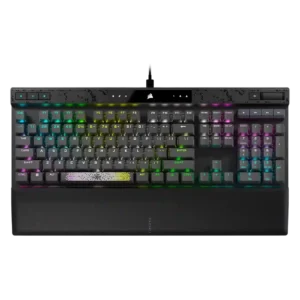
The full-size chassis is repeatedly described as taking up a lot of desk space.

Product 2: ASUS ROG Azoth
4.7

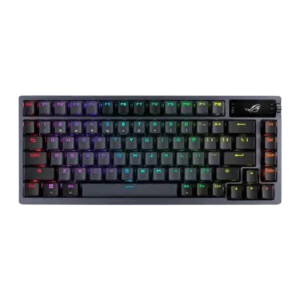
The 75% layout saves desk space while still leaving room for mouse movement and core keys that smaller boards often drop.

durability
Product 1: Corsair K70 MAX
4.6

Reviews suggest good durability, citing drop resistance, tough construction, and durable PBT caps.

Product 2: ASUS ROG Azoth
4.7

Long-term and shorter reviews both point to durable construction, with strong materials and good aging characteristics over extended use.

ease of switch replacement
Product 1: Corsair K70 MAX
3.4

Switch replacement flexibility appears mixed: one review says common switches will not fit, while another calls the board hot-swappable.

Product 2: ASUS ROG Azoth
4.8

Switch replacement is easy thanks to hot-swap support and included tools, making experimentation much easier than on typical gaming boards.

ergonomics
Product 1: Corsair K70 MAX
4.5

Ergonomics are generally good thanks to incline options, wrist support, and comfort during long sessions.

Product 2: ASUS ROG Azoth
3.2

Ergonomics are mixed: the feet and typing angle help, but the high profile and control design can become tiring or awkward.

extra gaming features
Product 1: Corsair K70 MAX
4.2

Extra gaming-focused features include tournament controls and other esports-oriented conveniences beyond the core switch tech.

Product 2: ASUS ROG Azoth
4.6

Gaming extras are plentiful, including macros, Windows lock, stealth shortcuts, and other gamer-focused convenience features.

frame rigidity
Product 1: Corsair K70 MAX
4.9

The frame is repeatedly described as very rigid and stable, with little to no flex.

Product 2: ASUS ROG Azoth
4.7

The chassis feels impressively rigid, with reviewers calling it solid and noting very little unwanted flex.

gaming performance
Product 1: Corsair K70 MAX
4.3

Gaming performance is usually praised as fast and strong, though one reviewer felt it was not meaningfully more confidence-inspiring than other boards.

Product 2: ASUS ROG Azoth
4.9

Gaming performance is a major strength, with reviewers praising responsiveness, wireless play, and all-around feel in fast-paced use.

hot-swappable switches
Product 1: Corsair K70 MAX
2.3

Reviews conflict on whether the switch setup should be considered hot-swappable, so flexibility here is inconsistent in the source material.

Product 2: ASUS ROG Azoth
5.0

Hot-swap support is one of the Azoth’s defining enthusiast features and is repeatedly highlighted across reviews.

keycap quality
Product 1: Corsair K70 MAX
4.7

The keycaps are consistently described as thick, durable PBT doubleshots with a premium feel.

Product 2: ASUS ROG Azoth
4.6

The stock PBT keycaps are generally well liked for texture and durability, even if not every reviewer loved every detail.

key responsiveness
Product 1: Corsair K70 MAX
4.6

Key response is repeatedly described as fast and immediate, especially when actuation is tuned aggressively.

Product 2: ASUS ROG Azoth
4.8

Key response is consistently described as quick and responsive, whether the board is used for gaming or general work.

key spacing
Product 1: Corsair K70 MAX
2.5

One review specifically flags accidental hits on the far-right cluster, suggesting the spacing can be unforgiving for some users.

Product 2: ASUS ROG Azoth
3.9

Key spacing is mostly praised for feeling natural on a compact layout, though the screen does force some keys closer together than ideal.

key stability
Product 1: Corsair K70 MAX
3.1

Key stability is mixed: some reviewers noticed wobble, while another found larger stabilized keys free of ticking.

Product 2: ASUS ROG Azoth
4.6

Stability is strong, especially on larger keys, with reviewers calling out controlled stabilizers and reduced wobble.

latency
Product 1: Corsair K70 MAX
4.5

Low-latency behavior is a recurring positive, with reviewers explicitly noting improved input speed and reduced lag.

Product 2: ASUS ROG Azoth
4.8

Latency is a strength, with reviewers repeatedly describing the board as low-latency and hard to distinguish from wired use.

layout options
Product 1: Corsair K70 MAX
3.7

The board is consistently presented as a full-size standard layout, with only limited layout variety discussed in the reviews.

Product 2: ASUS ROG Azoth
4.4

Layout flexibility is decent for this category, with reviewers noting the 75% format and availability beyond a single regional layout.

legend visibility
Product 1: Corsair K70 MAX
3.1

Legend visibility is mixed: some reviewers say legends are dim without backlighting, while another found the lettering generally well done.

Product 2: ASUS ROG Azoth
2.9

Legend visibility is a weak point when the lighting is off, with multiple reviewers saying the legends are hard to see.

macro customization
Product 1: Corsair K70 MAX
4.5

Macro support is robust, with onboard recording, macro creation, and programmable actions all mentioned.

Product 2: ASUS ROG Azoth
2.7

Macro support exists, but reviewers repeatedly note limits around secondary layers and more advanced mapping flexibility.

materials quality
Product 1: Corsair K70 MAX
4.8

Materials quality is a strong point, especially the aluminum top frame/plate and overall premium material mix.

Product 2: ASUS ROG Azoth
4.8

Material quality is high, mixing aluminum, steel, quality plastics, and enthusiast-style components in a premium package.

media controls
Product 1: Corsair K70 MAX
4.5

Dedicated media controls are a consistent convenience across reviews.

Product 2: ASUS ROG Azoth
3.9

Media control support is useful overall, though the dial and rocker implementation can be less satisfying than a traditional wheel.

noise level
Product 1: Corsair K70 MAX
2.1

Noise level is a common complaint, with several reviews calling the board loud or not particularly quiet.

Product 2: ASUS ROG Azoth
4.7

Noise is well managed, especially with quieter switches, and several reviews call the board notably quiet for a gaming keyboard.

onboard memory
Product 1: Corsair K70 MAX
4.8

Onboard memory is a recurring positive, with 8MB storage and large profile capacity repeatedly cited.

Product 2: ASUS ROG Azoth
4.5

Onboard profile storage is a real advantage, letting users keep multiple saved configurations on the keyboard itself.

passthrough features
Product 1: Corsair K70 MAX
1.0

The board lacks USB passthrough, and the only direct review evidence treats that as a missing feature.

Product 2: ASUS ROG Azoth
1.5

Passthrough and extra ports are a clear weakness, because reviewers explicitly note the lack of USB passthrough and audio jacks.

per-key lighting control
Product 1: Corsair K70 MAX
5.0

Per-key lighting control is a clear strength, with individual key lighting adjustments repeatedly confirmed.

Product 2: ASUS ROG Azoth
4.7

Per-key lighting control is well supported, with reviewers highlighting both per-key RGB hardware and detailed tuning options.

polling rate
Product 1: Corsair K70 MAX
4.9

High polling rate support is one of the board’s standout gaming features across reviews.

Product 2: ASUS ROG Azoth
4.5

The 1,000Hz polling rate is in line with premium wireless gaming boards and was treated as fully competitive in reviews.

portability
Product 1: Corsair K70 MAX
2.1

Portability is poor: reviewers describe it as heavy, desk-bound, and not especially travel-friendly.

Product 2: ASUS ROG Azoth
3.4

Portability is mixed: the compact layout helps with travel, but the weight makes it less convenient than lighter small boards.

profile management
Product 1: Corsair K70 MAX
4.7

Profile management is strong, with onboard profile storage and app-linked profiles frequently mentioned.

Product 2: ASUS ROG Azoth
4.4

Profile management is solid, with multiple stored profiles and quick switching available for different setups or tasks.

rapid trigger support
Product 1: Corsair K70 MAX
4.2

Rapid Trigger support is discussed positively, though some reviews frame it as a feature enabled or arriving via updates.

Product 2: ASUS ROG Azoth
No score yet
reliability
Product 1: Corsair K70 MAX
4.5

Reliability evidence is positive, focusing on durable use and dependable contactless switch behavior.

Product 2: ASUS ROG Azoth
4.8

Reliability is strong overall, with reviewers reporting stable wireless use, no missed inputs, and good long-term behavior.

RGB customization
Product 1: Corsair K70 MAX
4.9

RGB customization is extensive, with lots of effects, per-key control, and easy profile-based adjustment.

Product 2: ASUS ROG Azoth
4.7

RGB customization is deep, covering effects, brightness, presets, and software-driven personalization.

RGB lighting quality
Product 1: Corsair K70 MAX
4.7

Lighting quality is generally praised as bright, vibrant, and crisp.

Product 2: ASUS ROG Azoth
4.4

Lighting quality is generally praised as attractive and useful, though it is more subtle than flashier gaming keyboards.

size and form factor
Product 1: Corsair K70 MAX
3.3

This is a large full-size keyboard, and the big footprint is both a feature and a drawback depending on the setup.

Product 2: ASUS ROG Azoth
4.7

The 75% form factor is one of the board’s biggest strengths, balancing compact size with much better everyday usability than 60% boards.

software quality
Product 1: Corsair K70 MAX
4.0

Software quality is generally good but not flawless; reviewers praise its power and breadth while also noting usability annoyances.

Product 2: ASUS ROG Azoth
2.1

Software quality is the clearest drawback, with repeated complaints about Armoury Crate being bloated, slow, unstable, or frustrating.

sound dampening
Product 1: Corsair K70 MAX
4.3

The sound-dampening setup is broadly seen as effective, though not always enough to make the board truly quiet.

Product 2: ASUS ROG Azoth
4.8

Sound dampening is excellent thanks to multiple foam and silicone layers that reduce ping, echo, and hollowness.

stabilizer quality
Product 1: Corsair K70 MAX
3.2

Stabilizer quality is mixed, with one review praising low ticking and others criticizing dryness or rattle.

Product 2: ASUS ROG Azoth
4.7

Stabilizers are a strength, with pre-lubed larger keys delivering smoother travel and better consistency than usual for gaming boards.

switch feel
Product 1: Corsair K70 MAX
4.5

Switch feel is generally praised as smooth and consistent.

Product 2: ASUS ROG Azoth
4.4

Switch feel is strong overall, with smooth stock switches and good variety, though some reviewers still preferred other switch types.

switch options
Product 1: Corsair K70 MAX
2.7

Switch choice is limited to the linear MGX approach, with reviews noting the lack of tactile or clicky alternatives.

Product 2: ASUS ROG Azoth
4.5

Switch choice is solid, with multiple stock switch variants that cover linear, tactile, and clicky preferences.

typing comfort
Product 1: Corsair K70 MAX
4.0

Typing comfort is mixed but mostly positive, helped by ergonomics and wrist support, though some fatigue complaints appear in longer sessions.

Product 2: ASUS ROG Azoth
4.2

Typing comfort is very good for most users thanks to the gasket-style build and compact but still practical layout, though a full-size board can still feel easier for long writing sessions.

typing feel
Product 1: Corsair K70 MAX
4.1

Typing feel is generally enjoyable and smooth, though not every reviewer found it class-leading.

Product 2: ASUS ROG Azoth
4.8

Typing feel is one of the Azoth’s biggest strengths, with many reviewers describing it as premium, smooth, and enthusiast-leaning.

value for money
Product 1: Corsair K70 MAX
3.4

Value is divisive: some reviewers think the board earns its price, while others see the cost as hard to justify.

Product 2: ASUS ROG Azoth
3.2

Value is mixed: reviewers love the hardware, but many still question whether the premium price is easy to justify.

volume control
Product 1: Corsair K70 MAX
4.6

The volume control hardware is repeatedly praised as a useful, well-executed dedicated control.

Product 2: ASUS ROG Azoth
3.2

Volume control works, but the dial and rocker can feel finicky enough that some reviewers found it less convenient than expected.

wireless performance
Product 1: Corsair K70 MAX
1.5

Wireless performance is effectively a weakness because the board is wired-only and repeatedly criticized for lacking wireless capability.

Product 2: ASUS ROG Azoth
4.9

Wireless performance is a standout, with stable 2.4GHz results, minimal lag, and behavior reviewers considered effectively wired-grade.

wrist rest quality
Product 1: Corsair K70 MAX
4.0

Wrist-rest quality is mostly praised for comfort and plushness, though one reviewer disliked the feel enough to call it clammy.

Product 2: ASUS ROG Azoth
2.0

The lack of an included wrist rest hurts long-session comfort for some users, especially given the board’s higher profile.